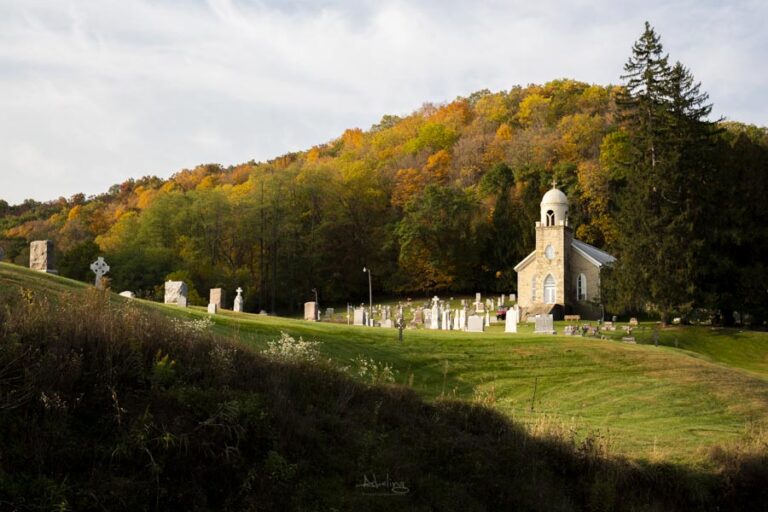
Yellow River State Forest: A First-Timer’s Guide to Iowa’s Wildest Forest
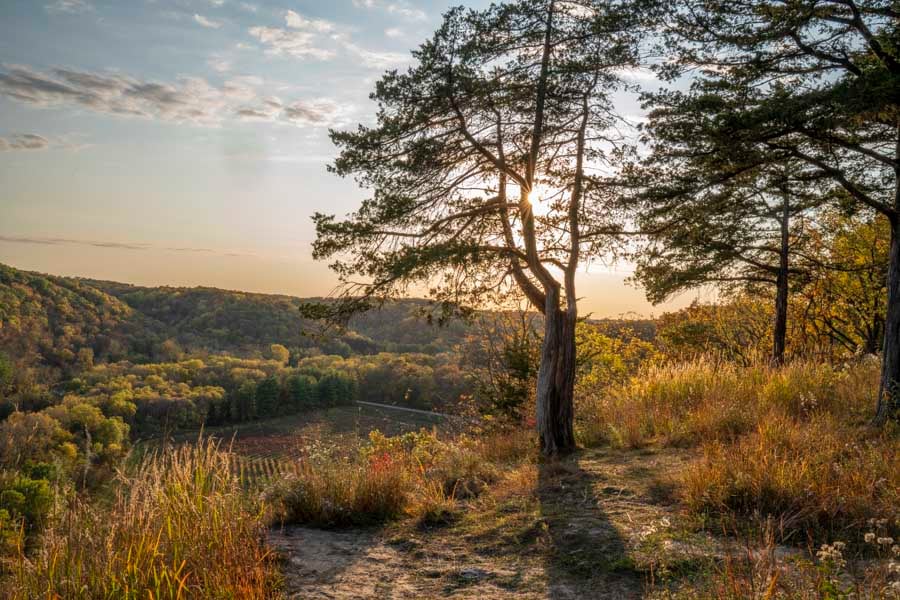
Yellow River State Forest doesn’t feel like a typical Iowa park.
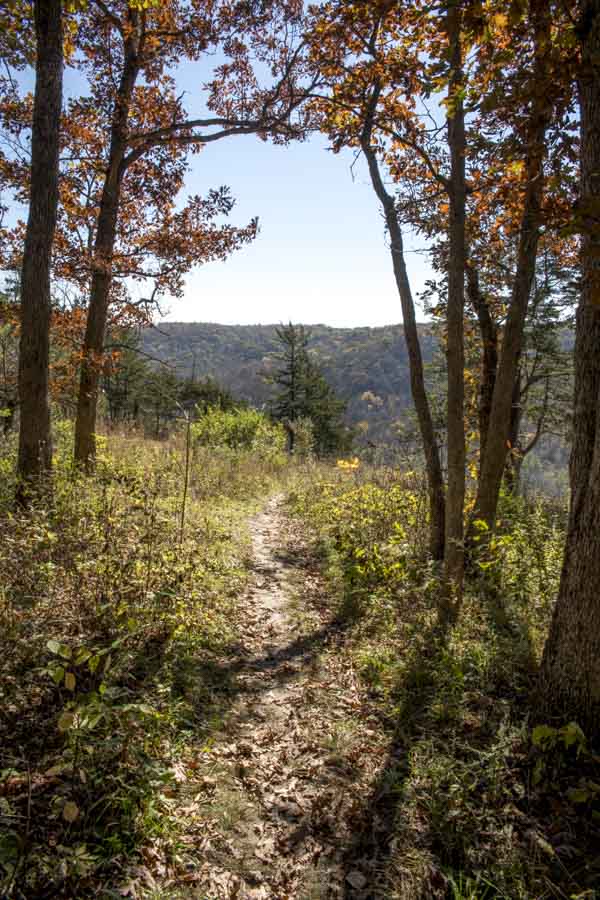
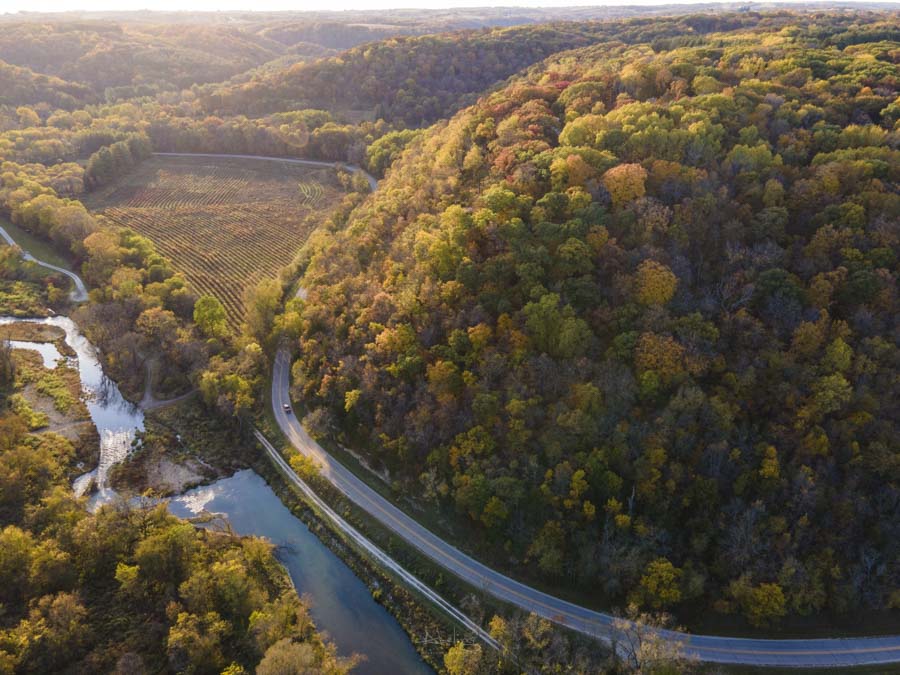
Instead of one compact property built around a lake or a single scenic loop, the forest covers nearly 8,900 acres spread across six separate units. Gravel roads wind through narrow valleys. Trails climb steep wooded ridges. Cold-water streams cut through rock-lined hollows, and overlooks open onto some of the most rugged scenery in Iowa.
The forest sits in Allamakee County near Harpers Ferry, within northeast Iowa’s Driftless Area. The Iowa DNR describes state forest trails and amenities as less developed and more rugged than those at many state parks. That’s exactly what makes Yellow River worth the trip, but it also means a little advance planning goes a long way.
Yellow River State Forest borders Effigy Mounds National Monument and sits close to the Mississippi River, Pikes Peak State Park and the communities of Marquette and McGregor. You could easily make it the center of a full weekend in northeast Iowa.
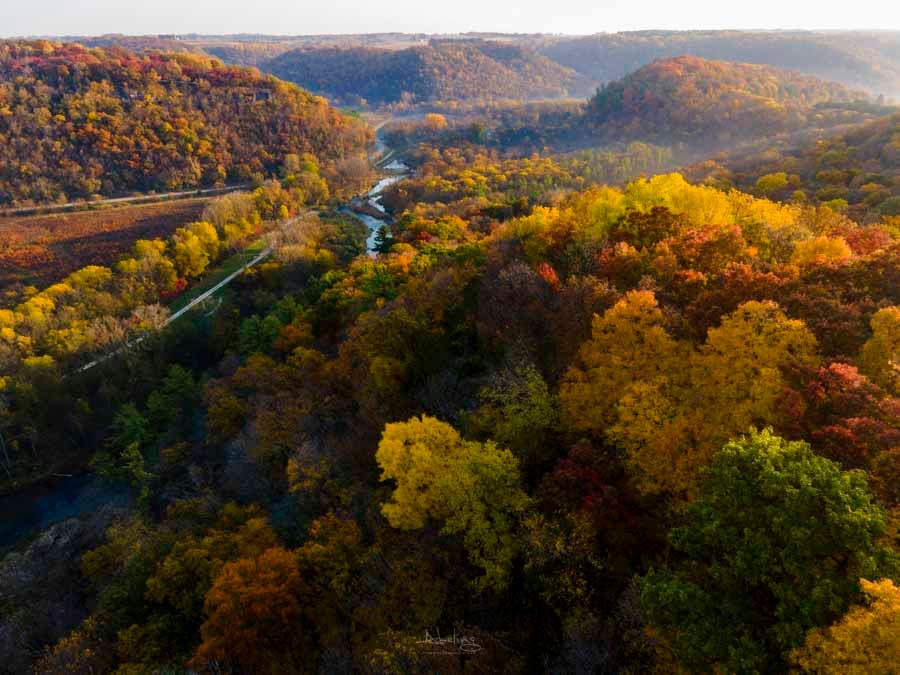
Yellow River State Forest quick facts
- Forest headquarters: 729 State Forest Road, Harpers Ferry, Iowa 52146
- Size: Nearly 8,900 acres divided among six units
- Established: The first land was purchased in 1935 with funding connected to the Civilian Conservation Corps
- Trails: More than 50 miles of multi-use trails, with more than 40 marked and maintained miles in the Paint Creek Unit
- Trout water: About seven miles along Paint Creek and Little Paint Creek
Cell service is unavailable in the campground areas and unreliable throughout much of the forest. Download the maps before leaving home, and bring a printed copy as a backup.
Understanding Yellow River’s six units
Yellow River State Forest is divided into six units that aren’t all connected. For a first visit, concentrate on the Paint Creek Unit. It contains most of the forest’s roads, marked trails, campgrounds, trout streams and recognizable attractions.
Paint Creek Unit
The 5,237-acre Paint Creek Unit is the largest and most visitor-friendly section of the forest. This is where you’ll find the headquarters, cabin, campgrounds, backpacking network, fire tower, trout streams and several scenic overlooks.
Enter from State Forest Road, also known as County Road B25. The forest headquarters at 729 State Forest Road makes a useful starting point for orienting yourself.
Luster Heights Unit
The 770-acre Luster Heights Unit has about three miles of maintained hiking and mountain biking trails, plus two overlooks of the Mississippi River. In winter, the trail system is groomed for cross-country skiing.
Use 481 Luster Heights Road, Harpers Ferry, for navigation. The Iowa DNR says the parking lot is about one mile down Luster Heights Road.
Yellow River Unit
The 1,227-acre Yellow River Unit provides canoe and kayak access to the Yellow River. Use 1986 Old Mission Road, Harpers Ferry, for navigation. Follow Old Mission Road until it ends at the river access.
Paint Rock Unit
The 864-acre Paint Rock Unit has eight miles of hiking-only trails and a backpack camping area with three sites. Unlike most Paint Creek trails, these routes aren’t shared with horses or mountain bikes.
Use 751 Highway 364, Harpers Ferry, for the unit’s primary access. Another parking area is available from Paint Rock Road.
Mudhen Unit
The 196-acre Mudhen Unit consists of Mississippi River islands and is accessible only by boat. It has little relevance for a typical first visit.
Waukon Junction Unit
The 209-acre Waukon Junction Unit is along Highway 364, about four miles south of Harpers Ferry. It is smaller and has fewer developed visitor facilities than Paint Creek.
Find the best scenic overlooks
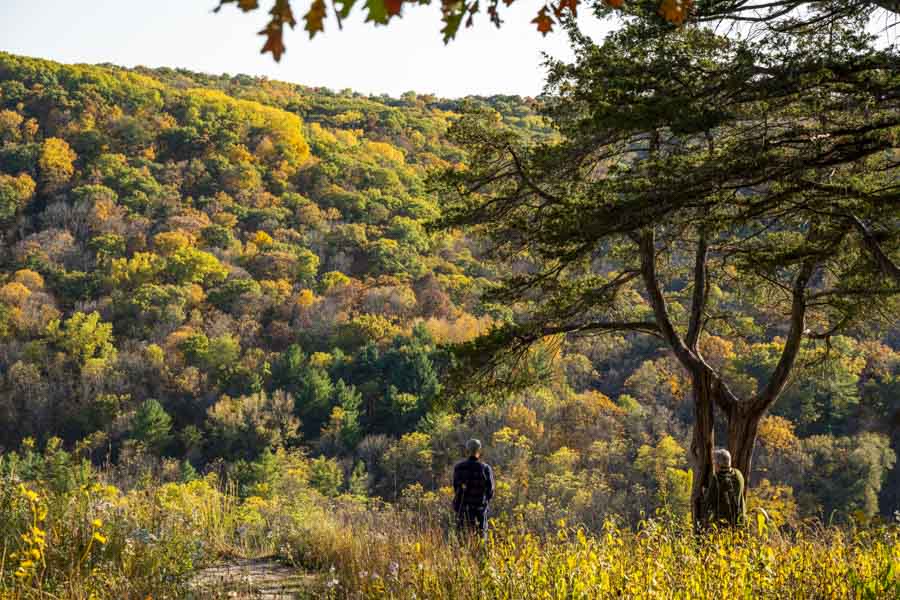
Yellow River’s overlooks are among the forest’s biggest rewards. Some require hiking, but others can be reached by driving forest roads followed by a short walk.
Because the overlooks don’t have conventional street addresses, use their named GPS pins along with the official Paint Creek Unit map. Download the map before arriving. Gravel roads can be steep, narrow or closed seasonally, so check conditions before heading deep into the forest.
Cedar Point Overlook
Cedar Point is one of the most frequently recommended stops in Yellow River State Forest. It overlooks the wooded Big Paint Creek valley and is especially impressive when fall color spreads across the surrounding ridges.
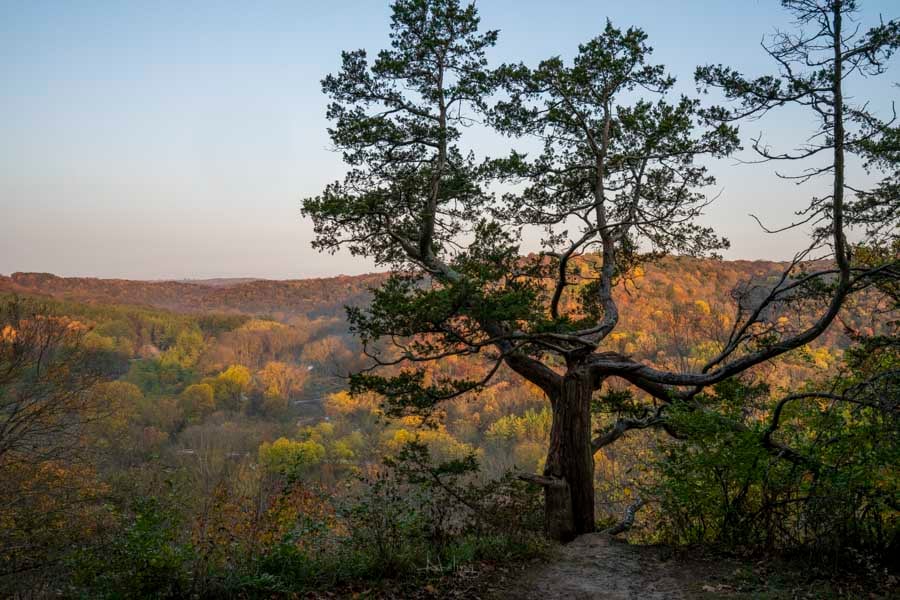
The overlook can be reached from Cedar Point Road with only a short walk from the end of the drivable approach. For GPS navigation, use 43.16805, -91.24151, or open the Cedar Point Overlook location in Google Maps.
This coordinate marks the overlook approach and trail area. Use the designated roadside or trailhead parking shown on the forest map, and don’t block gates or narrow forest roads.
Larkin Overlook
Larkin Overlook provides a broad view across the Paint Creek valley. The overlook was named for the Larkin family, which once operated a farm below the bluff.
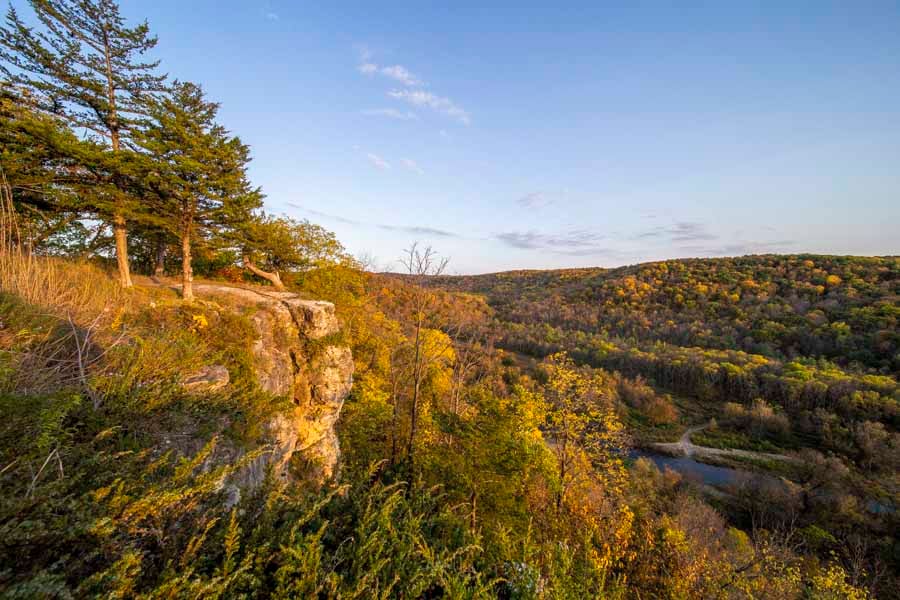
There is no dependable street address. Use the named Larkin Overlook GPS pin and verify the route against the official Paint Creek Unit map. The final approach follows gravel forest roads.
Paint Creek Overlook
Paint Creek Overlook sits along the same general bluff system and provides another elevated view across the forest. Pair it with Larkin Overlook rather than treating it as a completely separate outing.
Use the Paint Creek Overlook GPS search, then confirm the parking approach on the official map. Mapping apps can choose questionable forest-road routes, especially when roads are wet or seasonally closed.
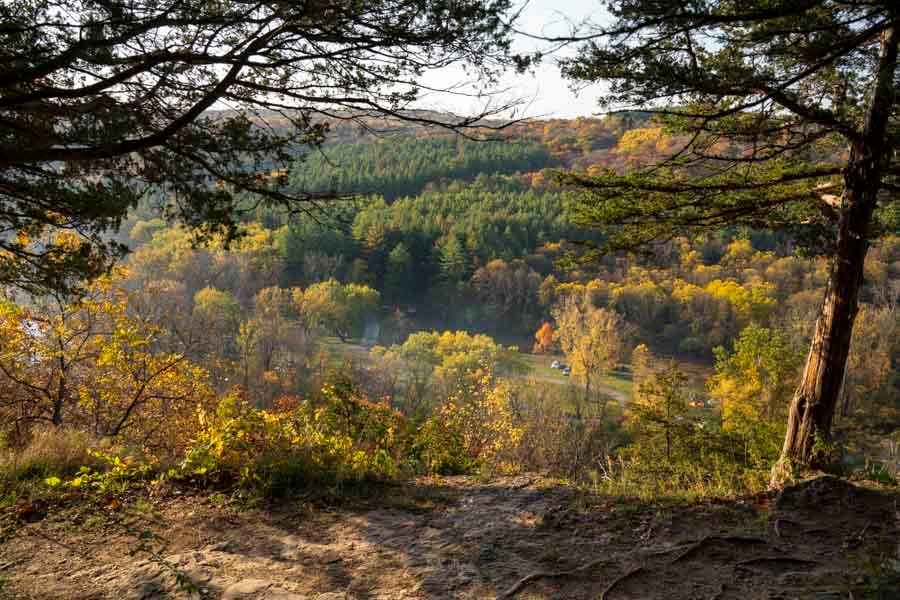
For the simplest first visit, stop at forest headquarters before driving to the overlooks. Staff can confirm which roads are open and recommend the best approach for your vehicle.
See Iowa’s only fire tower
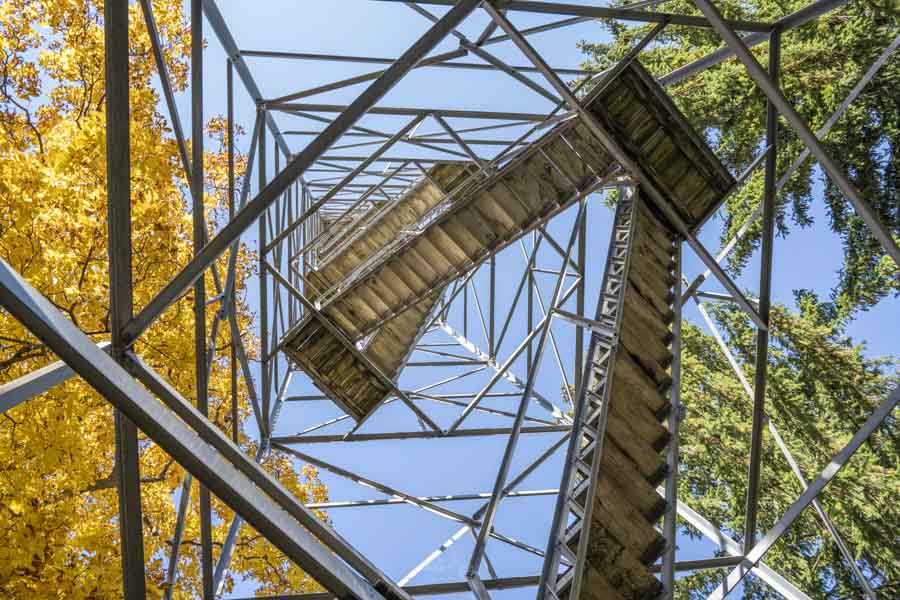
Yellow River State Forest is home to Iowa’s only remaining fire tower.
The 100-foot Aermotor LS40 tower was acquired from the U.S. Forest Service and reconstructed at Yellow River in the early 1960s. Iowa DNR material gives 1963 as its completion date, while historic records commonly cite 1962 for the reconstruction. The tower was added to the National Register of Historic Places in 2021.
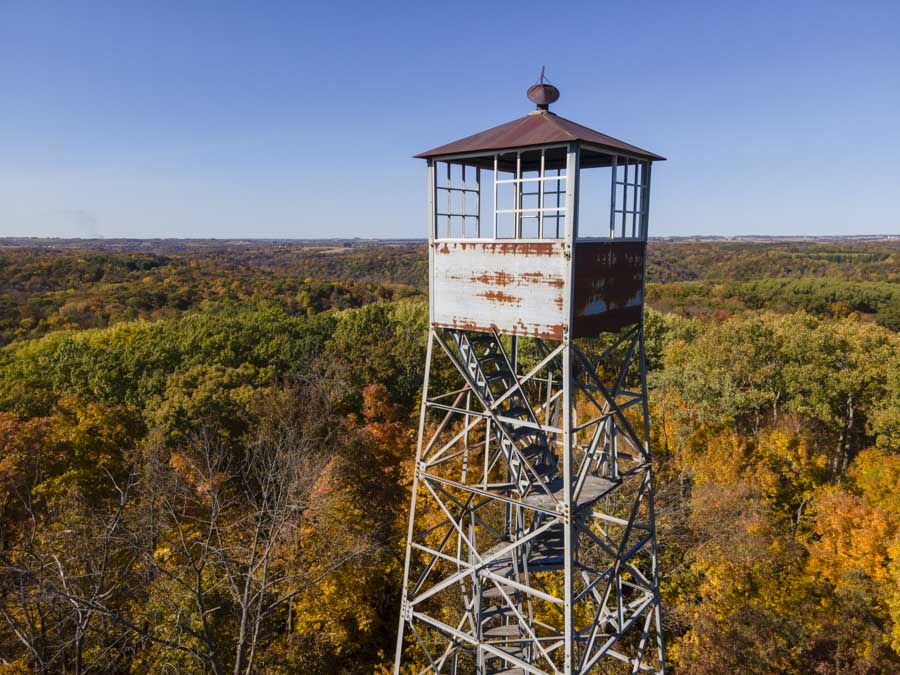
Visitors should know that the tower is fenced and closed to climbing. Deterioration and vandalism damaged the stairs and lookout cab, making public access unsafe. You can still view and photograph the structure from the ground, but don’t expect to climb to the top.
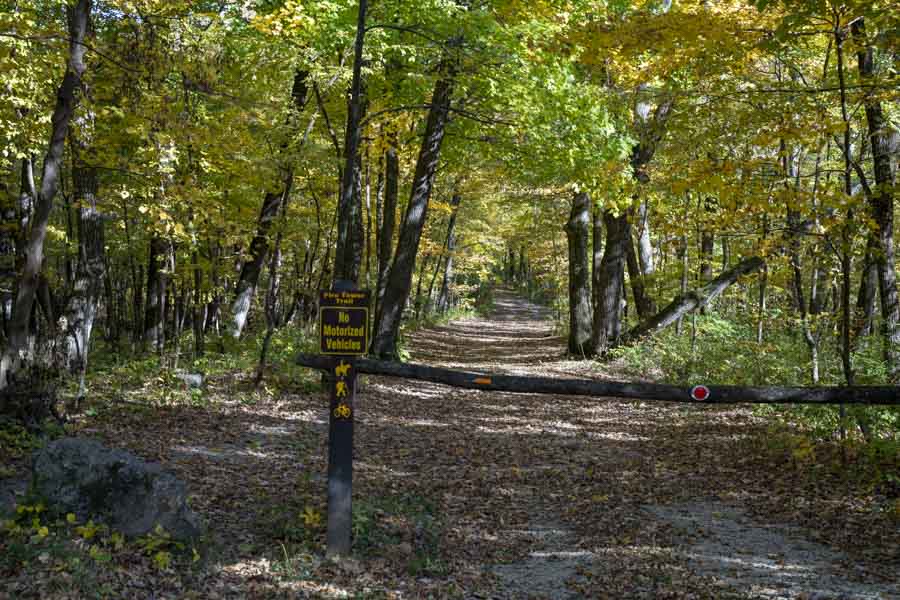
The fire tower is reached from Fire Tower Road near the sawmill complex. Use 737 State Forest Road, Harpers Ferry, for the sawmill and fire-tower access area, then follow posted signs and the official map. Fire Tower Road is part of the experience, with a narrow, wooded route through the Paint Creek Unit.
Hiking and backpacking at Yellow River
Yellow River has more than 50 miles of multi-use trails, including more than 40 marked and maintained miles in the Paint Creek Unit. The forest was once named one of Outside magazine’s Top 50 hiking destinations, but don’t confuse that recognition with an easy walk.
Trails may be well maintained while still being demanding. Elevation changes are steep and frequent, and a mile here can take longer than a mile on a flat rail trail. Heat, humidity, mud and stream crossings can add time.
Bluff Trail
Bluff Trail begins with a steep climb before easing onto higher ground. It’s a good choice for hikers who want a taste of the forest’s elevation without completing the full backpacking circuit.
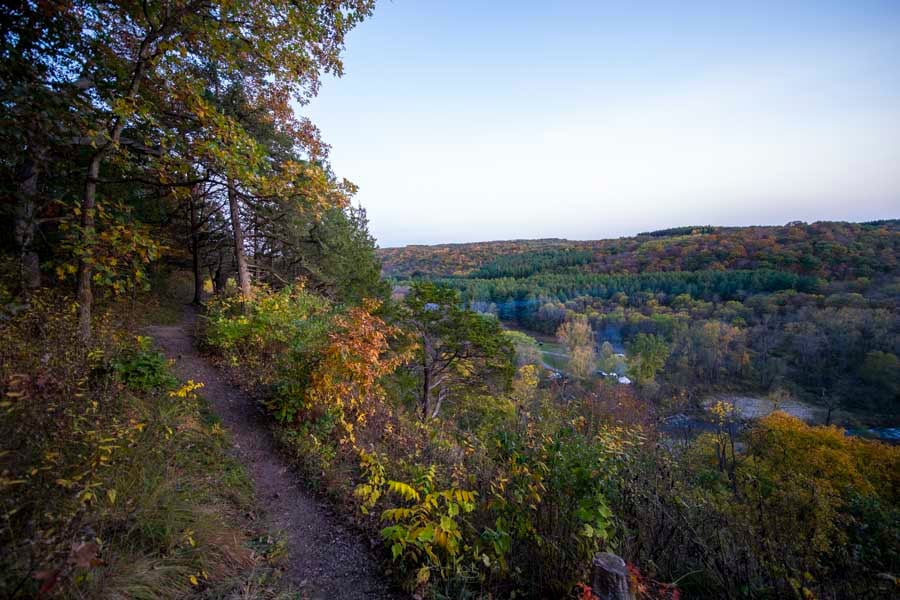
Larkin Valley Trail
Larkin Valley Trail travels through one of the forest’s scenic drainage areas and can be combined with nearby routes for a longer hike. Expect repeated climbs and descents rather than one steady grade.
White Pine Trail
White Pine Trail passes through forest that reflects Yellow River’s history of planting pine and other tree species on former farm and pasture land. It adds a different look from the oak and maple forests covering many of the ridges.
Paint Creek and equestrian trails
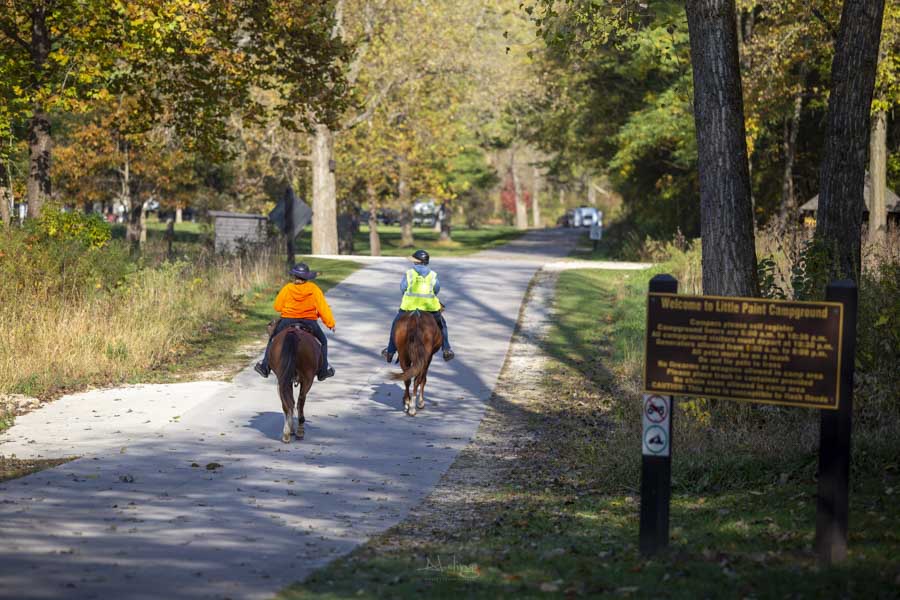
Many Paint Creek trails are shared by hikers, mountain bikers and horseback riders. Stay alert, yield appropriately and expect occasional horse manure on the trail.
The backpacking loop
A commonly used backpacking loop through the Paint Creek Unit is approximately 14 miles, although the total depends on the trail connections and campsites you choose. Use the official backpacking map to calculate your route rather than relying on a single mileage posted online.
Five backcountry camping areas are positioned along the backpacking trail, including Camp Glen Wendel and Heffern’s Hill. Each area has four individual campsites with fire rings. The sites are free and available on a first-come, first-served basis.
Backcountry campers must sign in at forest headquarters before camping. There are no restrooms at the backpacking areas, and campers must stay within designated sites. Water access varies, so carry enough water and use proper treatment for any water collected from streams.
Trail signs can become less frequent deeper in the forest. Bring the official paper map, note trail junctions as you pass them and allow extra time for backtracking. Don’t plan mileage as if you were walking level ground.
Trout fishing and paddling
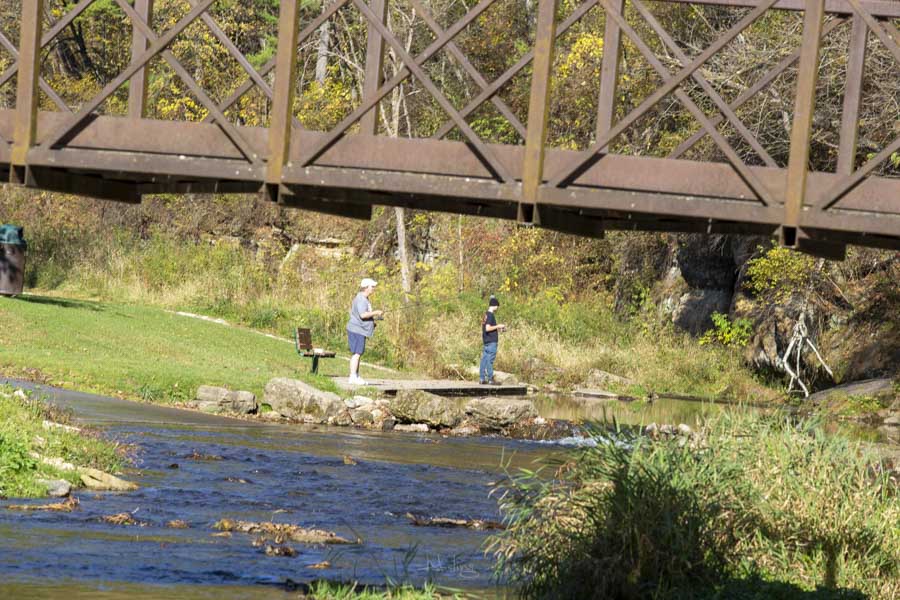
Paint Creek and Little Paint Creek provide about seven miles of trout water within the forest. The streams wind through narrow valleys below rocky outcrops and wooded slopes.
The Iowa DNR stocks rainbow and brook trout, while brown trout reproduce naturally in the streams. Little Paint Creek also has a paved area providing easier bank access for anglers.
Fishing requires a valid Iowa fishing license and the appropriate trout stamp. Check current Iowa DNR regulations and stocking information before your trip.
Paddlers can explore the 35-mile Yellow River Water Trail. About three miles of the route pass through the state forest. The primitive Ridgetop campsite is accessible only by canoe or kayak and is available at no charge on a first-come, first-served basis. It has no restroom facilities, and visitors must carry out all trash.
River levels and conditions can change quickly. Check conditions and understand the route before launching. This isn’t a float where you should depend on cell service to solve a problem.
Camping and cabins
Yellow River offers rustic accommodations that match its backcountry setting.
Rustic camping cabin
The Paint Creek Unit has a rustic cabin available from April 1 through October 31 with a two-night minimum stay. It includes electricity, electric heaters, a fireplace, refrigerator, microwave, coffee maker, toaster and basic indoor space, plus screened and open-air porches.
There is no running water or modern restroom inside the cabin. An outdoor hydrant and vault toilet are nearby. Reserve the cabin through the Iowa State Parks reservation system.
Developed campgrounds
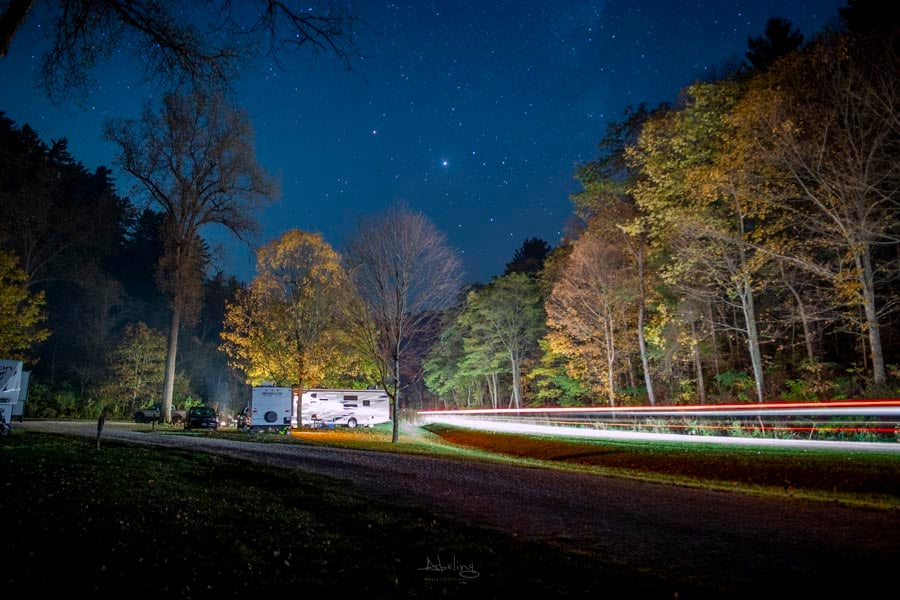
The Paint Creek Unit has four non-modern camping areas:
- Big Paint Campground: 720 State Forest Road
- Little Paint Campground: 794 State Forest Road
- Creekside Equestrian Campground: 784 State Forest Road
- Frontier Equestrian Campground: Reached through the Paint Creek Unit by following the official campground map
All campsites are non-electric and served by vault toilets. The campgrounds are 100 percent reservable, and a reservation is required before occupying a site.
Backpacking campsites
Yellow River’s five backpacking areas are free and first-come, first-served. Each has four sites, but no restrooms or trash service. Register at the headquarters parking area, camp only at designated sites and carry out everything you bring in.
Firewood and ice
Older visitor information sometimes says firewood isn’t sold in the forest. The Friends of Yellow River State Forest currently lists seasonal wood and ice sales at the information kiosk at 723 State Forest Road. Availability can change, so don’t depend on it without checking.
If you bring firewood, follow Iowa’s rules designed to prevent the spread of invasive pests. Any firewood brought into the forest must be used or left there rather than transported elsewhere.
Birds, wildlife and dark skies
Yellow River State Forest and neighboring Effigy Mounds National Monument form a Globally Significant Bird Area. Their large block of forest supports at least 100 breeding bird species, including cerulean warblers, bald eagles and red-shouldered hawks.
The forest’s distance from large cities also means darker skies than most Iowans see at home. The Friends of Yellow River State Forest works to protect those dark skies, making the area appealing for stargazing and night photography. Choose an open area where overnight access is allowed, use a red flashlight and avoid shining bright lights toward other campers.
Hunting is permitted throughout most of the forest for deer, turkey, squirrel, rabbit, waterfowl and upland game birds. Campgrounds are excluded from hunting. During open seasons, hikers should wear bright colors and remain aware of their surroundings.
Places to visit nearby
Effigy Mounds National Monument
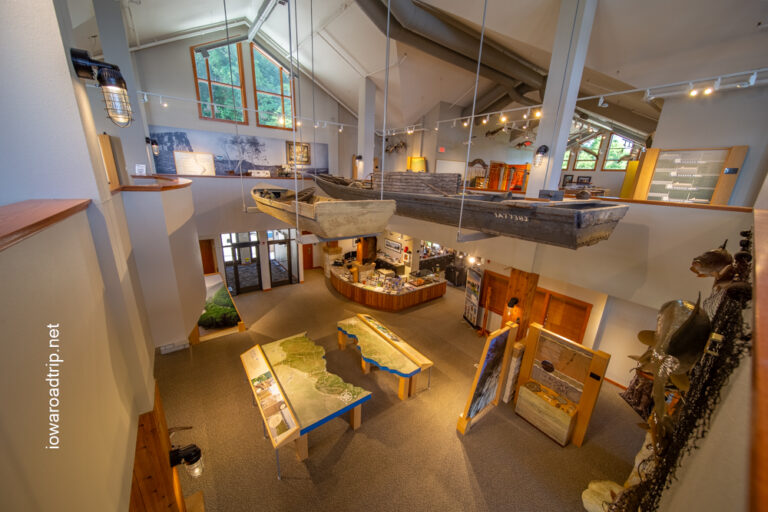
Effigy Mounds sits directly beside the forest and protects more than 200 Indigenous mounds, including animal-shaped effigy mounds. Hiking trails lead to Mississippi River overlooks and mound groups. Allow several hours if you want to visit the museum and complete one of the longer hikes.
Pikes Peak State Park
Pikes Peak State Park overlooks the confluence of the Wisconsin and Mississippi rivers near McGregor. Its main overlook is much more developed and accessible than Yellow River’s backcountry viewpoints, making the two destinations a good contrast.
Marquette and McGregor
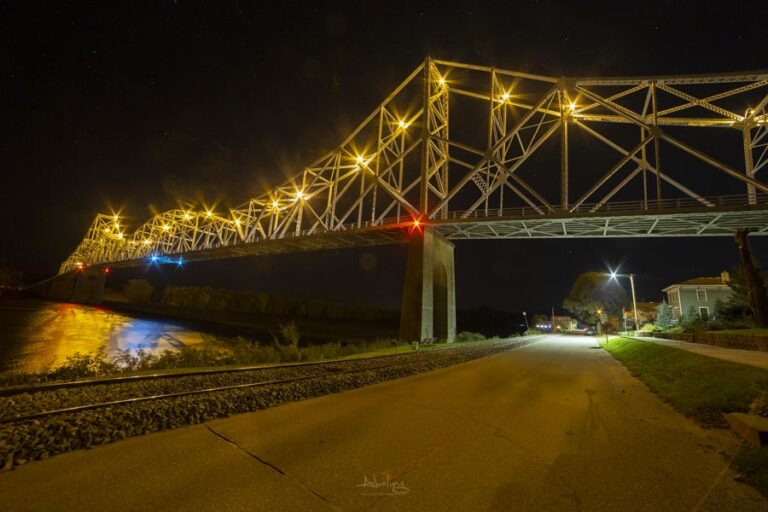
The neighboring river towns of Marquette and McGregor offer restaurants, shops, lodging and Mississippi River scenery. They make convenient bases if primitive camping isn’t your style.
Is Yellow River State Forest worth the trip?
Yellow River is one of the best places in Iowa to experience something close to backcountry travel. The forest asks more of visitors than a typical state park, but it rewards that effort with quiet trails, cold-water streams, bluff-top views and enough room to feel genuinely removed from everyday life.
For a first visit, begin at the Paint Creek Unit, choose one or two overlooks, see the fire tower and complete a manageable trail rather than trying to cover the entire forest. Once you understand the roads and layout, it becomes much easier to return for a longer hike or overnight trip.
Save this guide for your next northeast Iowa road trip, and share it with someone who would enjoy exploring Iowa’s wild side.
Have you ever hiked the full Yellow River backpacking loop? What advice would you give someone trying it for the first time?