Ledges State Park: Iowa’s Hidden Canyon Country
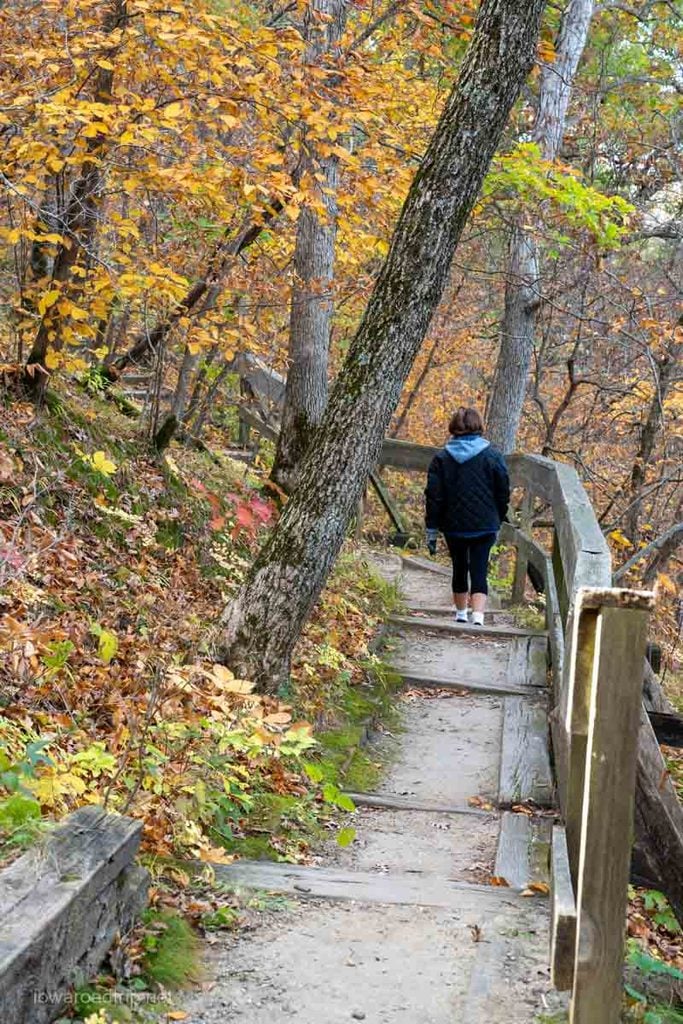
If you’ve ever wished Iowa had a little more drama in its landscape — something with actual walls of rock instead of rolling corn hills — Ledges State Park will surprise you. Tucked into the Des Moines River valley about 15 miles west of Ames and just 4 miles south of Boone, Ledges is one of Iowa’s oldest state parks, dedicated back in 1924. Sandstone bluffs rise up to 100 feet above Pea’s Creek here, carving out a canyon that feels like it wandered in from somewhere out west and decided to stay.
It’s an odd, wonderful outlier in the middle of the flat, glacially-smoothed Des Moines Lobe — Iowa’s answer to canyon country, hiding in plain sight just off the interstate.
Quick Facts
- Address: 1515 P Avenue, Madrid, Iowa
- Size: 1,117 acres
- Established: 1924
- Campground: Open March through November
Canyon Drive
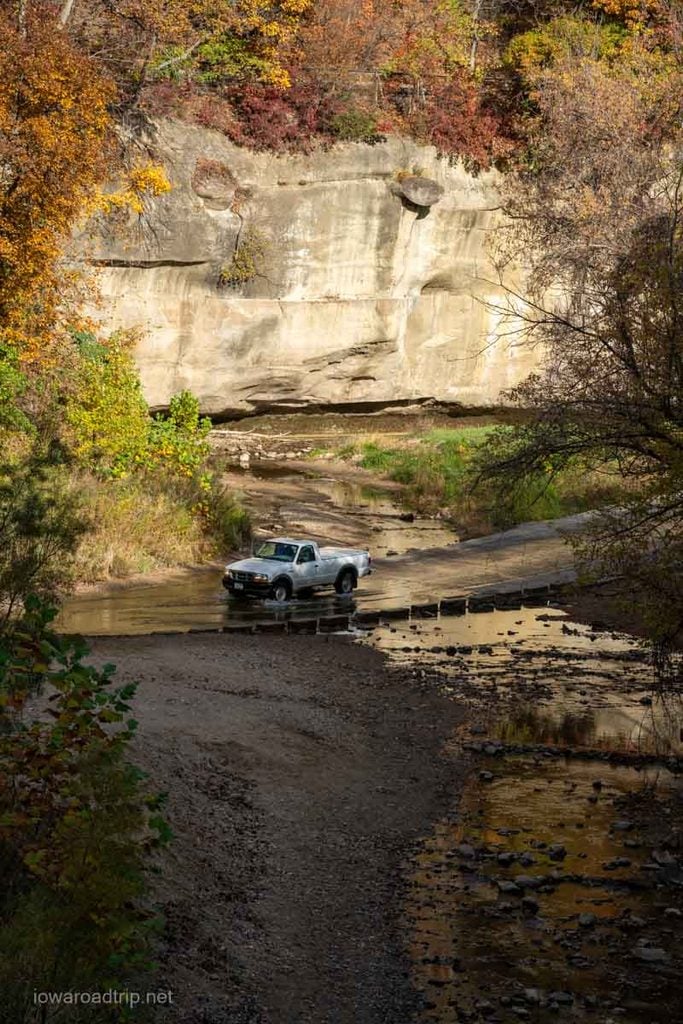
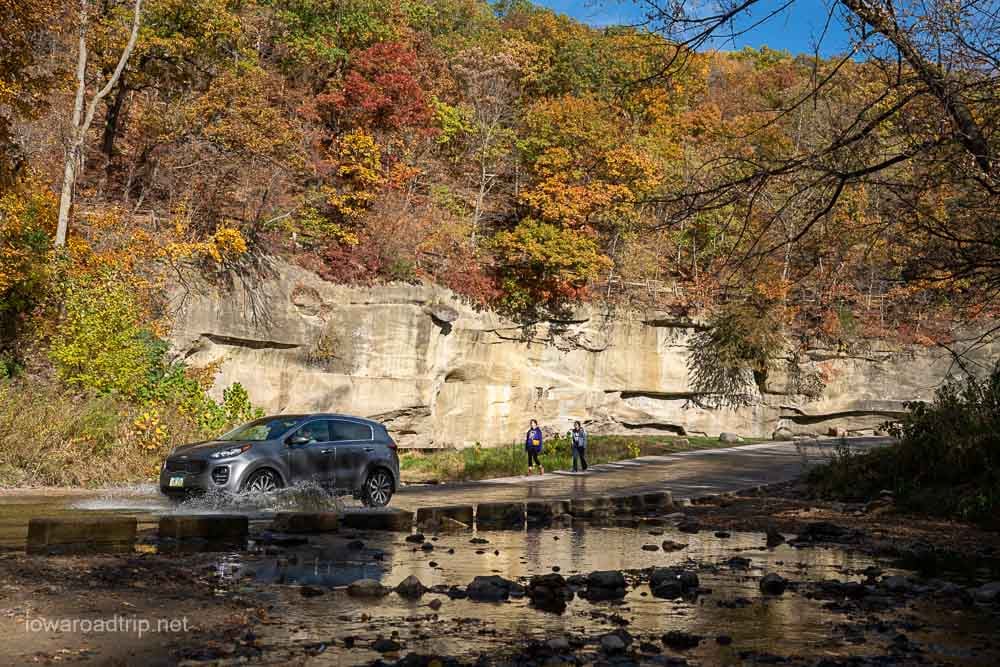
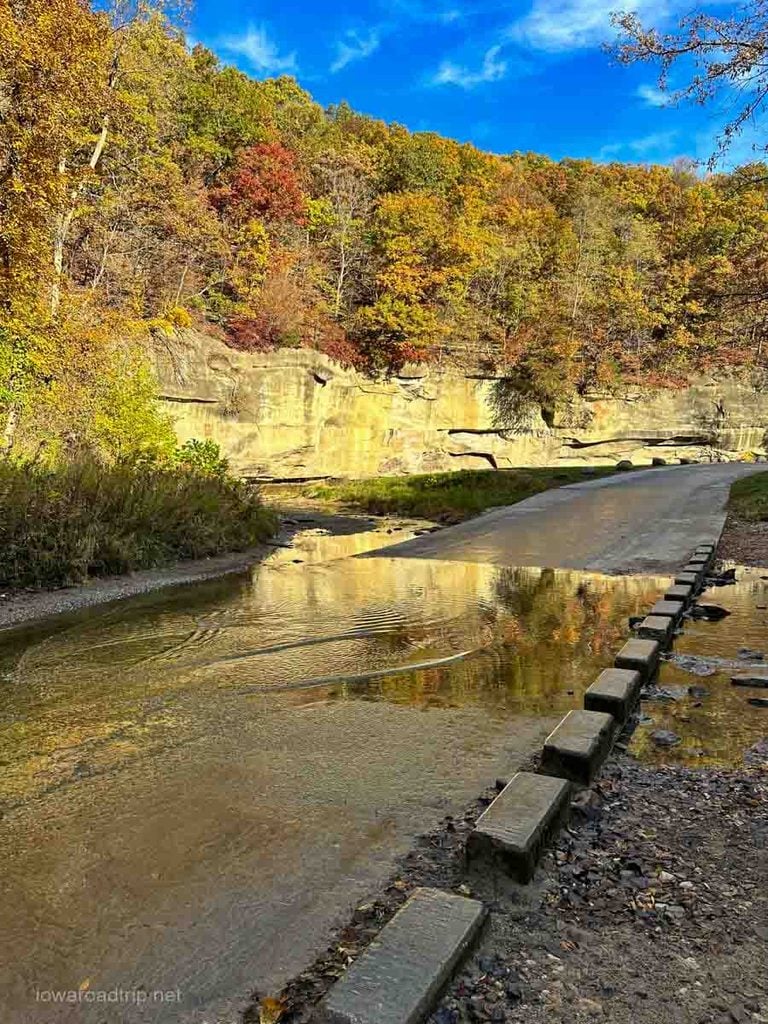
For most visitors, Ledges starts with Canyon Drive — a one-lane road that winds along Pea’s Creek and Davis Creek and crosses the water five separate times. There’s no bridge engineering trickery here; you just drive straight through the creek. Sandstone walls rise 50 feet on either side of the road, with bluffs towering another 100 feet above that. As you drive through the park, don’t be surprised to find kids playing in the water and encouraging you to drive fast across the creek crossings, as they are hoping you’ll spray them with water.
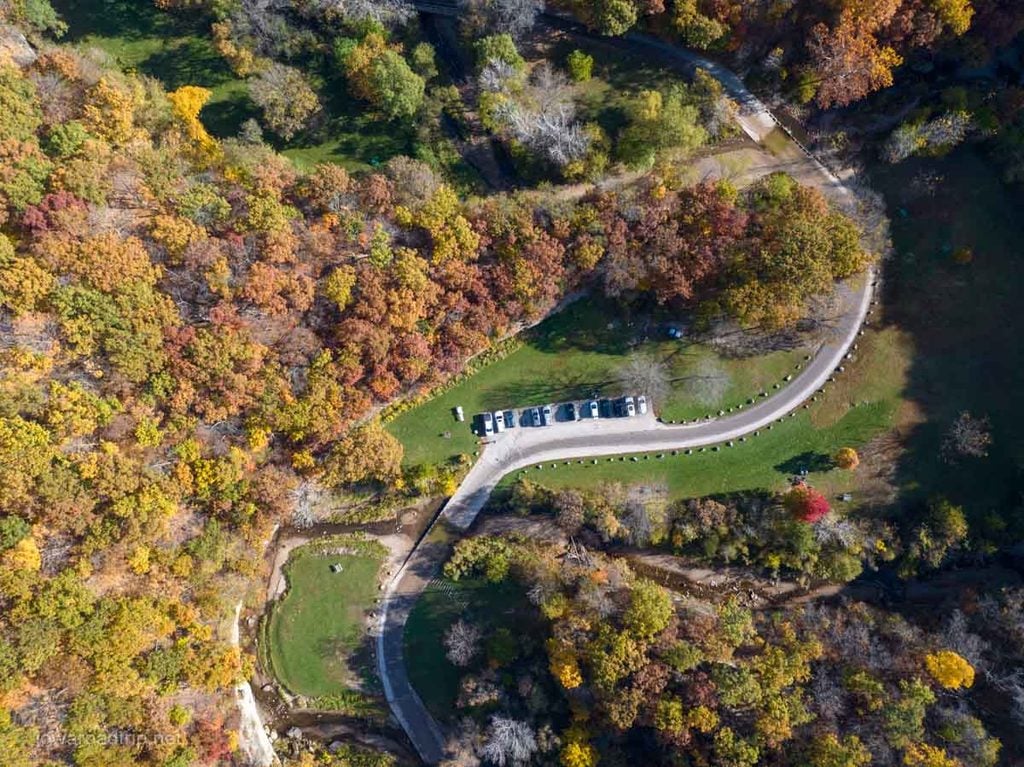
The drive starts at the top of the hill at the east entrance to the park and winds down the hill and heads west through the park. As you pass through the park, there are parking spots for stopping. However, if you don’t stop and drive completely through the park, remember, it’s one way and you’ll have to drive a different path through the park to get back to the top of the hill.
One thing to plan around: Canyon Drive closes to vehicle traffic in winter. The good news is it’s still very walkable (and arguably at its most peaceful) once the cars are gone.
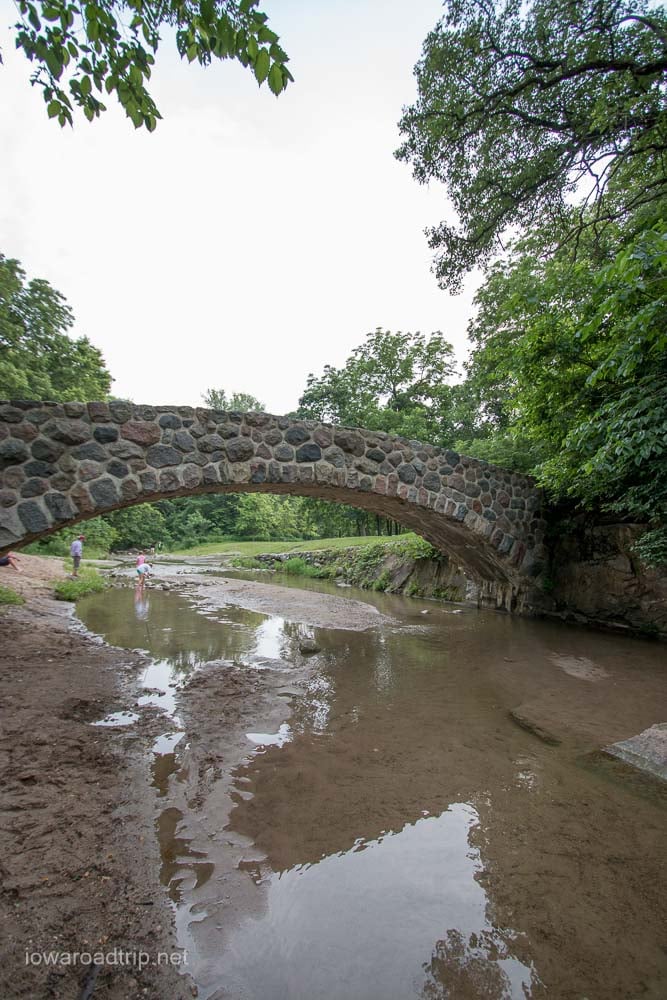
The Canyon Walk: Stone Bridge and Wading the Creek
The crossings are usually shallow, ankle-to-shin deep, which makes this stretch a favorite for families who want to park, roll up their pant legs, and wade a little before continuing on. Just know that levels can rise quickly after heavy rain, so it’s worth checking conditions before you go.
Partway through Canyon Drive, you’ll find one of the park’s best photo opportunities — a stone bridge built by the Civilian Conservation Corps in the 1930s. Cars route around it through the low-water creek crossing, but the bridge itself is open to foot traffic, and it’s a great spot to pause for pictures over the water.
That CCC influence runs throughout Ledges. Trails, shelters, and other structures across the park were built using native timber and fieldstone, giving the whole place a rustic, built-to-last character that’s held up for nearly a century.

This stretch of creek is also where a lot of the “we go to Ledges just for this” magic happens. Kids wade in ankle-deep water, wait for cars to splash through the crossing, and generally have a blast. Wear shoes you don’t mind getting wet, and again — check conditions if there’s been recent heavy rain.
The Must-See Overlooks
Ledges has several overlooks, but if you only have a few hours, these are the four to prioritize:
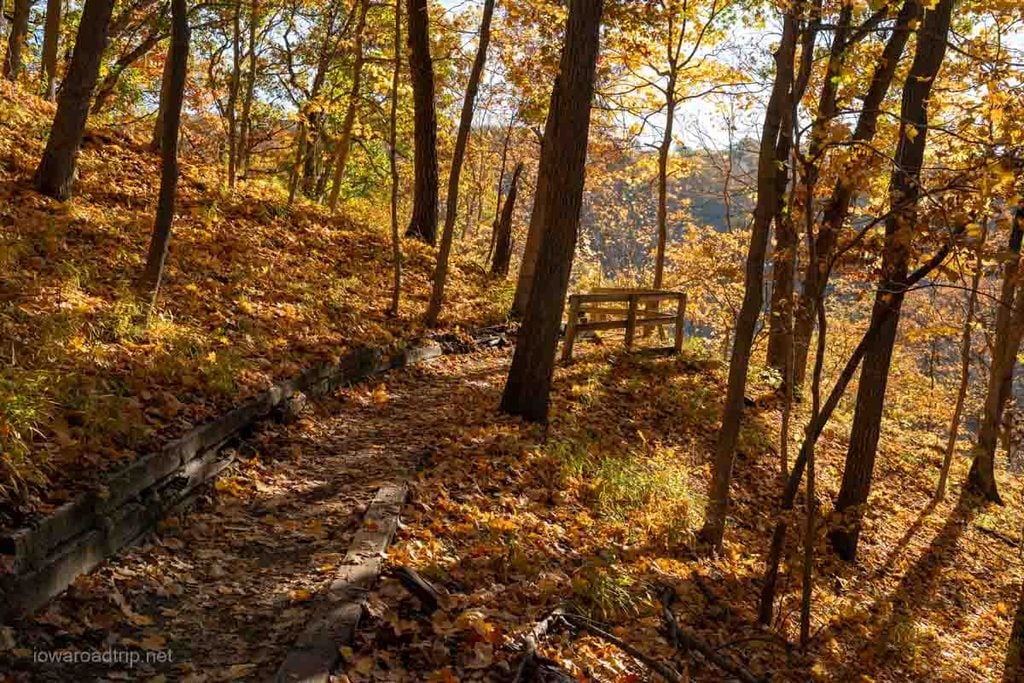
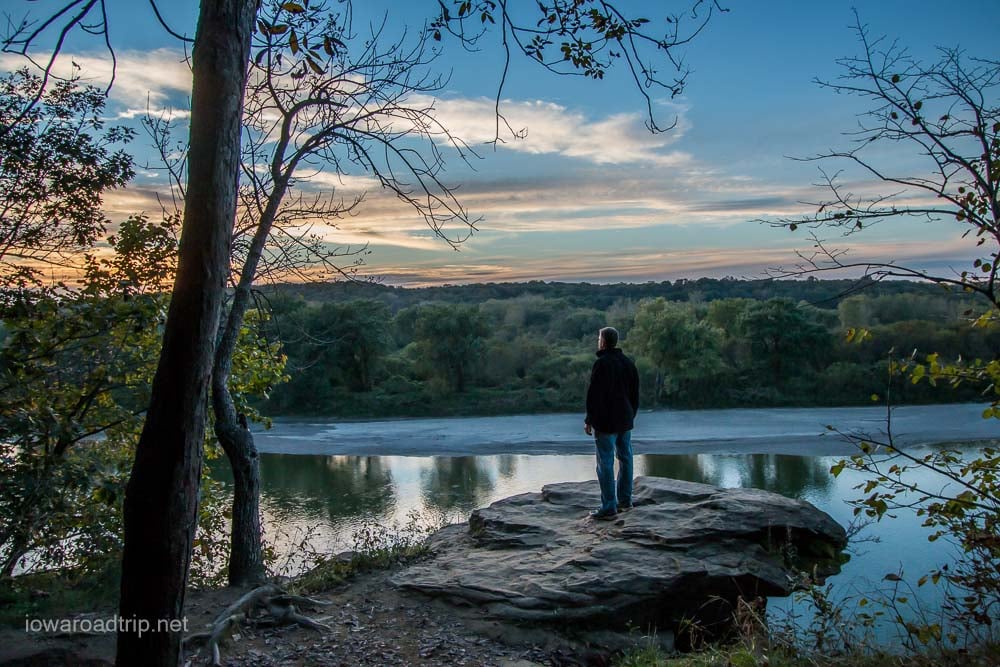
- Crow’s Nest — The park’s most iconic viewpoint. This wooded platform looks out over the Des Moines River valley, and hikers consistently say it’s at its best in leaf-off season (late fall through early spring), when the view opens up.
- Inspiration Point — A quieter, equally scenic overlook. It’s located at the top of hill along the Canyon Drive and you’ll pass it on your way down the hill and into the canyon.
- Lost Lake Trail Overlook — This overlook sits several hundred feet above the Des Moines River and is an easy, flat walk to reach. However, you’ll notice that this overlook has no railing or safety features. This is the most dangerous of the scenic overlooks.
- Table Rock — Another solid stop if you’re working your way through the park’s trail system.
Top Trails for a First Visit
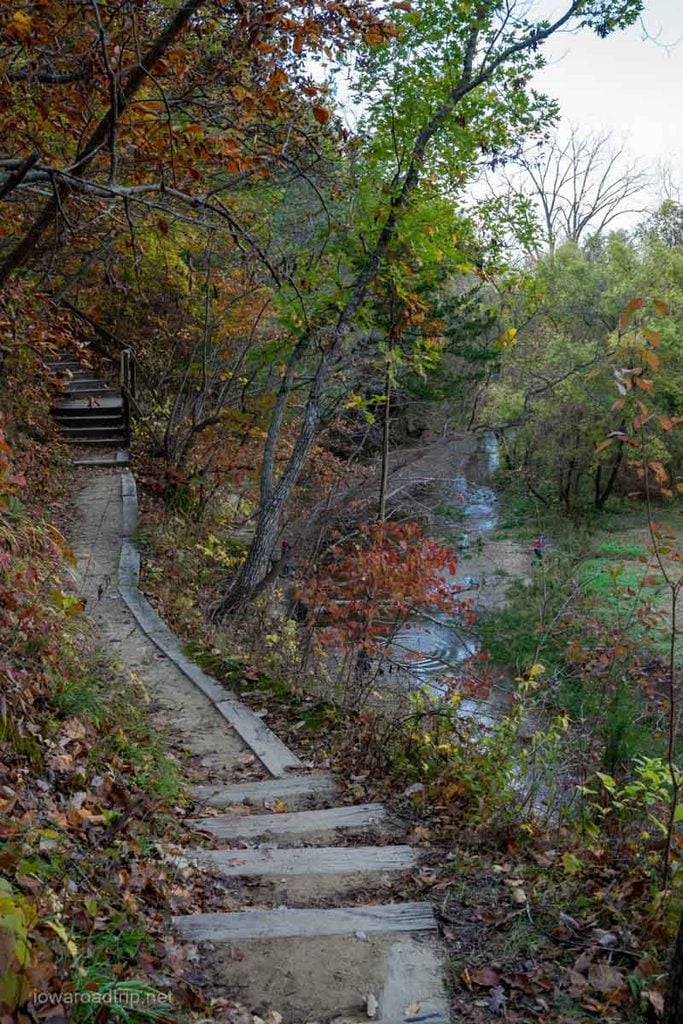
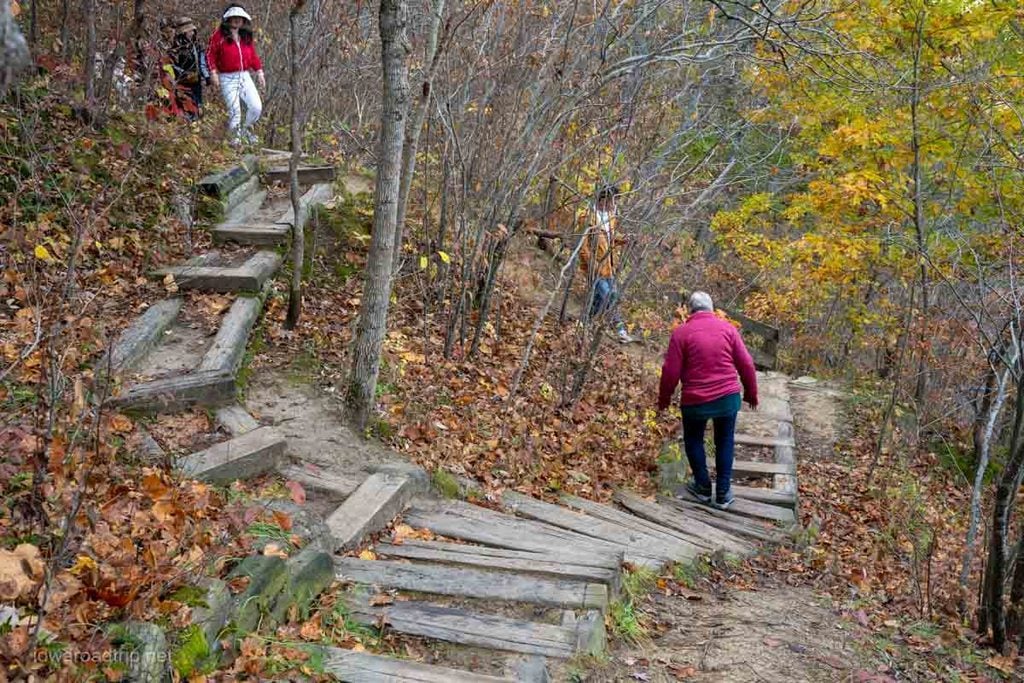
Ledges packs about four miles of trail into its canyon terrain, and most of it runs steep. If you’re coming for a casual visit rather than a full workout, these are the easier, high-payoff options:
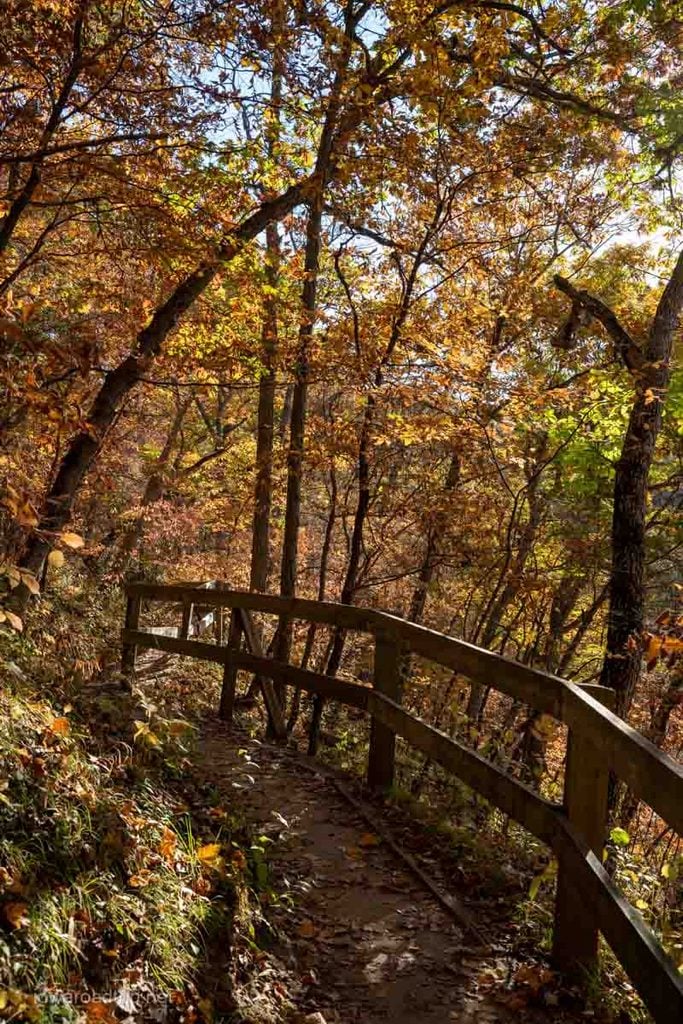
- Crow’s Nest Loop (~1.4 miles, easy) — The most popular route in the park, and it delivers you straight to the namesake viewpoint.
- Hog’s Back Trail (~1.0 mile, easy) — A ridgeline walk with nice views along the way.
- Lost Lake Trail (fully accessible) — Flat, crushed-rock surface that makes it a great option for families with strollers or visitors with mobility limitations, without sacrificing one of the park’s best views.
- Oak Woods Trail — A short interpretive trail that’s great with kids — bring a magnifying glass and look for lichen along the way.
Beyond these, expect the terrain to get considerably steeper, so plan accordingly if you’re bringing young kids or anyone who prefers flatter ground.
Practical Tips for First-Timers
- Dogs: Allowed throughout the park, but must be leashed (6 feet max).
- Flooding: Lower areas of the park flood periodically due to its proximity to Saylorville Lake — check the park’s current alerts before you head out, especially after heavy rain
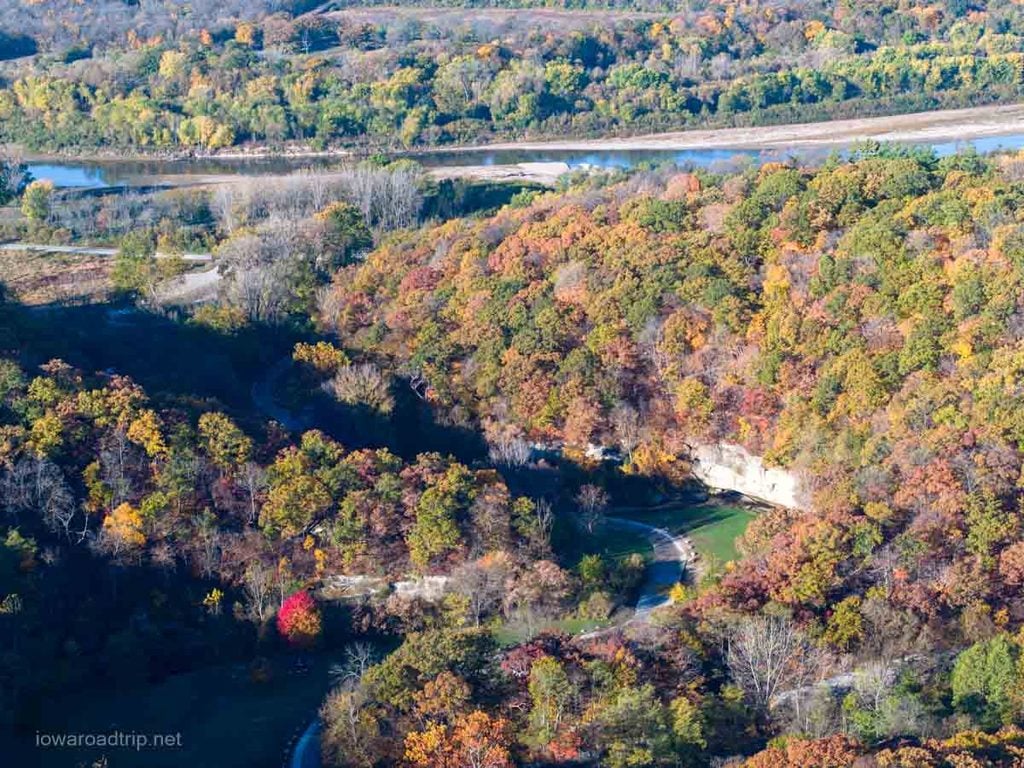
- Best time to visit: Fall foliage draws the biggest crowds and the best color, but don’t sleep on winter — Crow’s Nest and the other overlooks open up dramatically once the leaves are down.
The Geology: Why It Looks Like Nowhere Else in Iowa
The short answer for why Ledges looks so different from the rest of the state: it’s built on sandstone that’s roughly 310 million years old, part of the Cherokee Group, originally laid down in an ancient river delta.
The “ledges” themselves — those distinct stepped layers you see in the bluffs — come down to differential erosion. The harder sandstone near the top is cemented with calcium carbonate and resists wearing away, while the softer, iron-oxide-stained layers below erode more easily. Over time, that difference carves out the shelf-like ledges the park is named for.
The canyon itself is a relatively recent addition, geologically speaking. It was carved by meltwater from the Des Moines Lobe glacier between 14,000 and 11,000 years ago — a massive amount of water moving through a landscape that today is home to a comparatively modest creek. That mismatch between the size of the canyon and the size of the water now running through it is part of what makes Ledges feel so dramatic. (This is a great spot in the post for a photo of the exposed, layered bluff face — the color banding really tells the geologic story.)
Have You Been to Ledges?
Ledges State Park is one of those places that rewards even a short visit — a couple of overlooks, a walk through the creek, and you’ve seen something genuinely different from anywhere else in Iowa. If this is on your list, save this post for later or share it with someone who needs a good day-trip idea.