
National Balloon Classic in Indianola, Iowa: The Complete Guide
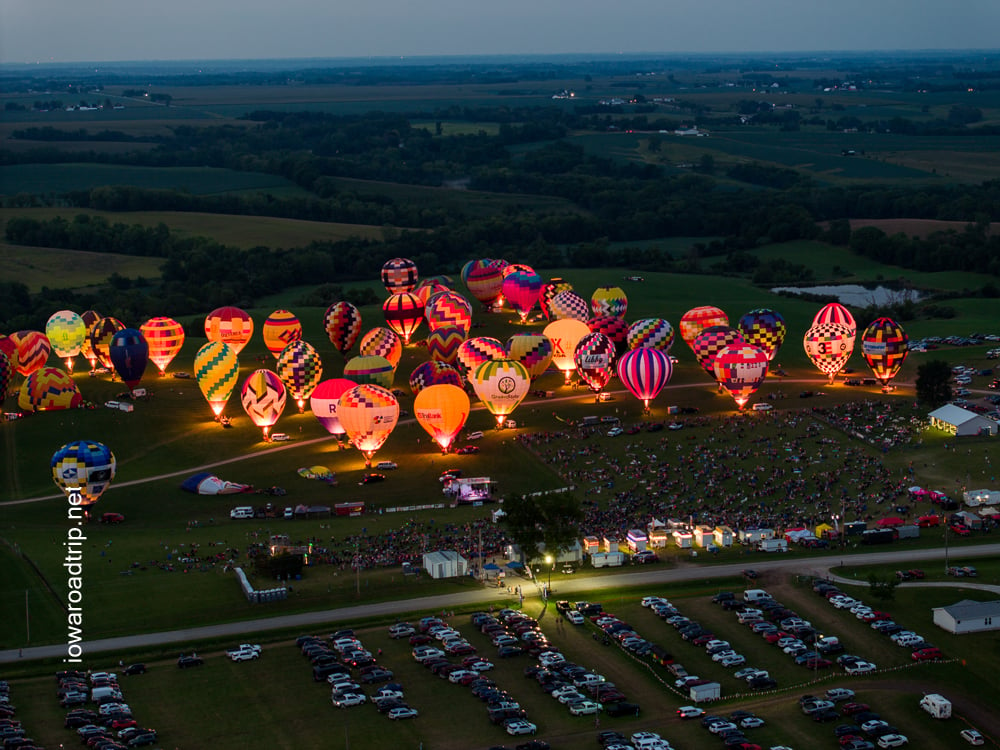
Every summer, the sky above Indianola turns into one of the most colorful scenes in Iowa.
The National Balloon Classic brings more than 100 hot air balloons to central Iowa for nine days of morning flights, evening launches, competition flying, NITE GLOW® events, drone shows, live entertainment, food, and family-friendly summer fun.
But if you’ve never been before, the schedule can be a little confusing.
What’s the difference between a morning competition flight and an evening balloon flight? What is a Mass Ascension? Is a NITE GLOW® the same thing as a balloon launch? And what happens if the balloons don’t fly?
This guide is designed to help you understand the full event before you go, so you can choose the experience that fits your trip best.
National Balloon Classic quick details
Event: National Balloon Classic
Dates: July 31–August 8, 2026
Location: Memorial Balloon Field
Address: 1136 150th Avenue, Indianola, Iowa 50125
Website: https://nationalballoonclassic.com/
Event type: Hot air balloon festival and competition
Best for: Families, photographers, road trippers, couples, aviation fans, and anyone looking for a classic Iowa summer event
Important note: Hot air balloon activities are weather dependent. Flights, glows, and launch times can change depending on wind, rain, visibility, and other safety factors.
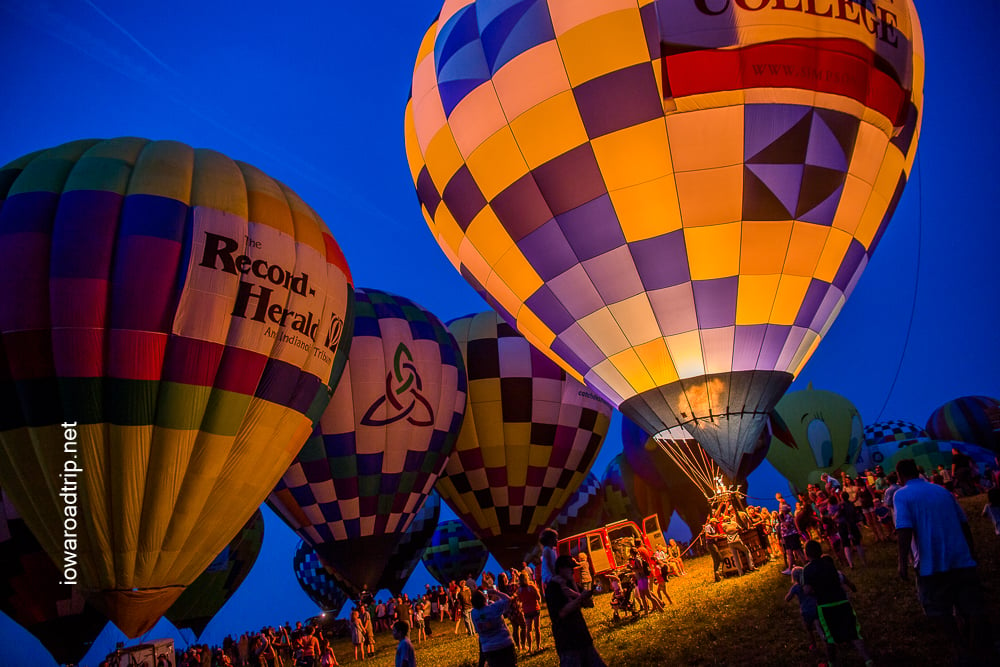
What is the National Balloon Classic?
The National Balloon Classic is one of Iowa’s signature summer events.
Held in Indianola, the event combines the sport of competitive hot air ballooning with a full public festival. Pilots come from across the country and beyond to compete, while visitors gather at Memorial Balloon Field to watch the sky fill with color.
The important thing to know is this: the National Balloon Classic is not just one type of event. It’s several different balloon experiences wrapped into one festival.
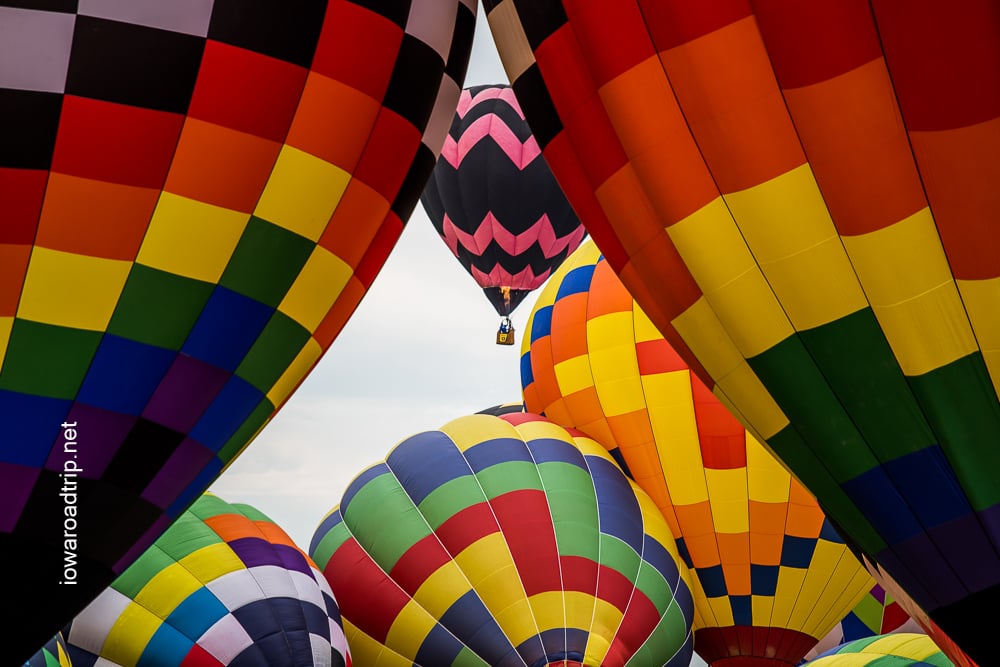
Understanding the different types of events
If you’re trying to decide which day or time to attend, it helps to understand the difference between the main types of events.
Not every balloon event is the same. A morning competition flight is different from an evening balloon flight. A Mass Ascension is different from a NITE GLOW®. And drone shows are a separate after-dark experience altogether.
Here’s how each one works.
Morning competition flights
Morning competition flights are often the best way to see the true competitive side of the National Balloon Classic. And admission to the balloon field is completely FREE during morning sessions, no parking fee – no admission fee.
I’ve been attending the morning sessions for about eight years, and I’ve even followed balloon pilots and crews through their early morning routine. Once you understand how the morning flights work, it makes the event even more interesting to watch.
Each morning, pilots meet at Memorial Balloon Field around 6 AM for a weather briefing. This is where they review wind speed, wind direction, visibility, and overall flight conditions.
One of the key factors is wind. If the weather looks good, especially with winds generally under about 10 miles per hour, the flight may be approved. When that happens, the decision is usually posted on the National Balloon Classic Facebook page as early as 6:15 AM.
If conditions are questionable, the decision may be delayed. Some mornings, the official “go” or “no-go” announcement may not come until closer to 6:30 AM.
If the morning flight is approved, pilots are given a list of competition targets. These are physical targets placed at multiple locations. The goal is to fly near the target and drop a small bean bag-style marker as close to the target as possible.
One of the targets is located at Memorial Balloon Field, but the other targets may be several miles away. Those other locations are not usually shared publicly, which helps avoid crowds of people driving rural roads trying to chase balloons.
That’s why, for most visitors, the best place to watch is still Memorial Balloon Field.
Here’s what makes the competition so interesting: all pilots receive the same weather information and the same list of target locations, but each pilot and crew gets to make their own strategy.
They have to decide where to launch from in order to get the best possible angle toward the targets. They also have to decide when to launch. Do they go early and try to reach the target first? Or do they wait a little longer, watch how the winds affect the other balloons, and then launch with a better idea of what the air is doing?
That strategy is part of what makes morning competition flights so fascinating.
For spectators, this also means you don’t necessarily need to be at the balloon field right at 6 AM when the pilots are having their briefing. A good approach is to watch the National Balloon Classic Facebook page for the morning flight announcement, then head toward Memorial Balloon Field if the flight is approved.
In many cases, it can take 30 to 45 minutes after launch before balloons begin arriving near the balloon field target. That gives visitors a little time to get in position after the official announcement.
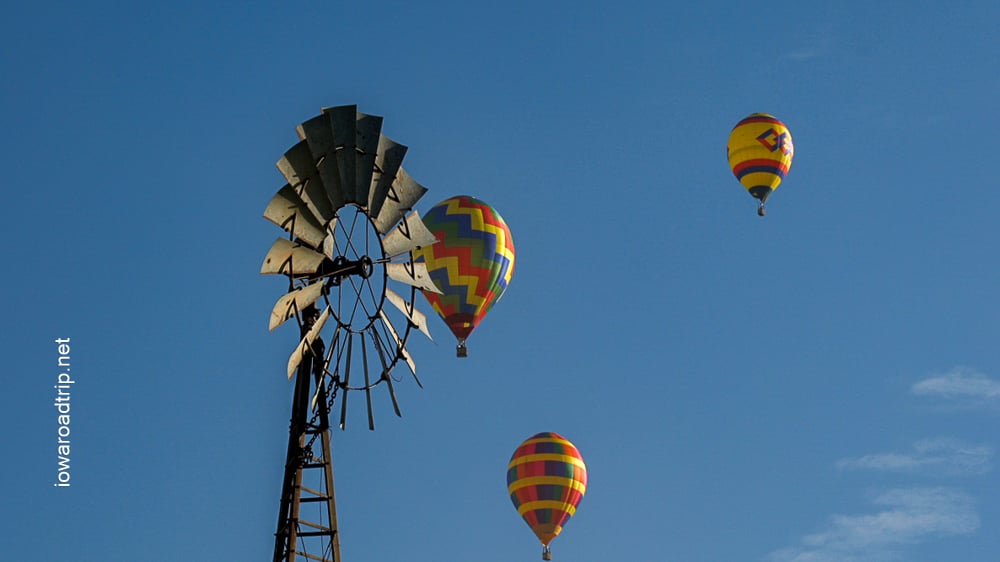
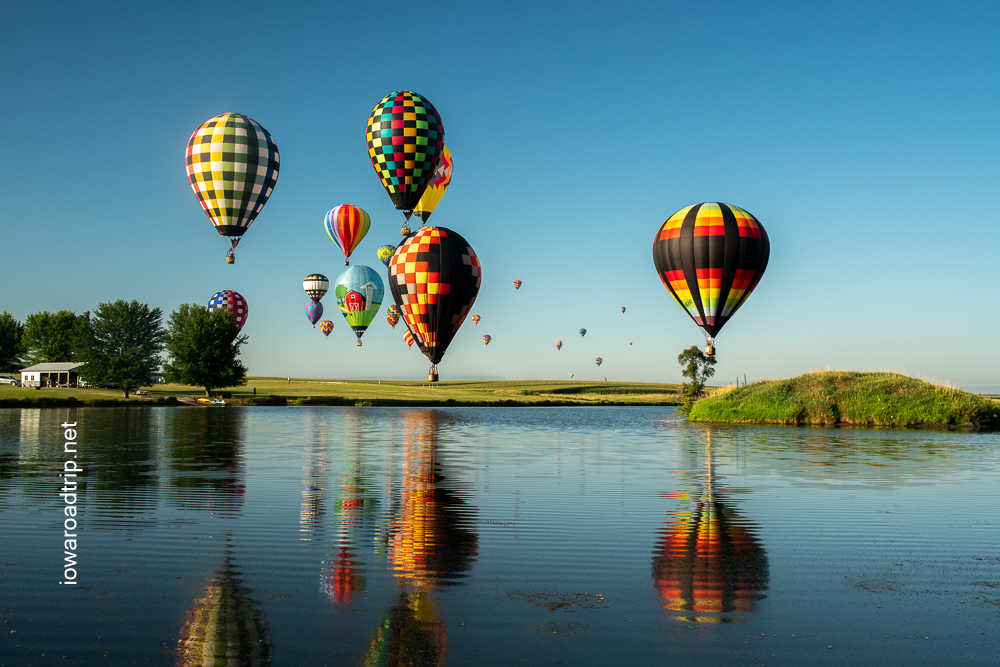
Morning flights can be quieter and less crowded than the evening sessions, and they’re often beautiful for photography. The light is softer, the air is cooler, and the balloons may drift over fields, roads, trees, and rural landscapes.
The tradeoff is that everything depends on weather, and you need to be flexible. Some mornings are perfect. Some mornings are delayed. Some mornings don’t fly at all.
But when the conditions line up, the morning competition flights are one of the most unique parts of the National Balloon Classic.
If you want more detail on this experience, I have a separate guide here:
https://iowaroadtrip.net/see-over-100-hot-air-balloons-for-free/
Evening balloon flights
Evening balloon flights are the version of the National Balloon Classic that most first-time visitors picture.
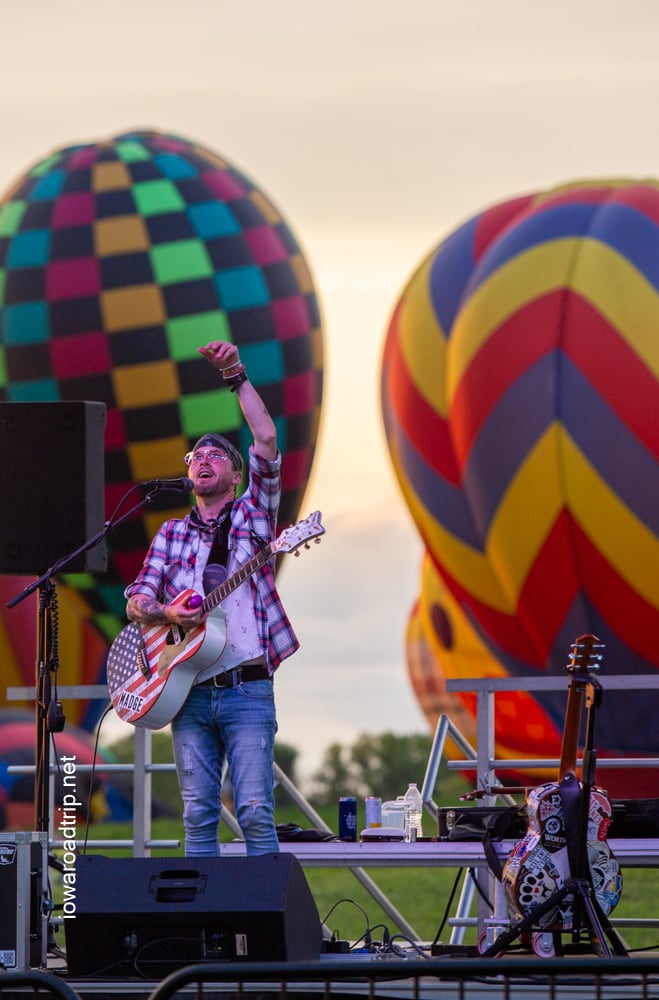
You enter the event grounds, find a place to sit, grab something to eat, listen to live music, watch families spread out across the hillside, and wait for the balloon activity to begin.
This is the full festival experience.
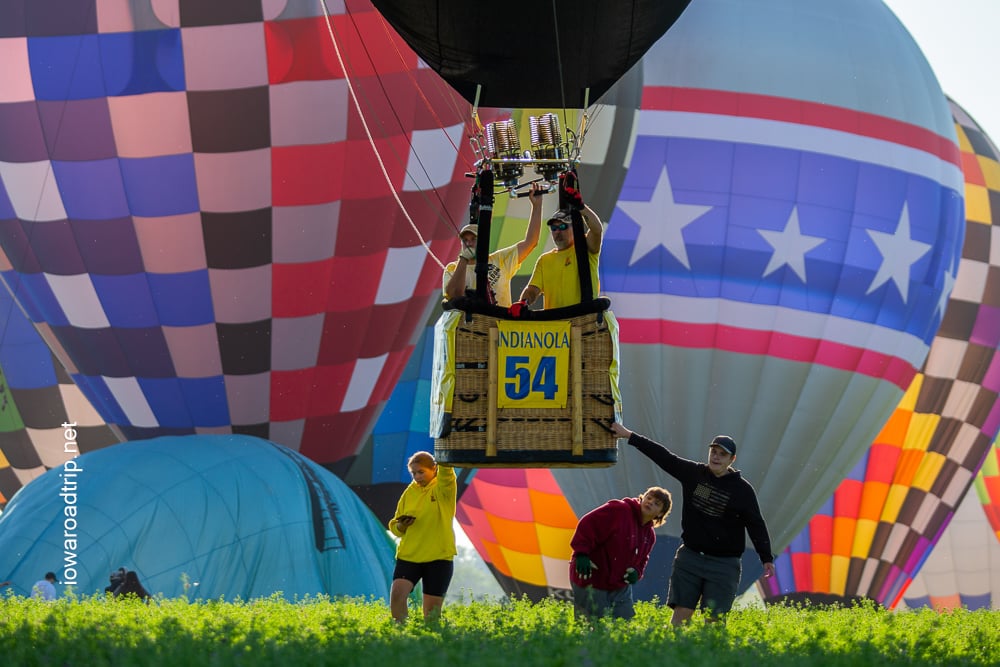
Unlike the morning competition flights, where pilots may launch from scattered locations depending on the day’s targets and wind direction, evening flights are centered around the event grounds at Memorial Balloon Field. Visitors can watch balloon crews unpack, stretch out the balloon envelopes, fire the burners, and slowly bring the balloons to life.
When conditions are right, balloons begin lifting off from the field and floating into the evening sky.
For families, evening sessions are usually the easiest way to experience the National Balloon Classic. You don’t have to wake up before sunrise, and there’s more going on around you: food vendors, live entertainment, restrooms, seating areas, and the general excitement of the crowd.
It’s also a good choice if you want the classic balloon festival atmosphere. The field fills with color, the burners roar, the crowd reacts as balloons lift off, and the whole place starts to feel like one giant Iowa summer celebration.
The thing to remember is that evening flights are still weather dependent. A beautiful evening on the ground does not always mean it is safe to fly. Wind speed, wind direction, storms, visibility, and field conditions all matter.
Some evenings, balloons may launch. Some evenings, they may inflate but stay on the field. Other times, the balloon activity may be delayed or canceled. They may also send the pilots outside of the balloon field and fly back in – it’s all weather dependent.
That’s why it’s best to think of the evening session as the full festival experience, not just a guaranteed balloon launch.
Come early, enjoy the music and food, watch the crews work, and stay flexible.
Mass Ascension
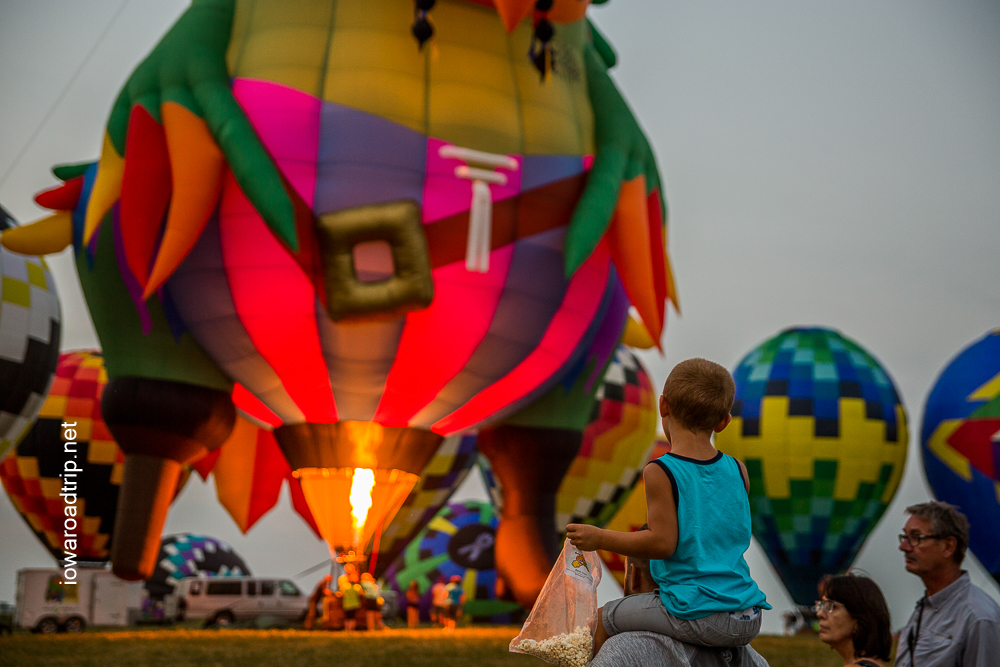
A Mass Ascension is one of the biggest “wow” moments of the National Balloon Classic.
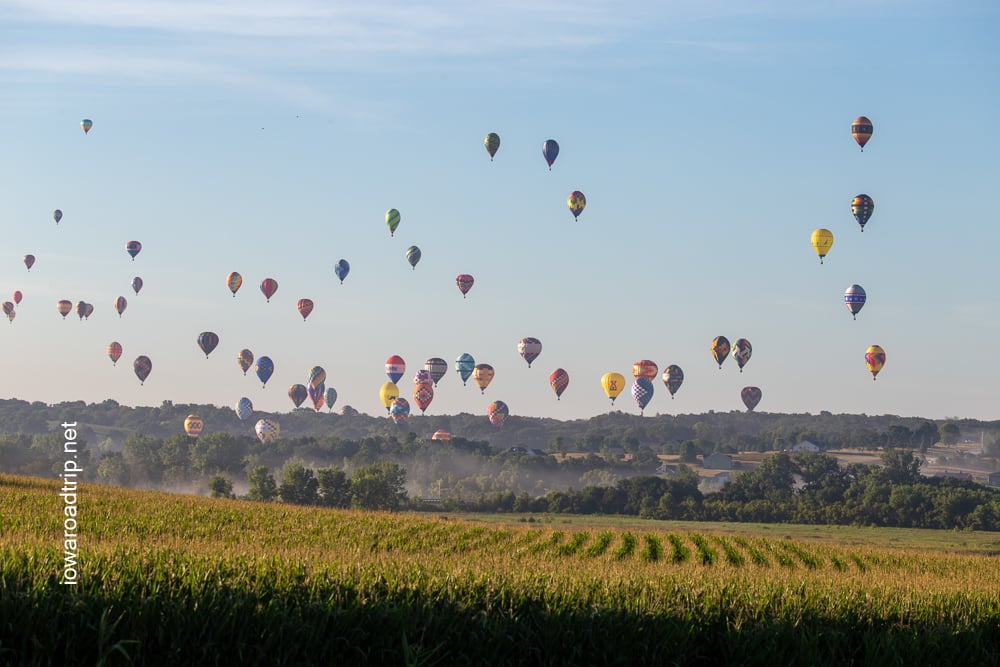
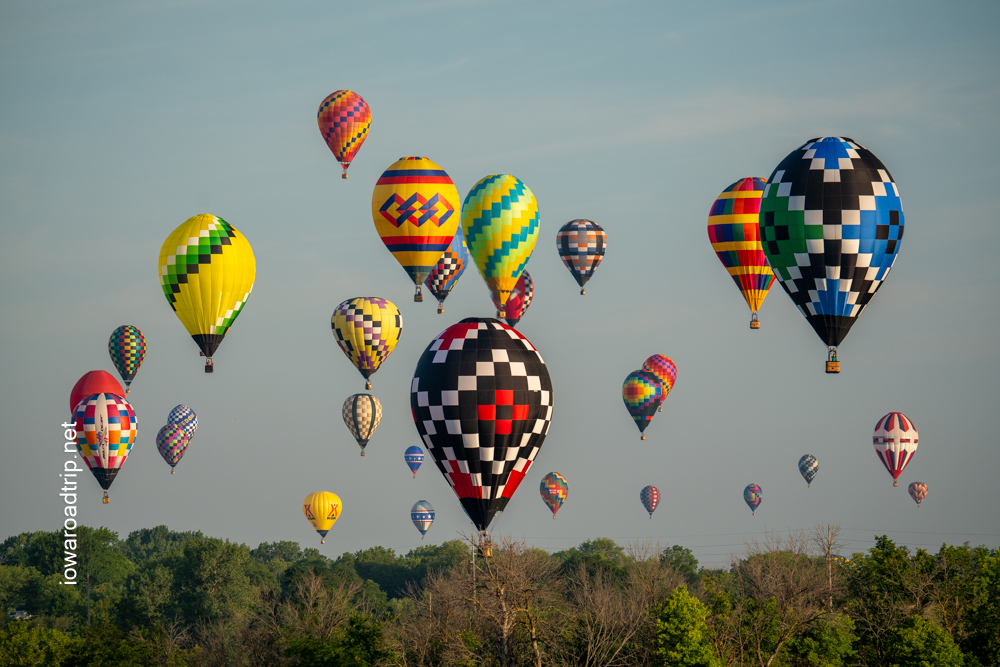
This is when roughly 100 hot air balloons take off at approximately the same time. It’s the scene many people picture when they think of a major balloon festival: balloon after balloon rising from the field until the sky above Indianola is filled with color.
Because it happens relatively quickly, this is one event where you really want to arrive on time — or even better, arrive early.
Once the event gives the go-ahead, pilots and crews head to the field and begin inflating their balloons. At first, you may only see one balloon take off. That first launch gives the other pilots a chance to observe the wind patterns and see how the balloon moves once it’s in the air.
Then, once organizers give the signal, the rest of the balloons begin launching.
Typically, it takes about 15 to 20 minutes for all of the balloons to lift off, so this is not something you want to show up late for. If you arrive after the launch has already started, you may miss a big part of the experience.
Depending on the wind direction, the balloons may lift off and drift right over the crowd, or they may move away from the event grounds. That unpredictability is part of what makes it exciting. Every Mass Ascension looks a little different.
Like all balloon events, Mass Ascension is weather dependent. Wind speed, wind direction, storms, visibility, and field conditions all play a role in whether the balloons can safely launch.
After the balloons leave the field, they continue their flight and eventually land in other locations. Meanwhile, the festival continues back at Memorial Balloon Field, often with live music, food, and sometimes special evening entertainment such as a drone show. Check the official National Balloon Classic schedule to see what else is planned for that night.
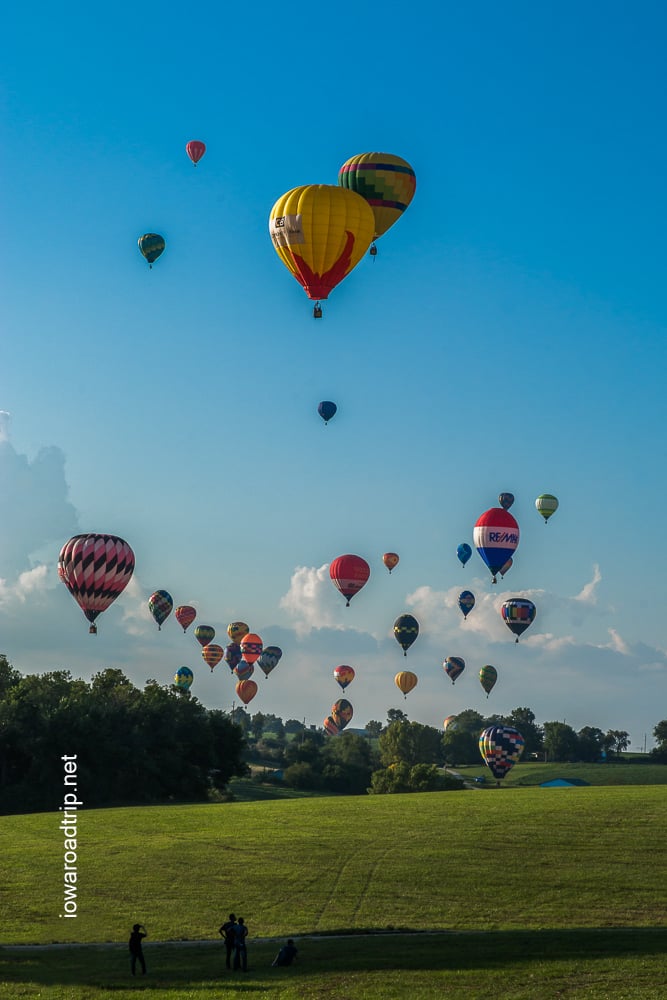
NITE GLOW®
A NITE GLOW® is different from a balloon launch.
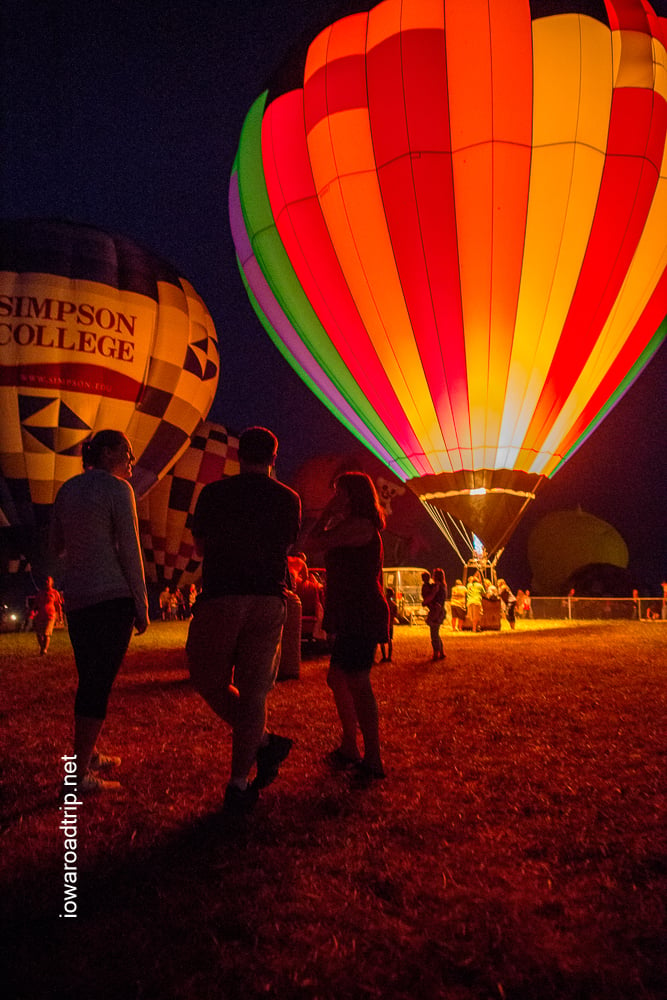
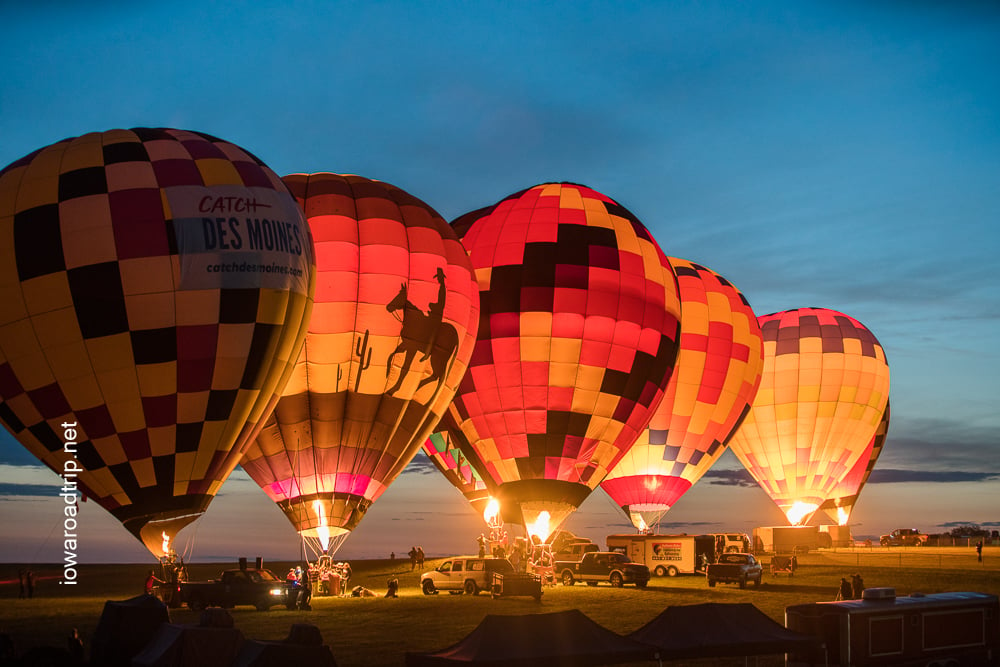
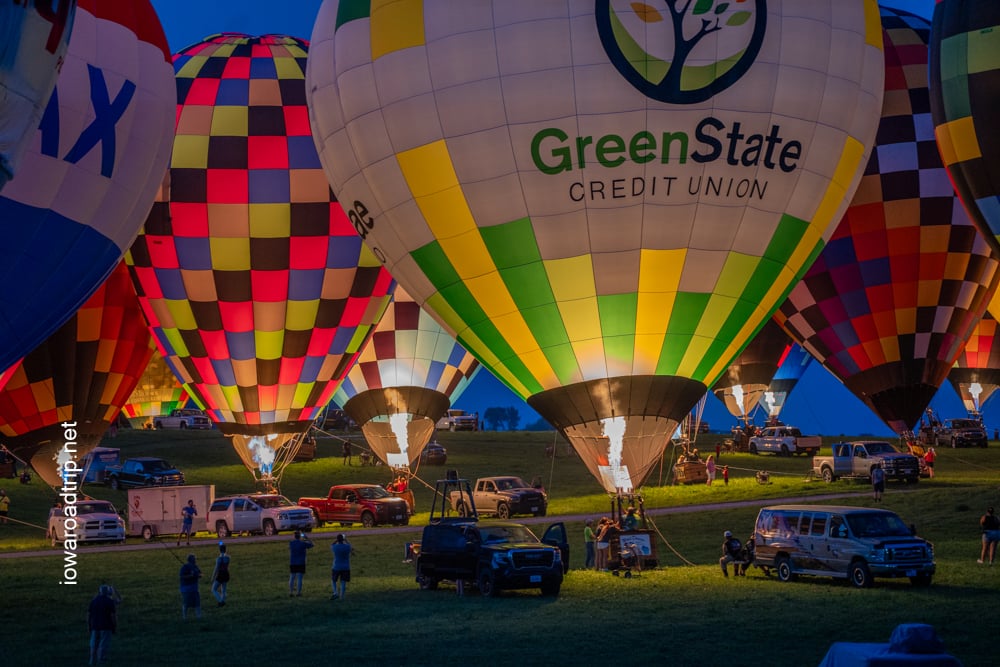
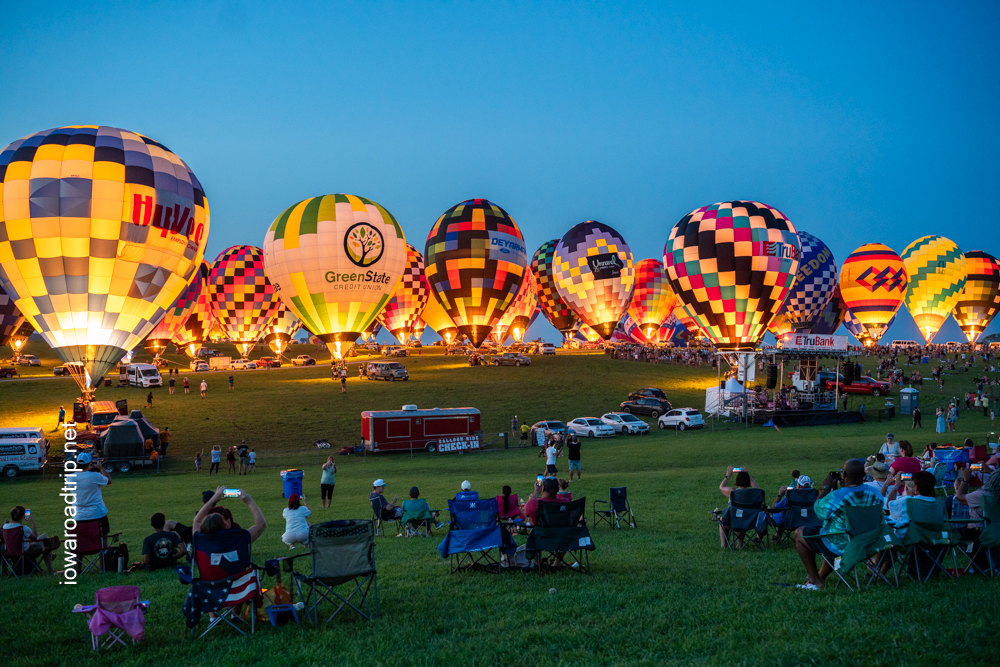
During a balloon flight, the balloons lift off and drift with the wind. During a NITE GLOW®, the balloons stay on the ground while pilots fire the burners, lighting the balloons from the inside.
The result is a field of giant glowing balloons after dark.
Like every balloon event, the NITE GLOW® is still weather dependent. Even if the glow is approved, there are a couple of different ways the evening can play out.
If the wind is questionable, the balloons may inflate and glow, but the fences may stay closed. In that case, visitors watch from across the field while the balloons light up from a safe distance.
If the weather conditions are better, the glow may become a much more interactive experience.
Typically, the organizers will do a countdown and ask the pilots to “burn,” or light their balloons, at the same time. When that happens, the whole field flashes with color as the balloons glow together. They may repeat this several times, creating one of the most dramatic scenes of the entire National Balloon Classic.
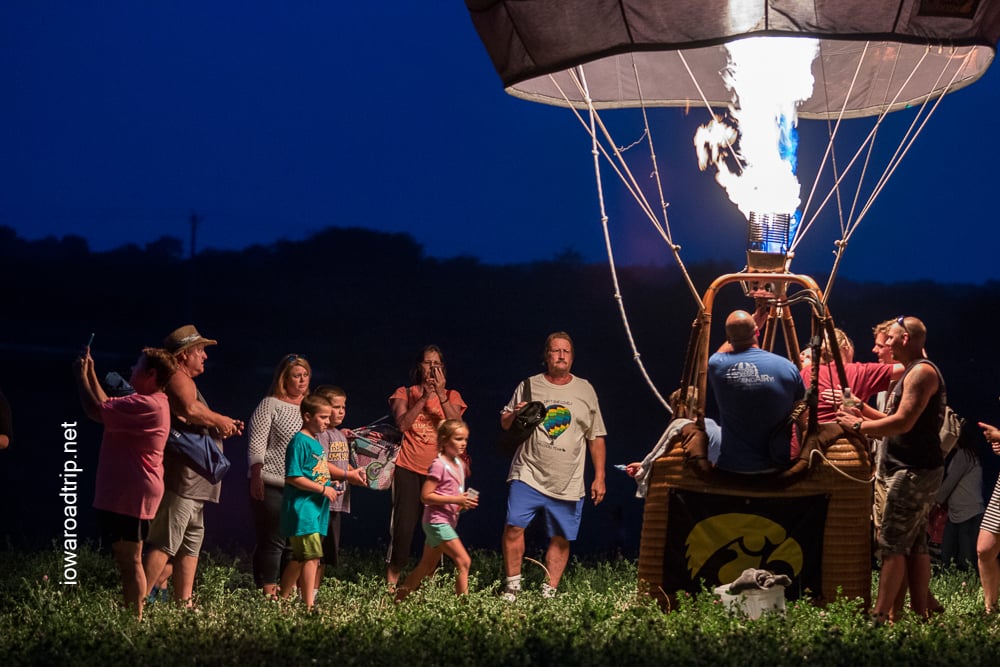
Then, if conditions allow, the gates may open and visitors may be invited onto the field to walk among the balloons, meet the pilots, and see everything up close.
If that happens, you’re in for a treat.
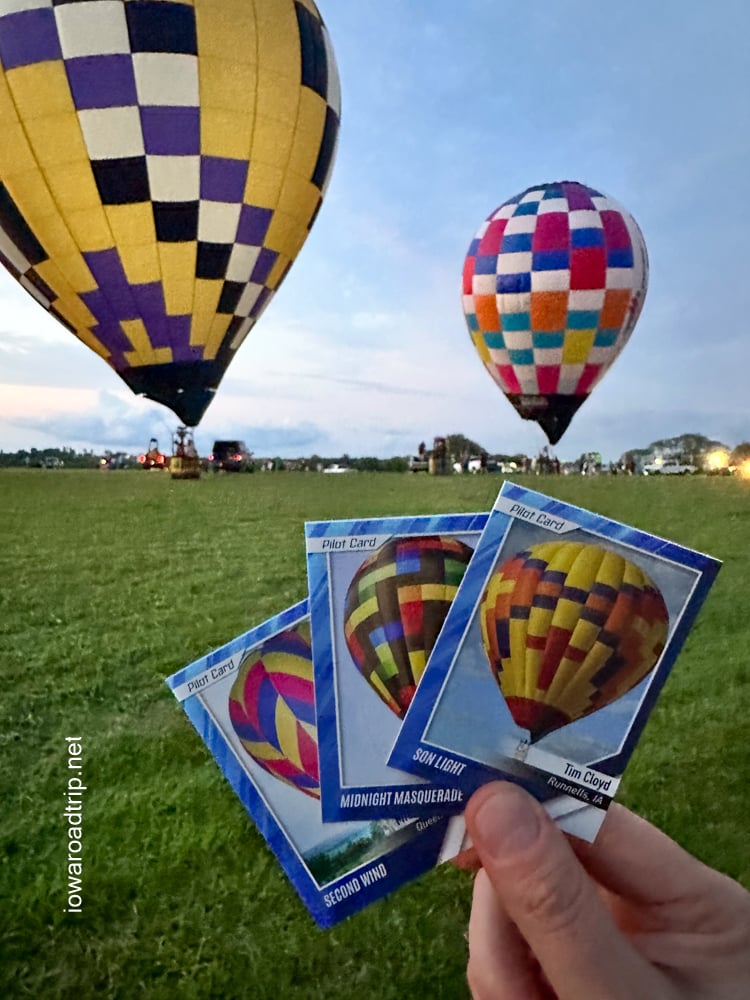
Many of the pilots love interacting with kids and families. Some even have balloon cards, which are kind of like baseball cards, except they feature the pilot’s balloon. Kids can often approach a pilot and ask if they have a balloon card to share.
For families, this can be one of the most memorable parts of the whole event.
Just keep in mind that small children may be nervous around the balloons. When the burners fire, they are loud, and if you’re standing nearby, you can feel the heat. That’s part of the excitement, but it can be overwhelming for sensitive kids.
For photographers, the NITE GLOW® is one of the best parts of the National Balloon Classic. You get glowing balloon fabric, silhouettes of the crowd, burner bursts, and a completely different atmosphere than a daytime launch.
When conditions line up, it’s one of the most magical scenes in Indianola.
I have a separate guide to the NITE GLOW® here:
https://iowaroadtrip.net/when-hot-air-balloons-light-up-the-night-skies-in-indianola/
Drone shows
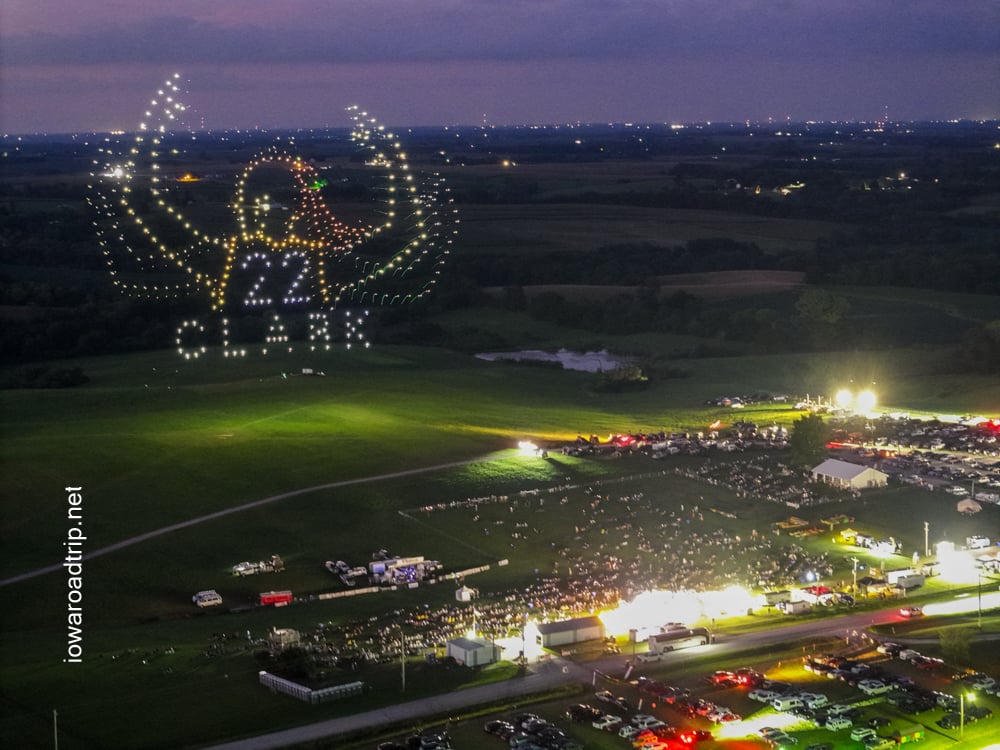
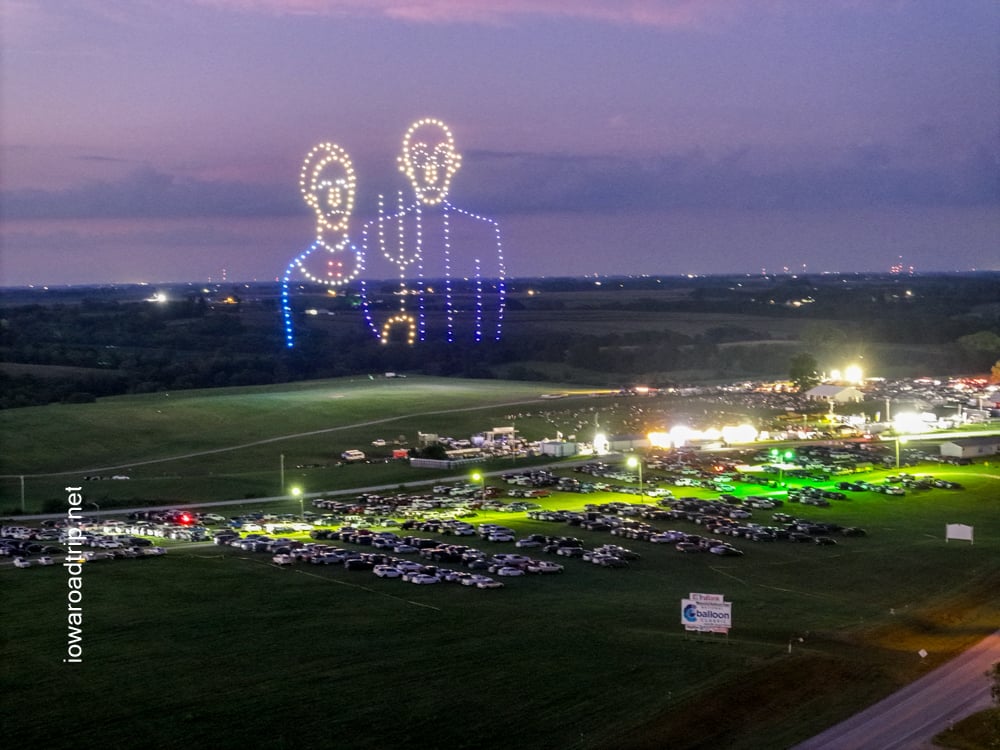
In recent years, drone shows have become part of the National Balloon Classic’s evening entertainment lineup.
These are separate from the balloon flights and NITE GLOW® events, but they add another reason to stay after dark. During a drone show, coordinated lights form shapes, designs, and animated scenes in the sky above the balloon field.
It’s a completely different kind of sky show than the balloons.
The drone shows are especially helpful for visitors who want a full evening experience. Depending on the schedule, you may be able to pair balloon activity, live music, food, and a drone show all in one night.
Before choosing which evening to attend, check the official schedule to see which nights include drone shows, NITE GLOW® events, Mass Ascension, or other special activities.
Which part of the National Balloon Classic should you attend?
The best part of the National Balloon Classic depends on what kind of experience you want.
That’s one reason this event can be a little confusing for first-time visitors. A morning competition flight, an evening balloon flight, a Mass Ascension, a NITE GLOW®, and a drone show are all part of the same overall event — but they feel very different when you’re there.
If this is your first time attending, I’d recommend choosing an evening session with scheduled balloon activity, especially if that evening includes a Mass Ascension or NITE GLOW®. That gives you the best chance to experience the full festival atmosphere: balloons, food, music, crowds, and after-dark entertainment.
If you’re most interested in photography, consider going more than once. Morning competition flights, evening launches, Mass Ascension, NITE GLOW®, and drone shows all create completely different photo opportunities.
Morning flights are best for soft light, rural scenery, and the competition side of ballooning. Evening sessions are best for the big festival feeling. Mass Ascension is best for seeing a huge number of balloons lift off in a short amount of time. NITE GLOW® is best for glowing balloons after dark. Drone shows add another visual experience to select evenings.
For families, evening sessions are usually the easiest choice. You’ll have food vendors, music, restrooms, seating areas, and more going on around you while you wait for balloon activity.
For smaller crowds and a quieter experience, morning competition flights are usually the better option.
If you only have one night, choose an evening with multiple things scheduled. A night that includes balloon activity plus NITE GLOW® or a drone show gives you more to experience, even if the weather affects part of the balloon schedule.
The most important thing is to stay flexible. With hot air balloons, the schedule tells you what is planned. The weather decides what actually happens.
Tickets, admission, and parking
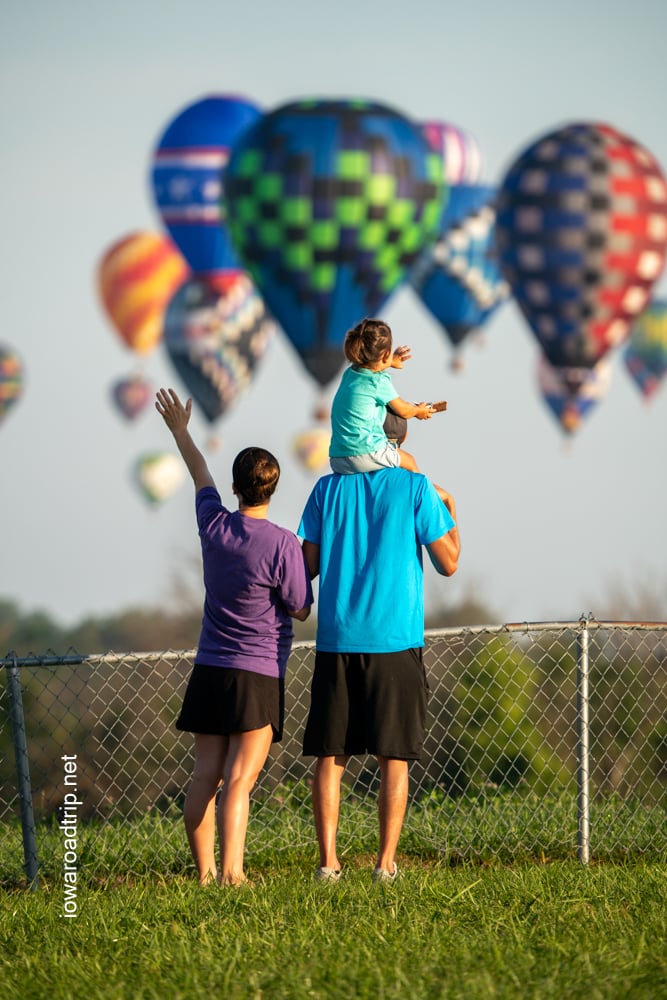
Evening sessions at the National Balloon Classic require admission, so check the official ticket page before you go. For 2026, the ticket prices is $12 per person, kids under 5 are free.
Morning competition flights are different, as they are completely free. They are more focused on the competitive side of ballooning, and the viewing experience can vary depending on the day’s flight plan, target locations, wind direction, and weather decision.
It’s also a good idea to check the National Balloon Classic Facebook page before heading to Indianola, especially if you’re going for a specific balloon event. Weather updates and flight decisions are often shared close to event time.
Because balloon activity is weather dependent, I would avoid buying tickets or making plans based only on the assumption that balloons will definitely fly. Choose a night where you’ll enjoy the full event experience — music, food, atmosphere, and special entertainment — even if the balloon schedule changes.
Official website:
https://nationalballoonclassic.com/
Weather: the most important thing to understand
The most important thing to know before attending the National Balloon Classic is this: hot air balloons are completely dependent on safe weather conditions.
That means balloon flights, Mass Ascension, NITE GLOW®, and other balloon activities can be delayed, changed, or canceled if conditions are not right.
Wind is one of the biggest factors. A day can look beautiful to spectators and still be too windy for safe ballooning because the winds are too strong aloft. Wind direction also matters because balloons travel with the wind, and pilots need to know where they are likely to go after launch. Typically, the wind speed will need to be less than 10mph.
Rain, storms, poor visibility, and changing weather can also affect the schedule.
This is why balloon decisions are often made close to event time. Pilots and event organizers need to evaluate the actual conditions, not just the forecast from earlier in the day.
For morning competition flights, that decision often happens after the 6 AM pilot briefing. If conditions are good, the event may post an update fairly quickly. If conditions are questionable, the decision may be delayed.
For evening sessions, the same idea applies. You may arrive at the event grounds before the final balloon decision has been made. That can feel uncertain, but it’s part of how ballooning works.
It’s also important to understand that a balloon cancellation does not always mean the entire event is canceled. Food vendors, live music, drone shows, and other entertainment may still continue depending on the schedule and weather.
The best approach is to stay flexible. Check the official National Balloon Classic website and Facebook page before you go, watch for updates, and understand that the schedule tells you what is planned — but the weather decides what actually happens.
What to bring to the National Balloon Classic
For evening sessions, plan like you’re settling in for a few hours outdoors.
Bring lawn chairs or a blanket so you have a comfortable place to sit while you wait for balloon activity, live music, or after-dark entertainment. You’ll also want water, sunscreen, bug spray, comfortable shoes, and a camera or phone with plenty of storage.
A portable charger is a good idea, especially if you plan to take photos or video throughout the evening.
For morning competition flights, dress for the early hour. Even in summer, it can feel cool as the sun comes up, so a light jacket or sweatshirt may be helpful.
No outside food or beverage or coolers are allowed.
A simple packing list:
- Lawn chairs or blanket
- Sunscreen
- Bug spray
- Comfortable shoes
- Camera or phone
- Portable charger
- Light jacket for morning flights
- Ear protection for sensitive kids
- Patience and flexibility
That last one matters. Ballooning is beautiful, but it does not run on a perfect clock.
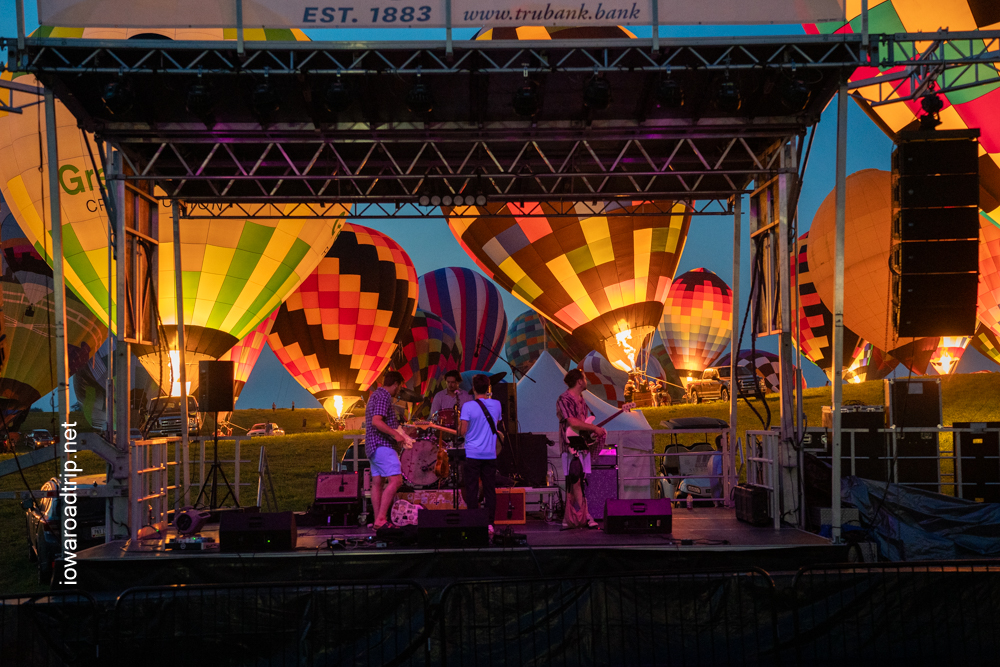
Food, music, and festival atmosphere
The evening sessions at the National Balloon Classic are about more than balloons.
Part of the fun is the full festival atmosphere. People arrive early, spread out on blankets or lawn chairs, grab food, listen to live music, and wait for the balloon activity to begin.
That’s one of the biggest differences between the morning competition flights and the evening sessions. Morning flights are more about the competition and the quiet beauty of balloons moving across the countryside. Evening sessions feel more like a summer festival.
You’ll see families, photographers, balloon fans, kids pointing at the sky, people relaxing on the hillside, and crews working on the field as the event builds toward the evening balloon activity.
Live music helps fill the time before the balloons launch, glow, or the after-dark entertainment begins. Food vendors make it easy to turn the evening into dinner and a show. And even if the balloon schedule shifts because of weather, there is still a full event happening around you.
The balloons may be the main attraction, but the full evening experience is what makes the National Balloon Classic feel like one of Iowa’s great summer traditions.
Balloon rides
One of the most common questions people ask about the National Balloon Classic is: “Can I ride in a hot air balloon?”
The answer is yes, but balloon rides are separate from general admission and must be scheduled ahead of time.
Buying a ticket to attend the evening event does not include a balloon ride. General admission gets you into the festival grounds to watch the balloon activity, enjoy the entertainment, visit food vendors, and experience the event from the ground.
Balloon rides are a separate experience, and availability is limited. They are also weather dependent, just like every other balloon activity at the event. Wind, visibility, storms, and other conditions can affect whether rides happen.
If you’re interested in riding in a balloon, check the official National Balloon Classic website for current ride information and booking details. I would only book through the official event or the official ride provider listed by the event.
For most visitors, watching from the ground is still a fantastic experience. You can see the balloons inflate, hear the burners, watch crews work, photograph the launch, and experience the excitement as balloons rise into the sky.
And during events like Mass Ascension or NITE GLOW®, being on the ground is exactly where you want to be.
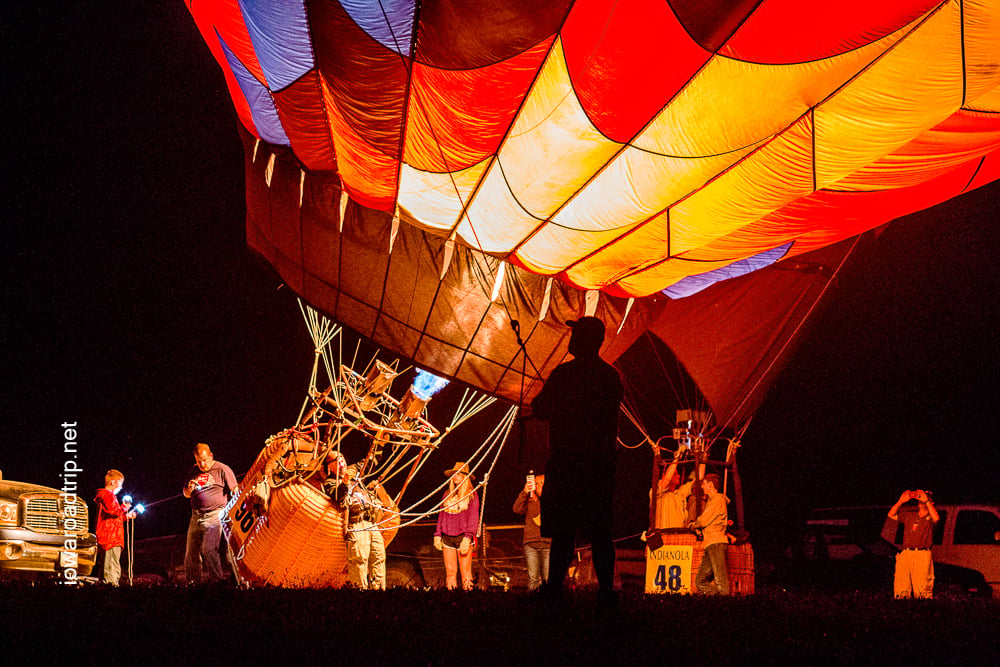
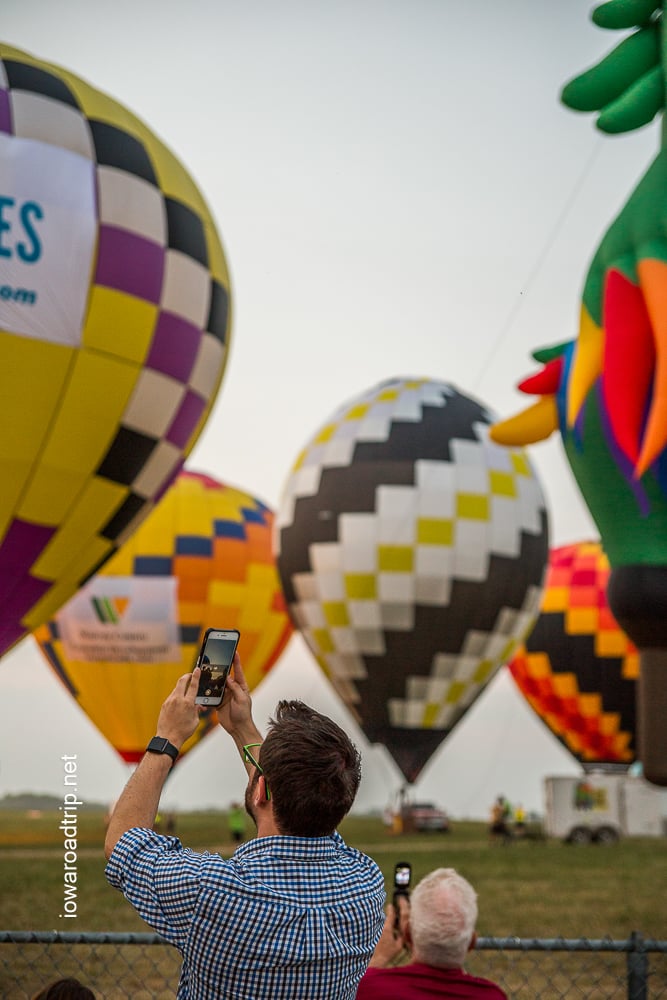
Photo tips for the National Balloon Classic
The National Balloon Classic is one of the best photo events in Iowa, but each part of the festival gives you a completely different kind of image.
For morning competition flights, arrive early and watch for soft sunrise light. The morning flights are great for photos of balloons over fields, roads, trees, farmsteads, and rural landscapes. If you’re photographing away from the balloon field, be respectful of private property, don’t block roads or driveways, and remember that the pilots and chase crews are working.
For evening balloon flights, shoot wide. This is where you can capture the scale of the event: the crowd, the balloon field, the crews inflating balloons, and the sky filling with color. Sunset light can be especially good as the balloons begin to lift off.
For Mass Ascension, be ready before the launch starts. Once the balloons begin taking off, the whole thing can happen quickly. Wide shots work well because they show the number of balloons, but vertical photos are also useful for Facebook, reels, and social media stories. Try to include both the field and the sky if you can.
For NITE GLOW®, timing is everything. The best photos usually happen when the pilots fire the burners and the balloons glow from the inside. Hold your phone or camera steady, use night mode if you’re on a phone, and look for silhouettes of people against the glowing balloons.
For drone shows, use a wide frame and keep the camera as still as possible. Including the crowd, field, or horizon can help give the lights a sense of scale. Vertical video can also work well if you’re planning to create a reel.
And one final photo tip: don’t spend the entire event behind the camera.
Take the photos, but also stop for a minute and watch. Some of the best parts of the National Balloon Classic are better experienced than captured.
Common questions about the National Balloon Classic
When is the 2026 National Balloon Classic?
The 2026 National Balloon Classic is scheduled for July 31 through August 8 in Indianola, Iowa.
Where is the National Balloon Classic held?
The event is held at Memorial Balloon Field in Indianola, Iowa. The address is 1136 150th Avenue, Indianola, IA 50125.
What time do balloons fly?
Morning competition flying takes place early in the morning, with the pilots meeting at 6am, and then a fly go or no go is decided sometimes between 6:15am and 6:30am. Evening balloon activity is scheduled for the evening sessions and exact times vary by day, so check the official National Balloon Classic schedule before attending.
Are balloon flights guaranteed?
No. Balloon flights are weather dependent. Wind, rain, storms, visibility, and other safety factors can delay, change, or cancel balloon activity.
What is the difference between a balloon flight and a NITE GLOW®?
During a balloon flight, balloons lift off and drift with the wind. During a NITE GLOW®, balloons stay on the ground while the burners light them from the inside.
What is Mass Ascension?
Mass Ascension is when roughly 100 hot air balloons take off at approximately the same time. It is one of the biggest visual moments of the National Balloon Classic.
What is the drone show?
The drone show is a separate after-dark entertainment feature where coordinated lights form shapes, designs, and animated scenes in the sky.
Do I need tickets?
Evening sessions require admission, which are $12 per person. You can pay at the gate, but the do not take cash, credit card or mobile payments only. Morning competition flights are a different experience, as there are not tickets or admission.
Is parking included?
Parking is included with your admission for evening sessions – and is also free for the morning sessions.
Can I bring chairs?
Lawn chairs and blankets are commonly brought in by visitors.
Can I bring outside food or drinks?
No outside food or drink is allowed.
Is the event kid-friendly?
Yes. The National Balloon Classic is a popular family-friendly event. Evening sessions are often the easiest choice for families because of the food, music, restrooms, and full festival atmosphere.
Can I bring my dog?
No pets are allowed.
What happens if the balloons do not fly?
Other parts of the evening may continue depending on the schedule and weather. Food vendors, music, drone shows, and other entertainment may still happen even if balloon activity changes.
Are morning flights free?
Morning competition flights are different from the evening ticketed sessions. The best public viewing option is often Memorial Balloon Field, especially since one of the competition targets is typically located there. Check the official schedule and morning updates before heading out.
Is the NITE GLOW® worth it?
Yes. When weather conditions allow it to happen, the NITE GLOW® is one of the most memorable and photogenic parts of the National Balloon Classic.
Can you ride in a balloon?
Balloon rides are separate from general admission and availability is limited and must be reserved ahead of time.
How do I know if balloon flights are canceled or delayed?
Check the official National Balloon Classic Facebook page for updates. Flight decisions are often made close to event time because pilots need current weather conditions.
Final thoughts
The National Balloon Classic is one of those Iowa events that feels different every time you go.
Some people love the quiet morning competition flights, when balloons drift over the countryside and pilots work their way toward the targets. Others come for the big evening festival atmosphere, with food, music, crowds, and balloons filling the field.
Some visitors wait all year for the NITE GLOW®, when the balloons light up after dark. Others plan their visit around Mass Ascension, drone shows, or simply the chance to sit on the hillside and watch one of Iowa’s most colorful summer traditions unfold.
The key is knowing what kind of experience you want.
Morning flights are quieter and more focused on the competition. Evening sessions feel more like a festival. Mass Ascension is the big visual moment. NITE GLOW® is the after-dark favorite. Drone shows add another reason to stay late.
No matter which part you choose, remember that ballooning always depends on the weather. The schedule tells you what is planned, but the wind decides what actually happens.
If you go in with flexibility and a little patience, the National Balloon Classic can be one of the most memorable summer events in Iowa.
Before heading to Indianola, check the official National Balloon Classic website and Facebook page for the latest schedule, ticket information, and weather updates.
Official website:
https://nationalballoonclassic.com/
Related Iowa Road Trip guides
If you’re planning your visit, these related Iowa Road Trip guides can help you go deeper on specific parts of the event:
Morning flights:
https://iowaroadtrip.net/see-over-100-hot-air-balloons-for-free/
NITE GLOW®:
https://iowaroadtrip.net/when-hot-air-balloons-light-up-the-night-skies-in-indianola/
Flight Over Des Moines preview event:
https://iowaroadtrip.net/see-hot-air-balloon-over-des-moines/


I wish I could print the text of your comprehensive article about the hot air balloon festival.
It will be our 1st trip to the balloon classic where are all the hotels
This was a great article. I referenced it a couple times ….with this being my first time going to the Balloon Classic. I am from Iowa so I’m familiar with the Des Moines/Indianola travel times. We got our hotel in Des Moines and the travel times goes fast, and worked for us since we travel northward anyway. The Facebook page and website were great reference points also. Only thing I would add to the simple packing list is possibly an umbrella if the sun is relentless and you get there earlier in the evening, to ensure open choice options of where you’d like to set up your lawn chair/blankets etc.