Wildcat Den State Park: Sandstone Cliffs and a 175-Year-Old Mill
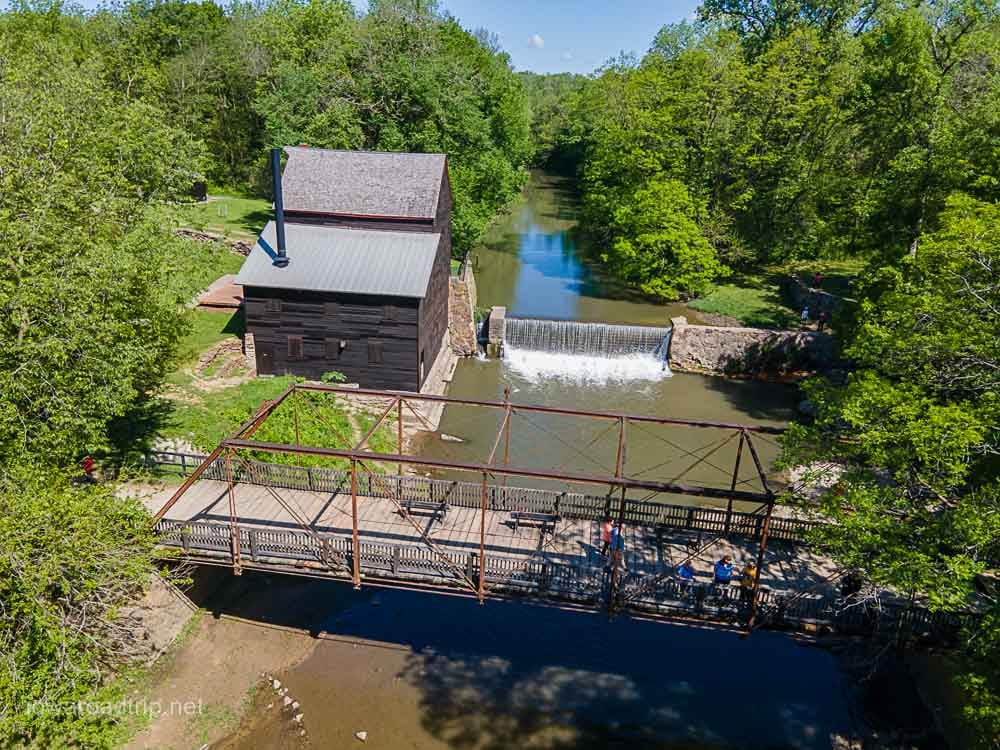
Wildcat Den State Park is one of Iowa’s most photographed parks, and it’s easy to see why. In just 417 acres, you get sandstone cliffs, narrow rock passageways, and glens carved from 300-million-year-old rock — plus a fully intact, still-operating 19th-century grist mill. It’s a rare combination: dramatic geology paired with genuine, hands-on history, all packed into one compact park.
Wildcat Den sits about 10 miles northeast of Muscatine and just a few miles west of the Quad Cities, which makes it an easy day trip for a big stretch of eastern Iowa and western Illinois.
Quick Facts
- Address: 1884 Wildcat Den Road, Muscatine, Iowa
- Size: 417 acres
- Dedicated: 1935 (the land was donated by sisters Emma and Clara Brandt, starting in 1928)
- Trail system: About 4 miles total, easy-to-moderate, packed earth and dirt
The Rock Formations: The Must-See Highlights
If you only have time for a handful of stops, here are the two main rock formations that make Wildcat Den famous:
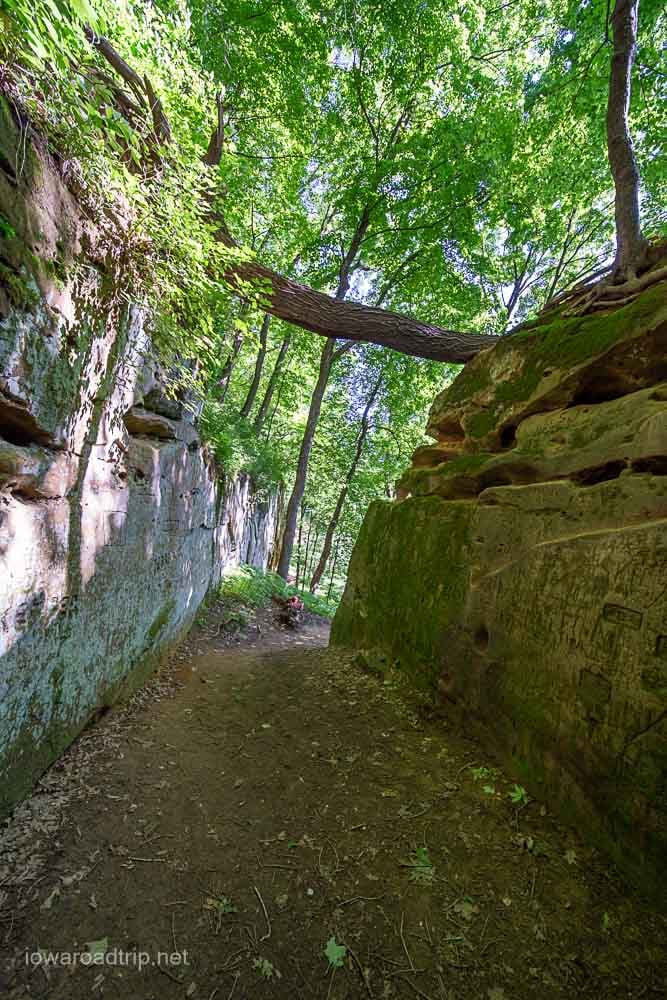
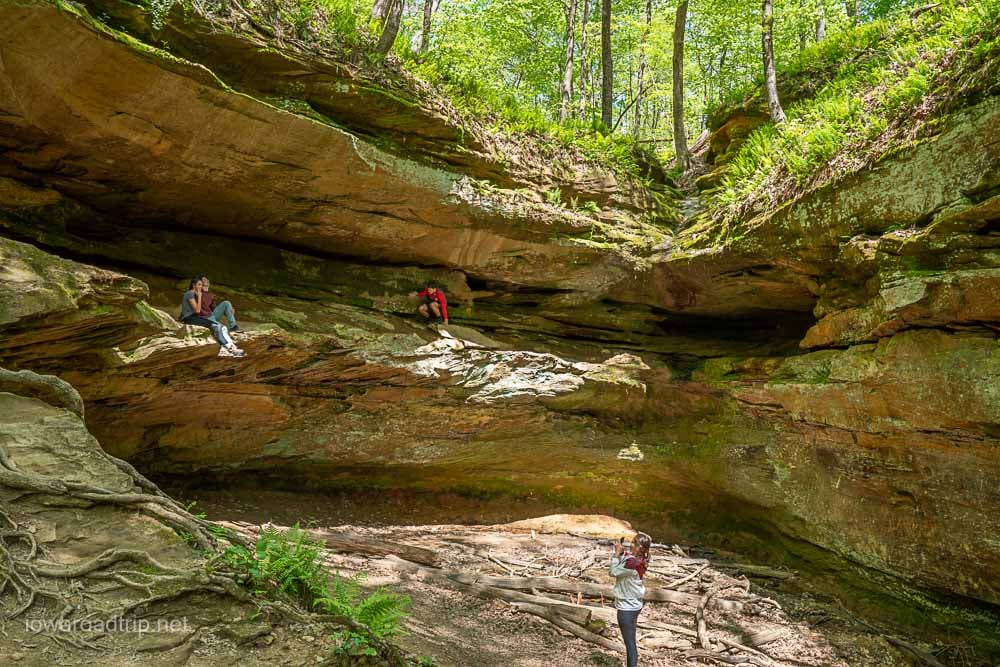
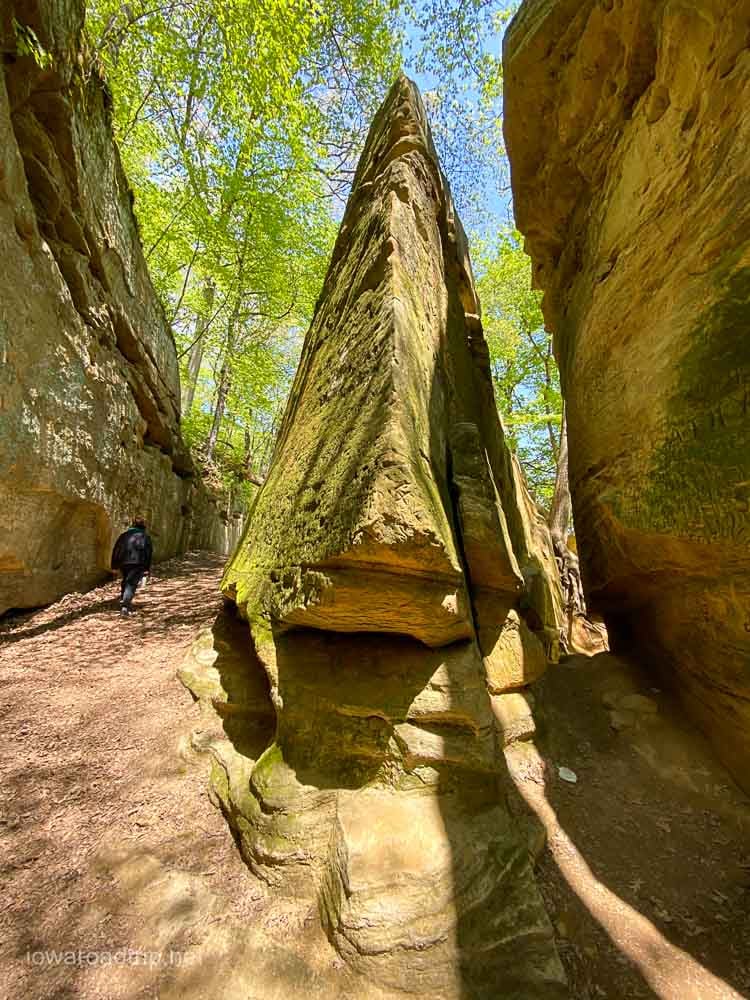
- Steamboat Rock — The park’s signature formation, a sandstone outcrop that genuinely resembles the bow of a steamboat. Reachable via the Lower Picnic Area trail. The area between the main cliff and Steamboat Rock is sometimes called Devil’s Lane or Devil’s Alley. And there’s also a break within Steamboat Rock that is called Fat Man’s Squeeze. Technically, there was a different Fat Man’s Squeeze that was in a nearby area of the park, but that section of rock collapsed decades ago and now many people refer to this narrow section as Fat Man’s Squeeze. In this area, also look for old rock carvings, which date back to 150 years. You’re welcome to admire the carvings, but don’t add to them, as the existing carvings are protected and they not allowing new carvings.
- Devil’s Punch Bowl — A dramatic, bowl-shaped rock feature and one of the most photographed spots in the park. If there’s enough rain fall, there may even be a waterfall coming over the edge of the Devil’s Punch Bowl.
Pine Creek Grist Mill: The Historical Centerpiece
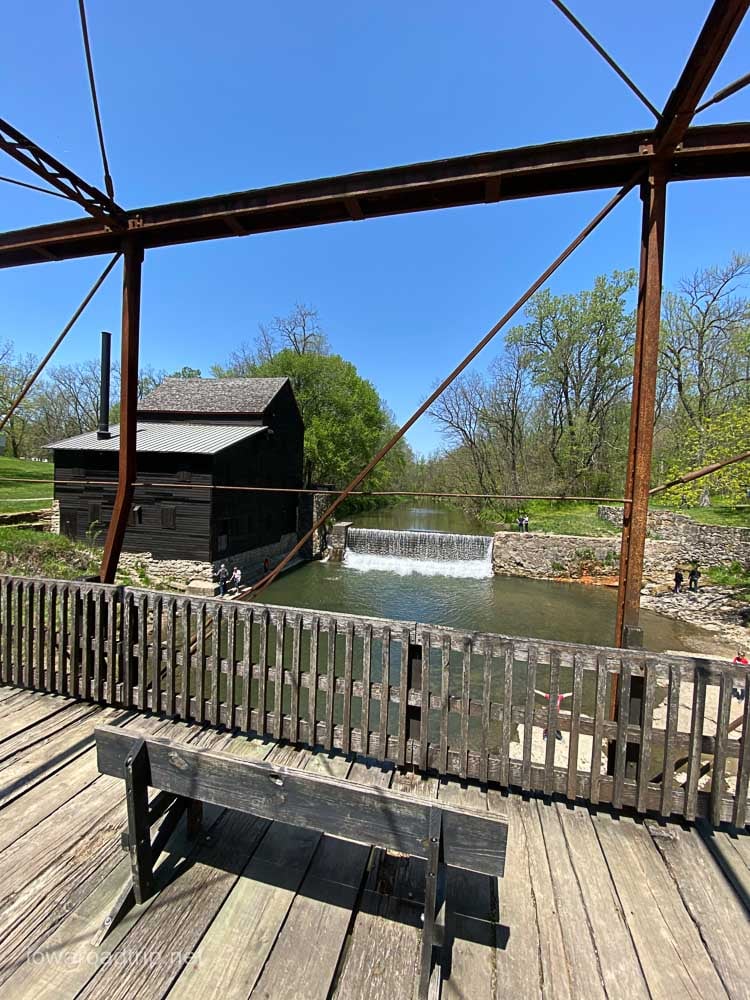
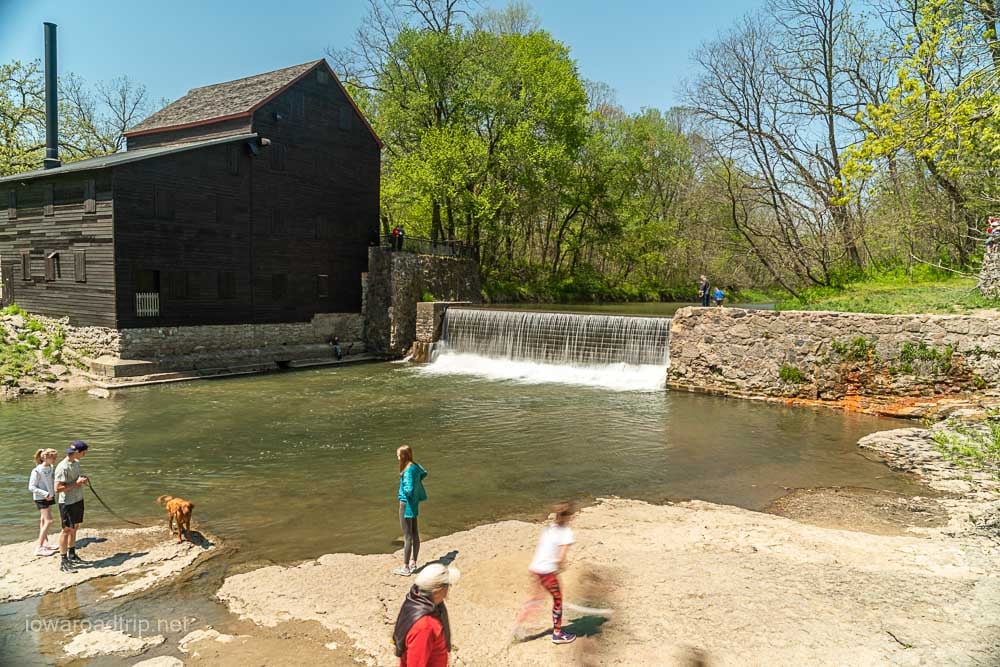
Built in 1848 by Benjamin Nye, Pine Creek Grist Mill is the oldest working grist mill between the Mississippi River and the Rockies, and it’s listed on the National Register of Historic Places. Watching it in operation is genuinely rare — this isn’t a static display, it’s a working piece of 19th-century industry.
The mill is open for tours Wednesday through Saturday, 10am to 5pm, and Sunday noon to 5pm, from May through early October. Right next to it, the Pine Mill Bridge has been closed to vehicle traffic since 1963 and now serves as a footbridge and scenic overlook — a nice quiet spot to take in the creek.
Other Historic Stops Nearby
History buffs have a few more reasons to slow down here:
- Melpine Schoolhouse — A one-room, turn-of-the-century schoolhouse relocated to the park grounds.
- The 1857–58 pioneer cabin — Also moved and reconstructed on-site, giving a glimpse of very early Iowa settler life.
- The Old Stone Church — Not officially part of the park, but multiple visitors mention it as worth a quick stop nearby.
Trails for a First Visit
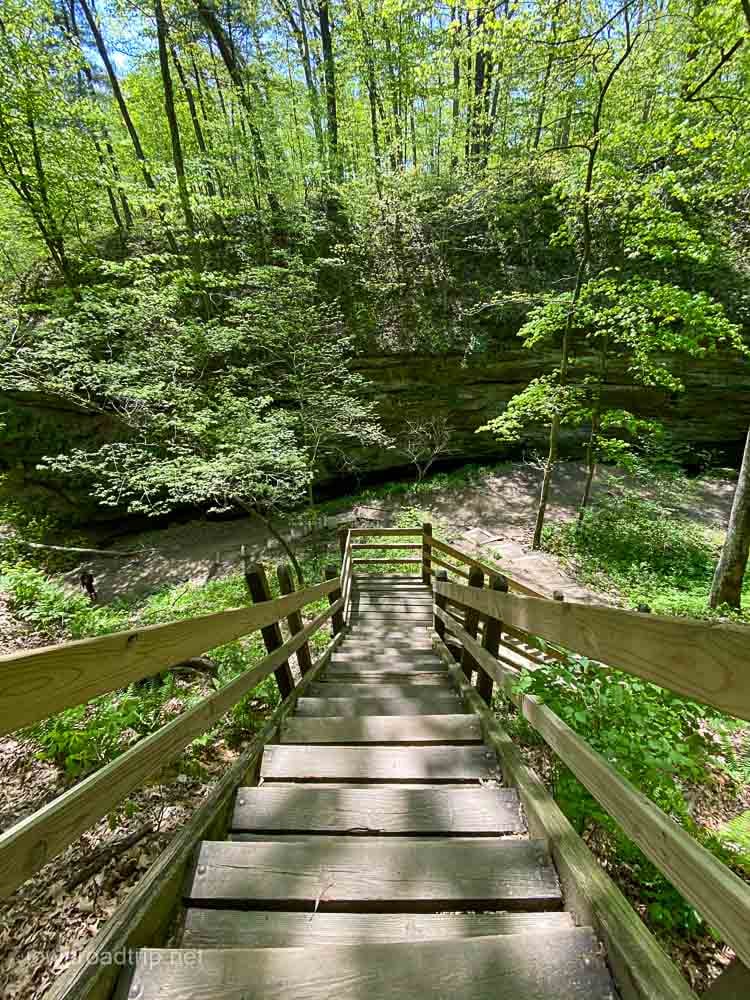
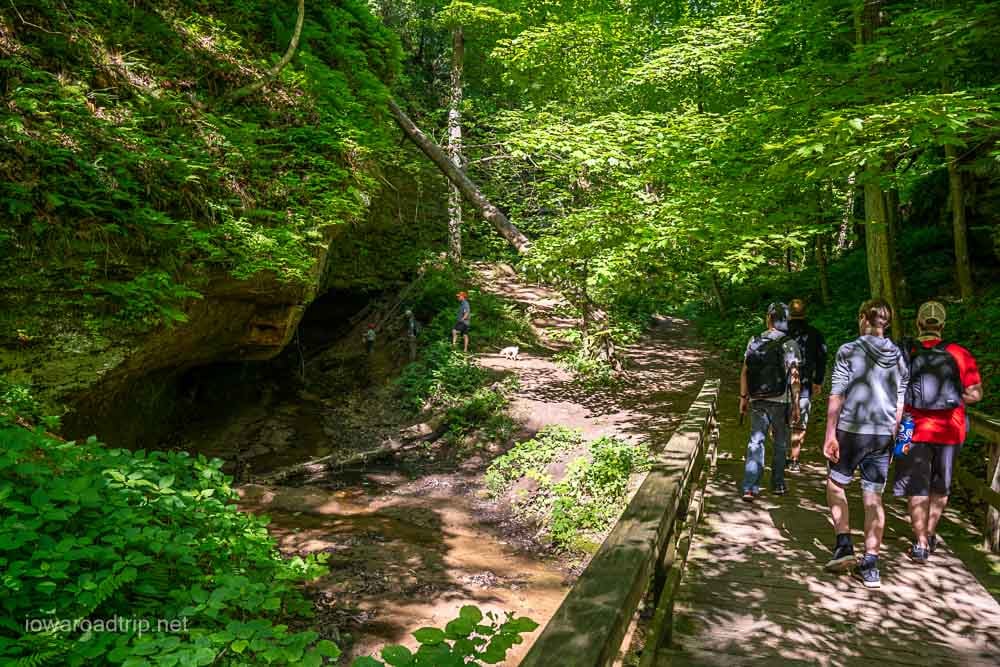
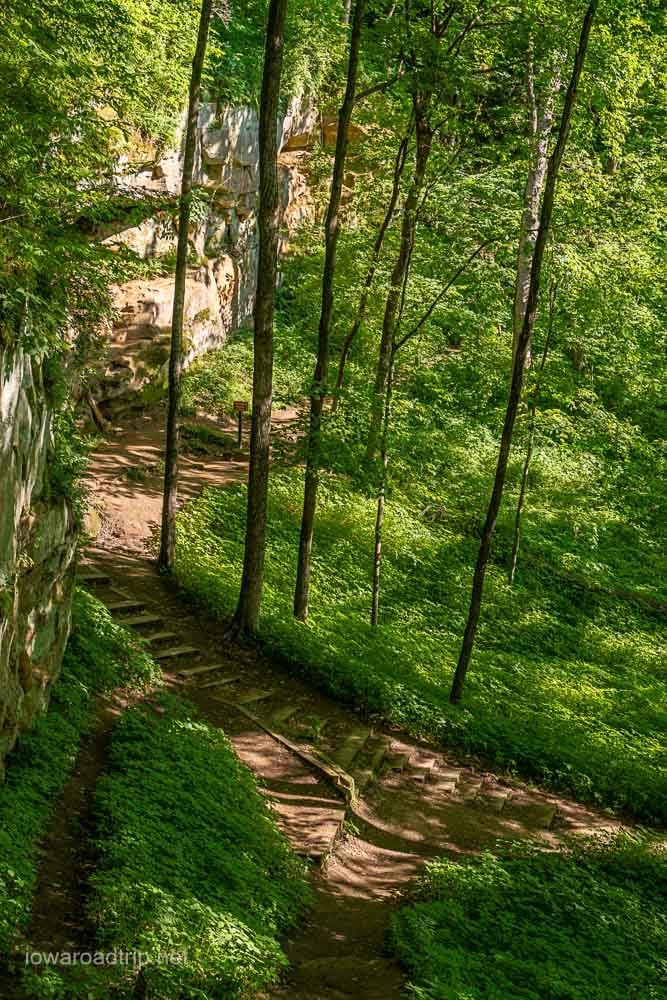
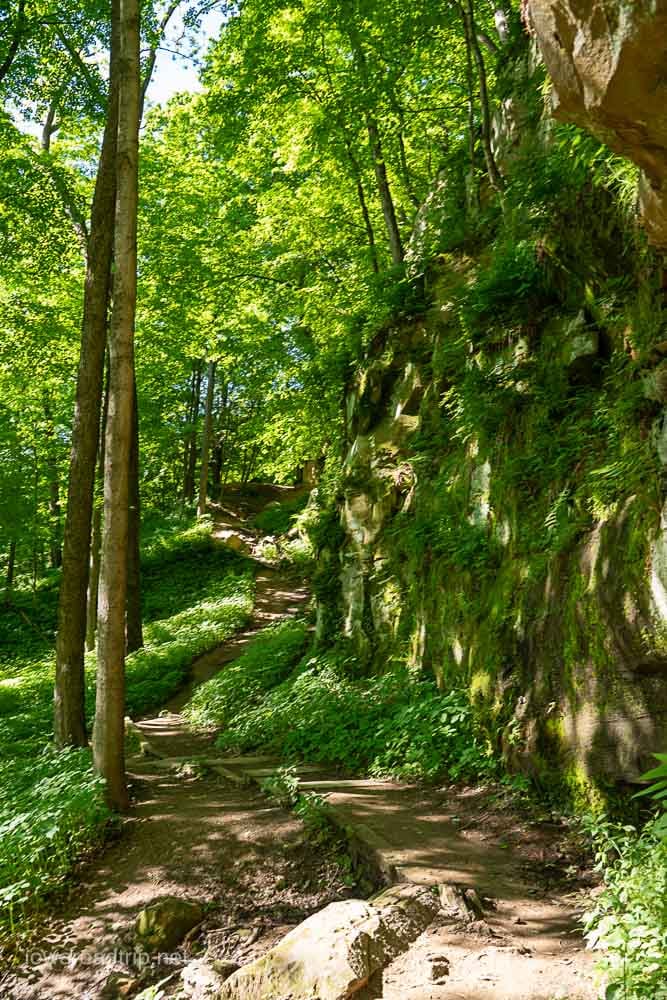
Wildcat Den’s trail system totals about 4 miles across a network of interconnected paths, generally rated easy to moderate. One thing worth flagging: there are a lot of stairs and steps on many of these trails, so it’s worth knowing that going in if steps aren’t your thing.
A couple of routes to know:
- Lower Picnic Area trail — Leads to Steamboat Rock.
- Trail from the north lot — Heads toward Devil’s Punch Bowl.
A heads-up from past visitors: the trail network isn’t always clearly signed once you’re past the trailheads, and paths fork and reconnect in ways that can be confusing. It’s worth downloading a map or GPS track before you go.
The Geology: A 375-Million-Year Story
Wildcat Den’s rock tells two very different geologic stories layered on top of each other.
The oldest exposed rock in the park is Devonian limestone and dolomite, roughly 375 million years old, visible along the margins of Pine Creek — best seen below the dam near the mill. Look closely and you can spot fossil corals, brachiopods, and crinoids embedded in the rock, remnants of an ancient sea floor.
Above that sits the sandstone everyone comes to see: Cherokee Group sandstone, about 310 million years old, deposited in ancient river channels. This is where you’ll find the crossbedding patterns and iron-oxide swirls that give the cliffs their distinctive look. At the base of Steamboat Rock, you can also find iron-rich springs, formed where the sandstone meets the underlying shale.
This section is a great spot for a photo of the crossbedded sandstone up close — it’s a striking visual explanation of why the rock looks the way it does.
Practical Tips for First-Timers
- Bring a map: Print one or download a trail file ahead of time. Signage past the trailheads is limited, and it’s easy to get turned around.
- Watch for stairs: Many trails involve a fair number of steps — manageable for most visitors “if you’re a little in shape,” but worth knowing in advance if mobility is a concern.
- Dogs: Welcome throughout the park, on leash.
- Set expectations: This is a hiking-and-history park, not a water-recreation destination — there’s no swimming or lake here.
Where to Camp
Wildcat Den has 28 primitive, non-electric campsites with vault toilets and no showers. Half the sites are first-come-first-served and half can be reserved in advance, so it’s worth checking availability before you make the drive.
If you’re looking for a more modern campground experience, Fairport State Recreation Area nearby is a good alternative.