Grotto of the Redemption in West Bend, Iowa: What to Know Before You Visit
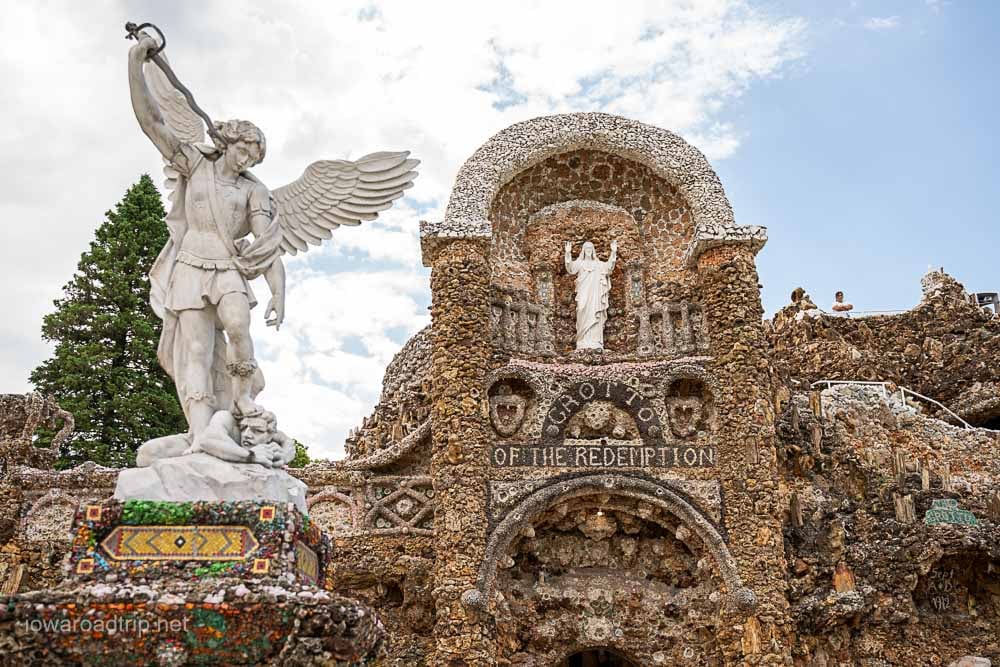
The Grotto of the Redemption in West Bend is one of the most unusual and unforgettable places you can visit in Iowa.
At first glance, it resembles a stone castle, cave, church shrine, and roadside attraction all rolled into one. But the familiar view of its main entrance shows only a small part of the experience.
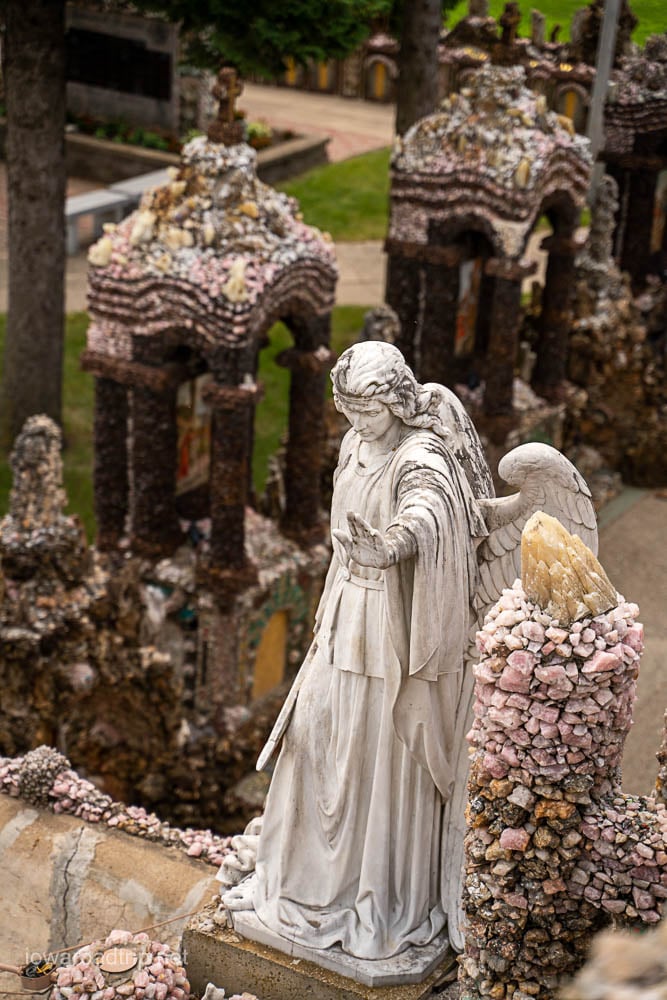
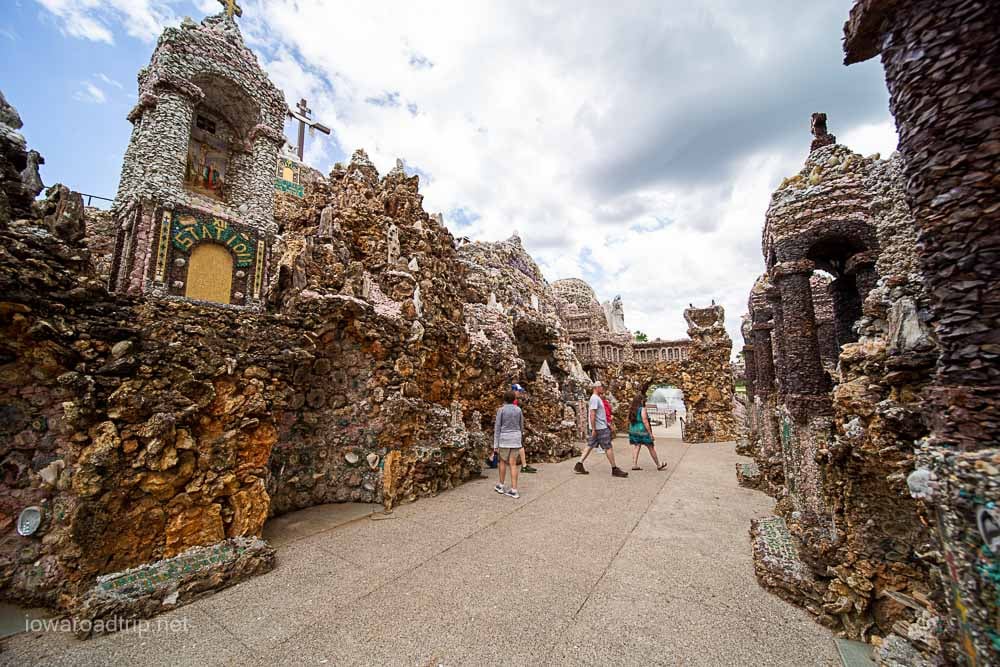
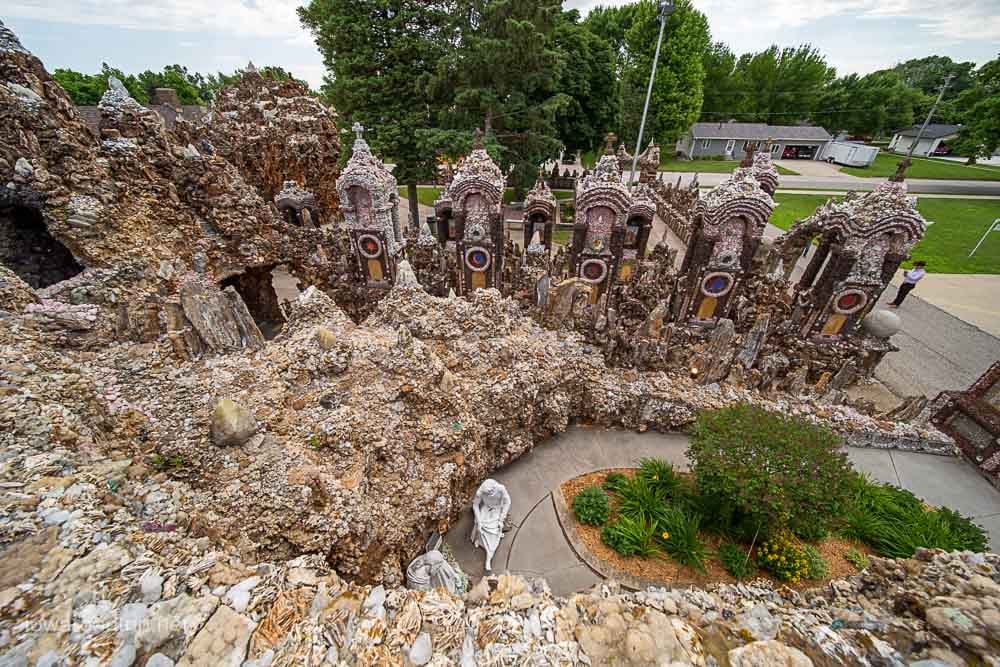
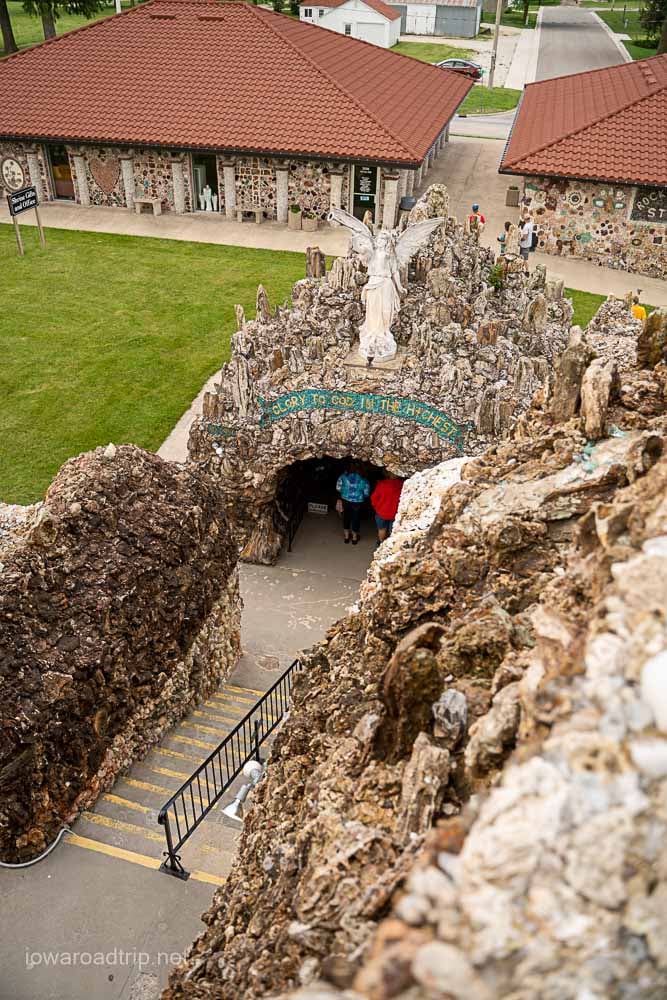
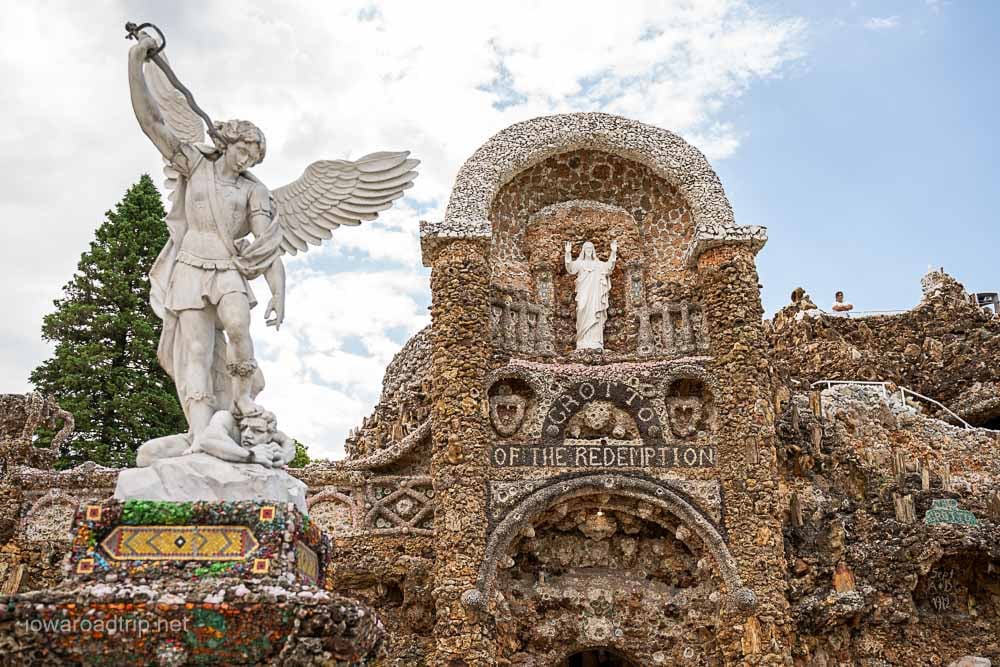
The Grotto is a massive outdoor shrine built with stones, gems, minerals, fossils, shells, petrified wood, and other materials gathered from around the world. Its nine connected grottos portray scenes from the life of Christ through statues, passageways, arches, staircases, and intricate stonework.
It is religious. It is artistic. It is geological. And it is a little unusual in the best Iowa road trip way.
Even visitors who are not traveling for religious reasons often leave impressed by the craftsmanship, scale, and sheer “How did they build this?” factor.
Quick visitor information
Grotto of the Redemption
Address: 208 1st Avenue NW, West Bend, Iowa 50597
Cost: No required admission; donations are encouraged
Shrine grounds: Open 24 hours a day
Recommended visit: Approximately 60 to 90 minutes
Guided tours: Typically available from April through October
Best for: Religious travelers, families, photographers, roadside-attraction fans, architecture lovers, and rock and mineral enthusiasts
On-site features: Nine grottos, museum, gift shop, Catholic church, pond, grounds, and campground
Hours for the museum, gift shop, office, and guided tours may change by season. Check the official Grotto website before making a long drive.
Where is the Grotto of the Redemption?
The Grotto is located at 208 1st Avenue NW in West Bend, next to Saints Peter and Paul Catholic Church.
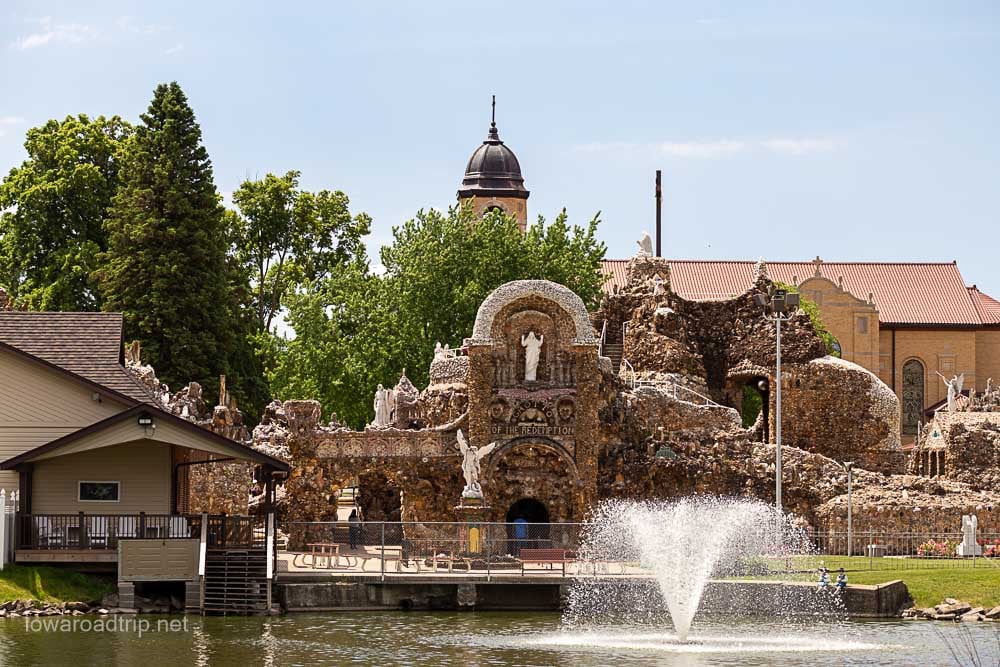
It sits directly in town and is easy to reach on paved streets. You do not need to travel down gravel roads or search for a remote rural entrance.
West Bend is a small community in north-central Iowa, making the Grotto a practical destination for a day trip or a detour through the region.
Approximate drive times
Approximate drive times include:
- Fort Dodge: 50 minutes
- Mason City: 1 hour, 30 minutes
- Ames: 2 hours
- Des Moines: 2 hours, 30 minutes
- Sioux City: 2 hours, 30 minutes
- Iowa Great Lakes area: 1 hour, 30 minutes
For many visitors, the Grotto works best as the centerpiece of a north-central Iowa road trip or as a memorable detour while traveling through the Fort Dodge, Algona, Emmetsburg, Pocahontas, or Iowa Great Lakes areas.
What should you expect when you arrive?
Expect something much larger than photographs may suggest.
The Grotto is not one cave, one statue, or one main facade. It is an outdoor complex made up of multiple connected grottos, stone walls, passageways, stairs, statues, religious scenes, and detailed surfaces.
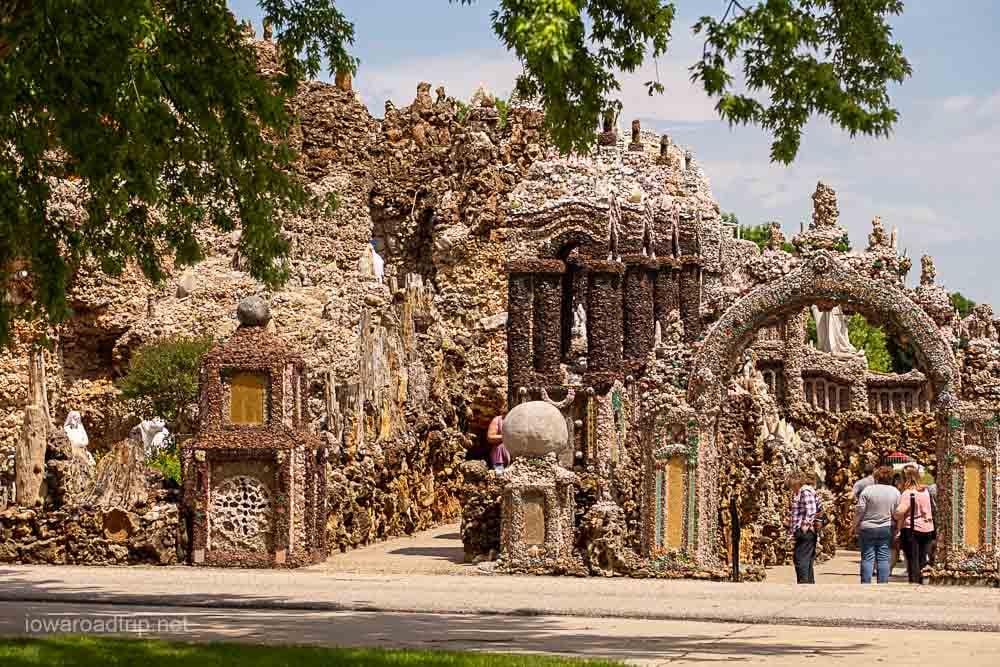
Visitors can walk through the site at their own pace, stop for photographs, study the materials, and view the structures from several angles.
Some people come for prayer or pilgrimage. Others visit for the architecture, geology, photography, history, or novelty of finding such an elaborate handmade place in a small Iowa town.
You do not need to share the religious purpose of the site to appreciate the amount of time, labor, and creativity built into it. However, remember that this remains an active Catholic shrine and should be treated respectfully.
How long should you spend at the Grotto?
The right amount of time depends on how much of the site you want to experience.
Quick self-guided visit: 30 to 45 minutes
This is enough time to walk through the main areas, take a few photos, and get a general sense of the Grotto.
It works well if you are passing through West Bend or adding the site to a larger day of travel.
Relaxed self-guided visit: 60 to 90 minutes
This is the best choice for most visitors.
It gives you enough time to explore slowly, double back for photos, study the rocks and minerals, visit the museum or gift shop when open, and see more than the main entrance.
Guided and complete visit: 2 to 3 hours
Allow more time if you plan to take a guided tour, visit the museum, enter the church, browse the gift shop, and walk through the Grotto more than once.
Groups planning a fuller experience may need approximately three hours.
Should you take a guided tour?
A guided tour is not required.
A self-guided visit works well when you are short on time, traveling with children, focused on photography, or prefer to explore independently.
You can still appreciate the scale, stonework, and main religious scenes without a guide.
However, a tour can add valuable context about:
- The meaning of the individual grottos
- The life of Father Paul Dobberstein
- The construction process
- The rocks, minerals, and other materials
- The people who continued the work
- The religious purpose of the site
For a first visit, a guided tour is worth considering when one is available and your schedule allows.
Is the Grotto free?
There is no required admission fee to walk through the Grotto.
Father Dobberstein did not want anyone excluded because they could not afford to visit, so the shrine has traditionally operated on donations rather than a mandatory admission charge.
Consider bringing cash or making a donation if you appreciate the site. Contributions help support maintenance and preservation.
Additional costs may apply for certain tours, group arrangements, gift shop purchases, or camping.
When is the Grotto open?
The outdoor shrine grounds are listed as open 24 hours a day, seven days a week.
That does not mean every building and service is available at all hours.
The office, museum, gift shop, church, and guided tours operate on separate schedules. Seasonal guided tours are generally available from April through the end of October.
Check current hours before visiting when a tour, museum stop, or gift shop visit is important to your plans.
What are the main things to see?
The main entrance
The main entrance provides the classic view most visitors recognize.
It is often the first moment when people realize the structure is larger and more detailed than expected. Take a wide photograph here to show the overall scale, but do not stop after seeing the front.
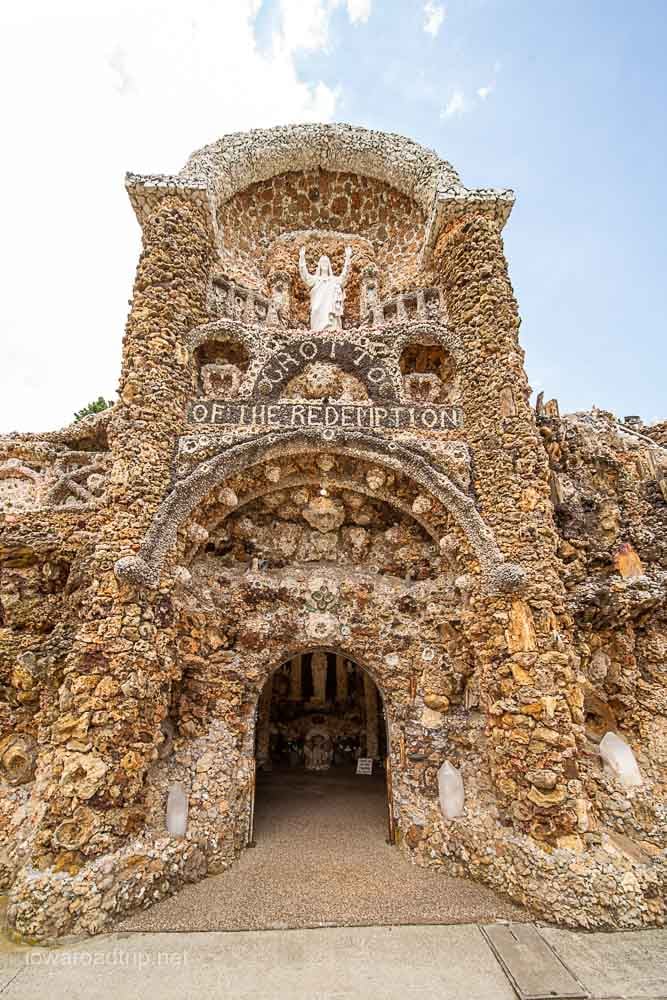
Move closer and look at the colors, shapes, textures, and individual materials embedded throughout the surface.
The nine grottos and religious scenes
The site includes nine grottos connected by the overall theme of Redemption.
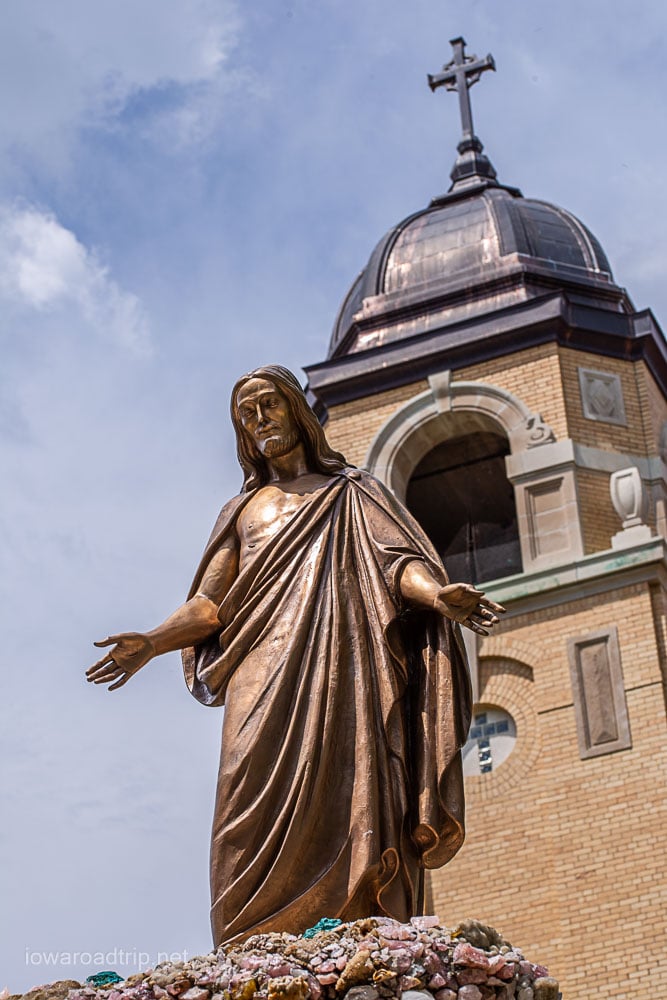
Together, they portray scenes from the life of Christ through stone settings, statues, passageways, arches, and carefully arranged materials.
Even visitors unfamiliar with the religious symbolism can appreciate how the separate structures were designed to work as one connected environment.
The stones, gems, and minerals
The materials are among the most fascinating parts of the Grotto.
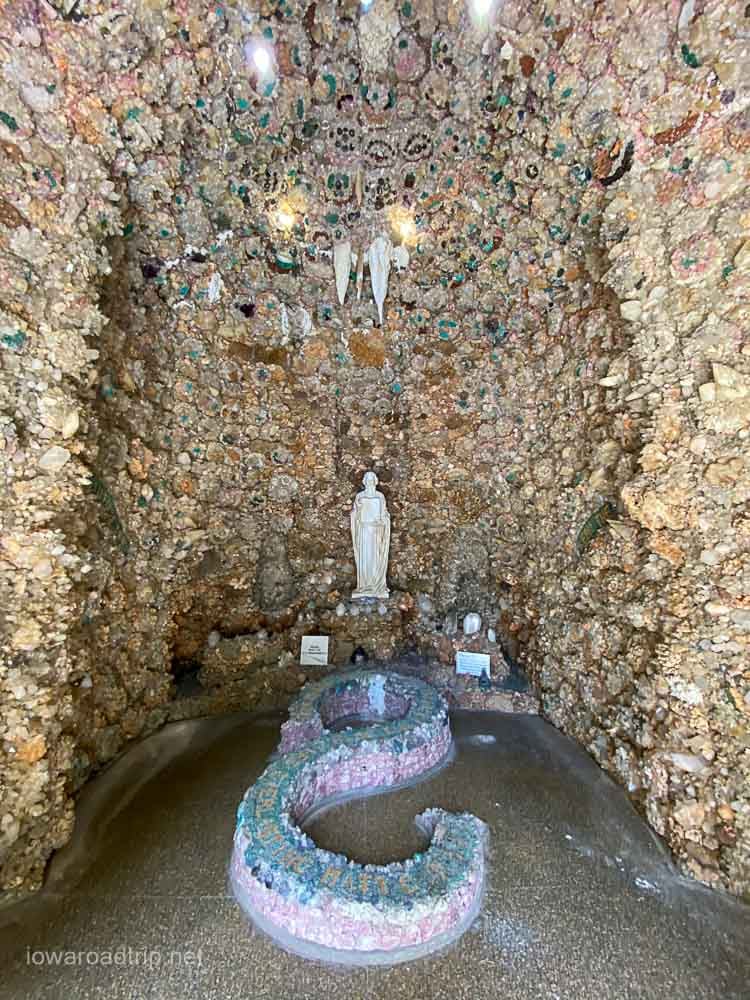
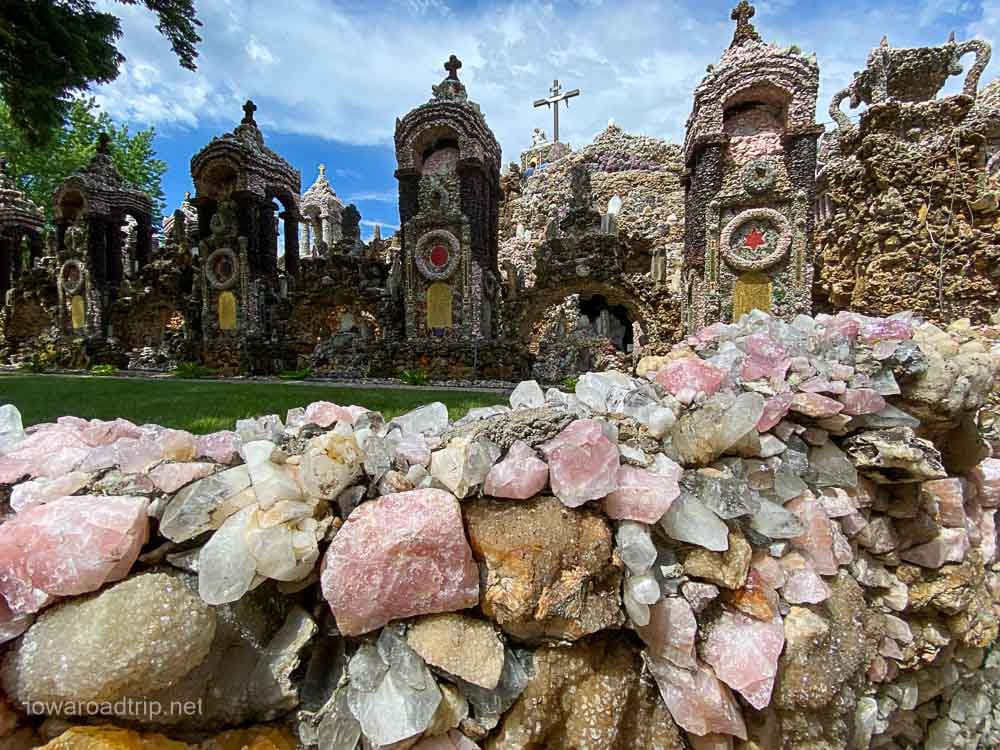
Walls, ceilings, arches, and decorative surfaces contain rocks, minerals, fossils, shells, crystals, and petrified materials from around the world.
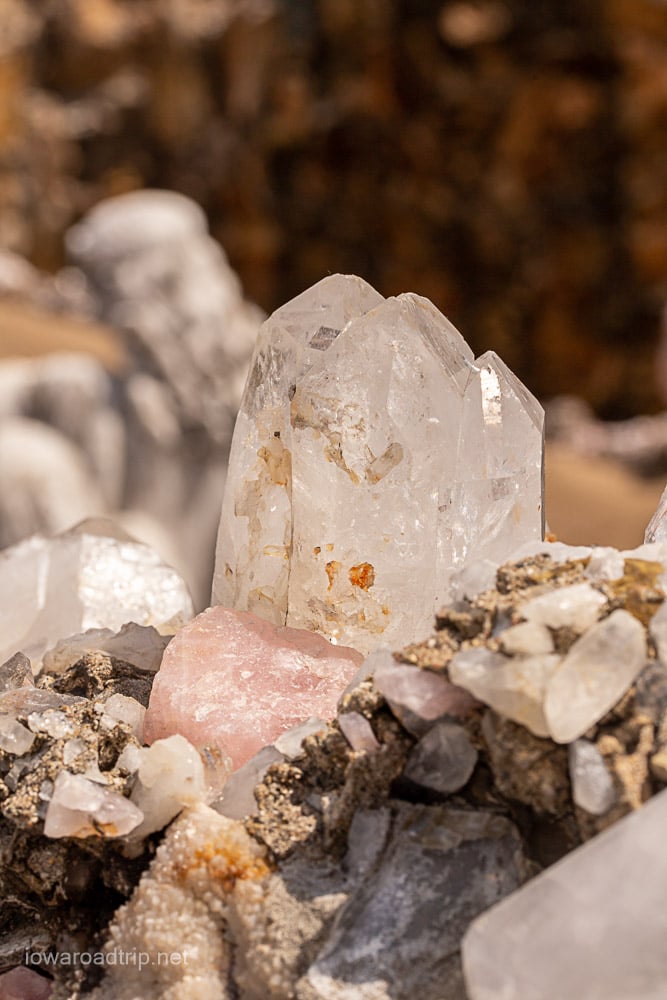
The Grotto functions as both a religious shrine and an outdoor geology classroom. Spend time looking closely rather than viewing the structures only from a distance.
The small details are often as impressive as the overall design.
The museum
The museum provides additional information about the building of the Grotto, the materials used, and the people who created and maintained it.
A museum visit can make the outdoor experience more meaningful because it helps explain how decades of work produced the structures visitors see today.
Check current museum hours before visiting.
Saints Peter and Paul Catholic Church
The Grotto is located beside Saints Peter and Paul Catholic Church and remains closely connected to the parish.
The church may be an important part of the visit for pilgrims and religious travelers. It also helps other visitors understand why the Grotto was built in this location.
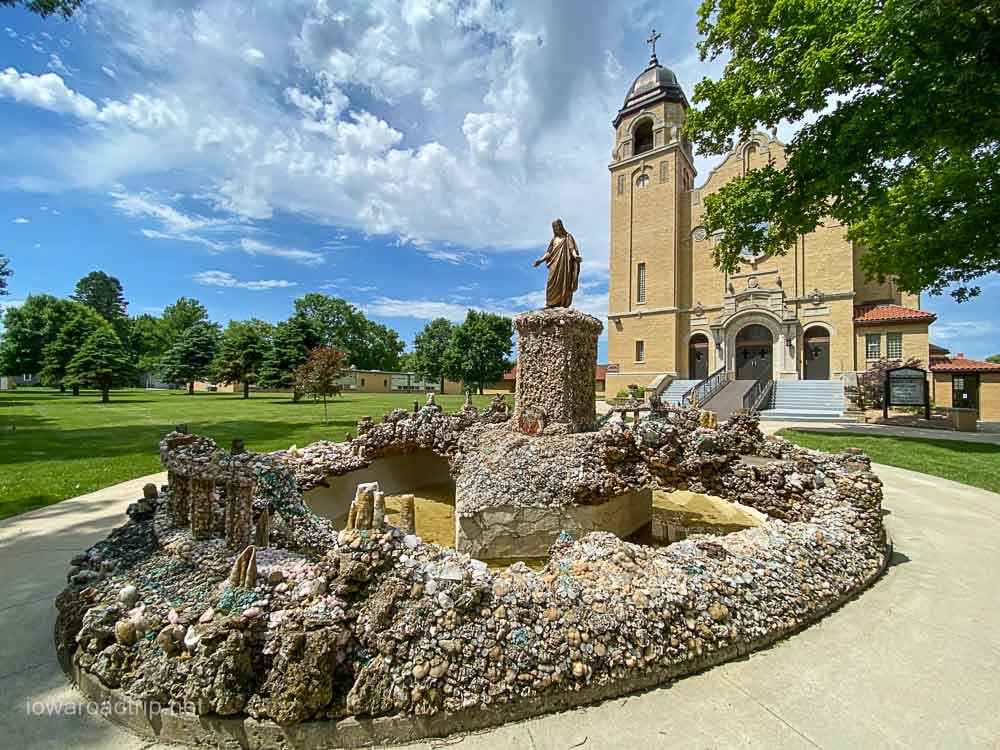
Be respectful of worship services, prayer, and parish activities.
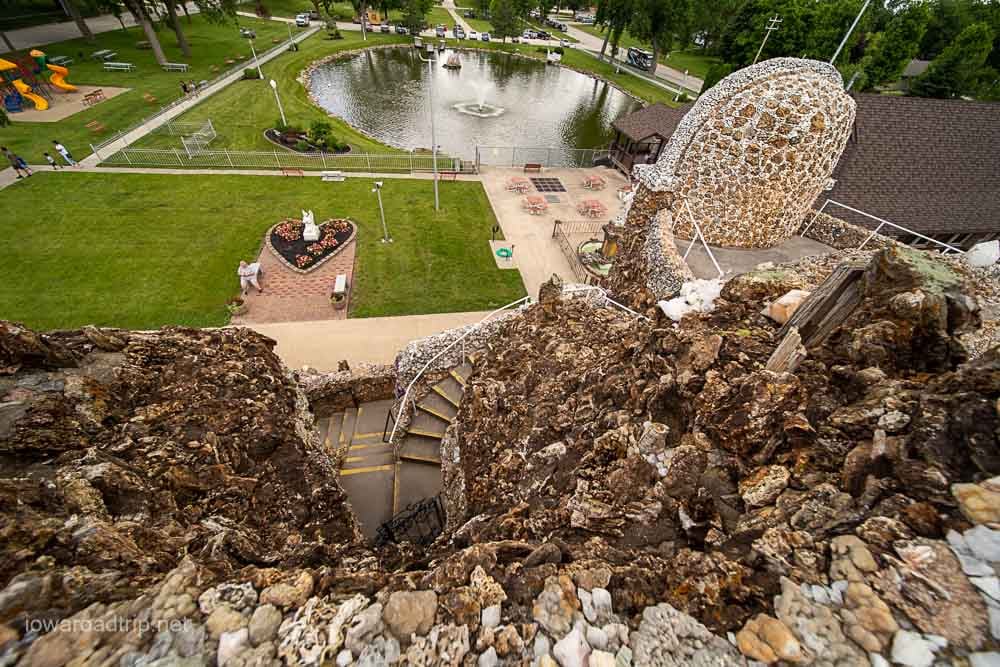
The pond and surrounding grounds
Do not leave immediately after walking through the main sections.
Explore the grounds, walk near the pond, and look back at the Grotto from different angles. Stepping away from the structures can provide a better sense of their size and their relationship to the church and surrounding property.
Some of the best photographs include more of the overall setting rather than only close views of the stonework.
The gift shop
The gift shop offers religious items, books, jewelry, postcards, souvenirs, and other keepsakes.
Because hours vary by season, check the current schedule when the gift shop is an important part of your visit.
Is the Grotto good for children?
The Grotto can be an enjoyable family stop because it is outdoors, visually interesting, and filled with unusual details.
Children who enjoy exploring passageways, looking at colorful rocks, or searching for hidden details may find plenty to hold their attention.
Try turning the visit into a simple scavenger hunt. Ask children to look for:
- Shiny stones
- Shells and fossils
- Angels and statues
- Arches and caves
- Different colors
- Stairs and passageways
- Unusual textures
Younger children may not understand all of the history or religious symbolism, so keep the visit flexible.
Watch children closely around steps, uneven surfaces, railings, and places they may be tempted to climb. The structures are historic and should not be treated as playground equipment.
Accessibility, stairs, and walking conditions
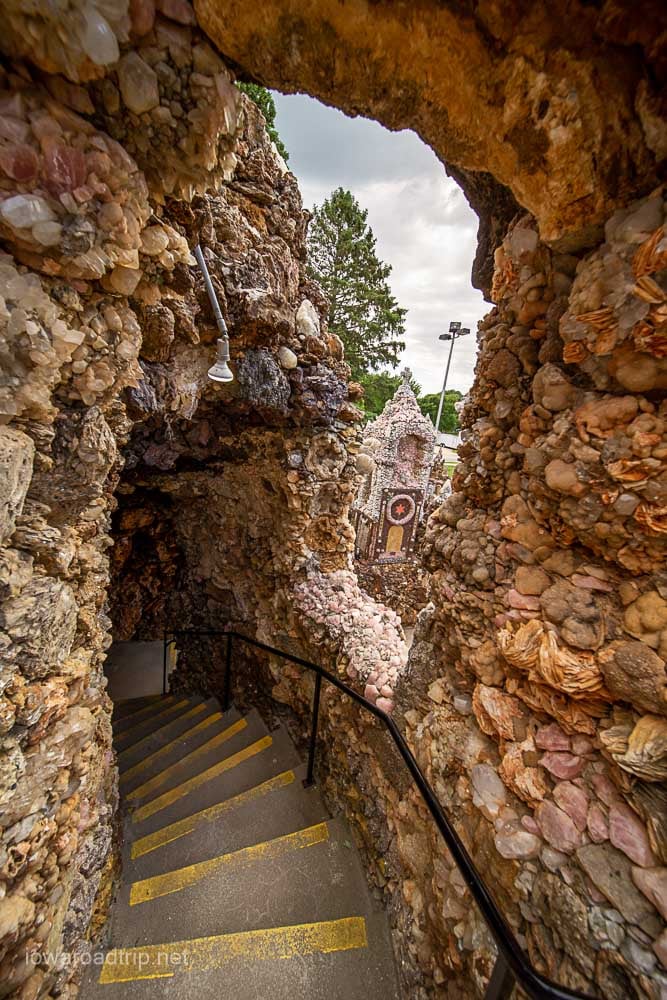
The Grotto is an outdoor site with paved and unpaved walkways, stairs, railings, elevated viewpoints, and uneven surfaces.
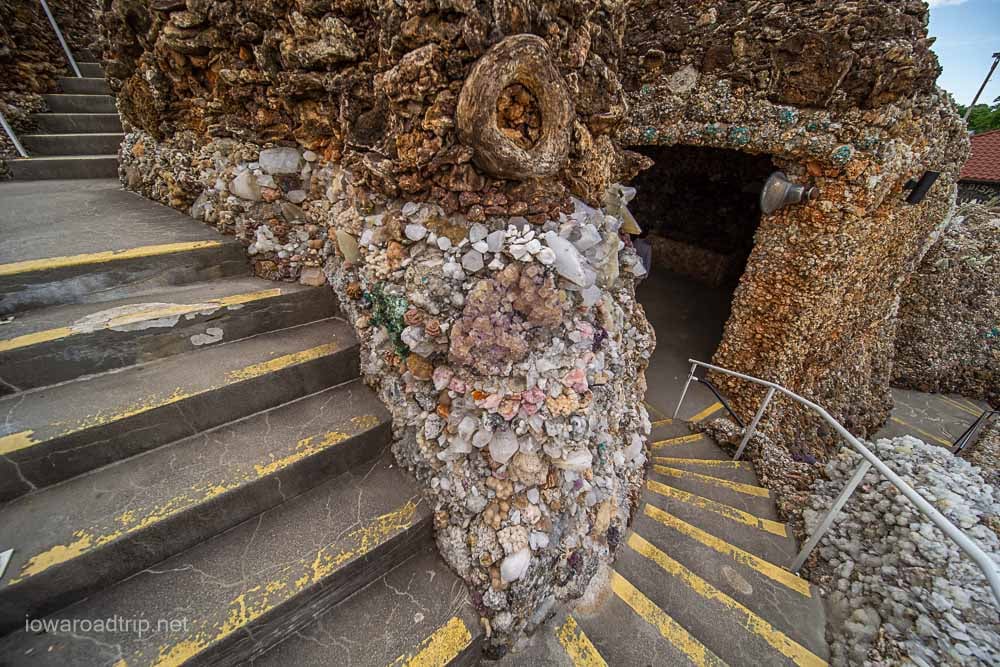
A significant portion can be viewed from ground level. However, some passageways and viewpoints require climbing stairs or navigating less accessible areas.
Visitors using wheelchairs, walkers, or strollers should be able to see much of the site but may not be able to reach every section.
Call ahead for current accessibility information when mobility is a major concern.
What should you bring?
Comfortable walking shoes are helpful because you will probably spend more time wandering than expected.
Depending on the season, consider bringing:
- Water
- Weather-appropriate clothing
- A charged phone or camera
- Cash for donations
- Money for the gift shop
- Snacks for children
- Sun protection during warm weather
Most of the experience is outdoors, so dress for current conditions.
Food and nearby planning
West Bend is a small town, so check restaurant hours before your trip.
This is especially important if you are visiting on a Sunday, holiday, or evening. Do not assume that food will be available at every hour.
Bringing snacks or simple picnic supplies can make the trip easier, particularly for families.
For a longer road trip, consider combining West Bend with Algona, Emmetsburg, Humboldt, Pocahontas, or Fort Dodge.
Can you camp at the Grotto?
A campground is available on the property.
Camper and tent sites have traditionally been offered on a first-come, first-served basis, with registration handled through the Grotto office or gift shop.
Camping can be useful for:
- RV travelers
- Pilgrimage groups
- Visitors planning a slower north-central Iowa trip
- Travelers passing through the region
Rates and registration procedures may change, so confirm current information before arriving.
Why was the Grotto built?
The Grotto was created by Father Paul Matthias Dobberstein, a Catholic priest who became pastor in West Bend in 1898.
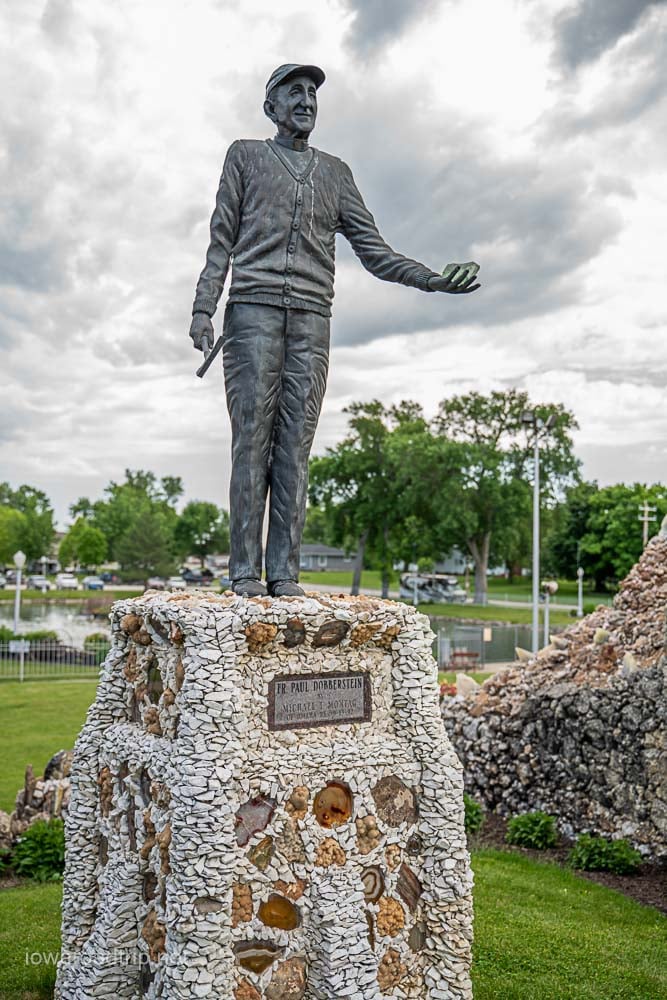
As a young seminarian, Dobberstein became critically ill with pneumonia. He prayed for the intercession of the Blessed Virgin Mary and promised that if he recovered, he would build a shrine in her honor.
After arriving in West Bend, he began collecting stones, minerals, and other materials. He spent roughly a decade gathering supplies before beginning construction in 1912.
Father Dobberstein then devoted more than four decades to creating the Grotto’s walls, ceilings, arches, and religious scenes.
He died in 1954, but the work and care of the site continued through others, including Matt Szerensce and Father Louis Greving.
The Grotto was not originally created as a tourist attraction. It was built as an expression of gratitude, faith, devotion, craftsmanship, and education.
Father Dobberstein wanted it to inspire religious reflection while also teaching visitors about the natural beauty and variety of rocks and minerals.
That purpose remains an important part of the experience today.
Is the Grotto of the Redemption worth visiting?
Yes—especially if you enjoy places that do not feel like anywhere else.
The Grotto is worth a special trip for Catholic pilgrims, Iowa bucket-list travelers, photographers, rock and mineral enthusiasts, folk-art fans, architecture lovers, and people who enjoy unusual handmade attractions.
It is not a theme park or a full-day entertainment complex. The experience is quieter and more reflective than that.
But photographs do not fully capture the scale, texture, and amount of work built into every wall, arch, statue, and passageway.
Give yourself enough time to slow down, look closely, and walk through more than once.
That is when the Grotto really starts to reveal itself.
Frequently asked questions
Where is the Grotto of the Redemption?
The Grotto is located at 208 1st Avenue NW in West Bend, Iowa, next to Saints Peter and Paul Catholic Church.
Is the Grotto free?
There is no required admission fee to walk through the outdoor shrine. Donations are encouraged.
How long should I allow?
A quick visit takes approximately 30 to 45 minutes. Most visitors should allow 60 to 90 minutes, while a guided and more complete visit may take two to three hours.
Is the Grotto open year-round?
The outdoor shrine grounds are listed as open throughout the year. Museum, gift shop, office, church, and guided-tour hours follow separate schedules.
Can I visit without a guided tour?
Yes. Visitors can walk through the Grotto independently. A guided tour provides more background about its construction, materials, symbolism, and history.
Is the Grotto wheelchair accessible?
Much of the site can be viewed from ground level, but some areas include stairs and uneven surfaces. Call ahead for current accessibility details when mobility is a concern.
This revision keeps the detailed travel guidance while reducing repeated statements about its size, audience, photography value, and religious significance.