Ride Into the Bison Herd at Hawkeye Buffalo & Cattle Ranch
I brought my largest zoom lens to Hawkeye Buffalo & Cattle Ranch, assuming I would photograph the bison from across a distant pasture.
I barely needed it.
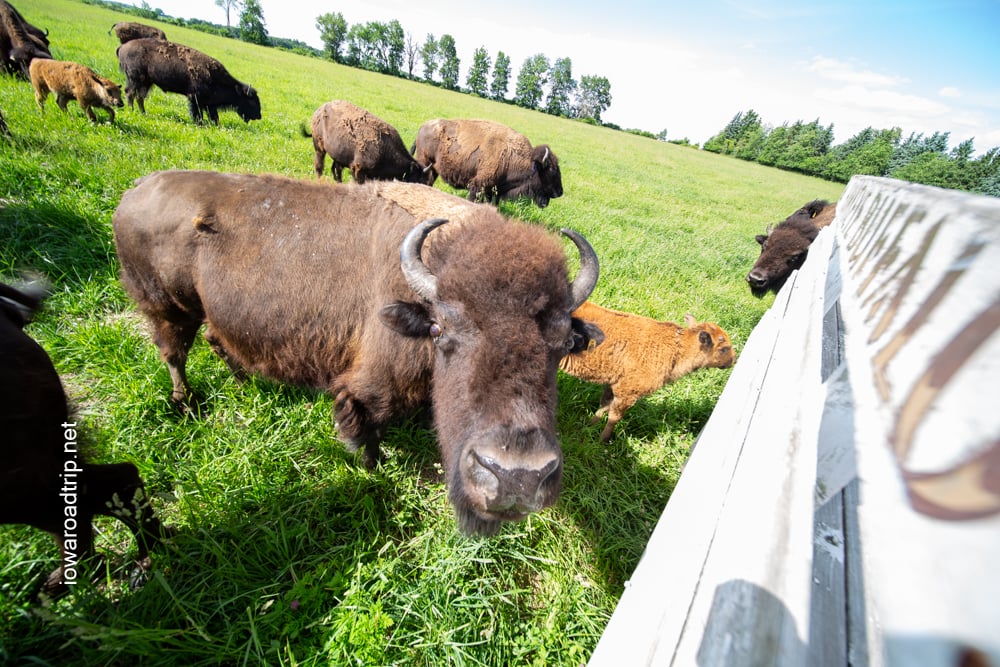
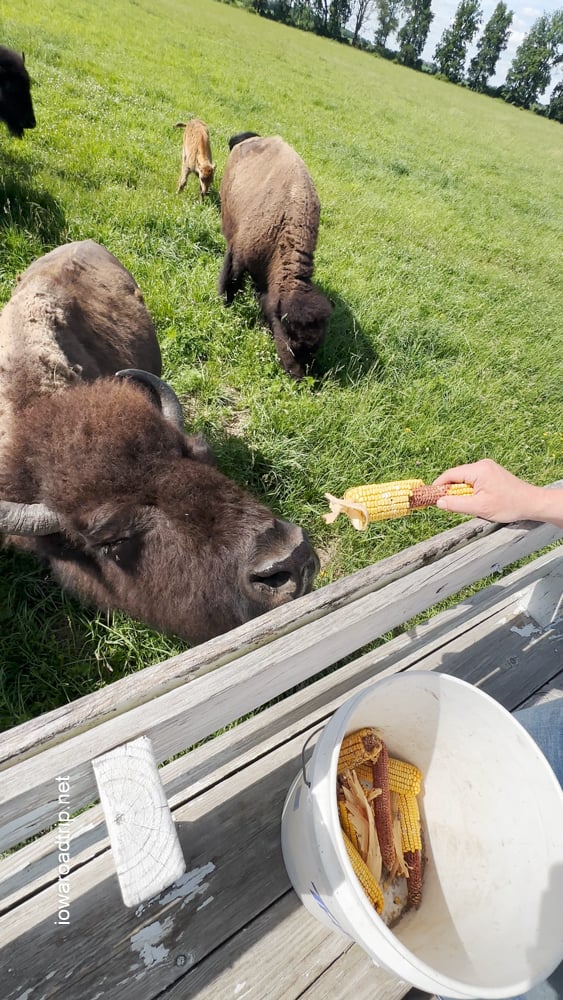
Once the herd recognized the tour wagon, the bison began moving toward us. Mothers came with their calves beside them, and before long, the animals were close enough to stick their noses through the openings in the wagon.
Many of my best photographs were taken with my phone.
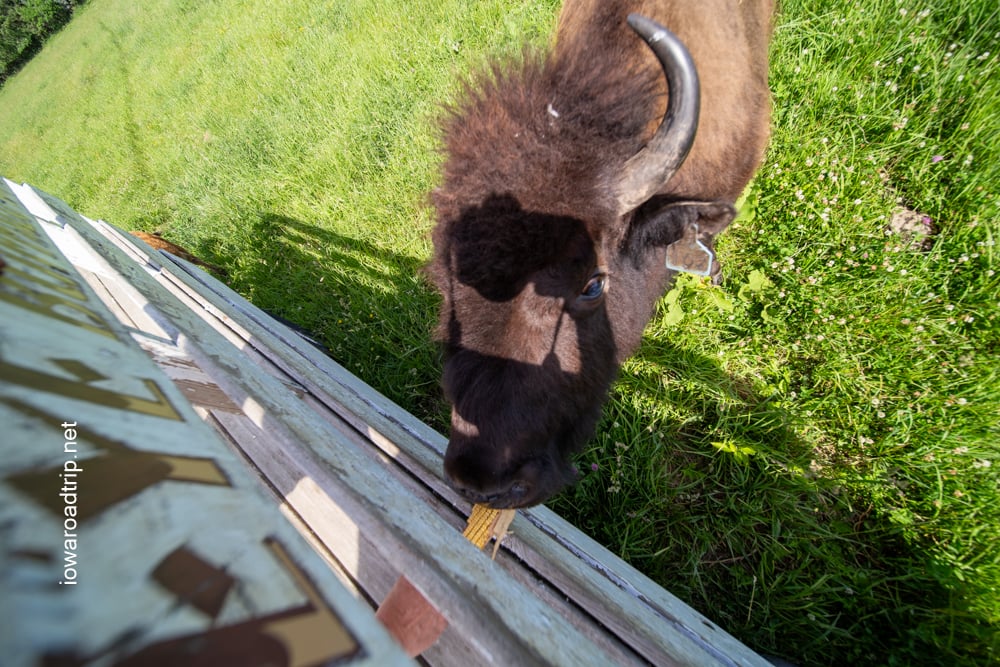
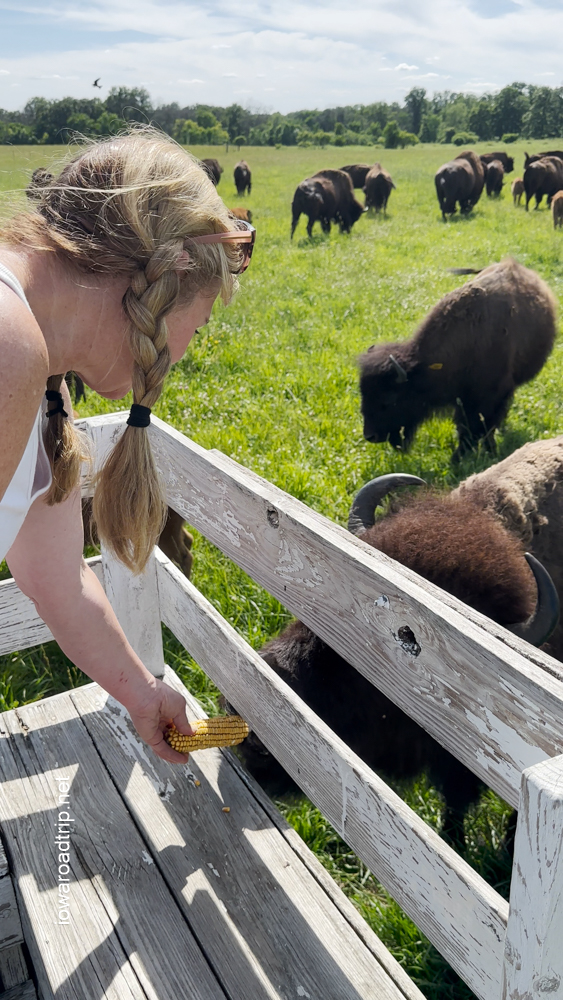
That is what makes this tour near Fredericksburg different from simply spotting bison behind a fence. Visitors ride into the pasture, watch the herd approach and may feed the animals ears of dried corn directly from the wagon.
The experience is educational, exciting and slightly intimidating—in the best possible way.
Quick visitor information
Hawkeye Buffalo & Cattle Ranch
Address: 3034 Pembroke Ave., Fredericksburg, Iowa 50630
Phone: 641-229-6701
Tour price:
- Adults: $15
- Children younger than 12: $10
Payment: Cash or Venmo
Reservations: Required at least 24 hours in advance
Tour length: My visit lasted approximately 90 minutes
Official website:
https://www.hawkeyebuffaloandcattle.com/
Tours are offered on select dates rather than on a daily walk-in schedule. Check the current schedule and reserve your place before making the drive.
Reserve your tour before making the drive
Hawkeye Buffalo & Cattle Ranch is a working farm, not a drop-in attraction.
Reservations must be made at least 24 hours in advance. Public tours are offered on select dates, while private school, bus and group tours may be arranged separately.
Visitors meet at the listed ranch address, where Martha McFarland prepares the wagon and explains what to expect.
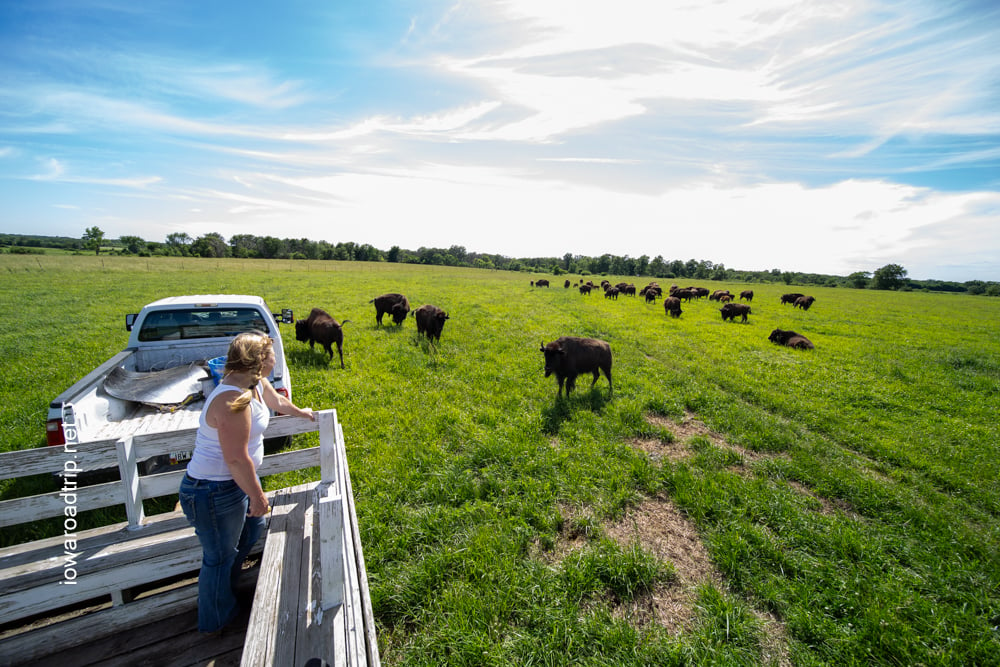
The wagon resembles the open wagons commonly used for fall hayrides at pumpkin patches. It has bench seating with back support and three steps for boarding. There are no handrails, but upright posts provide something to hold while climbing aboard.
Once everyone is seated, the wagon is pulled behind a pickup toward the bison pastures.
The ride into the pasture
The wagon travels about a quarter-mile down a gravel road to another part of the farm. That portion of the ride is relatively smooth.
After Martha stops to open a gate, the wagon continues for another quarter-mile across uneven grass fields. This part is noticeably bumpier.
The bison may be anywhere within more than 250 acres, so the tour does not begin with the herd waiting beside a designated viewing area.
You ride out to find them.
The wagon is uncovered, which means full sun, wind and whatever weather arrives that day. The open design becomes an advantage once the bison appear because visitors can turn to see animals approaching from either side.
When the herd recognizes the wagon
The most memorable part of my tour happened before the first bison reached us.
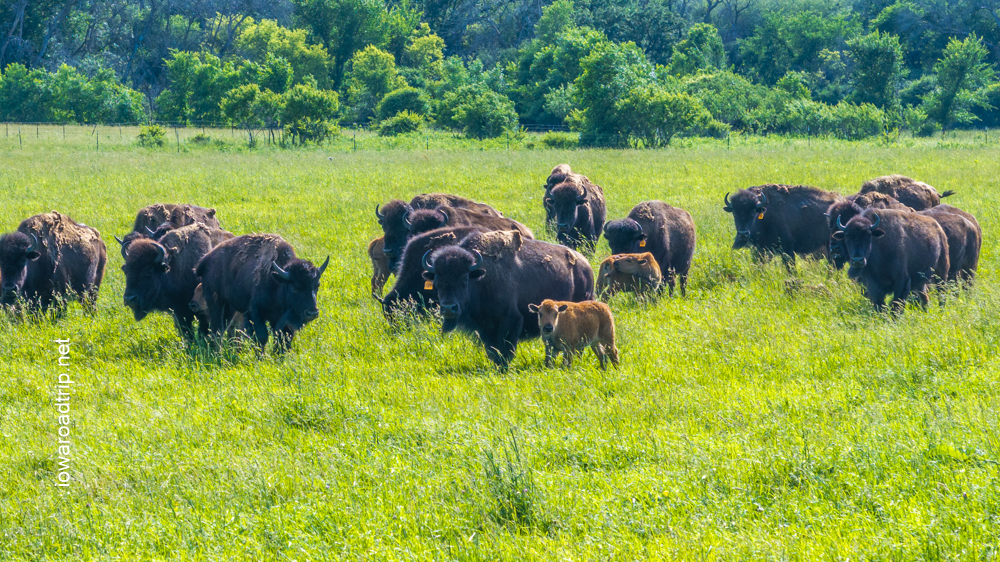
Once the animals recognized the wagon, the entire herd began moving in our direction.
There was no dramatic roar or thunderous sound. The impact came from watching all of them change direction at once.
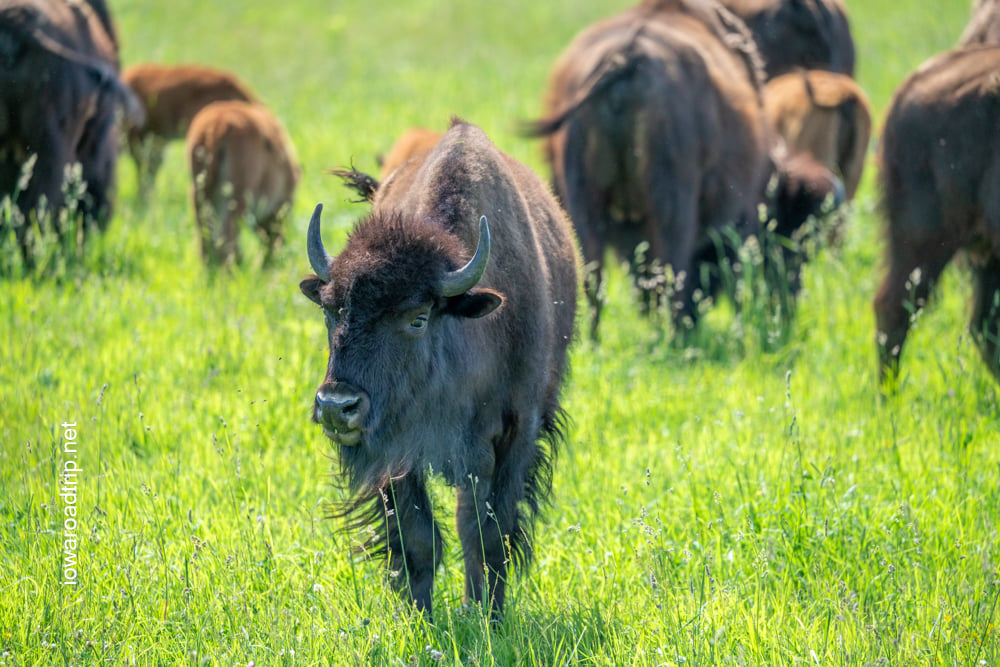
It was exciting and slightly scary—the feeling of looking across the pasture and thinking, Here they come.
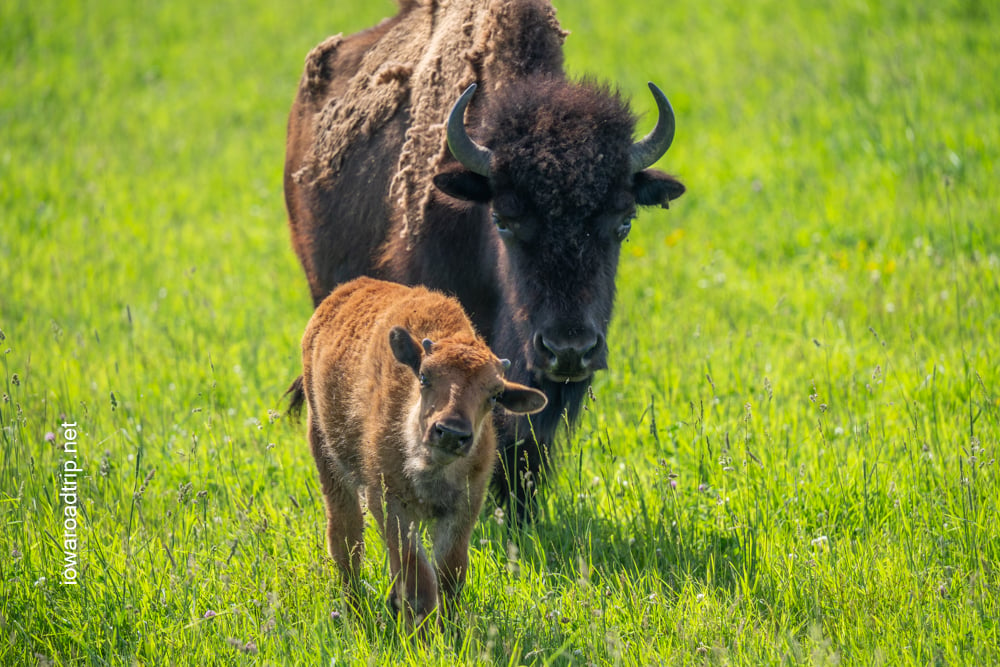
The calves stayed beside their mothers as the herd approached. Within a short time, animals that had been scattered across the pasture were gathering around the wagon.
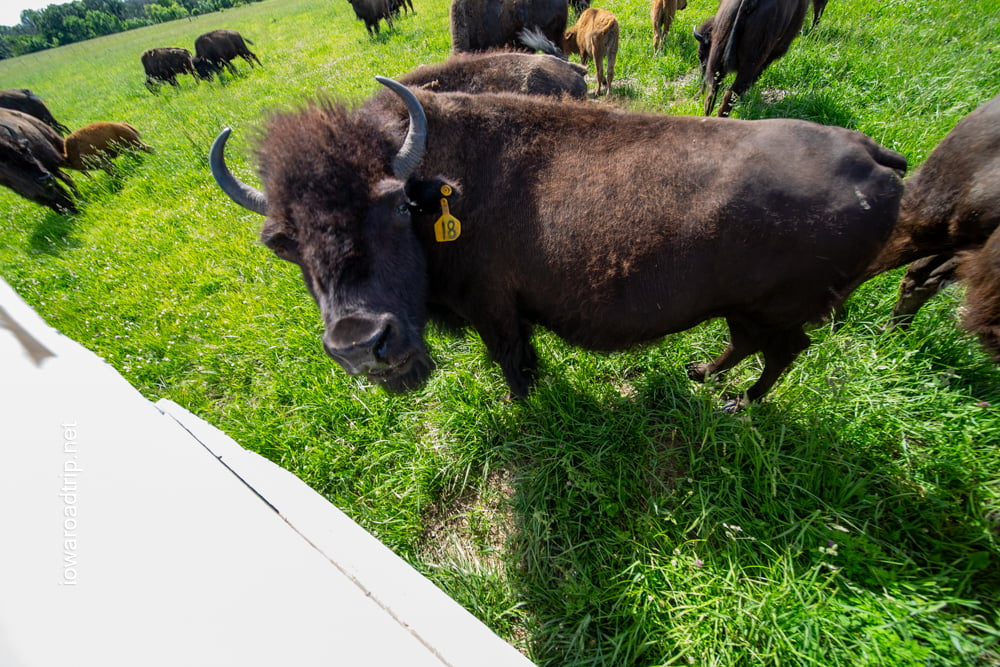
The bison have learned that the wagon means visitors are bringing a special treat: ears of dried corn.
The ranch is an organic operation, and the bison spend their time grazing on the grasses growing across the acreage. The dried corn is reserved for tours, which explains why the animals recognize the wagon and come to meet it.
How close do the bison come?
Much closer than I expected.
I carried a long zoom lens because I assumed the animals would remain at a distance. Instead, many came directly alongside the wagon.
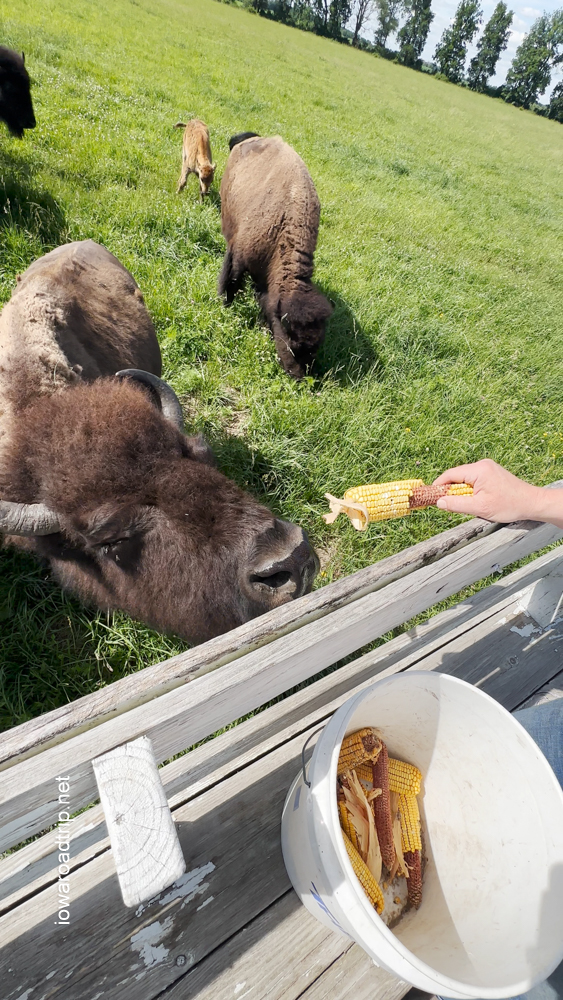
Some pushed their noses through the openings between the rails while searching for corn.
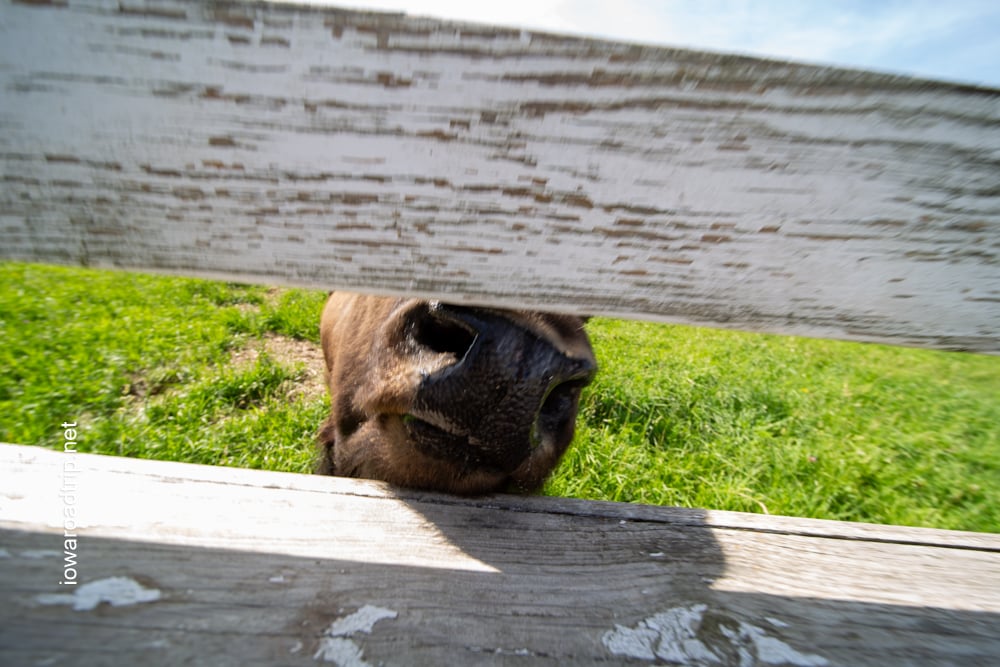
You can see the texture of their coats, the size of their heads and the details around their eyes and horns without binoculars or a telephoto lens.
These are living animals on a working farm, so every tour may be different. On my visit, the bison stayed beside the wagon for approximately 20 minutes—essentially as long as corn remained available.
Once they realized the treats were gone, they gradually drifted back into the pasture.
Do not pet the fluffy cows
Before anyone begins feeding the bison, Martha explains the safety rules.
Her most memorable instruction is simple:
Do not pet the fluffy cows.
Bison do not appreciate having objects—including your hands—placed near their faces.
Visitors may hold out an ear of dried corn and allow a bison to take it. Anyone uncomfortable feeding directly can drop the corn onto the ground and let the animals retrieve it.
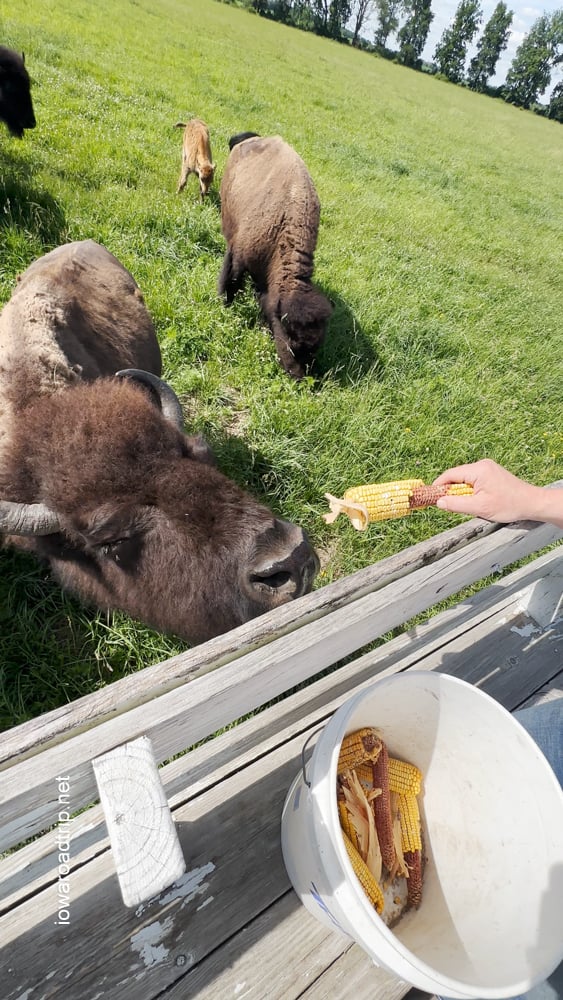
You can also choose not to feed them and simply watch.
The bison may appear calm, but they are still large and powerful animals. Follow Martha’s instructions and resist the temptation to reach through the wagon rails.
In other words: Do not pet the fluffy cows.
More than a close animal encounter
Feeding the herd is the visual highlight, but the tour covers much more.
Martha talks about:
- What bison eat
- How members of the herd care for and respond to one another
- Her role in managing the animals
- The history of bison
- Iowa’s landscape and geological history
- Soil health and regenerative agriculture
- The nutritional characteristics of bison meat
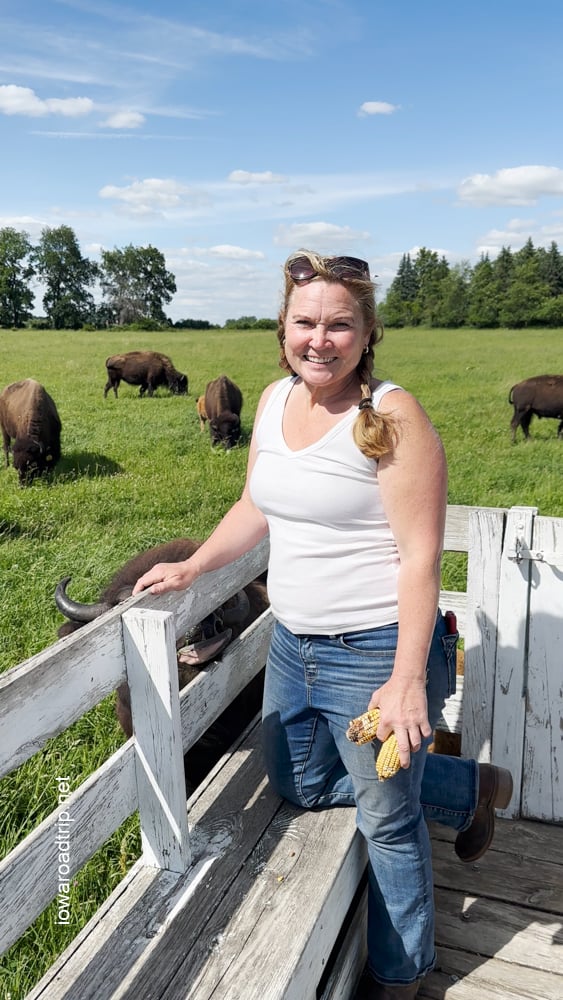
She is knowledgeable and experienced, but the presentation never feels like a formal lecture.
Martha combines information with humor, personal stories and observations from years of working with the herd. You can tell she has led many tours and knows how to explain the farm while responding to whatever the bison are doing around the wagon.
Visitors do not need an agricultural background to follow the discussion. The pasture, grasses and animals provide real-life examples of the farming practices she describes.
Is the wagon ride comfortable?
The wagon has bench seating with back support, but visitors should expect a true outdoor farm ride.
The gravel-road section is fairly smooth. The trip across the pasture includes more bumps and jolts because the wagon travels over uneven grass.
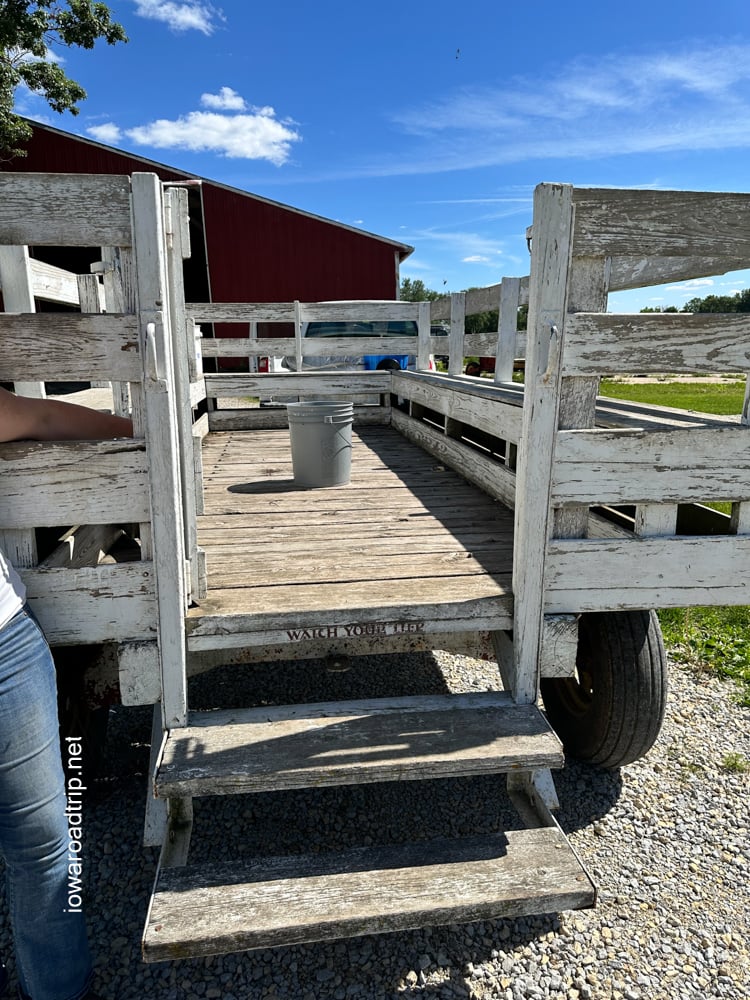
There is no roof, so prepare for:
- Direct sunlight
- Wind
- Heat or cooler temperatures
- Dust and dry grass
- A bumpy ride across the pasture
When the wagon is not full, visitors can move around to see or photograph bison on either side. A full tour may provide less room to change positions.
Visitors with mobility or balance concerns should contact the ranch before reserving. The wagon has three steps and posts to hold for support, but no traditional handrails.
Is the tour good for young children?
Yes, as long as adults are prepared to supervise them closely.
Children will probably enjoy:
- Riding in the wagon
- Watching the herd approach
- Seeing calves beside their mothers
- Feeding ears of corn
- Viewing bison from only a few feet away
The biggest concern is the natural temptation to reach out and touch an animal.
Families with several young children should bring enough adults to watch everyone once bison gather around both sides of the wagon. Very young children may also find the animals’ size and closeness intimidating.
Let children watch first, and do not pressure them to feed a bison directly.
Most importantly, help them remember the rule: Do not pet the fluffy cows.
Photography tips
Do not assume you will need your longest lens.
A phone or moderately wide camera lens may be more useful once the bison reach the wagon. My largest zoom lens was unnecessary for many of the closest encounters.
Have your camera ready before the herd begins moving. The moment when the entire group turns toward the wagon may provide the best wide scene of the tour.
Other possible photographs include:
- Calves walking beside their mothers
- A bison taking an ear of corn
- Noses pushing between the wagon rails
- Visitors feeding the herd
- The wagon surrounded by animals
- Close views showing the texture of their coats
Include part of the wagon or a person holding corn to provide a sense of scale.
Because bison may approach from either side, watch the entire herd instead of concentrating on one animal. Keep camera straps and equipment inside the wagon and follow Martha’s safety directions before worrying about the photograph.
What should you wear?
Dress for the weather and wear closed-toe shoes.
You will be boarding a farm wagon and traveling through gravel roads and grassy fields. This is not an indoor or climate-controlled attraction.
Depending on the forecast, consider bringing:
- Sunscreen
- A hat and sunglasses
- Insect repellent
- A light jacket
- A charged phone or camera
- Water for before or after the ride
The exposure to sun and wind is part of the experience. It feels like a real trip into the pasture rather than a staged animal exhibit.
Shop for bison products after the tour
After the corn was gone and the herd moved away, Martha returned to the pickup and pulled the wagon back to the original meeting area.
The final stop was a room containing freezers filled with bison products available for purchase.
The selection is similar to the range of beef products many shoppers already recognize, including:
- Ground bison
- Hamburger-style patties
- Steaks
- Filets
- Chuck roast and other roasts
- Jerky
- Summer sausage
- Bones and specialty cuts
Inventory may change. Purchases can be made with cash or Venmo.
I tried the bison jerky, and it was fantastic.
Bring a cooler if you plan to purchase frozen meat, especially when you have additional road-trip stops before returning home.
How long does the tour take?
My entire visit lasted approximately 90 minutes.
That included boarding the wagon, traveling to the pasture, feeding and learning about the bison, returning to the meeting area and looking through the products available for purchase.
Tour length may vary depending on the location of the herd, the size of the group, visitor questions and animal behavior.
Allow about two hours in your schedule so you do not feel rushed.
Who will enjoy this tour?
Hawkeye Buffalo & Cattle Ranch is a strong choice for:
- Families with animal-loving children
- Photographers
- Bison enthusiasts
- Visitors interested in Iowa agriculture
- School and youth groups
- Travelers interested in regenerative farming
- Anyone looking for an unusual northeast Iowa road-trip stop
The tour works because it combines a memorable close encounter with a deeper explanation of the animals, the farm and the landscape.
You leave with photographs, but also with a better understanding of bison behavior and the work involved in caring for the herd.
Final thoughts
The biggest surprise at Hawkeye Buffalo & Cattle Ranch is not simply seeing bison.
It is watching the entire herd recognize the wagon and begin moving toward you.
For a few moments, it feels exciting and slightly unsettling. Then the animals reach the wagon, calves remain beside their mothers and large noses begin searching between the rails for dried corn.
That is when you realize the zoom lens you carried into the pasture is no longer necessary.
The bison are right there.
Reserve before making the drive, dress for an open-air farm ride and remember Martha’s most important instruction:
Do not pet the fluffy cows.