Meet the Robots Milking Cows at Cinnamon Ridge Dairy Farm
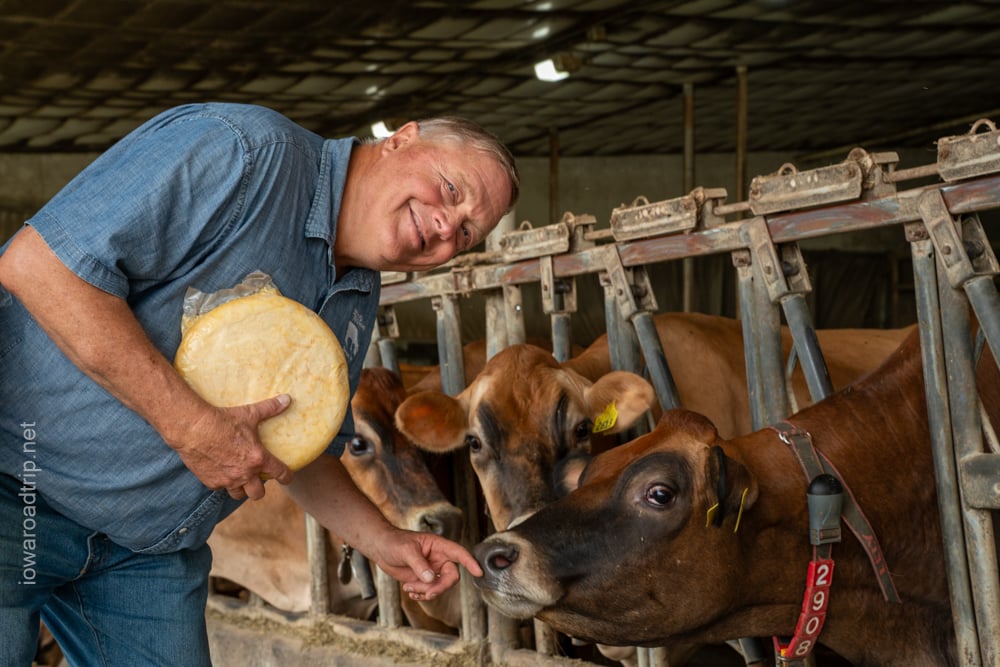
Four robots. A quarter of a million dollars apiece. That’s a million dollars in milking equipment inside one barn, and the cows are the ones deciding when to use it.
I’ve spent a lot of time visiting the working farms across northeast Iowa’s Silos & Smokestacks region, and Cinnamon Ridge Farms near Donahue had been on my list for a while. Once I finally made the trip, I understood why it kept coming up.
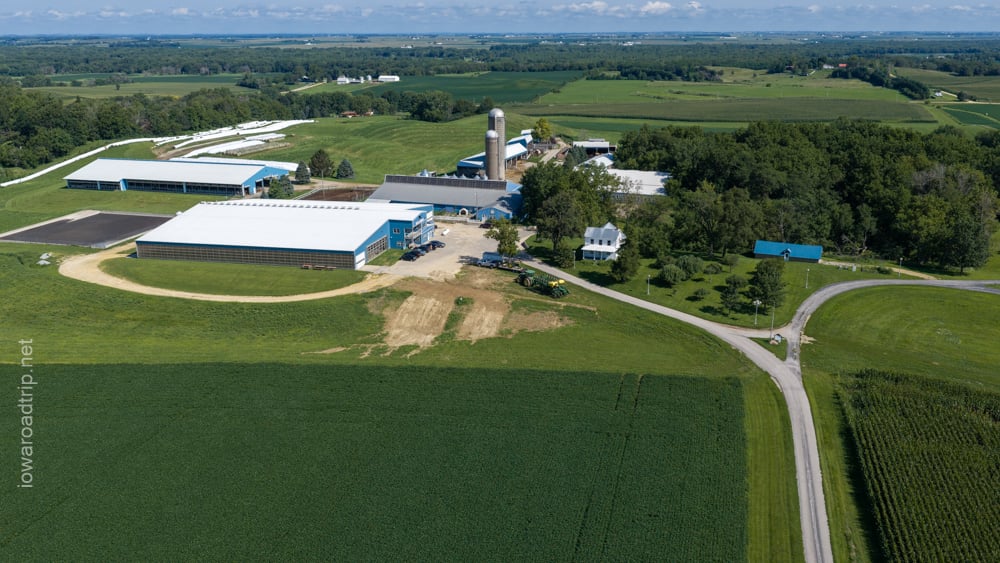
Cinnamon Ridge is a working dairy farm near the Quad Cities and the Mississippi River, and it’s built its reputation on two things: a robotic milking operation that draws farmers from around the world, and a cheese tasting that’s unlike anything else I’ve experienced on a farm tour.
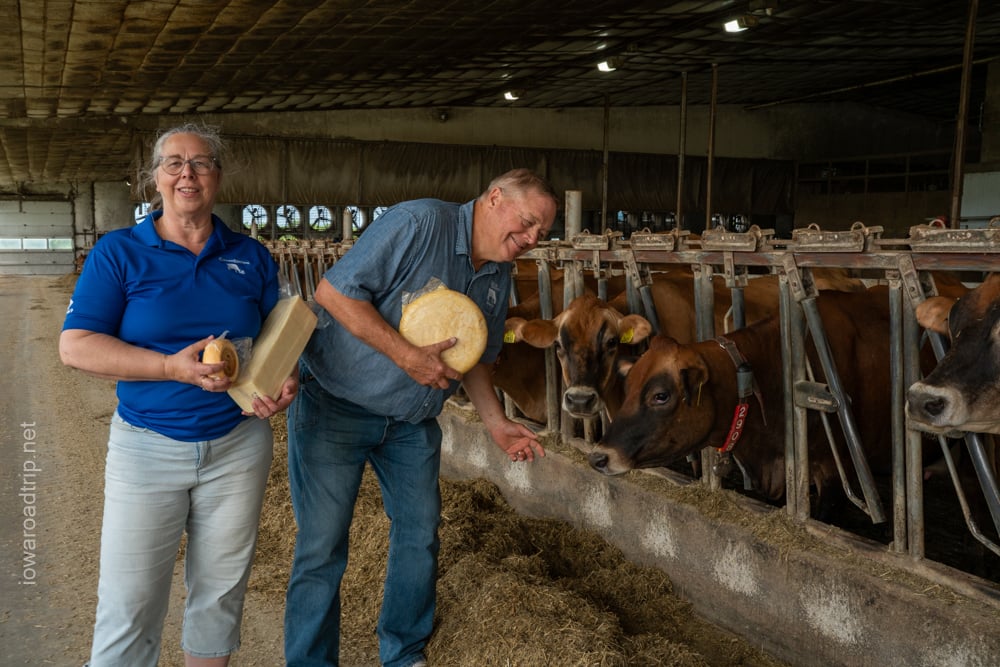
What sets this farm apart isn’t just the technology. It’s that the Maxwell family controls every step of the process themselves. They grow the crops that feed their cows. They milk the cows. They process that milk. They turn it into cheese. Nothing is outsourced along the way.
Table of Contents
- Quick visitor information
- How the tour is structured
- Four robots, a million dollars, zero humans required
- A closer look at the cows
- Full circle, from the field to the cheese
- The cheese tasting
- Meeting Maxwell Muenster
- Is it good for kids?
- Group and event options
- What to expect logistically
- Who will enjoy Cinnamon Ridge Farms?
- Final thoughts
Quick visitor information
Cinnamon Ridge Farms
Address: 10600 275th St., Donahue, Iowa 52746
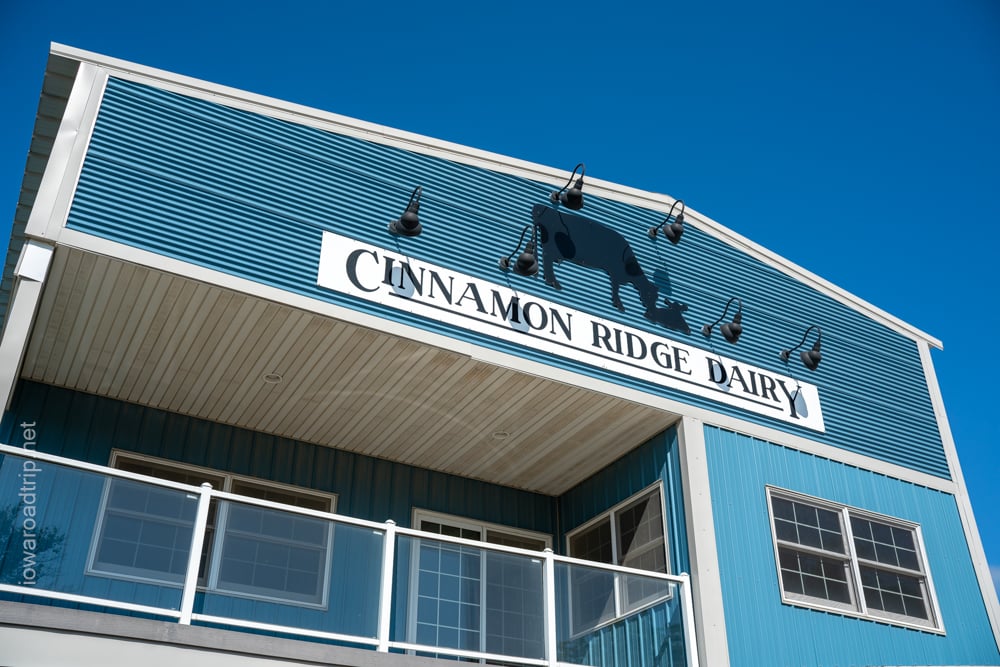
[IMAGE: 2026-08-08_10_47_58.JPG — low angle of the blue Cinnamon Ridge Dairy barn sign]
Tour hours (by appointment)
Open Barn Tours (no appointment needed): Select Saturdays in June, July and August, starting promptly at 10 a.m. Online ticket purchase required.
Tour length: Plan on approximately 90 minutes
Group tours: $17 per person, groups of 20+ Youth tours: $10 per child, groups of 10+ Activity camps: $20 per child
Farm store: Located at the end of the farm lane
Website: cinnamonridgefarms.com
Most tours require advance booking, so check the website or call ahead before planning your visit.
How the tour is structured
I toured with a group of about 25 people, and the whole visit ran close to 90 minutes start to finish.
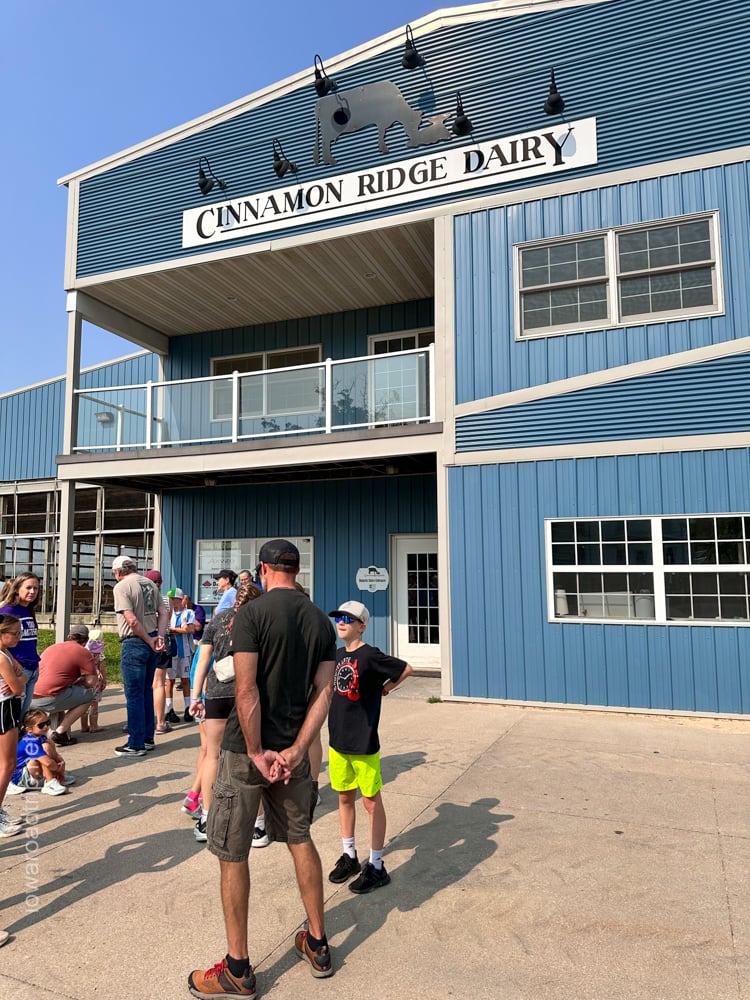
We checked in as a group right at the entrance to the barn. From there, our guide walked us inside to the ground floor, where four robotic milking machines were actively working. That’s where the tour really opens up.
Four robots, a million dollars, zero humans required
Standing on the ground floor, watching the robots work, is when the scale of this operation hits you.
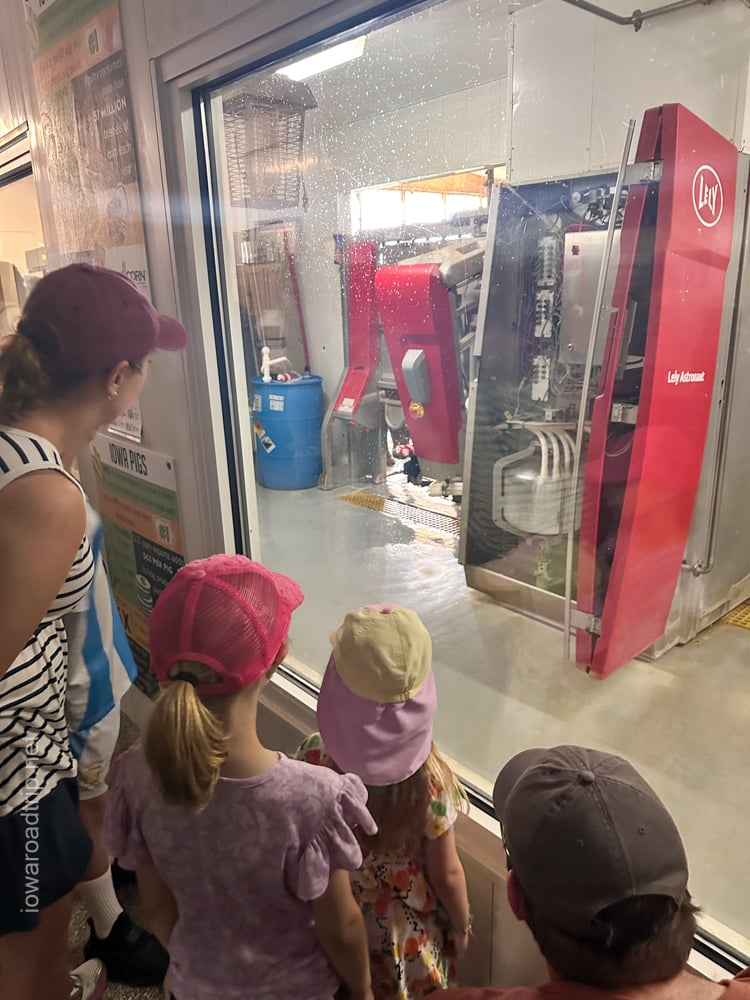
Each robotic milker costs roughly $250,000. Cinnamon Ridge runs four of them, which means there’s about a million dollars in robotics working inside this one barn. Our guide walked us through how the system works: cows aren’t milked on a schedule set by a person. They decide when they want to be milked, walk themselves into the machine, and the robot handles the rest, cleaning and attaching itself automatically.
Our group fielded plenty of questions about the cows and the robotics at this stage, and it’s easy to see why this part of the tour is what Cinnamon Ridge is known for internationally. People travel from dozens of countries specifically to see this system in action.
A closer look at the cows
After the ground floor, we headed up a set of stairs to the second level. This floor has a large seating area and a kitchen up front, along with observation windows looking directly down into two barns full of cows.
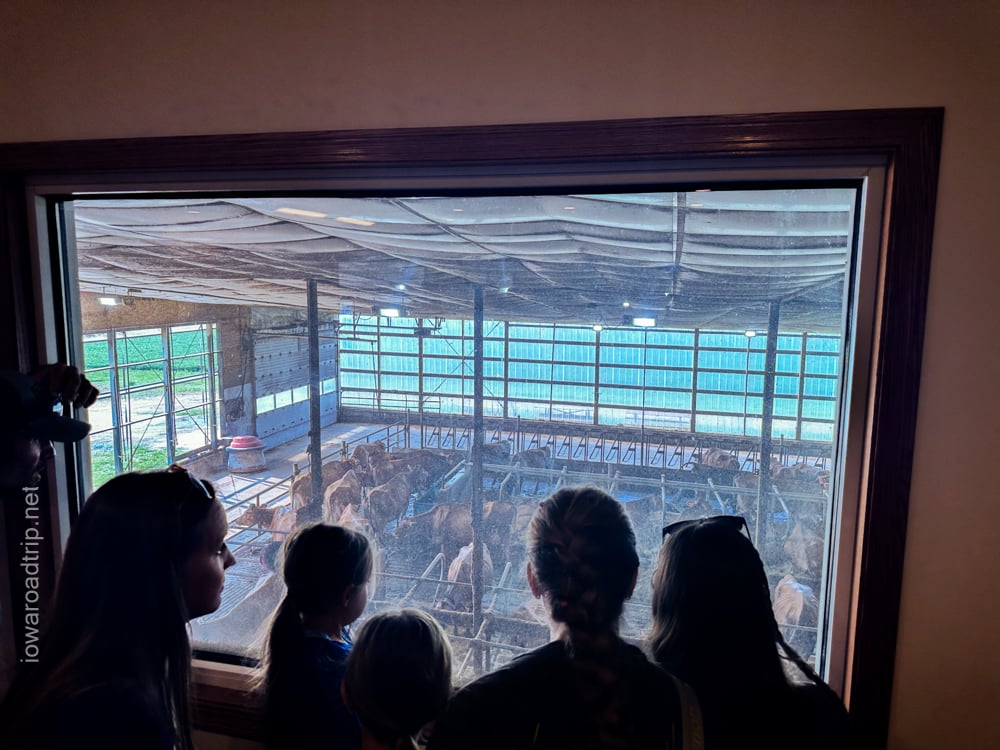
Our guide continued talking about the cows and day-to-day farm operations from up here, with the herd visible below the whole time. It’s one thing to hear about a free-stall barn and sand bedding. It’s another to watch the cows actually using it while someone explains it to you.
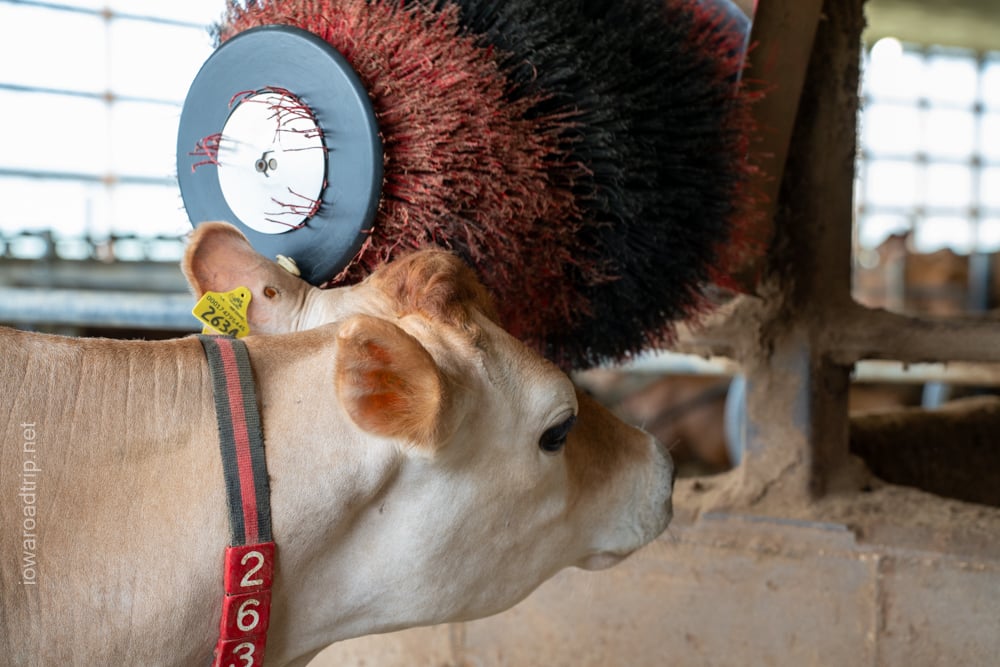
Full circle, from the field to the cheese
Once the conversation moved past the barn operations, our guide shifted into how the farm handles everything after the milk leaves the cow.
This is the detail that stuck with me the most. Cinnamon Ridge doesn’t just milk cows and sell the milk. They grow the crops that feed their own herd. They milk the cows. They process that milk on-site. They turn it into cheese themselves. Every step of the chain happens on this one farm, which is different from most of the other working farm tours I’ve been on in this region.
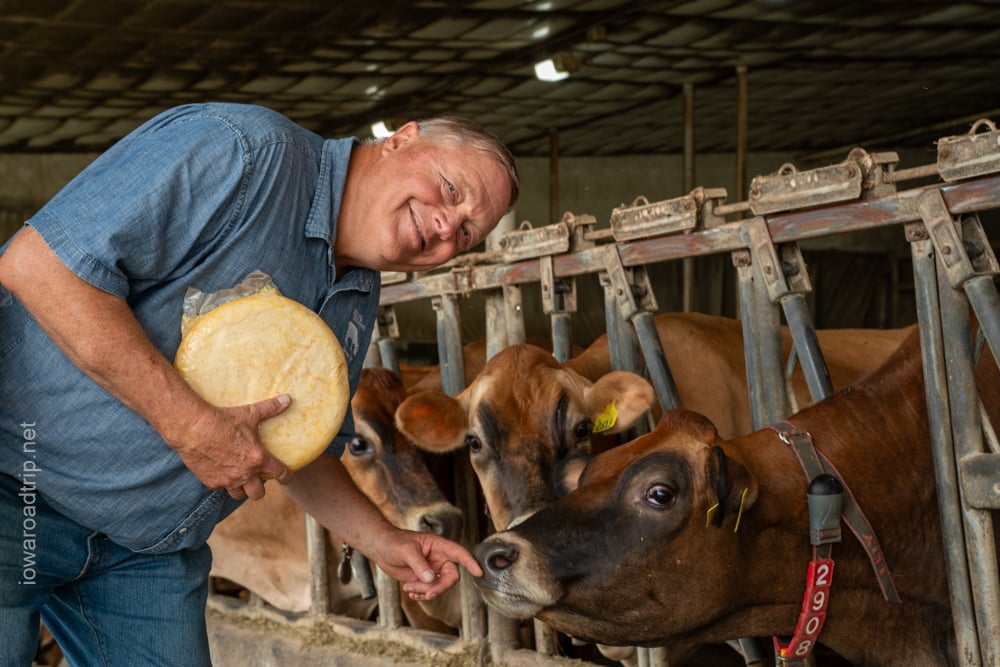
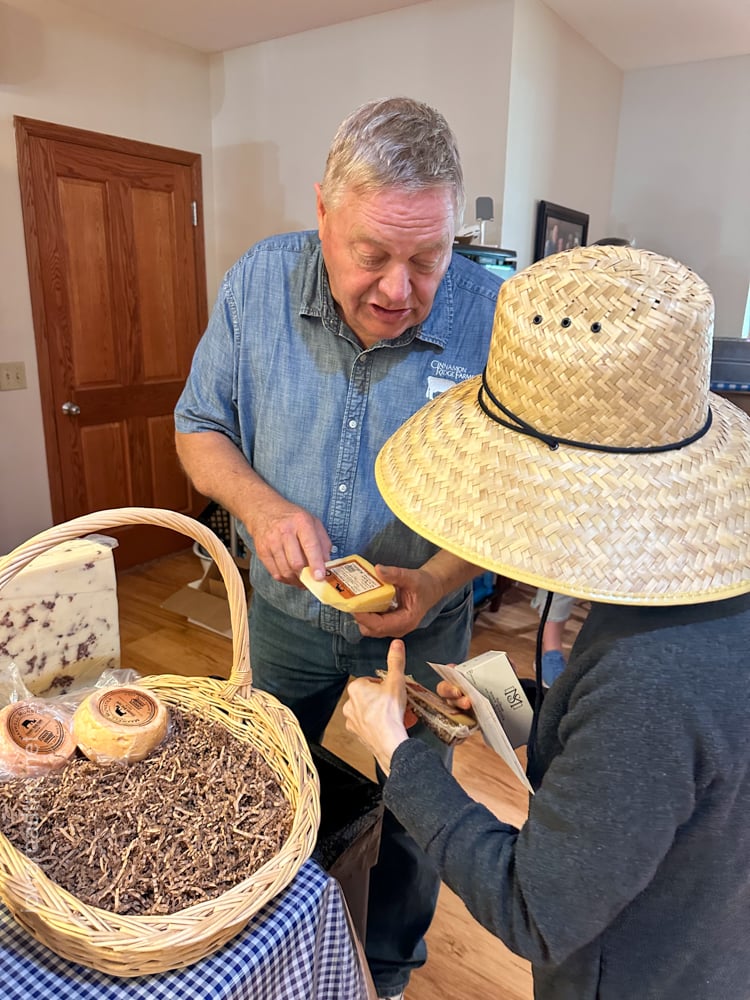
Watching John Maxwell hold a finished wheel of cheese while standing at the same rail where the cows that produced the milk were feeding made that full-circle idea click in a way that a description on a website never could.
The cheese tasting
This is the part of the tour that separates Cinnamon Ridge from every other farm tour I’ve taken.
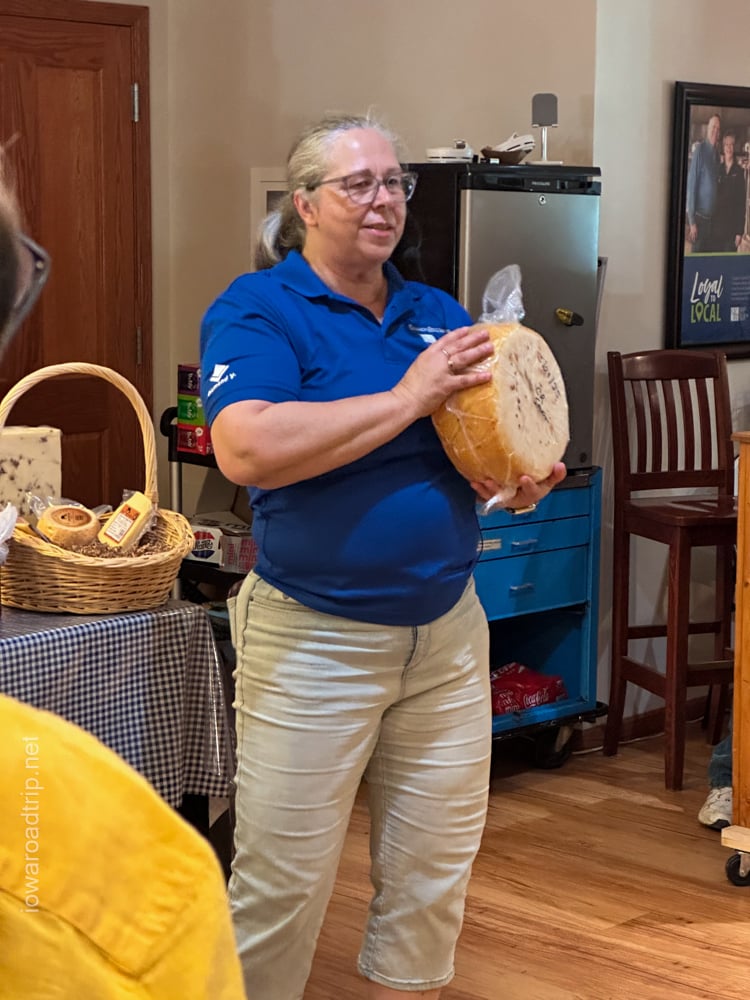
Once we settled into the second-floor seating area, the presentation shifted fully into cheesemaking. Our guides talked us through several specific types of cheese Cinnamon Ridge produces, without stopping to explain the basics of common varieties. If you already know what cheddar or muenster is, you’re not going to sit through a beginner’s course. They assume you know the fundamentals and focus on what makes their cheese different.
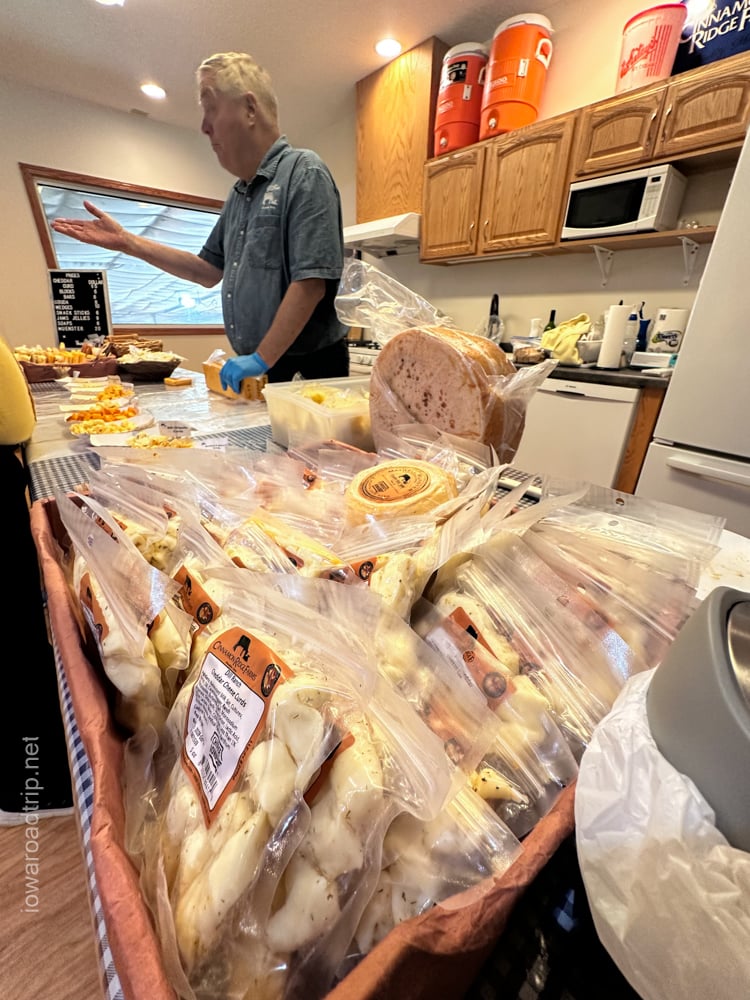
Then they spread the cheese out.
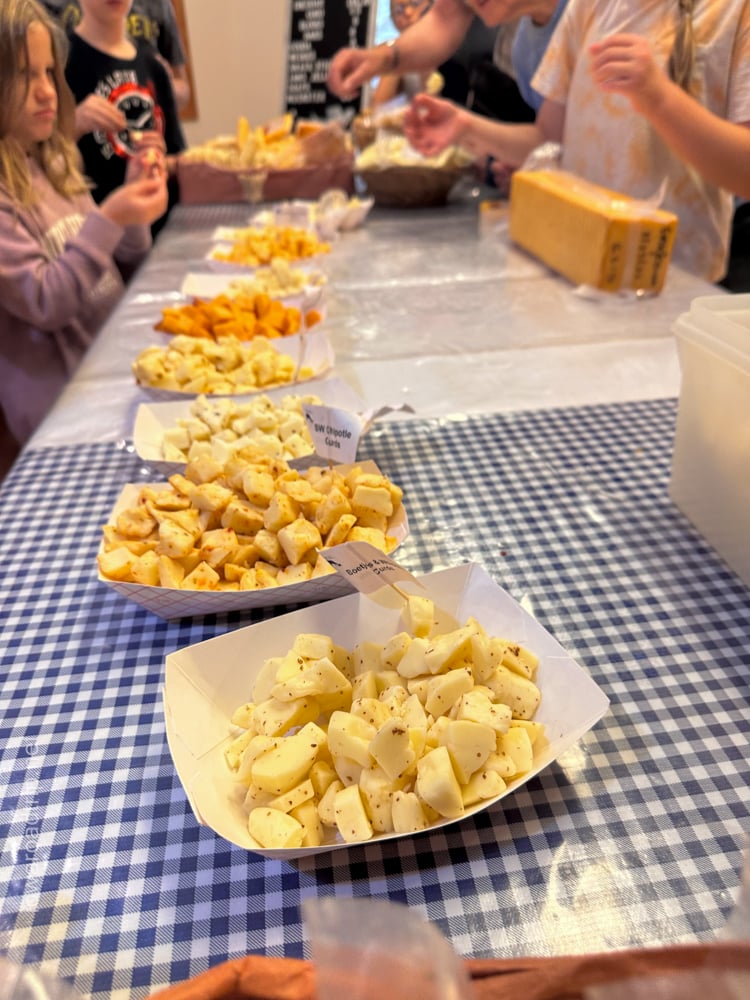
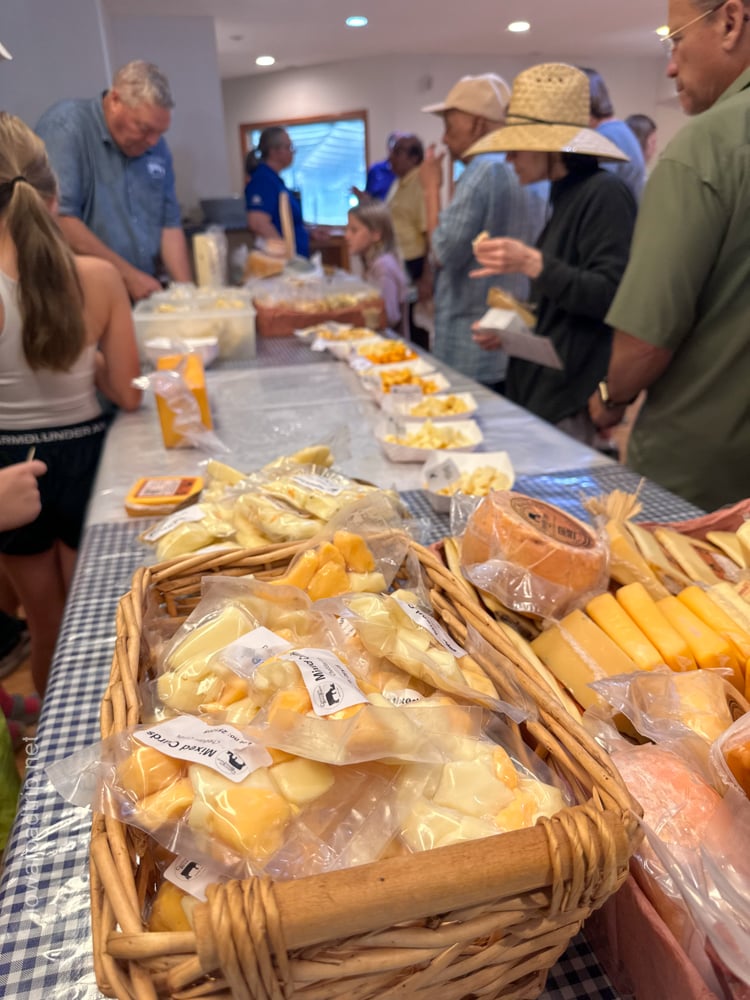
Somewhere between 10 and 12 different cheeses were laid out on the counter for everyone to try, from mild curds to sharper aged varieties. It wasn’t a quick sample-and-move-on setup. There was real variety, and plenty of it.
Meeting Maxwell Muenster
Out of every cheese on that counter, one stood out to me: the Maxwell Muenster.
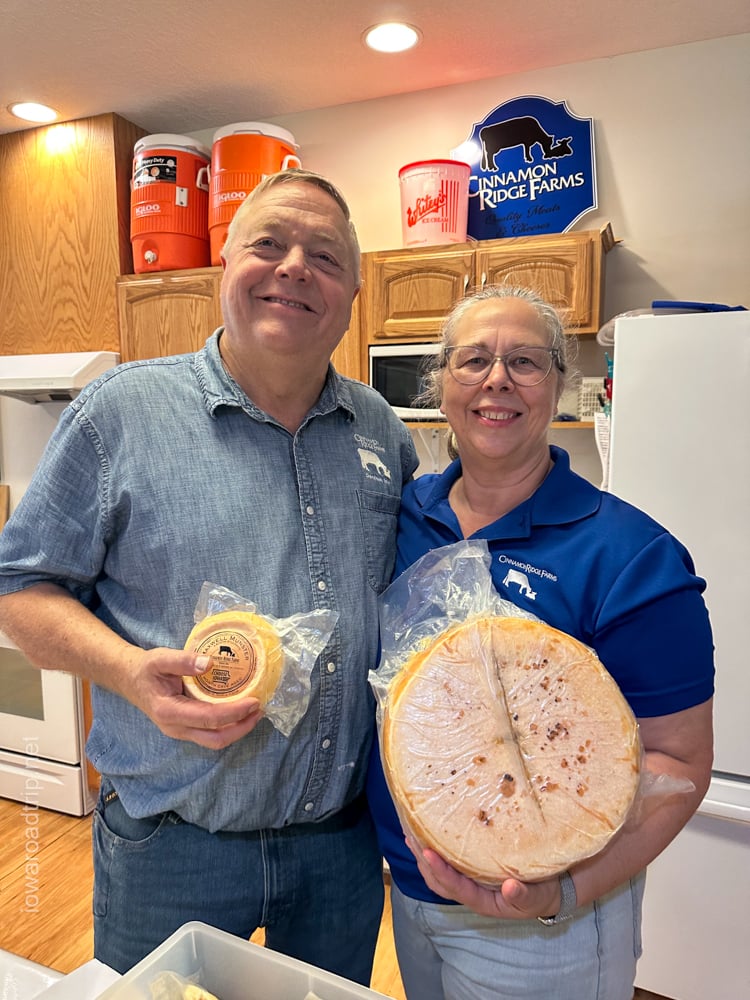
It was the most unique cheese of the entire lineup, unlike anything I’d tried at another farm or cheese shop. If you’re going to try just one thing at Cinnamon Ridge, that’s the one I’d point you toward.
Is it good for kids?
Yes, and it was clear from my visit that kids are a big part of who this tour is built for.
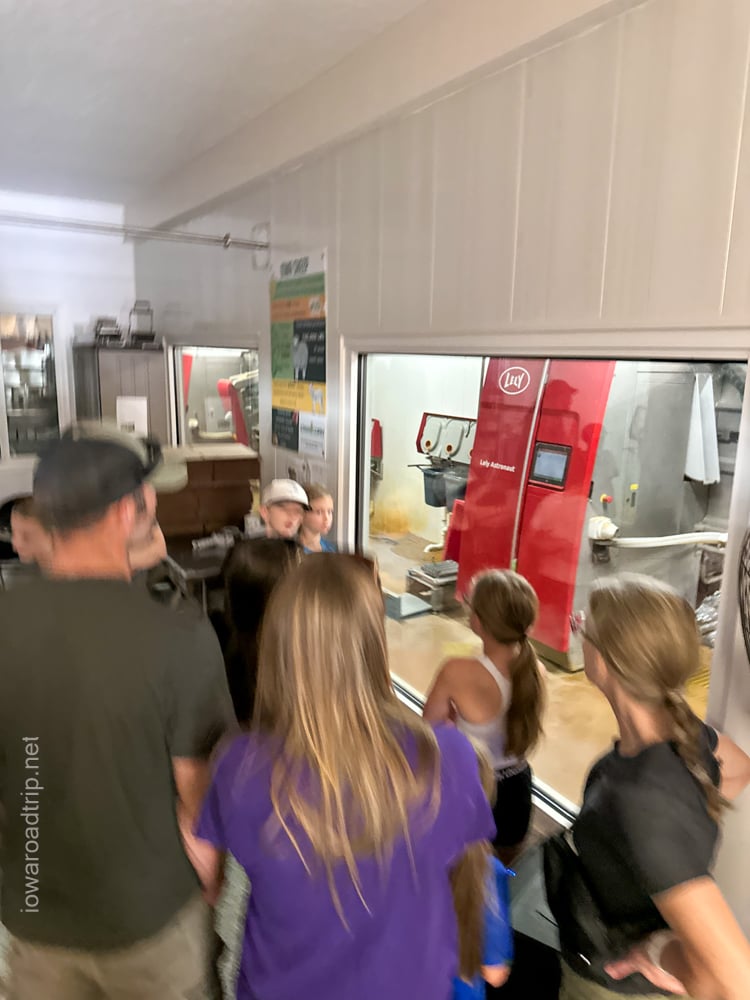
Cinnamon Ridge also offers Youth Tours designed specifically for groups of 10 or more children, along with smaller activity camps. But even in a general tour, the robots hold a kid’s attention in a way that a standard farm walk-through often doesn’t. Watching a machine clean and attach itself to a cow is genuinely fascinating at any age.
Group and event options
Beyond the standard tours, Cinnamon Ridge hosts a range of group and event options.
That includes Behind the Barn Door tours, farm-to-table style Lunch on the Farm events, and charcuterie board add-ons for groups of 20 or more. The farm has also hosted everything from international agricultural delegations to corporate outings and bus tours, so it’s well set up for organized groups looking for something beyond a typical meeting space.
If you’re planning a larger gathering rather than a family visit, it’s worth reaching out directly to see what can be arranged.
What to expect logistically
This is a working farm, not a polished visitor center, and it’s worth keeping a few things in mind.
Wear closed-toe shoes you don’t mind getting dirty. The tour moves through active barn areas, so appropriate footwear matters here, just as it would at any working dairy.
Parking is available at the farm, with the store located at the end of the lane. Because most tours require advance booking or ticket purchase, confirm your plans before making the drive out, especially if you’re coming from any distance.
Who will enjoy Cinnamon Ridge Farms?
Cinnamon Ridge is a strong stop for:
- Families with kids curious about animals and technology
- Ag-curious travelers and anyone interested in modern farming
- Cheese lovers who want to see where it’s actually made
- School groups, clubs and organized tours
- Travelers exploring the Quad Cities and Mississippi River corridor
- Anyone who has toured other Silos & Smokestacks farms and wants to see something different
Final thoughts
I’ve toured a number of working farms across northeast Iowa, and Cinnamon Ridge stands apart for two reasons: the robotics, and the cheese tasting.
Watching four robots, worth a million dollars combined, run a milking operation that the cows themselves control is genuinely impressive. But it’s the full-circle operation, growing the feed, milking the cows, processing the milk, making the cheese, all on one farm, that makes the tour feel complete rather than just a novelty stop.
By the time you’re holding a piece of Maxwell Muenster in one hand and looking out at the herd that made it possible, it’s clear why this farm keeps showing up on so many people’s Iowa road trip lists.