Step Into an Immigrant’s Shoes at the German American Heritage Center in Davenport
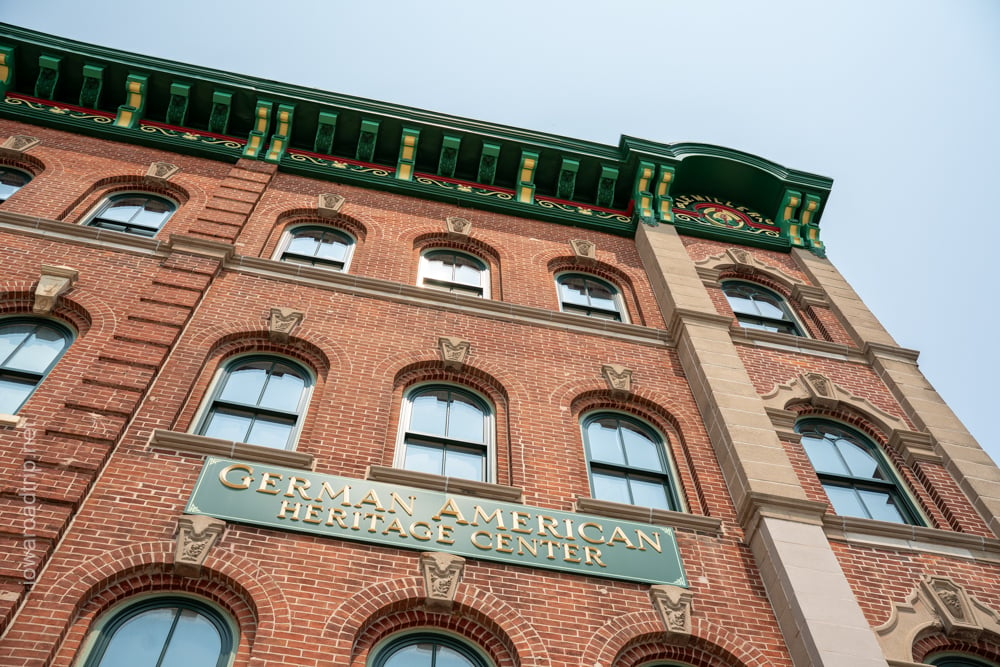
The building itself is the first artifact.
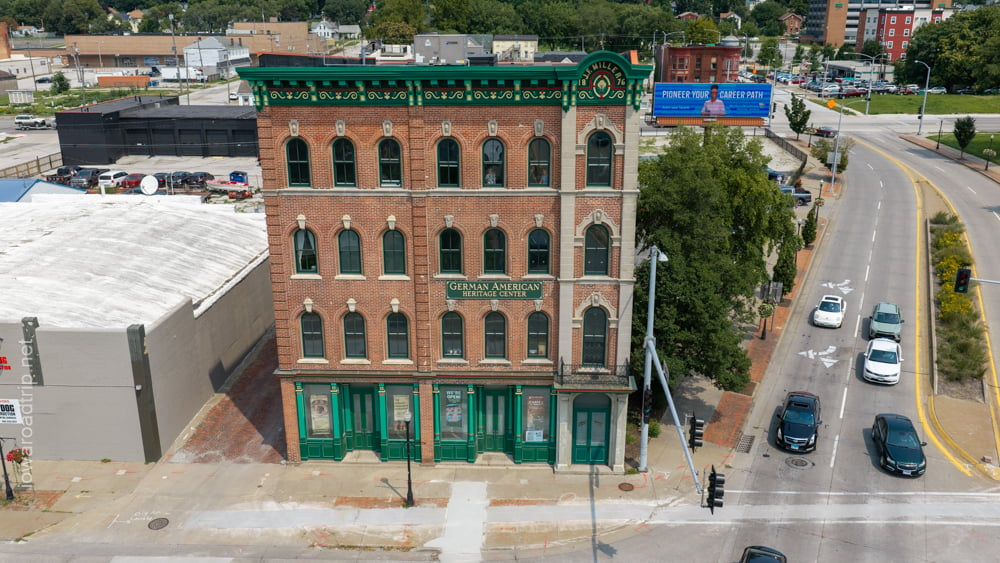
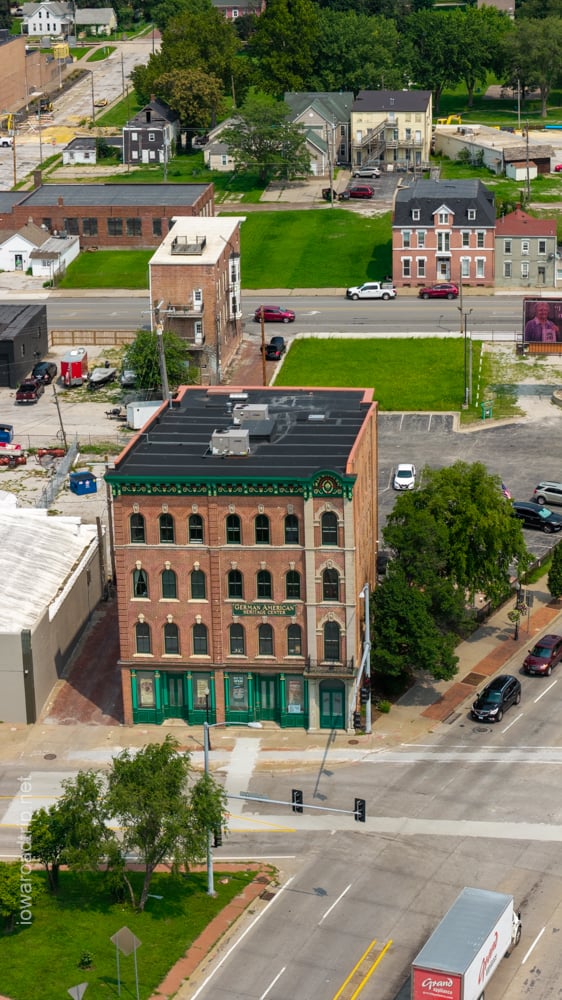
Long before it was a museum, this building was the Standard Hotel, a busy immigrant hotel built in the 1860s where thousands of German immigrants stayed after arriving in Davenport. It’s the last remaining immigrant hotel of its kind in the region, and it’s listed on the National Register of Historic Places. Walking up to the German American Heritage Center, with its ornate green cornice and arched brick windows, you’re not looking at a replica or a recreation. You’re looking at the actual place where this history happened.
That distinction shapes the entire visit, from the gift shop on the first floor to the restored hotel room three flights up.
Quick visitor information
German American Heritage Center & Museum
Address: 712 W 2nd St., Davenport, Iowa 52802
Hours:
- Tuesday–Saturday: 10 a.m.–4 p.m.
- Sunday: Noon–4 p.m.
- Closed Mondays
Accessibility: Both elevator and stairs available to all floors
Website: gahc.org
A hotel built for immigrants, not tourists
The German American Heritage Center building, sometimes called the Germania House, was originally constructed as a hotel to serve the enormous wave of German immigrants passing through Scott County in the 1800s.
By the 1990s, the building was in danger of demolition. The organization that would become the museum raised $1.3 million to restore the exterior and the first two floors, work that was completed in 2004. The museum itself was founded as a nonprofit in 1994 and reopened to the public in 2000, with a major exhibit expansion following in 2009.
Knowing that history changes how you walk through the place. The narrow hallways and small rooms upstairs aren’t a design choice made for the museum. They’re the original hotel layout.
Why Davenport became “the most German city”
Scott County has a specific reason for being at the center of this story.
The first passenger railroad to cross the Mississippi River ran through here, which made Davenport a major entry point for German immigrants heading into the upper Midwest and beyond. By 1900, the U.S. Census found that over half the citizens of Iowa, Nebraska, Wisconsin, Minnesota, and both Dakotas were German immigrants or their descendants. A German newspaperman writing that same year called Davenport “the most German city, not only in the State, but in all the Middle West.”
That context is worth having in mind before you even reach the exhibits.
The gift shop is one of the highlights
Most museum gift shops are an afterthought on the way out. This one is worth visiting on the way in.
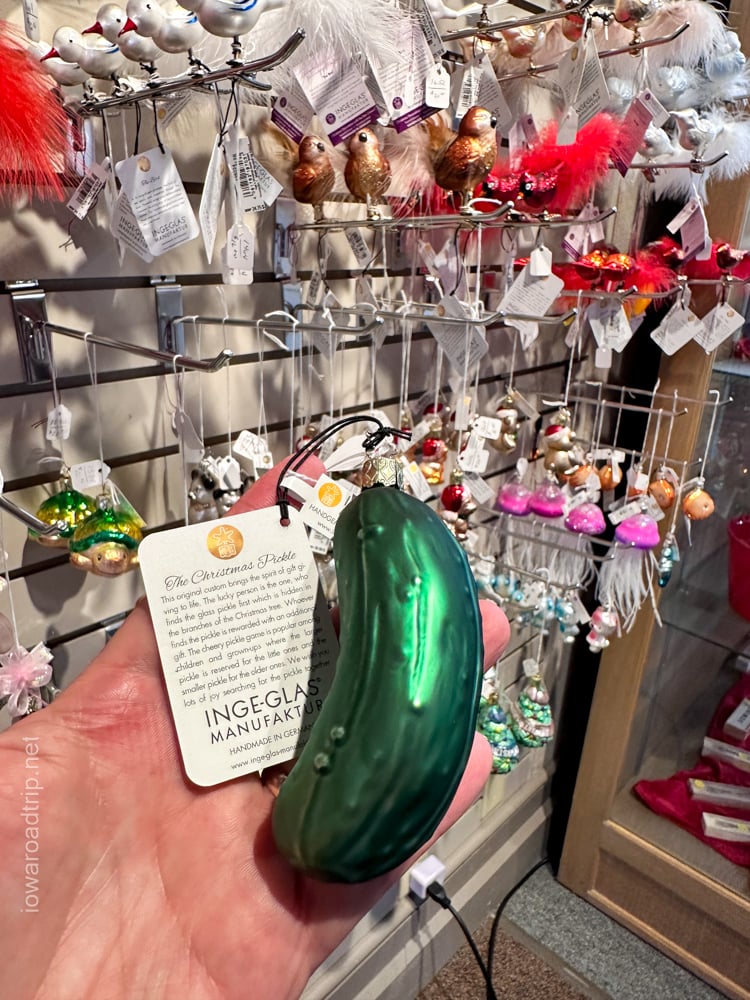
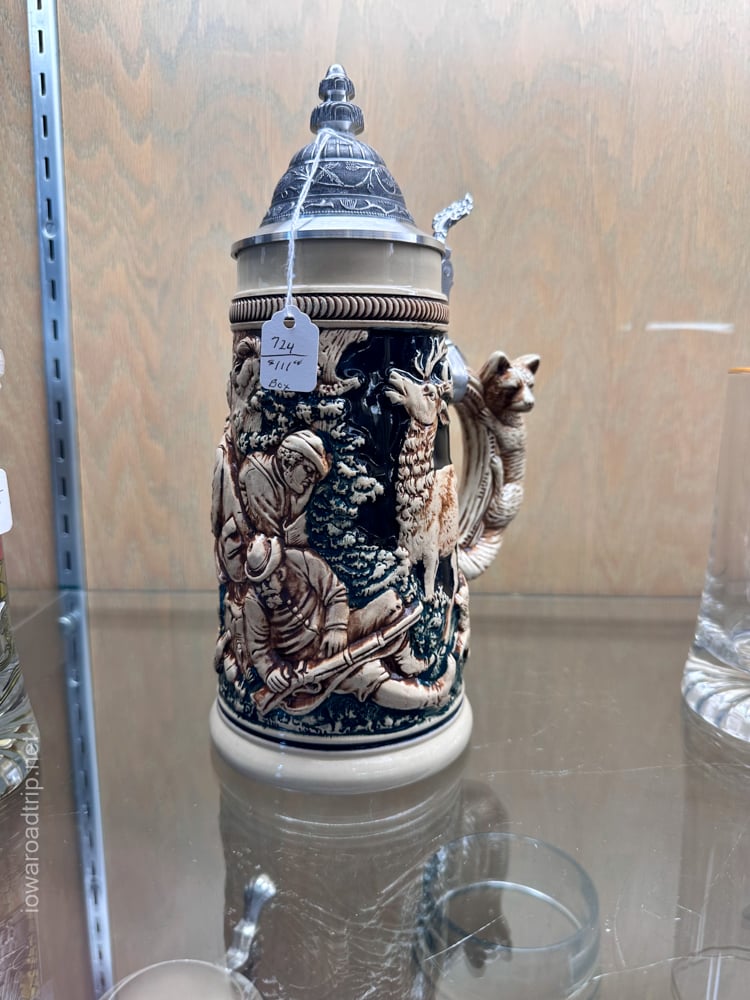
Staff told me that roughly 95% of what’s sold here is actually imported from Germany, not just German-themed merchandise made elsewhere. That means the beer steins, nutcrackers, and Christmas ornaments on the shelves are authentic German-made products.
One of my favorite finds was the glass Christmas Pickle ornament, a genuine German holiday tradition where the pickle is hidden in the tree and whoever finds it first gets an extra gift. There were also cans of Paulaner beer, brewed in Germany, sitting right there for purchase.

If you only have time for one stop before heading upstairs, the gift shop alone gives you a real sense of German craft and tradition, not a souvenir-shop version of it.
Getting oriented: what’s on each floor
At the front desk, staff gave a quick rundown of what to expect on each level before sending us up.
The first floor holds the gift shop along with some exhibit space. The third floor is home to the permanent exhibition and the restored hotel room. The fourth floor is used as a private meeting and rental space rather than public exhibits. Both an elevator and stairs are available, so the museum is accessible regardless of which floor you’re headed to.
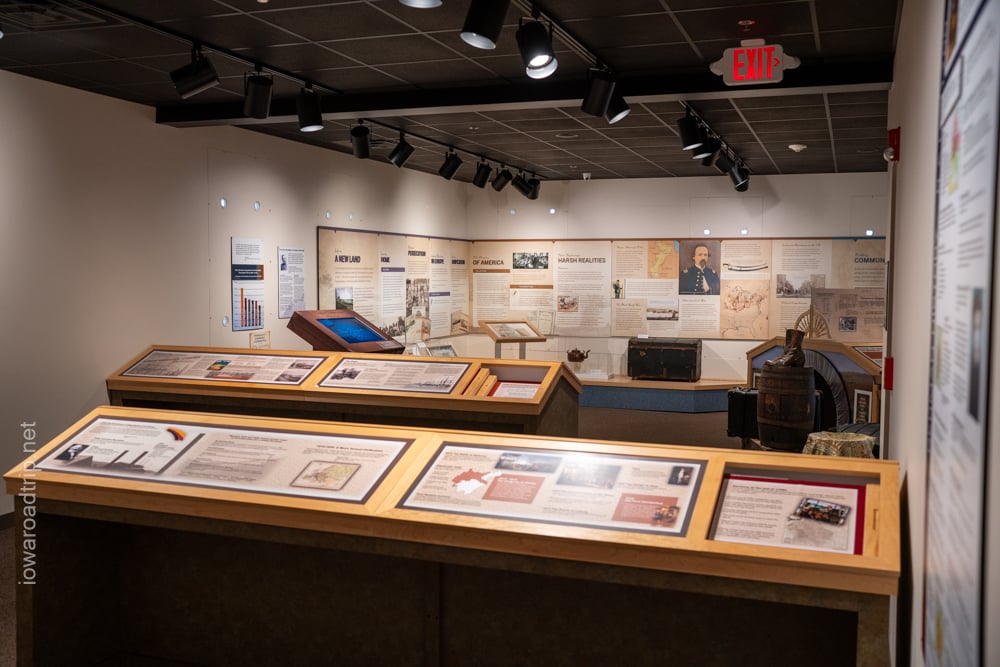
Knowing the floor plan upfront made it easy to plan the visit rather than wandering room to room guessing what was next.
Step into an immigrant’s shoes
The centerpiece of the third-floor exhibit is a simple, effective idea: literal footprints on the floor.
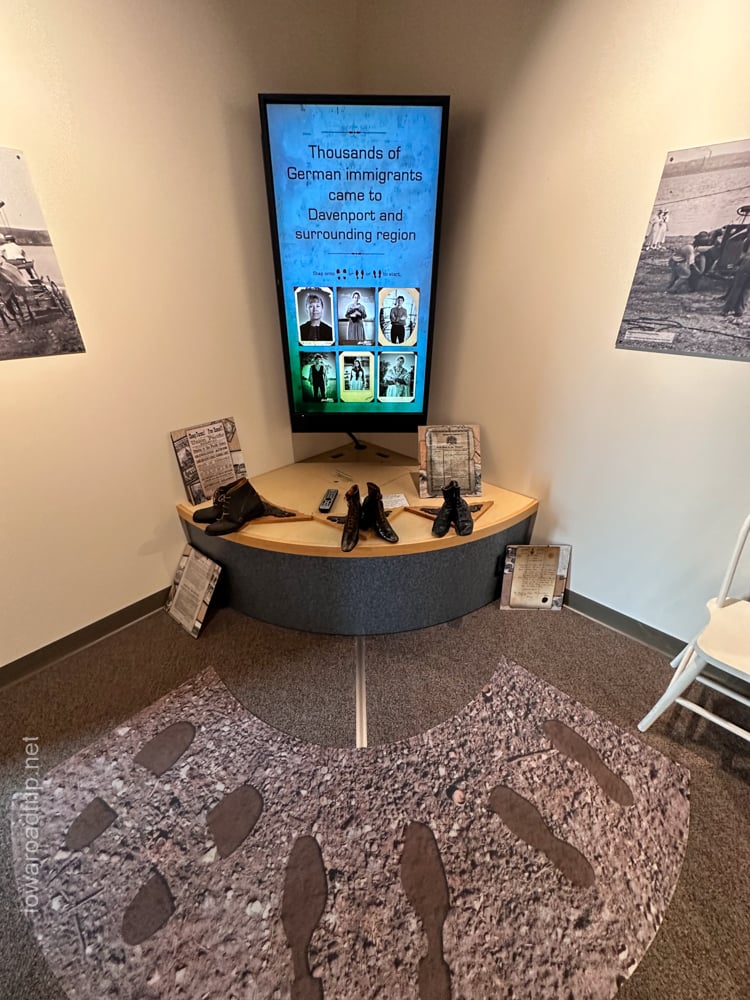
A screen reads: “Thousands of German immigrants came to Davenport and surrounding region.” Below it, actual footprints are laid into the floor, representing a child, a woman, and a man. Step onto a set of prints, and the corresponding figure appears on screen to share their personal story, describing the specific challenges they faced leaving home and building a new life in Iowa.
It’s a small piece of interactive design, but it’s the kind of thing that makes an abstract historical statistic feel like an individual person’s experience instead.
Scan a passport, follow a real immigrant’s journey
A second interactive station nearby works on a similar idea, but goes even deeper.
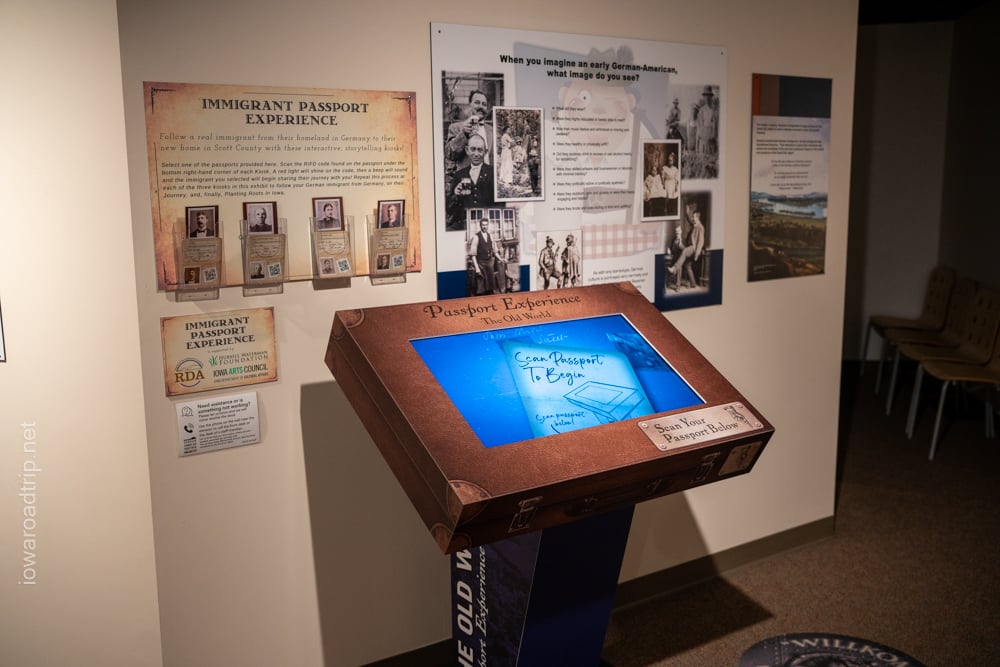
At the Immigrant Passport Experience, you choose one of several passports on display, each belonging to a real immigrant who came through Scott County. Scan the code on the passport, and a screen walks you through that person’s actual journey: why they left Germany, what the crossing itself was like, and what their first years in Iowa looked like once they arrived.
Between this and the footprint exhibit, the museum leans heavily into personal, first-person storytelling rather than static timelines and wall text. It’s a more memorable way to learn the history than reading placards alone.
What immigrants actually carried
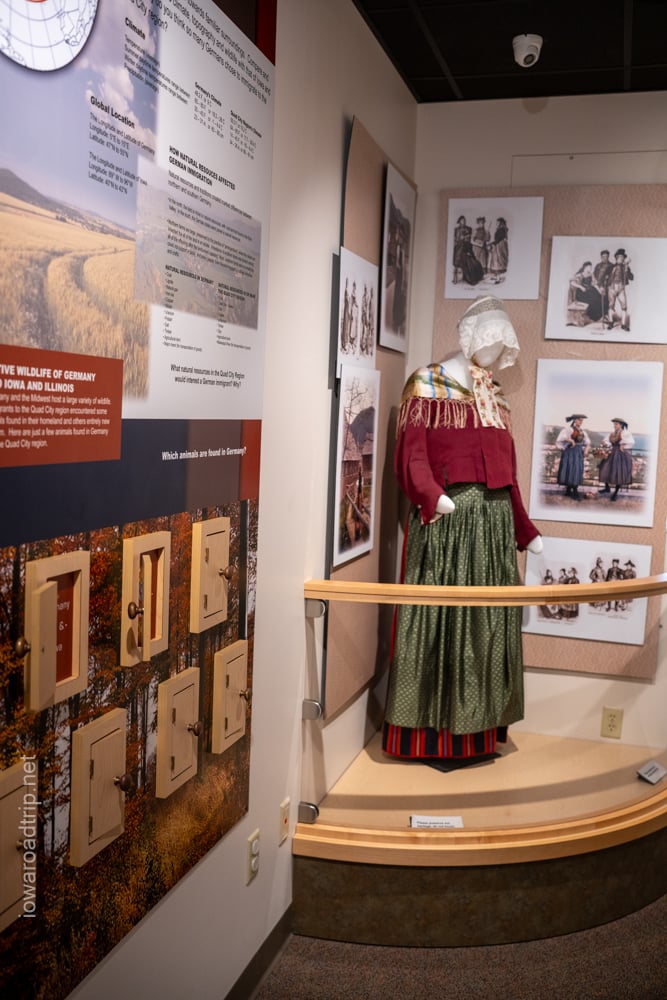
Scattered through the permanent exhibit are physical objects that ground the stories in something tangible.
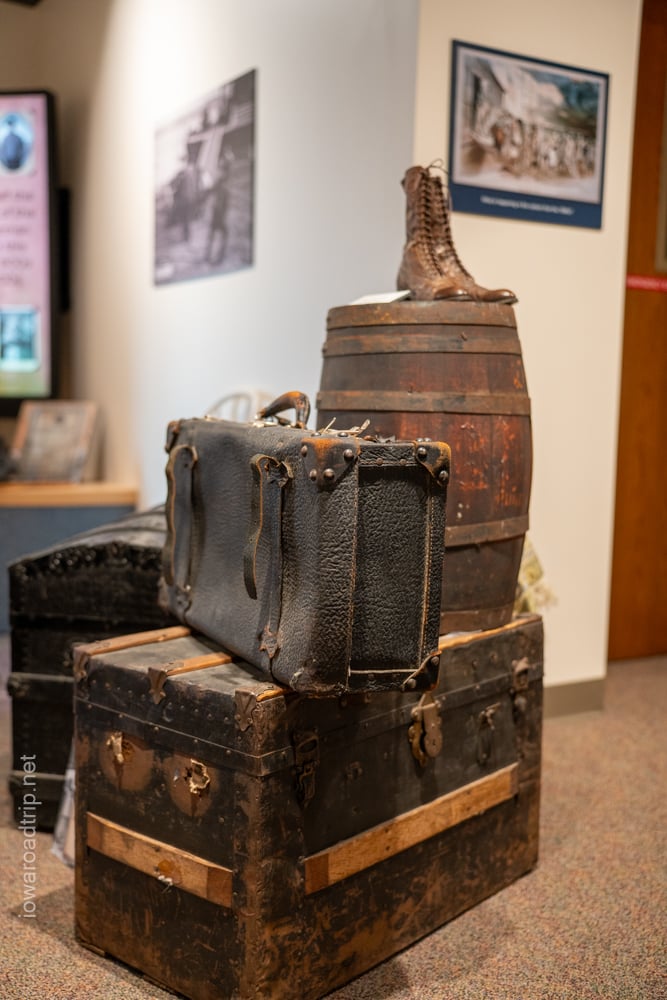
Weathered steamer trunks, a wooden barrel, and a well-worn leather suitcase sit stacked together, exactly the kind of luggage a German family would have carried across the Atlantic and then onward by rail into Iowa.
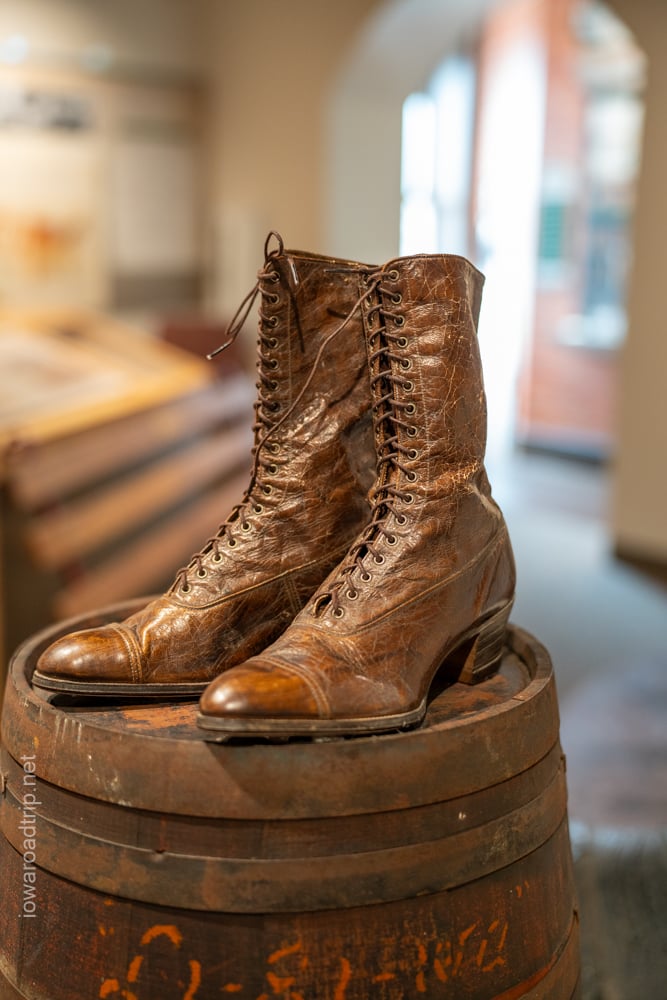
A pair of laced leather boots sits displayed on top of one trunk, a small detail that says a lot about what people wore for a journey that could take weeks.
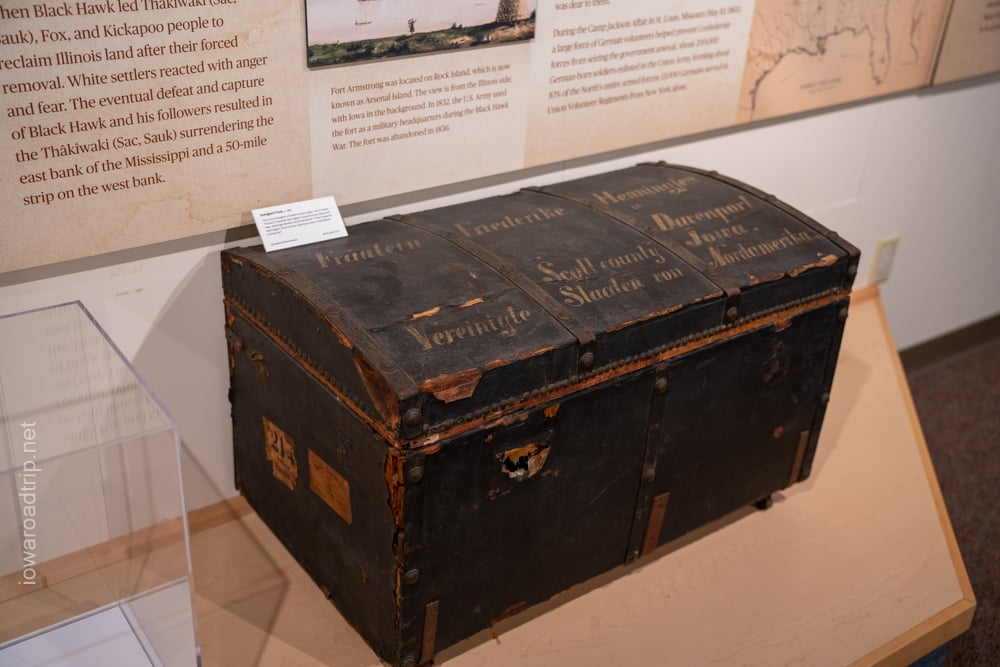
One large trunk still bears its original stenciled lettering in German, listing a name and a destination: Scott County, Iowa, Nordamerika. It’s a small, permanent record of somebody’s actual move across an ocean.
The restored hotel room
Given that this building was once an actual hotel, the museum has preserved one small guest room exactly as it would have looked to an arriving immigrant.
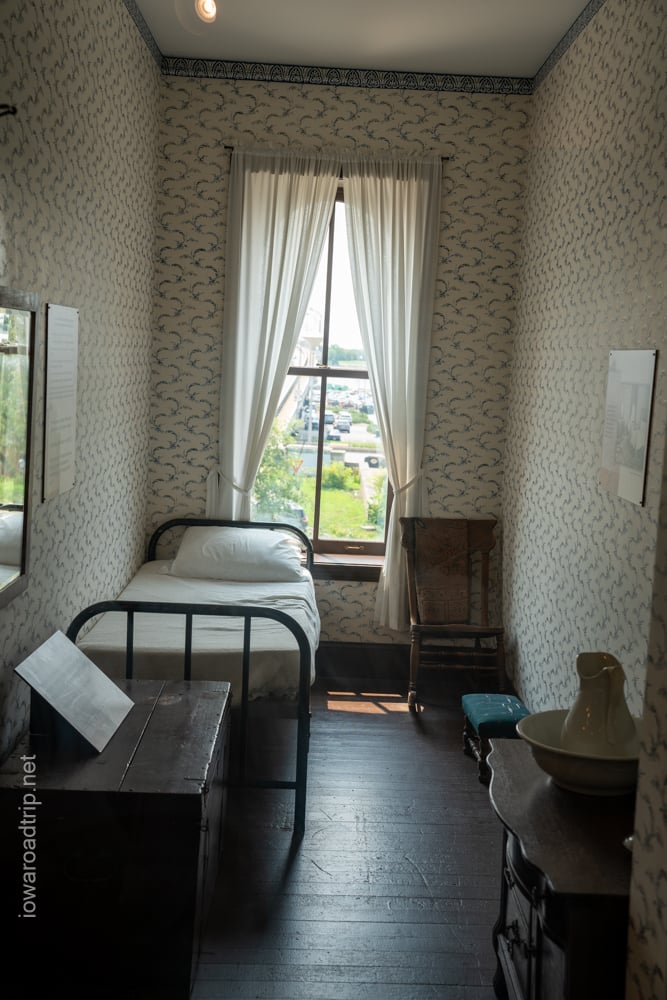
It’s small. It’s simple. And that’s precisely the point. This wasn’t a luxury stopover. It was a clean, modest place for exhausted travelers to rest before starting the next leg of their journey, whether that meant settling in Davenport or continuing further west.
Standing in that narrow room, looking out the same window generations of immigrants once did, is one of the more quietly powerful moments in the museum.
Beyond the permanent exhibit
The German American Heritage Center runs more than just its core exhibition.
Rotating special exhibits change throughout the year, and the museum also organizes $10 architecture walking tours through downtown Davenport and the Gold Coast Historic District, covering roughly 1.5 miles and two hours, focused on where German immigrants actually lived and worked. Recurring community events like Kaffee und Kuchen, the Eiermarkt spring vendor market, and the Christkindlmarkt add seasonal reasons to come back even after your first visit.
Is it good for kids?
Yes. The interactive nature of the exhibits, especially the footprint stations and the passport scanning kiosks, keeps things hands-on rather than purely educational in a passive sense. There’s also a dedicated children’s activity space within the permanent exhibition designed specifically for younger visitors.
Free admission days
The museum offers several free admission windows throughout the year, including a Community Open House Weekend in January, the Saturday before Easter during the Eiermarkt spring market, an occasional Family Free Day, and the second Saturday in December during the Christkindlmarkt vendor market. Signing up for their newsletter is the easiest way to catch these dates as they’re announced.
Who will enjoy this stop?
The German American Heritage Center is a strong fit for:
- Anyone with German ancestry researching family history
- History and genealogy enthusiasts
- Families looking for a hands-on, interactive museum
- Architecture and historic preservation fans
- Quad Cities day-trippers looking for something beyond the usual stops
Final thoughts
Most museums tell you about history. This one lets you stand inside it.
The building itself was the destination for thousands of real immigrants, the hallways you walk are the same ones they walked, and the small hotel room upstairs held actual travelers rather than a staged reconstruction. Add in the footprint and passport exhibits, both built around real individual stories rather than general statistics, and the German American Heritage Center turns a piece of Iowa history into something you experience rather than simply read about.
By the time you’re back downstairs, maybe holding a genuine German Christmas ornament from the gift shop, it’s clear this museum understands exactly what makes its story worth telling.