Tour the Historic Montauk Mansion in Clermont, Iowa
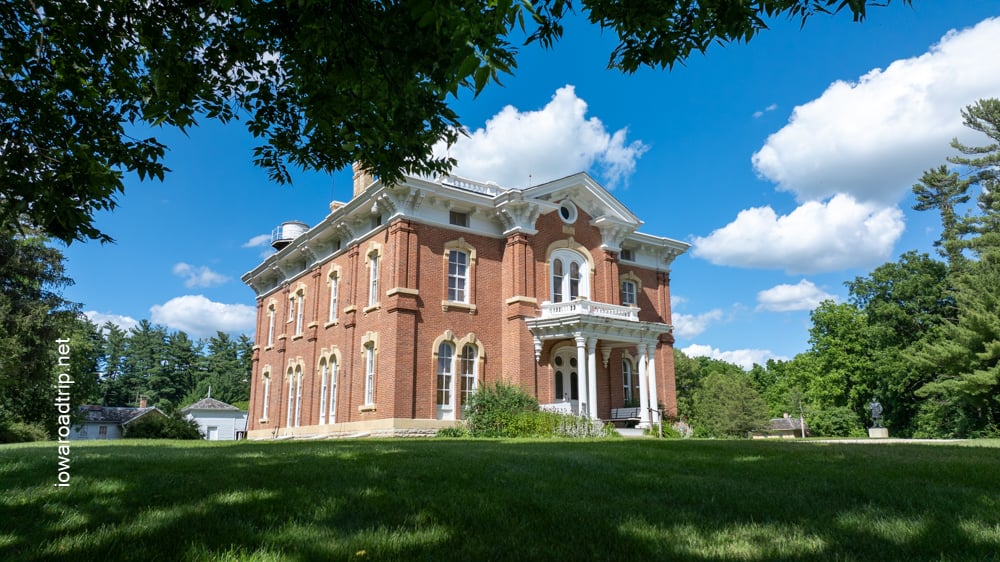
Montauk may be best known as the home of former Iowa Gov. William Larrabee, but the house tells a much longer story.
William and Anna Larrabee moved into Montauk in 1874, and members of the family continued living there until 1965. Because so many of their furnishings and belongings remained in the house, visitors aren’t walking through rooms recreated to represent a single year. Instead, you’ll see nearly a century of changes in one family home.
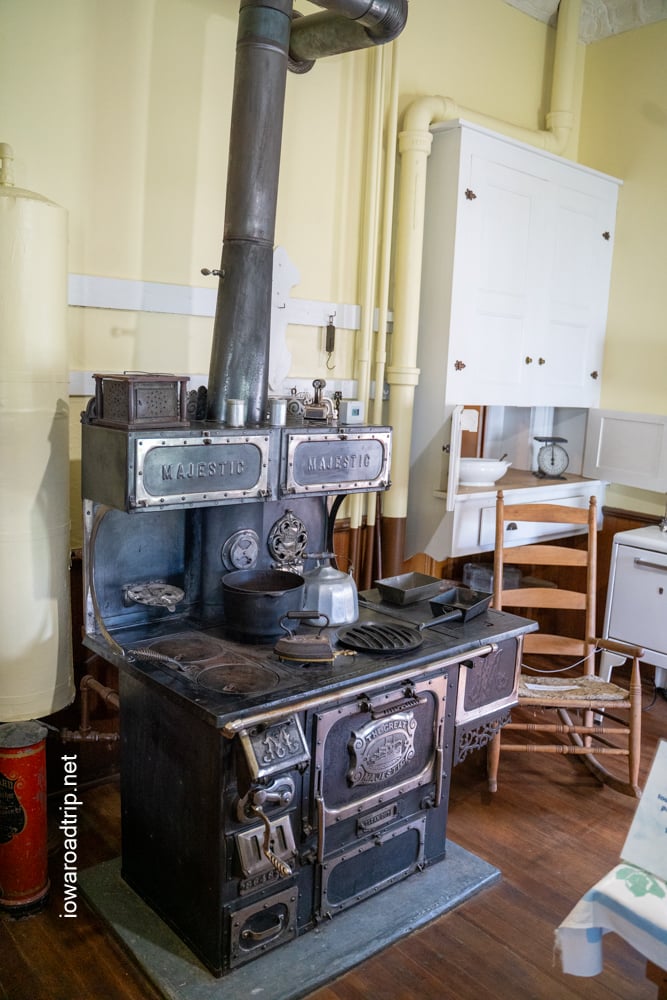
Victorian furnishings share space with electricity, telephones and newer appliances added by later generations. In the kitchen, for example, an old wood stove stands near a dishwasher from the 1950s.
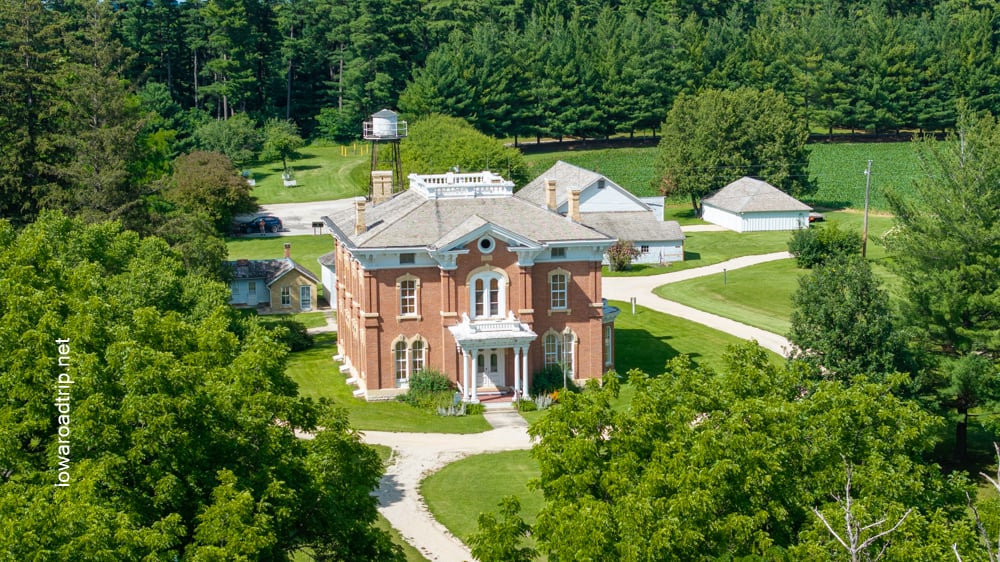
There’s also plenty to explore outside the mansion, including historic farm buildings, Civil War statues, picnic areas and walking trails on the 46-acre property.
Montauk Historic Site Visitor Information
Address: 26223 Harding Road, Clermont, Iowa
Admission: Free
Phone: 563-423-7173
House tour: Guided
Tour length: Approximately 45 to 60 minutes
Allow for a full visit: About 90 minutes to two hours
Parking: Gravel lot with some uneven areas
Restrooms: Outdoor public restrooms are available
Seasonal Hours
From Memorial Day weekend through Labor Day, Montauk is generally open daily from noon to 4 p.m.
From Labor Day through October 31, it is generally open Friday through Sunday from noon to 4 p.m.
The site closes during the winter. Check current hours or call before making a special trip, especially near the beginning or end of the season.
What to Expect When You Arrive
Montauk sits along U.S. Highway 18 just north of Clermont. Brown highway signs mark the turn, but the driveway is near the top of a hill, so watch for the entrance as you approach.
The main parking area is gravel, and the route toward the mansion includes some loose and uneven surfaces. Visitors who need closer access can drive to the ramp near the back porch.
The mansion is seen by guided tour, while the grounds and open farm buildings can be explored separately.
Take the Guided Tour of Montauk
The guided mansion tour generally lasts 45 to 60 minutes and is the main part of a visit.
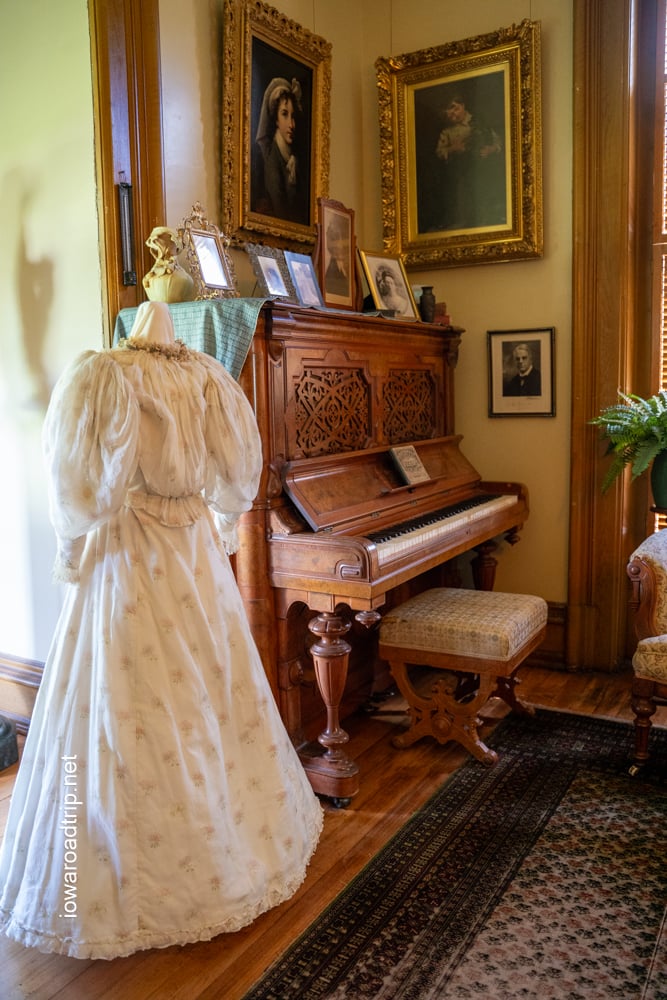
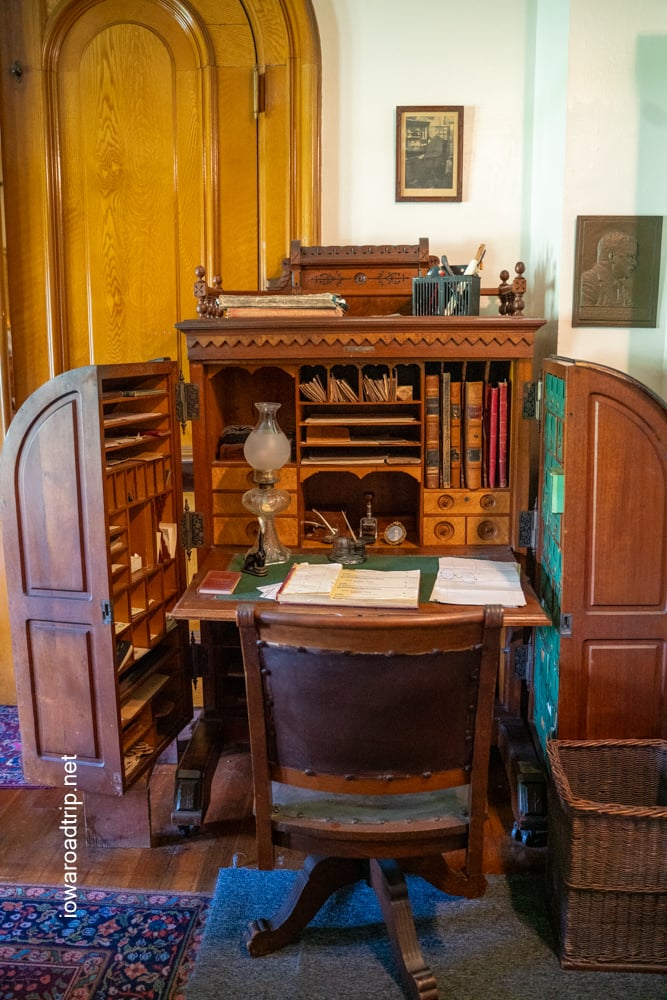
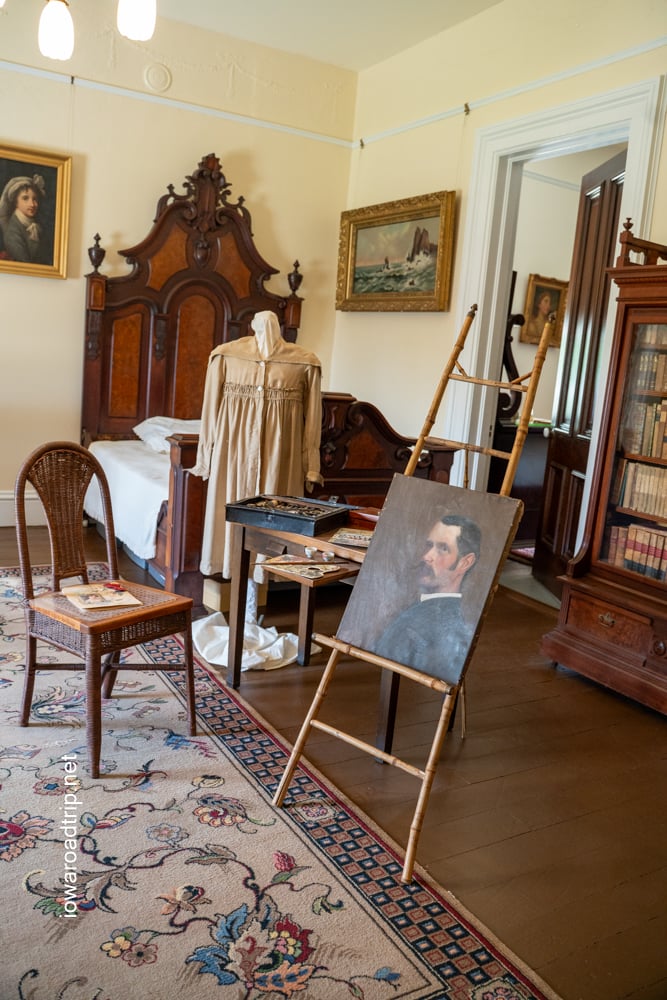
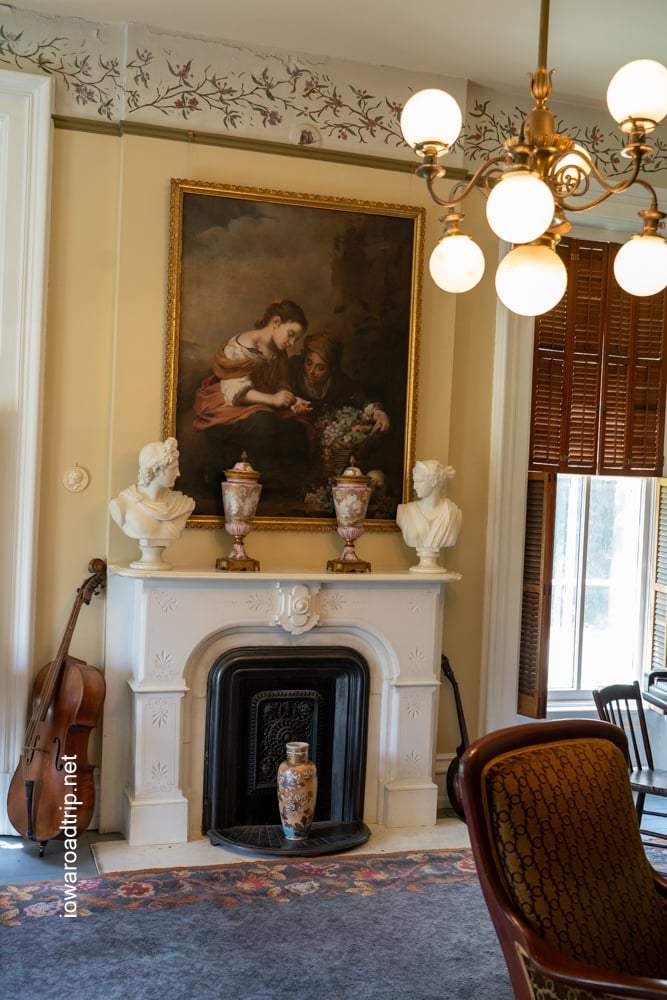
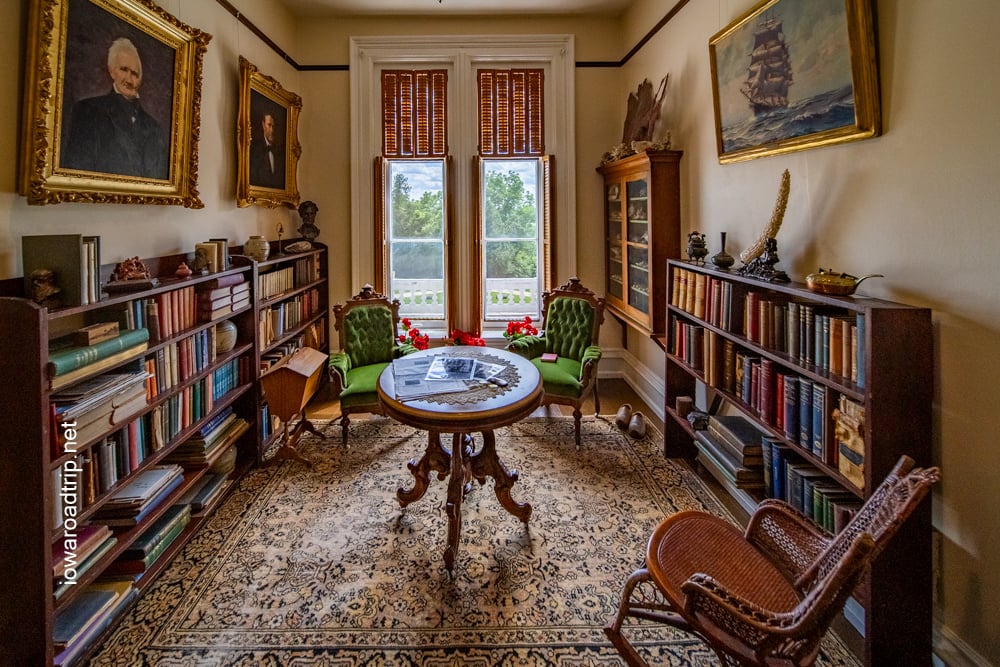
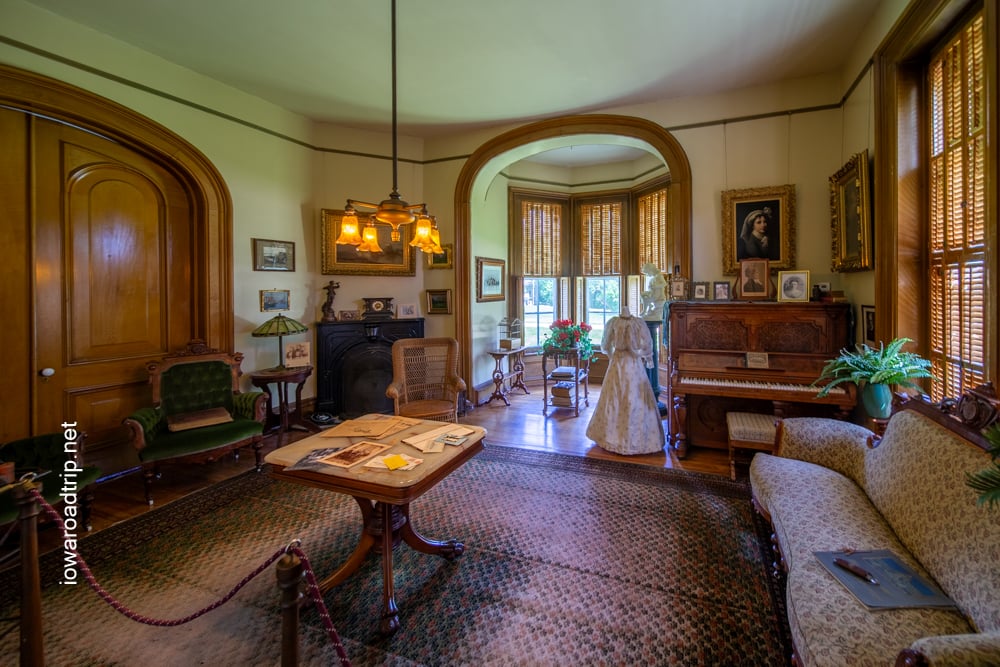
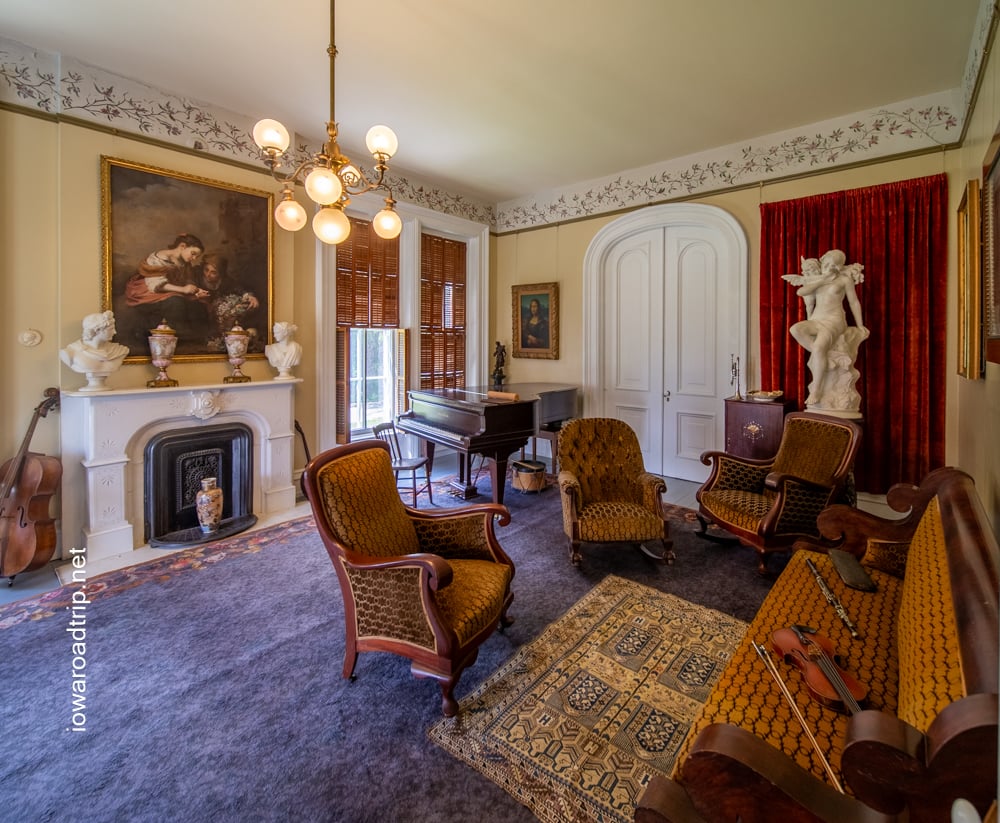
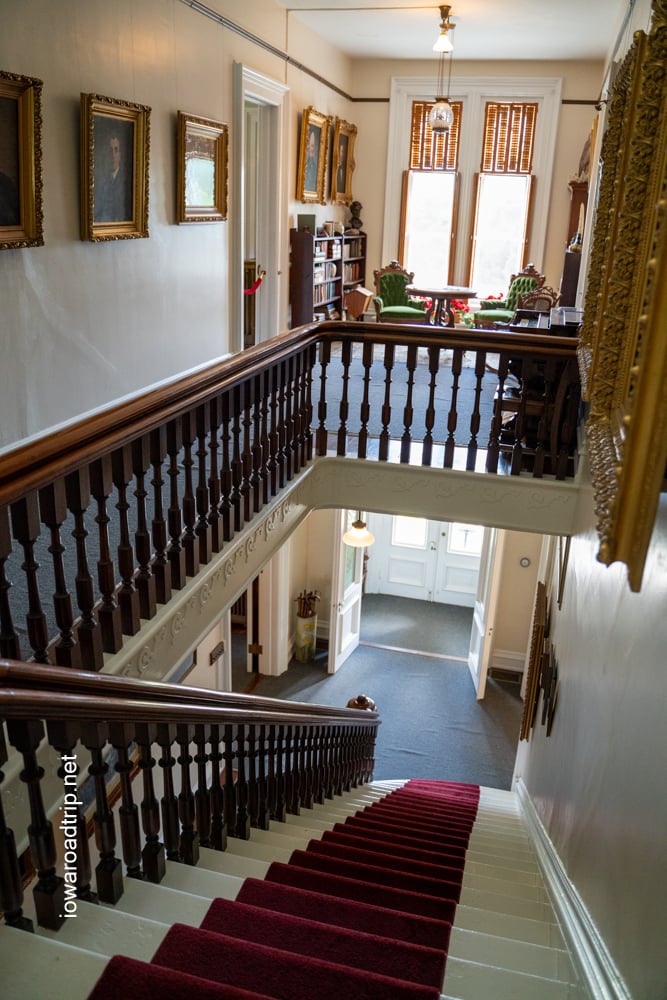
Nine rooms are currently open, including the sitting room, library, music room, dining room, kitchen and bedrooms. Much of what you see belonged to the Larrabee family, including furniture, artwork, books, china, lamps, statues and other personal belongings.
That’s what makes Montauk different from many historic homes. The rooms don’t feel like they were assembled later to recreate a particular era. They gradually changed as the family changed.
One generation added electricity. Another added newer appliances. Older furniture and household items often stayed right where they were.
Look for the Mix of Old and New
The changing technology inside Montauk is one of the most interesting parts of the house.
Montauk was built with central heat. The family added a telephone around 1900 and electricity around 1910. Later appliances joined equipment that had already been in the house for decades.
The kitchen may provide the clearest example, where a wood stove dating to around 1900 stands near a dishwasher from the 1950s. Elsewhere, look for older and newer lighting, plumbing fixtures, telephones and furniture from different periods.
Rather than showing how the house looked in 1874, Montauk shows how one family continued living there and adapting it for nearly a century.
Why Is It Called Montauk?
Anna Larrabee named the house after the Montauk Point Lighthouse on Long Island.
Her father was a sea captain, and the lighthouse helped guide him home from his voyages. The widow’s walk on top of the house provides another subtle connection to maritime architecture.
Who Was William Larrabee?
William Larrabee came to Iowa as a young teacher and later became involved in farming, milling, banking and land ownership.
He served in the Iowa Senate from 1867 to 1885 before becoming Iowa’s 12th governor, serving from 1886 through 1890. After leaving office, he returned to Montauk.
His political career is an important part of the property’s history, but the house also tells the story of Anna, their children and the generations of Larrabees who continued living there.
Notice the Architecture
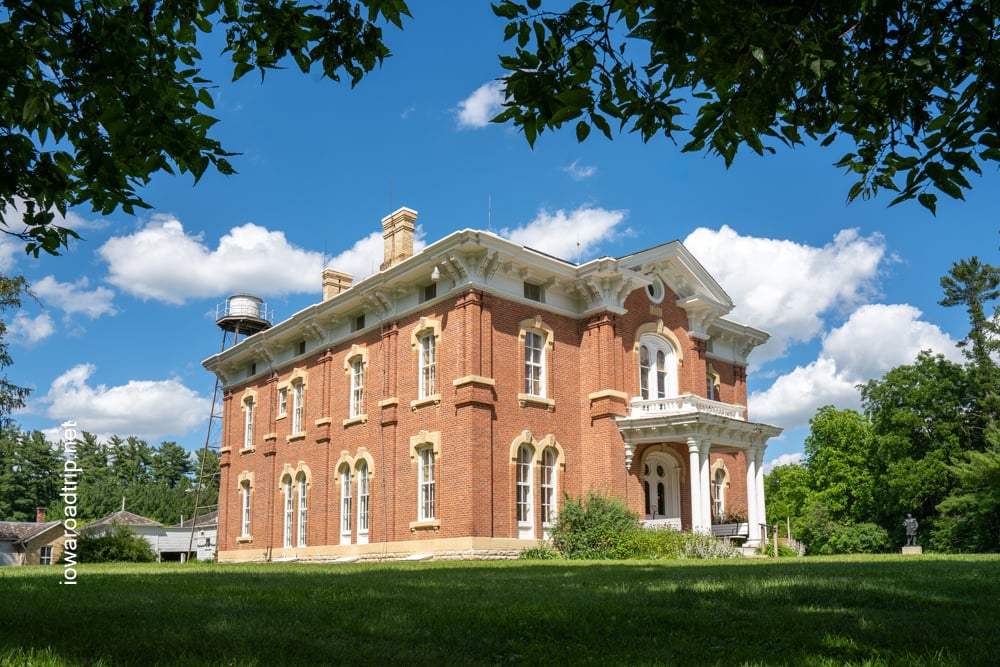
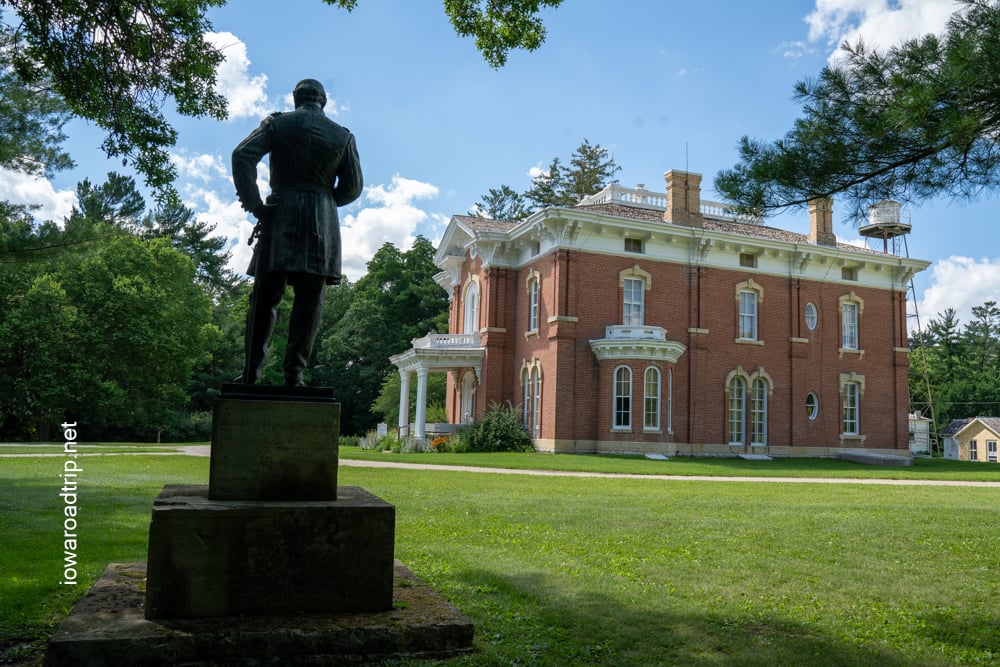
Completed in 1874, Montauk is a two-story Italianate brick home.
Look for its tall windows, decorative brackets, broad roof overhangs, columned entrance and widow’s walk. The bricks were made from local clay, while limestone used in the house came from a nearby quarry.
See the Civil War Statues
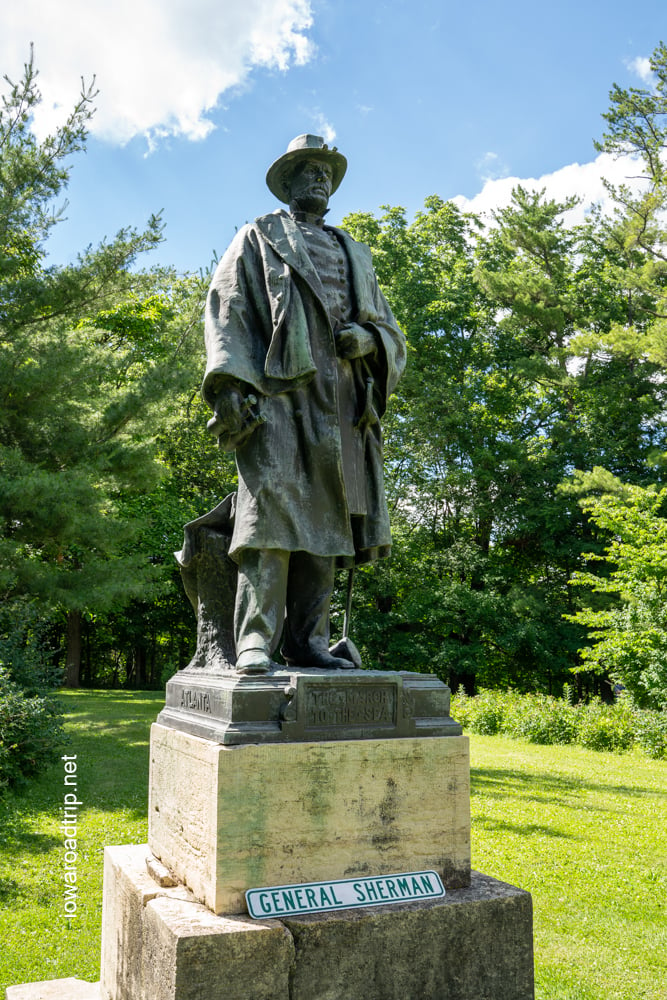
A circular drive passes in front of the mansion, where four bronze statues represent prominent Civil War figures:
- Ulysses S. Grant
- William Tecumseh Sherman
- Grenville Dodge
- David Farragut
The statues were commissioned by Larrabee and add another distinctive feature to the grounds.
Explore the Historic Farm Buildings
Montauk wasn’t simply a governor’s country home. It was also a working farm.
The estate once included barns, corncribs, sheds, gardens, an orchard, a creamery, laundry, workshop, water tower and other buildings needed to keep the property running. Several restored buildings can still be explored today.
The carriage house includes a tactile exhibit with braille, large-print text and Spanish translations. Other structures help show the practical side of life at Montauk, from washing clothes and repairing equipment to raising livestock and storing crops.
Historic accounts describe peacocks roaming the grounds, turkeys roosting in trees, cattle and chickens, vegetable gardens, grain fields and an orchard. Larrabee also planted more than 100,000 pine trees.
Walk the Grounds and Trails
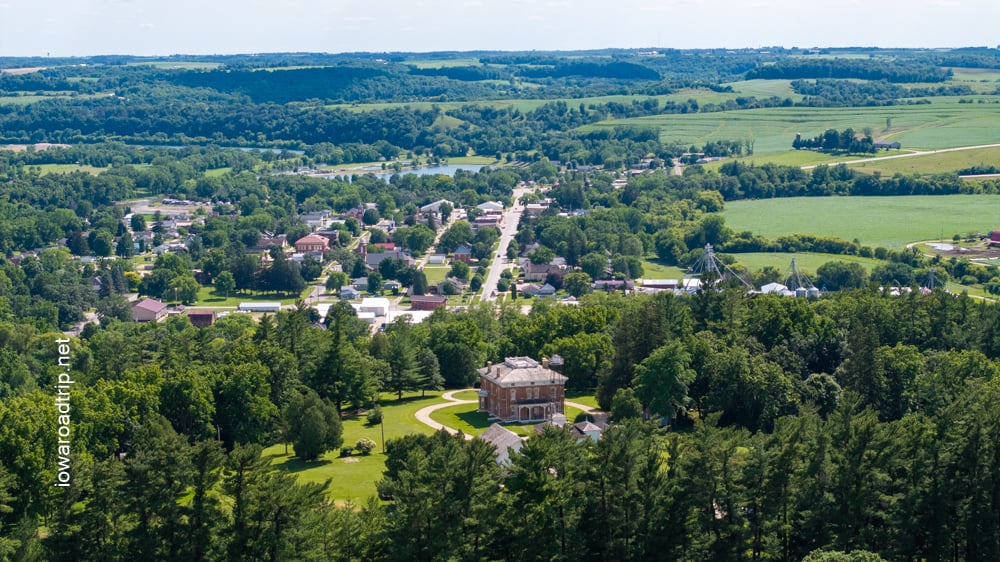
Montauk sits on a bluff above Clermont and the Turkey River Valley.
The 46-acre property includes landscaped grounds, picnic tables, a short gravel loop near the mansion and longer woodland trails. Some routes include hills, uneven ground and natural debris, so footwear appropriate for walking outdoors is a good idea.
If you have extra time after the mansion tour, walking the grounds helps put the house in context as part of a much larger country estate.
Accessibility
Accessibility varies depending on which parts of Montauk you plan to visit.
A ramp at the rear of the mansion provides step-free entry to the first floor. The second floor requires climbing 21 stairs and there is no elevator, but a captioned virtual tour of the upper level is available on an iPad. Folding chairs can also be requested.
Outside, expect a mix of gravel, grass and uneven surfaces. The carriage house has a ramp, while some of the other farm buildings and trails are more difficult to reach.
Visitors with specific accessibility concerns should contact Montauk before arriving.
How Much Time Should You Allow?
Allow about one hour for the mansion tour alone.
For the mansion plus the nearby farm buildings and statues, plan on roughly 90 minutes.
If you also want to walk the trails, take photographs or have a picnic, allow two hours or longer.
Make It Part of a Clermont Road Trip
Montauk can easily serve as the main stop during a visit to Clermont.
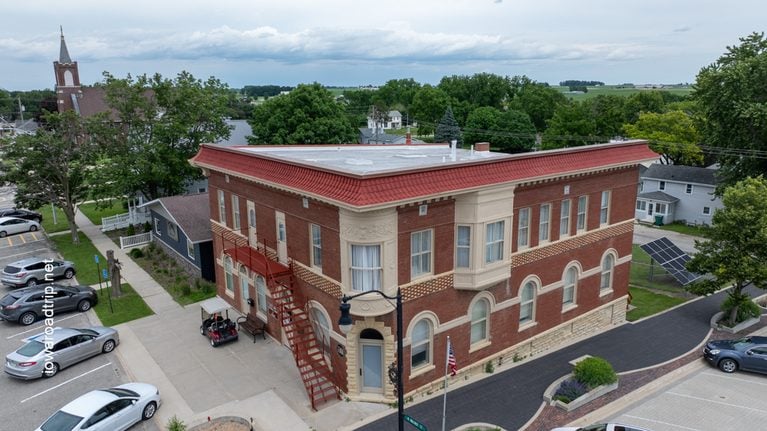
Other historic sites in the area include the Clermont railroad depot, Lincoln Park, Clermont Museum, Larrabee School, the historic opera house, stone jail, blacksmith shop and Union Sunday School.
You could also combine Montauk with Elgin, Fayette or Volga River State Recreation Area for a longer northeast Iowa road trip. Check current hours and access before planning around additional historic sites.
Is Montauk Historic Site Worth Visiting?
Montauk is especially worth a stop if you enjoy historic homes, Iowa history, architecture or places where the original belongings are still part of the story.
The fact that the Larrabee family lived here for nearly a century is what makes the house so interesting. Instead of seeing one carefully recreated moment in time, you see a home that changed as the people living inside it changed.
From shelves filled with the family’s books to an old wood stove sitting near a 1950s dishwasher, Montauk feels less like a recreation and more like a family home that happened to survive with much of its story still inside.