Watch Robotic Milking at Iowa’s Dairy Center in Calmar
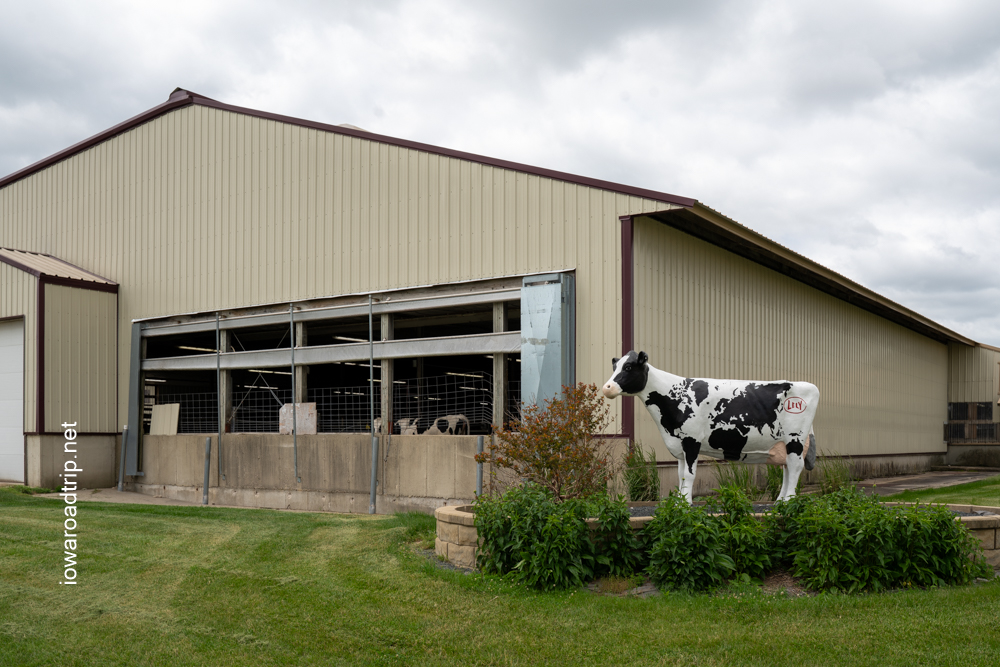
The cows at Iowa’s Dairy Center don’t wait for someone to lead them into a milking parlor. When they’re ready, they walk into a robotic milking station on their own.
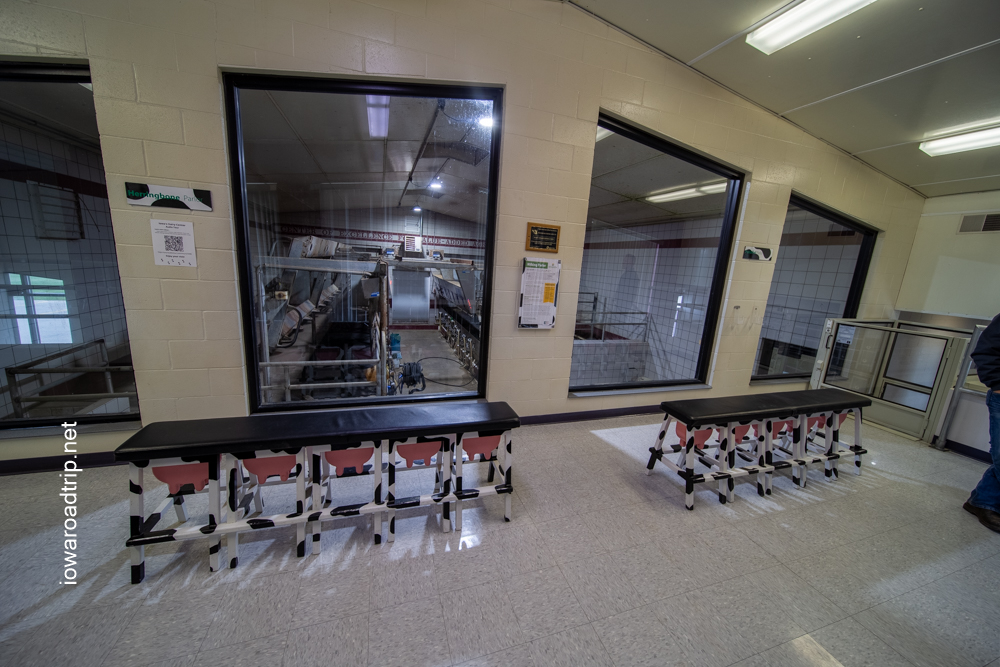
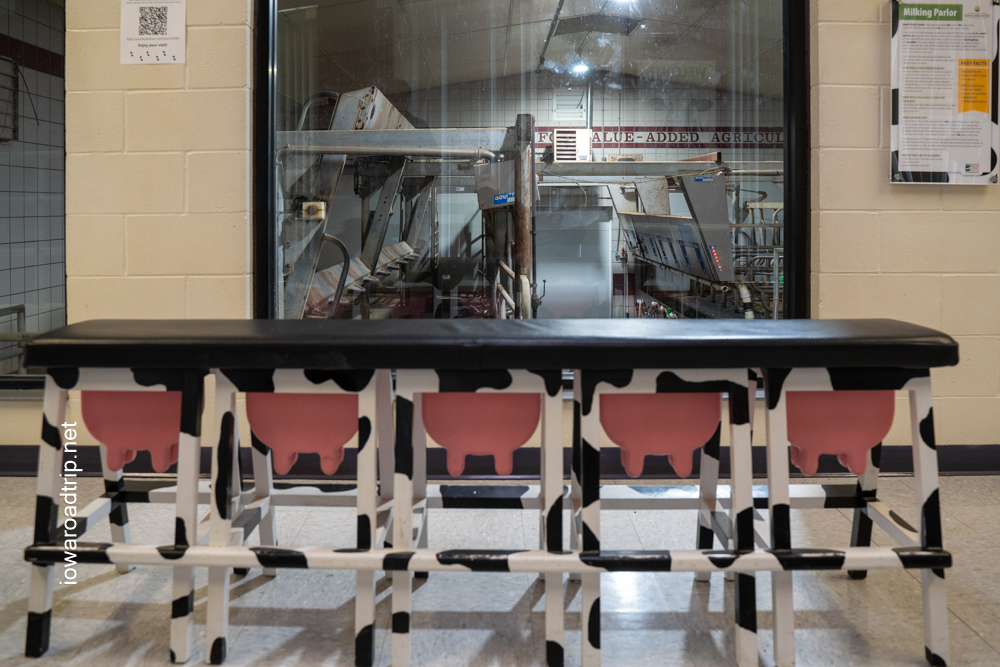
From a nearby viewing area, you can watch the robot identify the cow, clean her, attach the milking equipment and begin collecting milk. It’s an interesting look at how technology has changed dairy farming, and you can watch the process without ever stepping into the working barn.
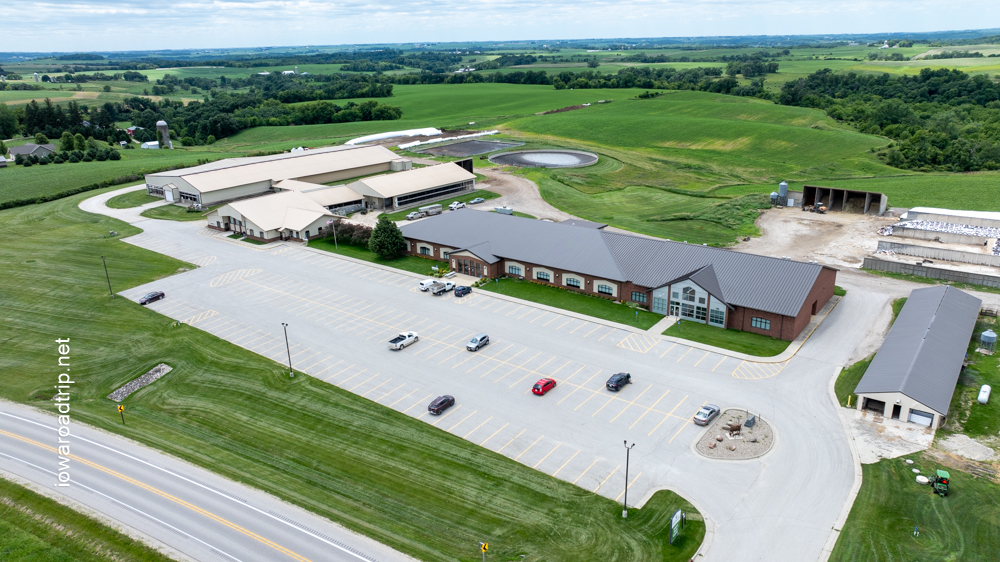
Iowa’s Dairy Center, located just south of Calmar, is both a working dairy farm and an educational facility connected with Northeast Iowa Community College. Visitors can stop by for free and explore several areas on their own, or reserve a guided tour for a closer look inside the barns.
Iowa’s Dairy Center Visitor Information
Address: 1527 Highway 150 South, Calmar, Iowa
Phone: 563-562-3263, ext. 8700
Self-guided admission: Free
Guided tours: $12 adults, $8 youth
Guided tour length: About one hour
Reservations: Required for guided tours
Public viewing hours
Robotic Milking Viewing Area: Open 24 hours a day
Iowa’s Dairy Museum: Monday through Friday, 8 a.m. to 4 p.m.
Beef Education Center: Daily, 9 a.m. to 3 p.m.
Hours can vary, so check Iowa’s Dairy Center before making a special trip.
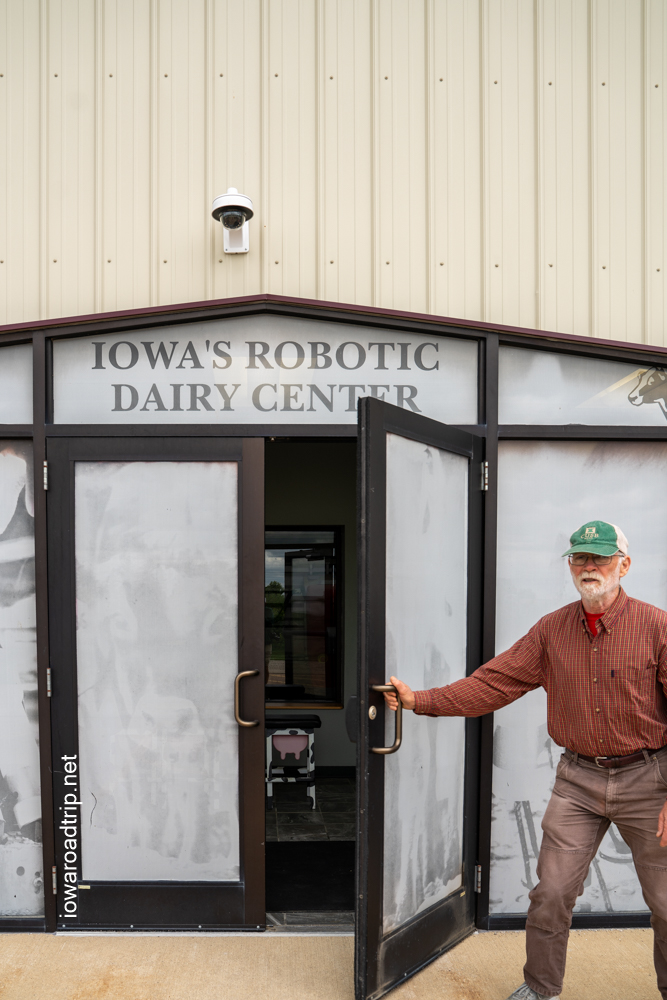
Guided Tour or Self-Guided Visit?
You don’t need a reservation to watch the robotic milking system.
A free self-guided visit includes the Robotic Milking Viewing Area, Hall of Breeds and other educational exhibits. During posted hours, you can also visit Iowa’s Dairy Museum and the Beef Education Center.
The guided tour is the better choice if you want to get closer to the animals. Tours include the freestall barn, maternity barn and calf barn, along with the robotic milking facility and museum areas.
The tour lasts about an hour and includes roughly half a mile of walking.
Watch the Robotic Milking System
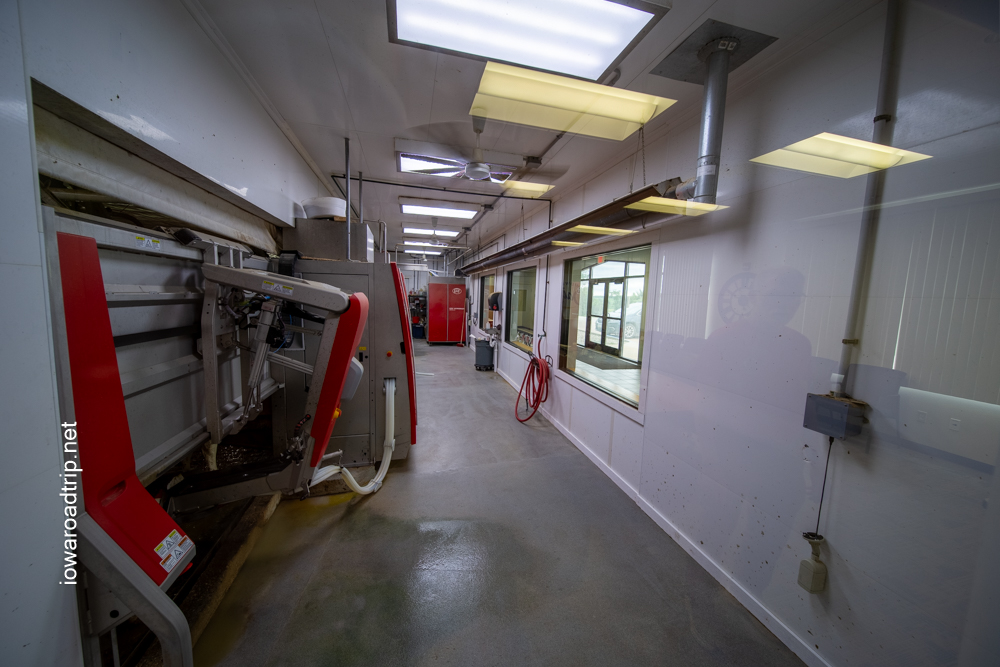
Robotic milking is easily one of the most interesting parts of a visit.
Instead of being milked at scheduled times, the cows can walk into the robotic stations when they’re ready. The system recognizes each cow and provides feed while she stands inside.
Brushes clean the udder, lasers help guide the equipment into position and the milking units attach automatically. Once milking is complete, the equipment sanitizes and resets for the next cow.
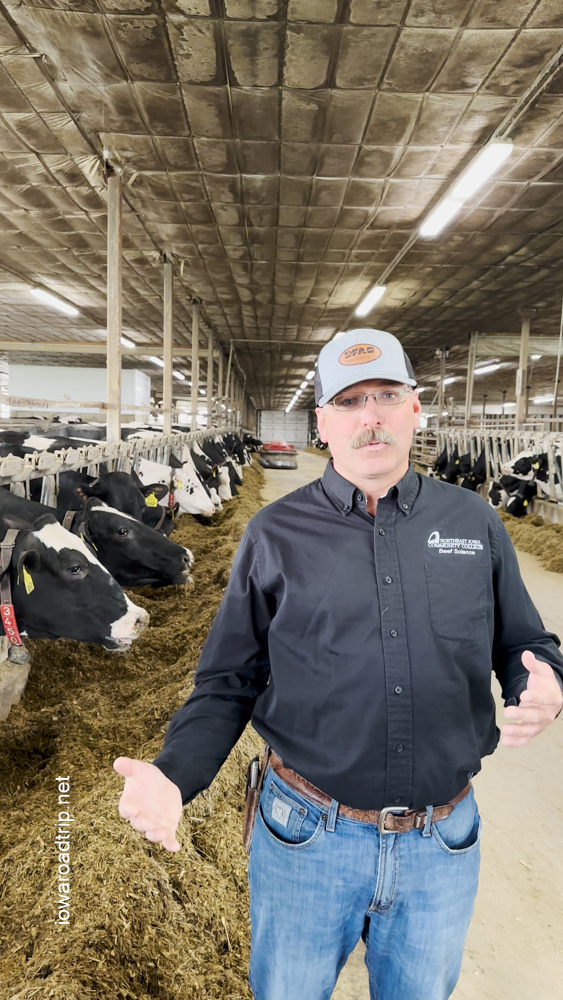
The farm upgraded to Lely A5 robots and added a third robotic milking unit in 2024. Approximately 160 Holstein cows use the system, with the average cow visiting three or four times each day.
Since the cows set their own schedules, you may need to wait a few minutes before one decides to walk into the robot.
See How Dairy Farming Has Changed
Iowa’s Dairy Center moved to fully robotic milking in 2024, but the former double-eight milking parlor is still part of the facility.
Seeing the old parlor and the robotic system in the same visit provides an interesting comparison. It shows just how much the daily routine of dairy farming has changed in a relatively short amount of time.
Older websites and reviews may still mention scheduled milking times in the parlor, but the cows are now milked by the robotic system.
Tour the Working Dairy Barns
Access to the working barns is available only as part of a guided tour.
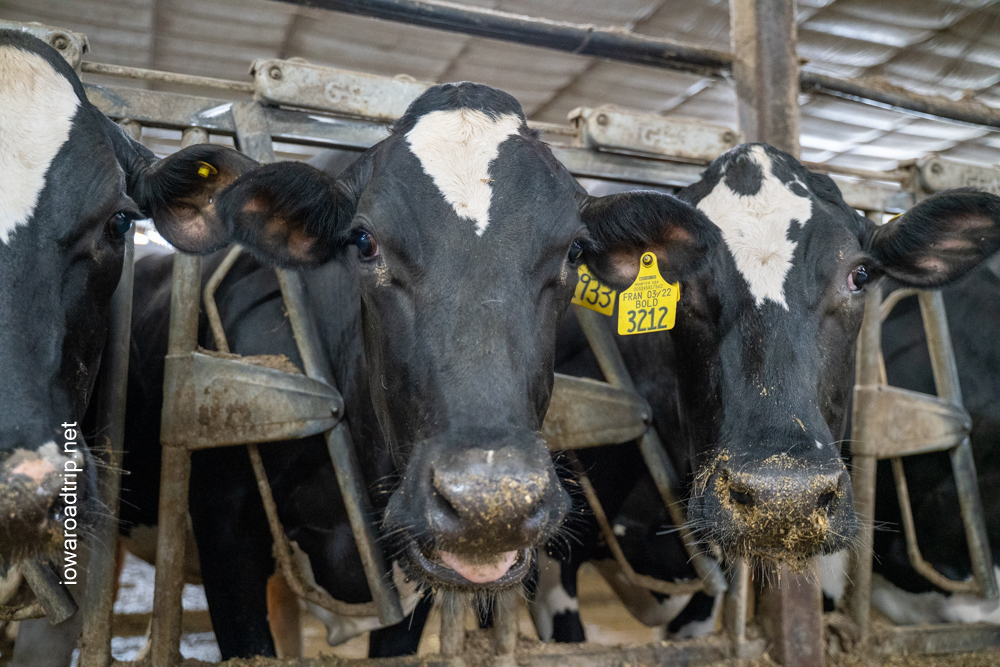
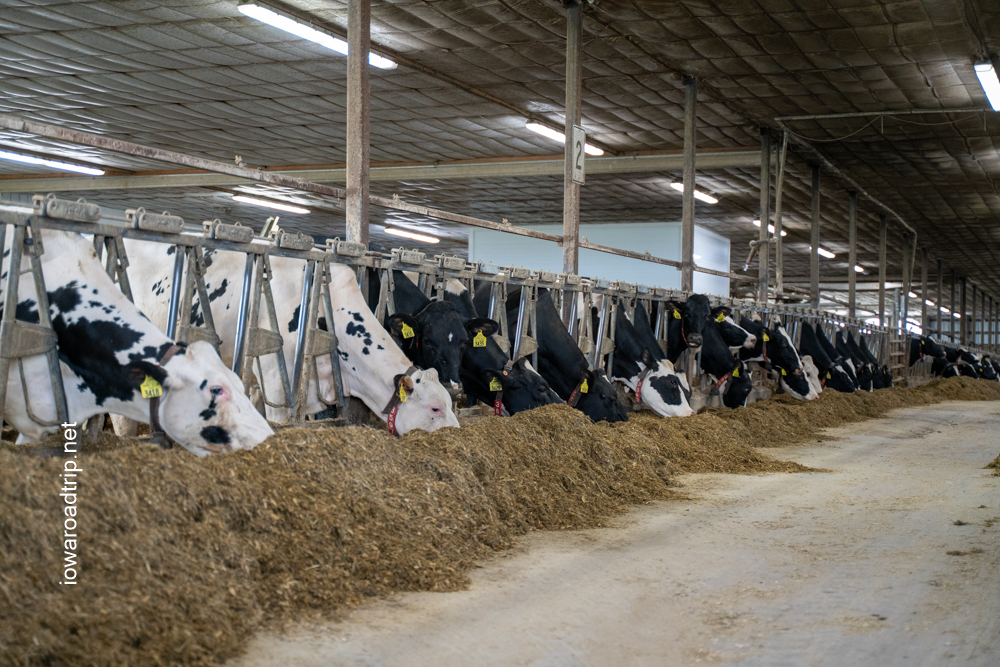
The milking herd lives in a freestall barn with sand-bedded resting areas and constant access to feed. Robots are also used elsewhere in the barn, including equipment that pushes feed closer to the cows and another system that helps keep the floor clean.
Keep in mind that this is a real working livestock barn. Expect normal farm sights, sounds and smells.
Meet the Calves
For families, the calf barn may be one of the highlights of the guided tour.
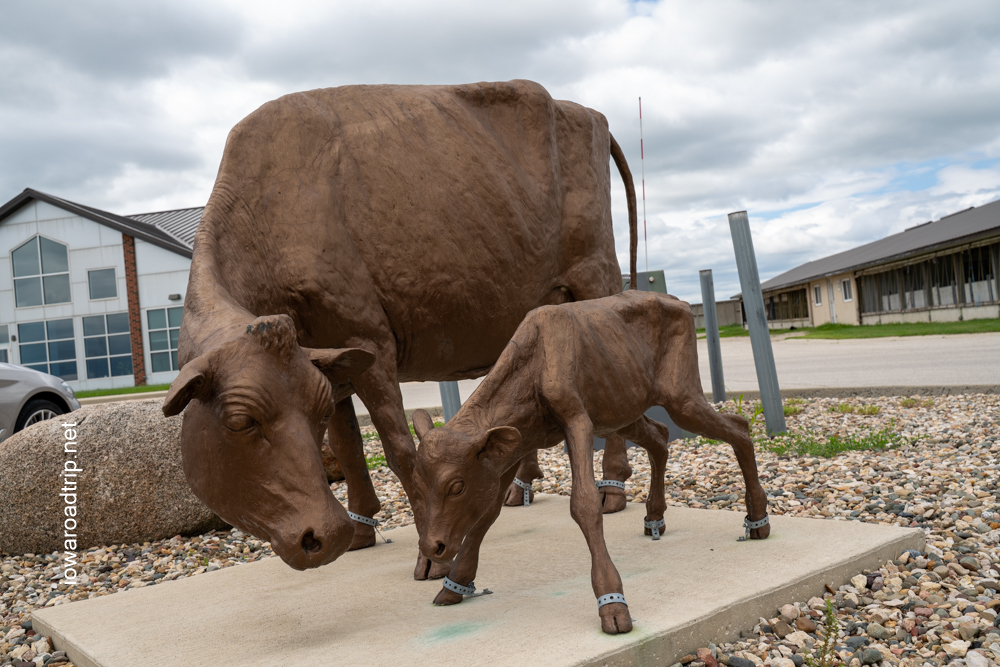
Young calves receive individual care and are fed milk twice a day, along with continual access to feed and water. Each calf has a name and identification tag.
See the Maternity Barn
The guided tour also visits the maternity barn, where cows are housed during the weeks leading up to calving.
It’s an opportunity to learn about the final stages of pregnancy, why cows stop being milked before giving birth and how they are monitored before and after calving.
Depending on the timing of your visit, you may even see a newborn calf.
Explore Iowa’s Dairy Museum
After seeing the modern robotic system, Iowa’s Dairy Museum provides a look at an earlier era of dairy farming.
Displays include historic milk bottles, butter-making equipment, dairy advertising, breed publications and tools once used on Iowa farms.
The collection also includes items from the former Iowa Holstein Museum.
Seeing these pieces after watching the robots makes the contrast between old and new dairy farming even more noticeable.
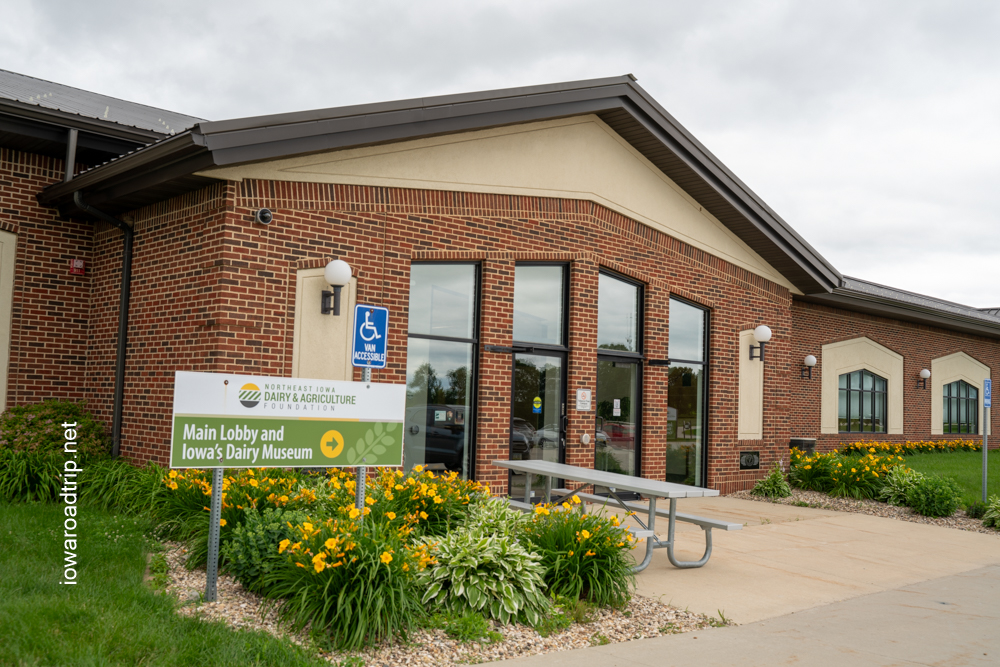
Look for the Butter Cow Connection
One of the more unusual exhibits explains how a cow digests food and turns it into milk.
The cow model used in the exhibit was created by Norma “Duffy” Lyon, the longtime sculptor of the Iowa State Fair Butter Cow.
It’s a fun Iowa connection tucked among the center’s educational displays.
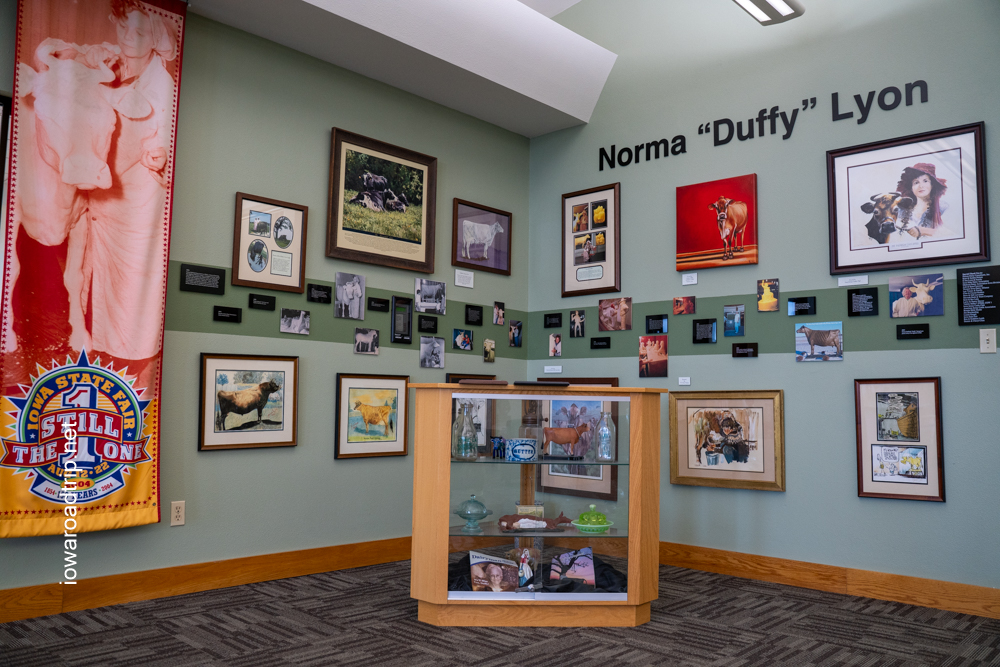
Learn About Dairy Breeds and Nutrition
The Hall of Breeds introduces visitors to different dairy cattle breeds and some notable Iowa cows.
Additional exhibits cover dairy nutrition, the digestive system and the journey milk takes from the farm to the grocery store.
These displays are especially useful for families and younger visitors who may not have much experience around farms.
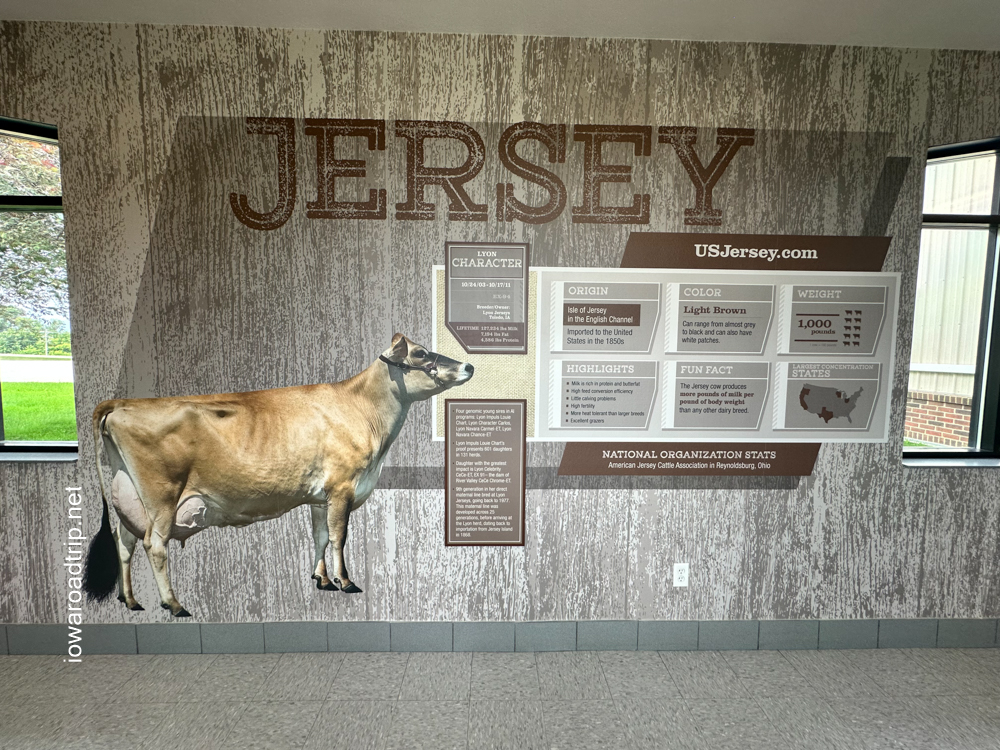
Visit the Beef Education Center
There’s more than dairy at the complex.
The Beef Education Center has a public viewing area overlooking a working facility used for student instruction and cattle care. Displays explain different stages of beef production and how cattle are handled.
Depending on what is happening that day, you may also see cattle or activity around the working chute.
Plan another 10 to 20 minutes if you want to include the Beef Education Center during your visit.
Is Iowa’s Dairy Center Good for Kids?
Kids who enjoy animals, farms or machinery should find plenty to see.
Watching a cow walk into a milking robot on her own is probably the biggest attention-getter, while the calves and working barns are highlights of the guided tour.
Families with younger children may get more from a guided visit because a guide can explain what is happening and take them closer to the animals.
What Should You Wear?
If you’re taking the guided tour, wear closed-toe shoes and clothes appropriate for a working farm.
Some portions of the tour include gravel and uneven surfaces, and you’ll spend time both indoors and outdoors.
Don’t wear anything that needs to stay perfectly clean.
Accessibility
The robotic viewing areas, museum and Hall of Breeds are described as wheelchair- and walker-friendly.
The guided tour includes approximately half a mile of walking and may involve gravel or uneven surfaces. Strollers are permitted.
Visitors with mobility concerns should contact Iowa’s Dairy Center before booking a tour to discuss accommodations.
How Much Time Should You Allow?
For a quick stop to watch the robots, allow about 20 to 30 minutes.
A more complete self-guided visit including the museum and Beef Education Center could take 45 minutes to an hour or more.
For a guided visit, plan at least one hour, plus additional time if you want to explore the museum or spend more time watching the robotic milking system.
Make It Part of a Northeast Iowa Road Trip
Iowa’s Dairy Center is just south of Calmar and about 10 miles from Decorah, making it easy to combine with several other northeast Iowa destinations.
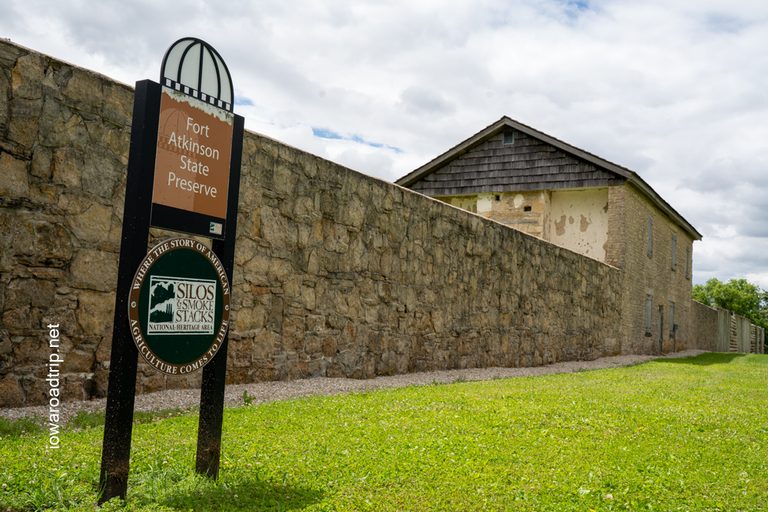
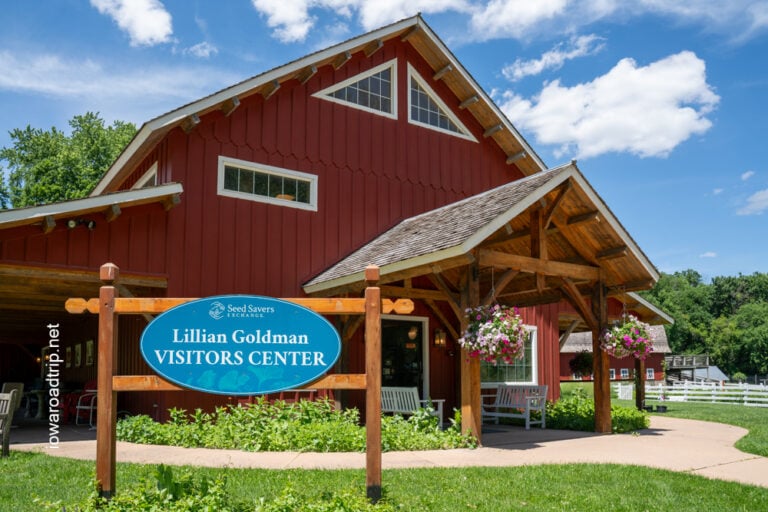
Nearby stops include Decorah, Spillville, Fort Atkinson, Seed Savers Exchange and Vesterheim.
It can also fit nicely into a larger agriculture-focused trip through the Silos & Smokestacks National Heritage Area.
Is Iowa’s Dairy Center Worth Visiting?
Iowa’s Dairy Center offers a look at something most people rarely get to see: the day-to-day operation of a modern dairy farm.
Even a short self-guided visit gives you the chance to watch cows choose when they want to be milked and see the robotic equipment do the work.
If you want to go beyond the viewing windows, reserve the guided tour. Getting inside the barns and closer to the animals provides a much better understanding of what goes into running a modern Iowa dairy farm.