Explore Fayette County History Inside a Former West Union Hospital
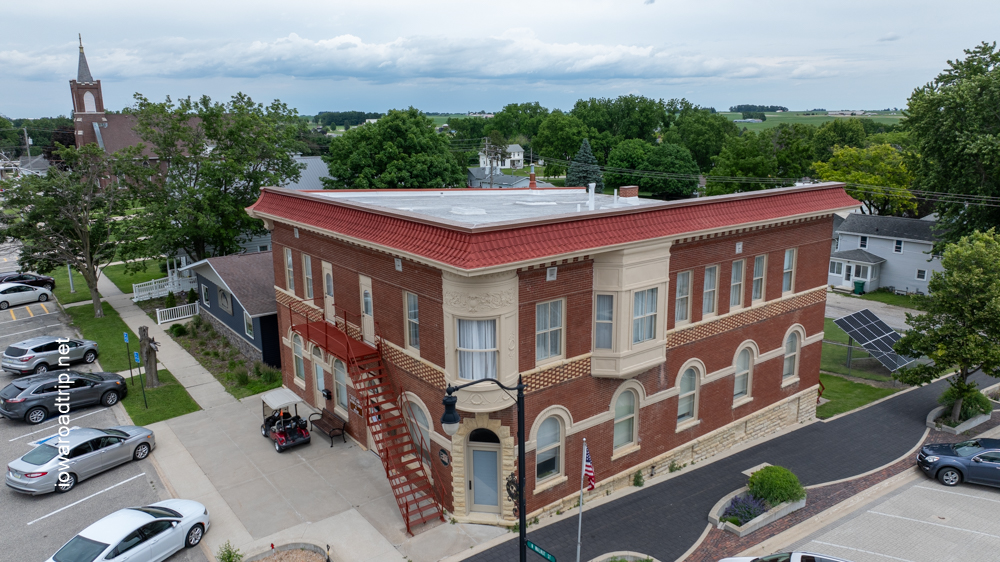
The Fayette County Historical Center covers much more than the history of West Union.
Its rooms are filled with stories from across Fayette County, including rural schools, family farms, military service, local businesses and communities that are much smaller today than they once were.
Even the building has a story. The three-story brick structure opened in 1903 as Maple View Sanitarium, the first hospital in Fayette County. It later served as a community hospital and nursing home before becoming the historical center. Today, rooms once used by doctors, nurses and patients hold photographs, tools, clothing, family records and other pieces of local history.
Fayette County Historical Center Visitor Information
Address: 100 N. Walnut Street, West Union, Iowa
Phone: 563-422-5797
Admission: Free; donations are accepted
Best for: Local history, genealogy, agriculture, military history and rural Iowa
Allow: One to two hours
Group tours: Available by appointment
Accessibility: An accessible restroom and limited elevator access are available
The museum is just off the courthouse square in downtown West Union. Because published hours have varied, call ahead before making a special trip.
A Former Hospital With More Than a Century of History
Dr. Frank Beach Whitmore built Maple View Sanitarium in 1903.
The hospital had room for roughly 12 to 15 patients, along with an operating room and medical office. Part of the first floor was also used as a general store.
Whitmore left in 1905 to become a missionary in China, and the sanitarium closed. The building later housed stores, offices and apartments before returning to medical use in 1914.
It served as West Union’s community hospital until 1951, then became a nursing home. The Fayette County Historical Society took over the building in 1975.
What You’ll Find Inside
Displays are spread across three levels.
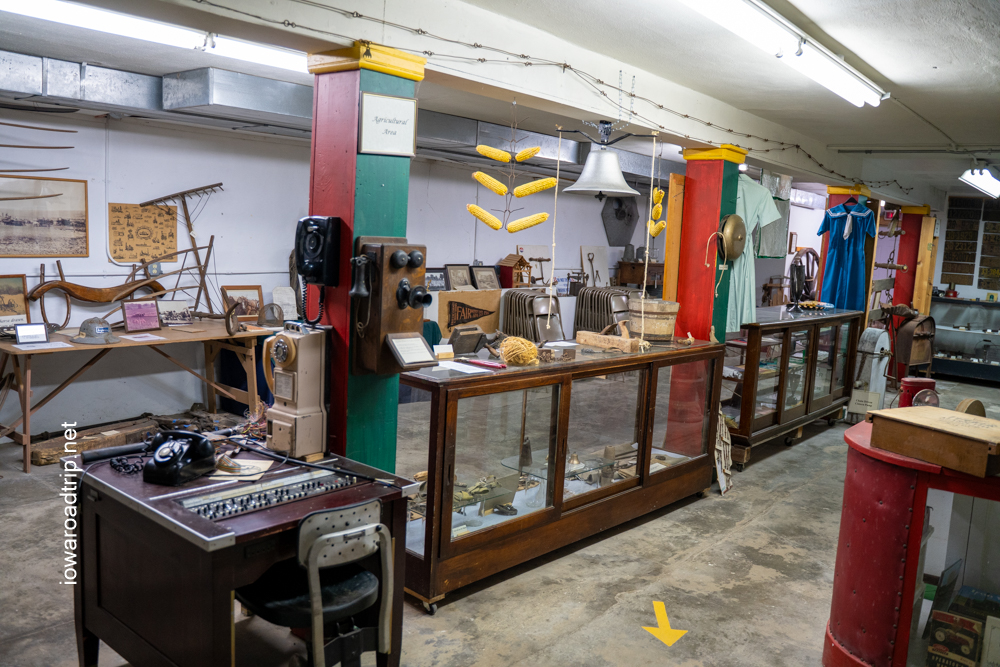
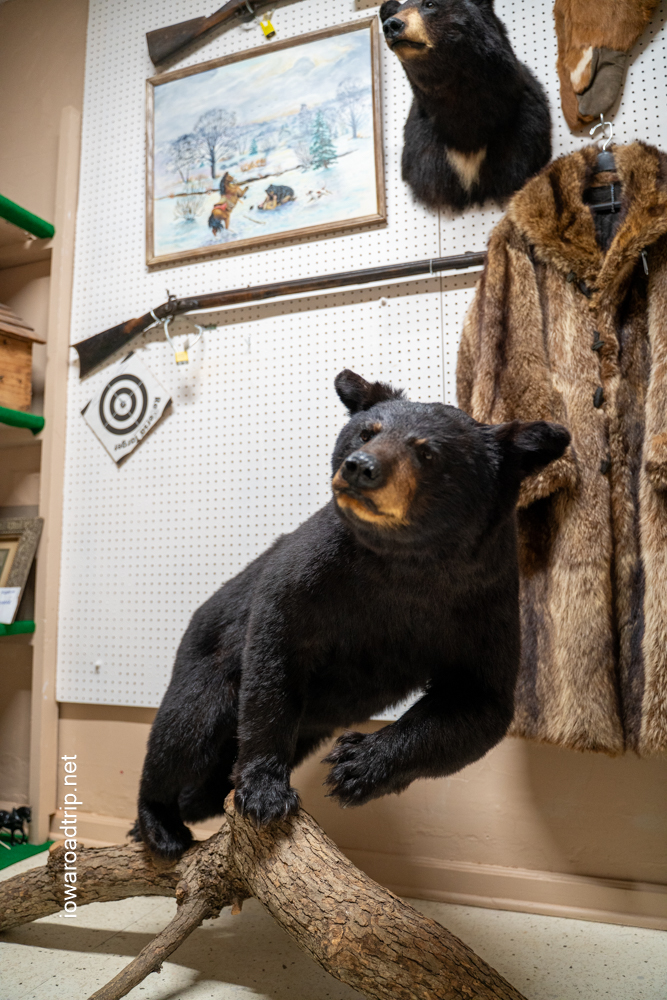
The museum has the feel of a traditional county historical collection, with rooms filled with photographs, documents, clothing, tools and objects donated by Fayette County families.
Some exhibits cover broad topics such as agriculture, schools and military service. Others focus on a particular family, business or community.
If you come across something you don’t recognize, ask a volunteer. Some of the most interesting objects are the ones whose purpose is no longer obvious.
Step Into an Old Classroom
The schoolroom includes textbooks, yearbooks, sheet music and other materials once used by Fayette County students and teachers.
Yearbooks are especially fun to browse because they preserve class photos, sports teams, school activities and buildings that may no longer exist.
The museum also has old telephone directories, which provide a snapshot of the families, addresses and businesses that once made up local communities.
Visitors with Fayette County roots may recognize a school, family name or even a relative.
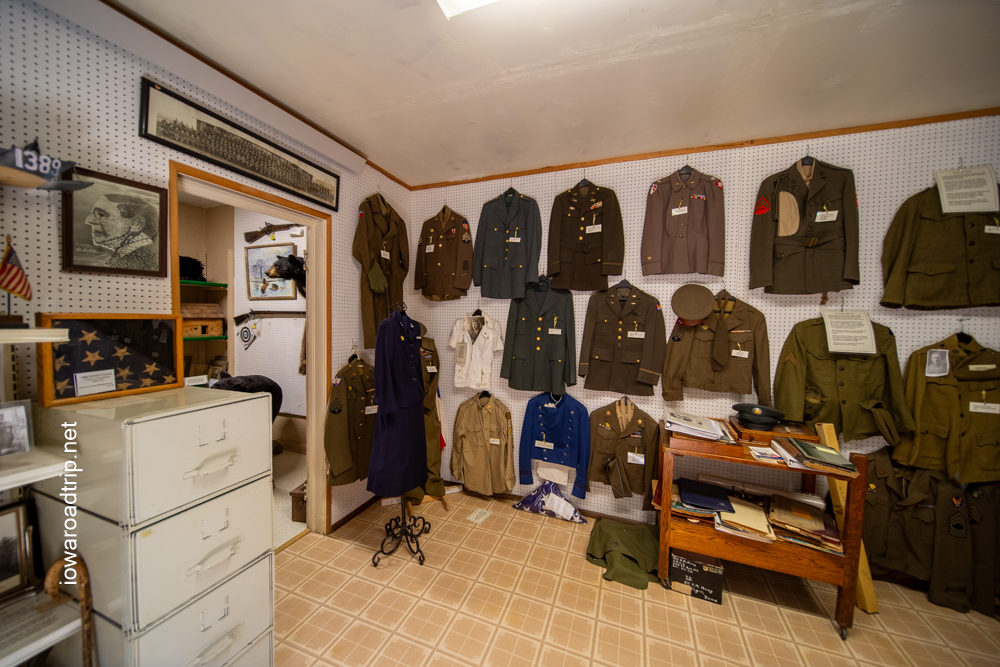
Local Stories of Military Service
Uniforms, jackets, photographs and personal items connect military history with Fayette County residents who served.
One of the collection’s most meaningful pieces is the Tupper Red Cross quilt.
The quilt belonged to Lloyd Tupper, who served in the Army Medical Corps and died in 1918. It carries the names of people from Auburn Township and the surrounding area.
See a Small-Town General Store
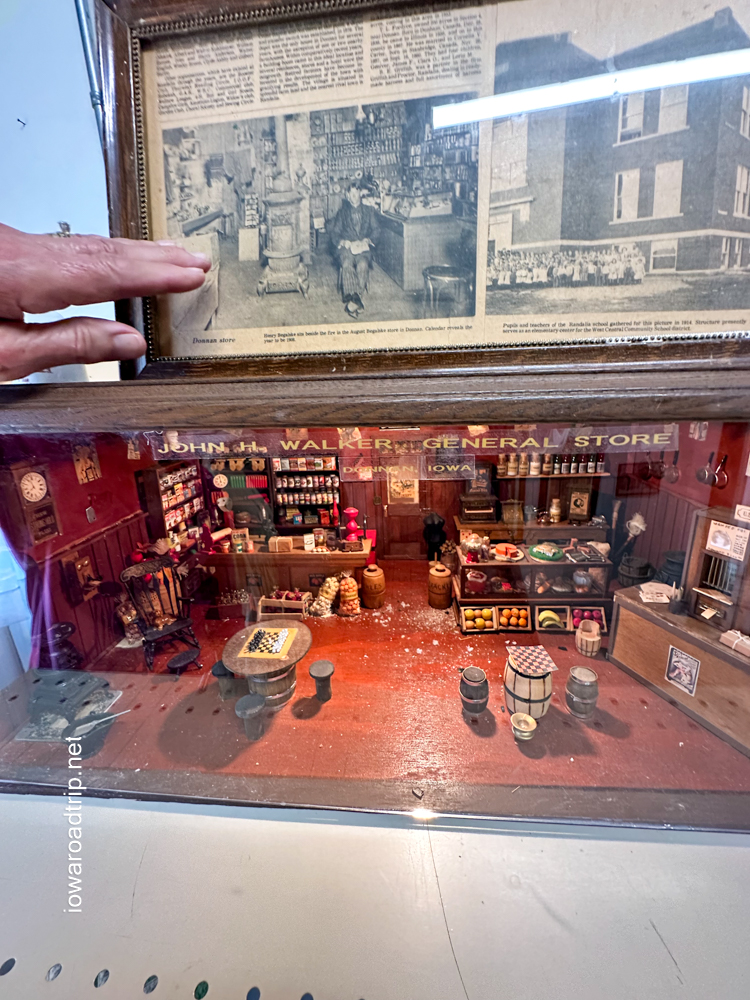
The Donnan Room contains a diorama of the John Walker General Store.
General stores once carried groceries, fabric, tools, medicine and household goods while also serving as gathering places in small communities.
Look closely at the shelves, signs, counters and packages. The smaller details make the display worth slowing down for.
Stories From Fayette County’s Smaller Communities
Not every exhibit focuses on West Union.
One room is devoted to Lima and includes a model of the Lima Church. The collection also contains early postal boxes from Wadena.
For anyone researching a particular Fayette County town or family, it’s worth asking whether additional photographs or records are available in the archives.
Look for the Cornhusk Dolls
Among the museum’s more unusual collections are cornhusk dolls made by the late Joyce Grimes.
Some of her work appeared in Midwest Living magazine in 1990.
Made from dried corn husks, the dolls feature clothing, hairstyles and small accessories, with each one having a slightly different personality.
They’re a nice change of pace from the museum’s documents, photographs and farm tools.
Explore Fayette County’s Agricultural Roots
Agriculture has shaped much of Fayette County’s history.
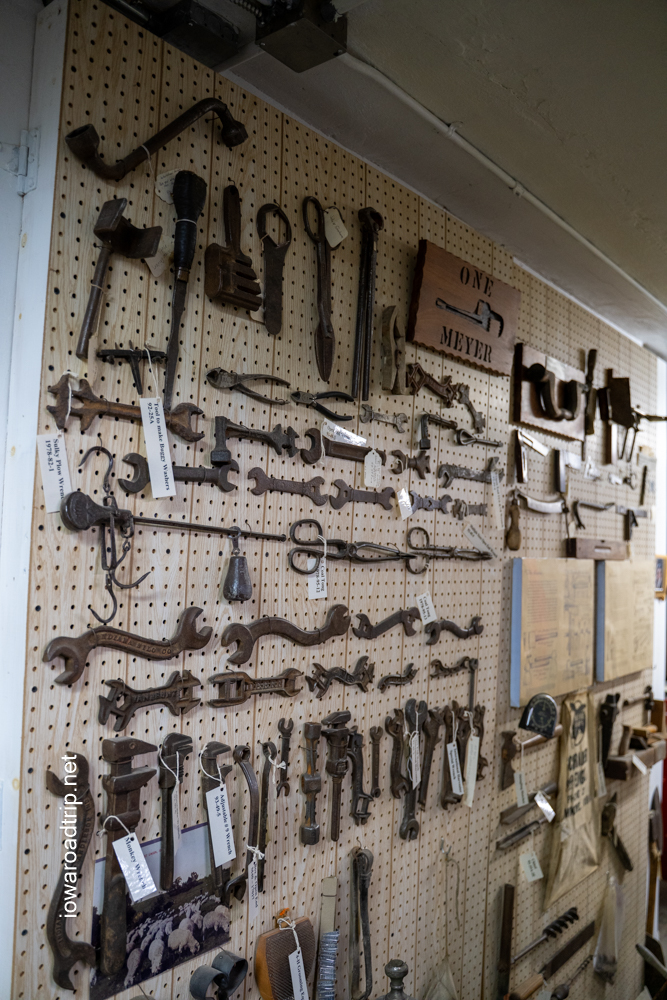
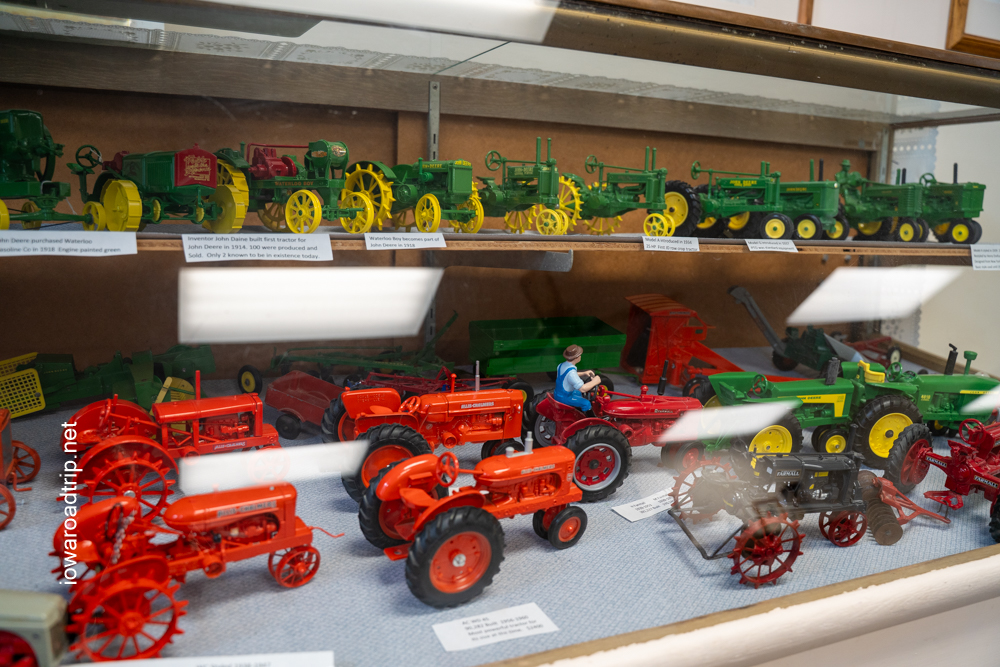
Tools and equipment on the lower level show how farm work changed from hand tools and animal power to tractors and more specialized machinery.
Look for worn handles, repairs and homemade modifications. Those details often reveal how heavily an item was used and how long its owner kept it working.
Find the Humphry Dairy Cow
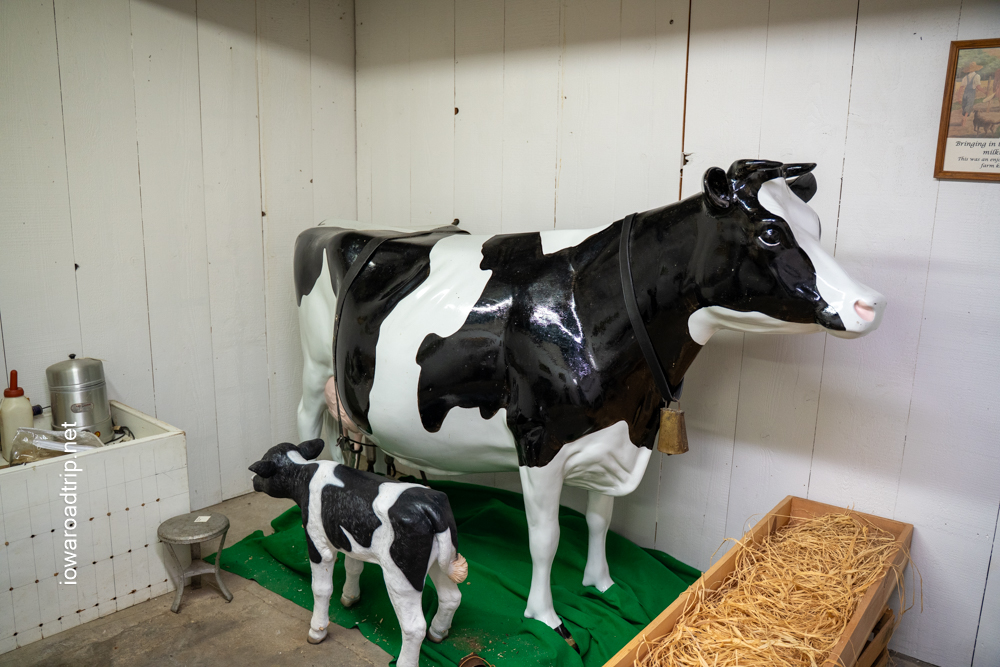
One of the museum’s easiest pieces to recognize is the Holstein cow that once stood outside the Humphry Dairy Restaurant.
Large roadside animals and signs were built to catch the attention of passing motorists, and many eventually became local landmarks.
The Humphry Dairy cow now serves as both a piece of local advertising history and one of the museum’s more entertaining photo opportunities.
Political History With Fayette County Connections
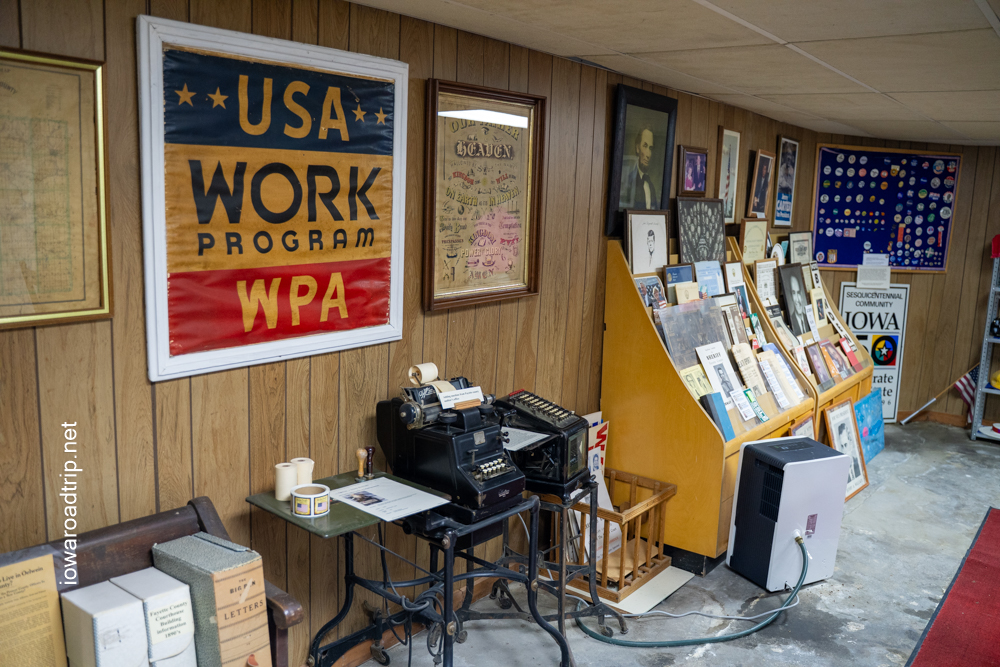
The lower level also contains political memorabilia connected with Fayette County residents who served in state and national government.
William Larrabee of Clermont served two terms as governor of Iowa. Lucian Ainsworth, Walter Butler and William Fuller served in Congress, while David B. Henderson became speaker of the U.S. House of Representatives.
Campaign buttons, signs, photographs and documents add another layer to the collection.
Research Your Fayette County Family History
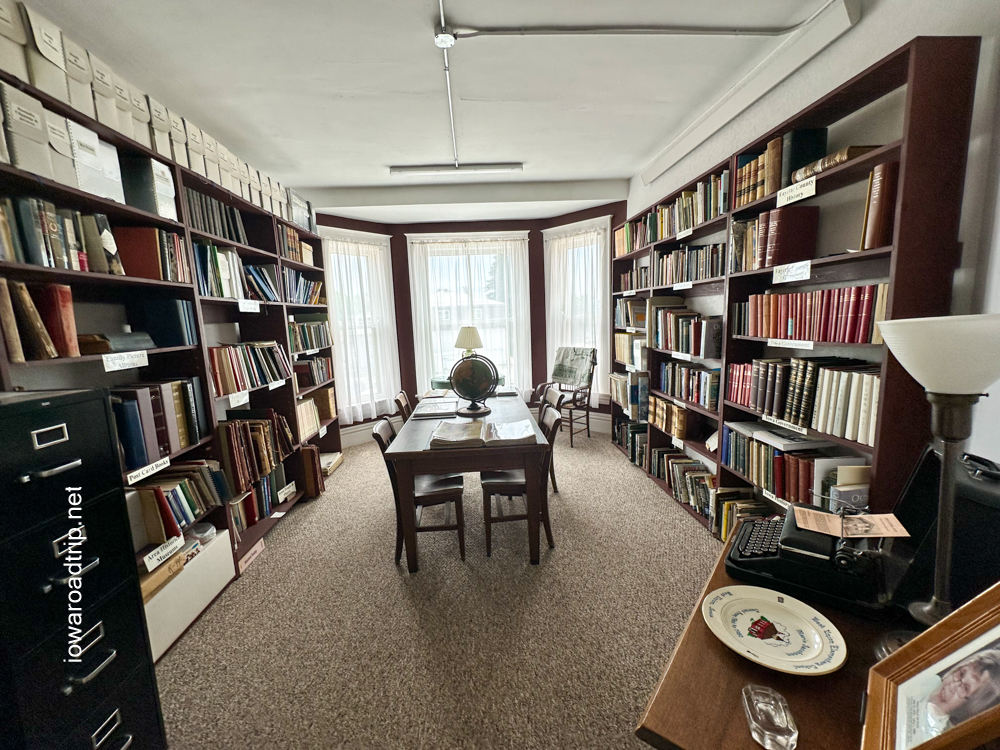
For genealogists, the museum’s records may be just as valuable as the exhibits.
The collection includes about 8,000 surname files, family histories, cemetery indexes and census records from 1850 through 1930. There are also newspapers dating to 1856, early county atlases, Civil War rosters and county history books.
Volunteers can help locate obituaries and other family records.
If genealogy is your main reason for visiting, bring full names, approximate dates and known towns or family relationships. Calling ahead can also help volunteers determine whether useful records are available.
Cemetery Records
The center also maintains records for city, church and pioneer cemeteries throughout Fayette County.
These indexes may contain birth and death dates, family relationships and clues that lead to other records.
The Fayette County Pioneer Cemetery Commission also works to locate burial grounds, document graves and preserve cemeteries that might otherwise be forgotten.
Visit the Log Cabin and Country School
The historical society maintains two additional buildings at the Fayette County Fairgrounds: a log cabin and a one-room school.
They are separate from the main museum and are generally open during the county fair or by appointment.
The current log cabin was built at the fairgrounds in 1946 after an earlier cabin burned.
The Union No. 5 country school was built in 1903 about four miles east of West Union and remained in use until 1960. The building was moved to the fairgrounds in 1975.
Arrange a visit in advance rather than assuming either building will be open.
Is the Museum Good for Kids?
The Fayette County Historical Center will probably work best for school-age children who enjoy old buildings, unusual objects and local stories.
The cornhusk dolls, Humphry Dairy cow, general-store diorama, schoolroom and farm tools may be the easiest exhibits for younger visitors to connect with.
This isn’t a hands-on children’s museum, so many objects are behind barriers or inside display cases.
Accessibility and How Much Time to Allow
The museum has an accessible restroom and limited elevator access.
Because exhibits are spread across three floors, visitors with mobility concerns should call ahead to ask which areas can be reached by elevator.
Allow about one hour for a general visit. If you enjoy reading exhibit labels, browsing old photographs or talking with volunteers, plan on 90 minutes to two hours.
Genealogy research may require considerably more time.
Make It Part of a West Union Road Trip
The museum is just off the courthouse square, making it easy to combine with a walk through downtown West Union.
Other nearby possibilities include Echo Valley State Park and the Fayette County Fairgrounds.
For a longer trip through the county, continue toward Montauk Historic Site in Clermont, Gilbertson Nature Center near Elgin or other historic and outdoor stops in northeast Iowa.
Why the Fayette County Historical Center Is Worth Visiting
What makes the Fayette County Historical Center interesting is the variety.
There are military uniforms and farm tools, but also cornhusk dolls, schoolbooks, postal boxes, political memorabilia, restaurant advertising and records from communities that have changed considerably over the years.
The former hospital adds another layer to the visit. A building once used to care for patients now holds the photographs, records and everyday objects that preserve Fayette County’s history.