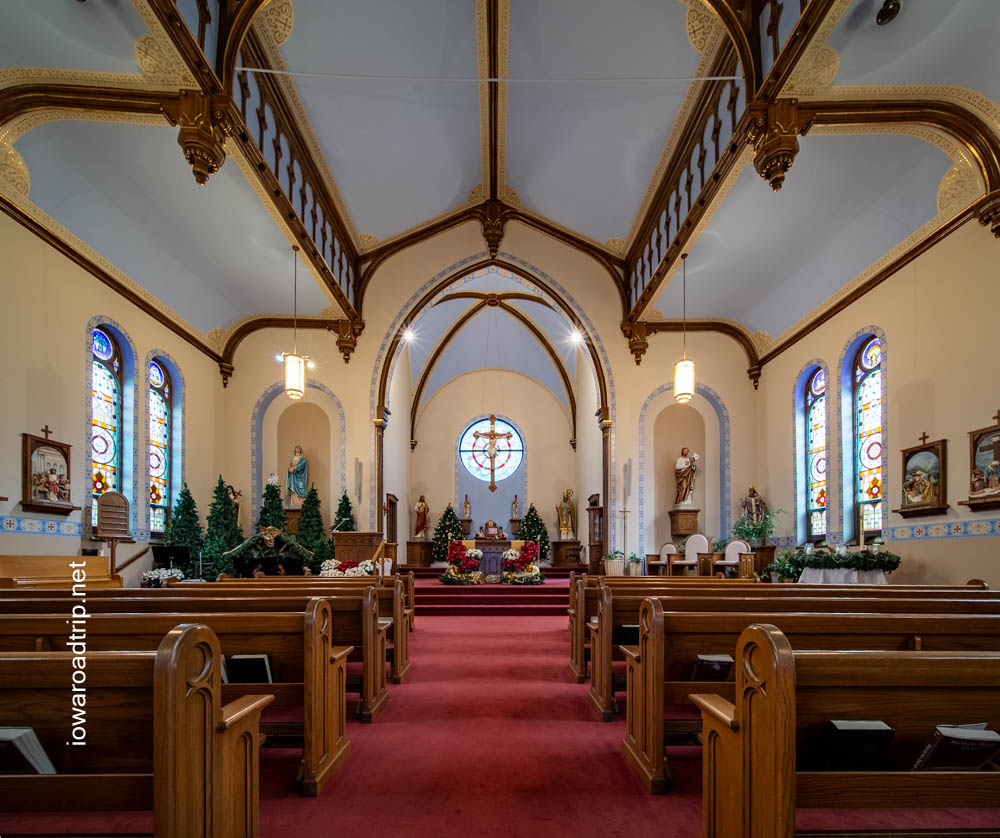
St. Boniface Catholic Church in Westphalia, Iowa
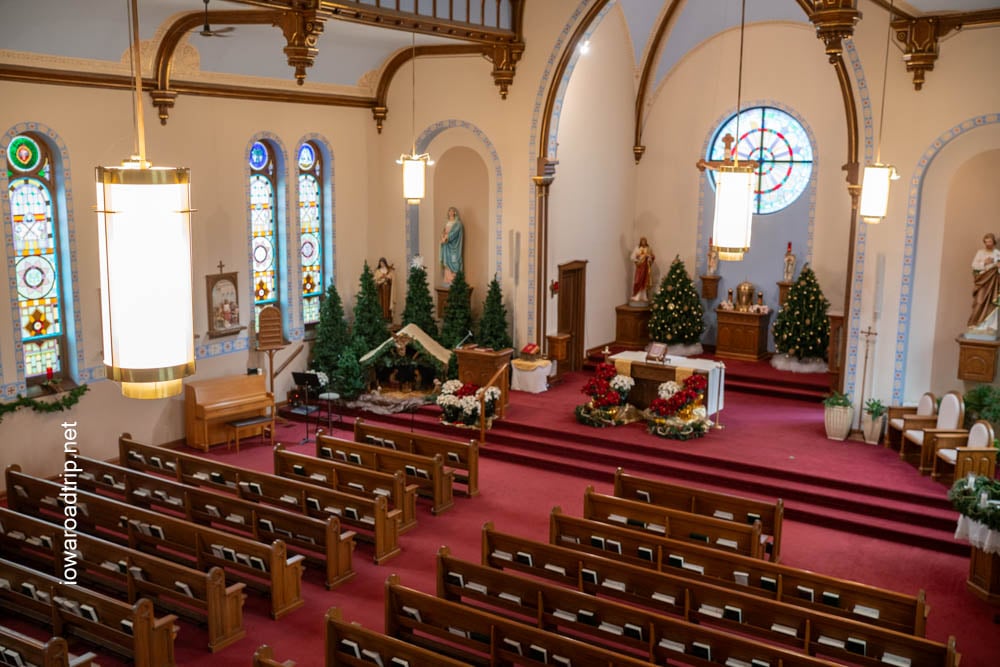
Tucked into the rolling countryside of western Iowa, St. Boniface Catholic Church is one of those places that stops you in your tracks. In a town as small as Westphalia, the scale, beauty, and history of this church feel almost unexpected. It’s a reminder that some of Iowa’s most impressive landmarks aren’t found in big cities, but in small communities built on faith, perseverance, and pride.
📍 Address
St. Boniface Catholic Church
306 3rd Street
Westphalia, Iowa

A Landmark That Defines Westphalia
St. Boniface Catholic Church isn’t just part of Westphalia—it is Westphalia. Rising above the surrounding farmland and homes, the church has long served as the visual and spiritual centerpiece of the community. For generations, it has been the place where families gathered not only for worship, but for milestones, traditions, and shared history.
Visitors often comment on how striking the church feels compared to the size of the town. That contrast is part of what makes the stop so memorable. You don’t expect to find a structure of this scale and craftsmanship here—and that surprise is exactly what makes it special.
A Church Built by Immigrants
Westphalia was settled in the 1870s by German Catholic immigrants who were determined to build a community centered around their faith. In 1873, the parish of St. Boniface was officially established, and by 1874, a cemetery had already been laid out, signaling their long-term commitment to this place.
The current church building was constructed and dedicated in 1882, just nine years after the parish was founded. Designed by Dubuque architect Fridolin Heer, the church was built in the Romanesque Revival style, a bold architectural choice for a rural Iowa town at the time.
Even more impressive—many of the bricks used to build the church were made on site, a testament to the labor and dedication of the early parishioners.
Architecture Worth Slowing Down For
From the outside, St. Boniface immediately draws the eye with its solid brick construction, symmetrical design, and prominent central bell tower topped with a spire. The Romanesque Revival style gives the church a sense of permanence and strength, perfectly reflecting the values of the community that built it.
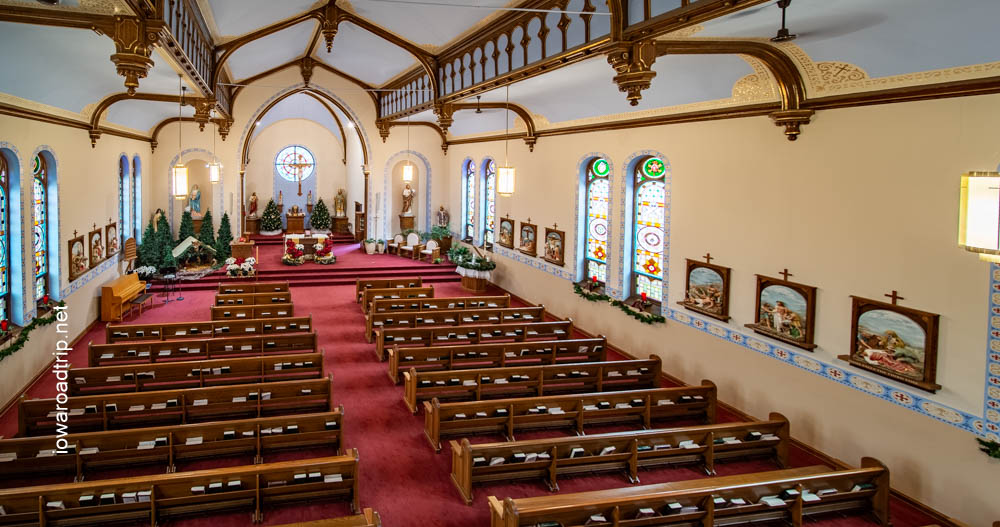
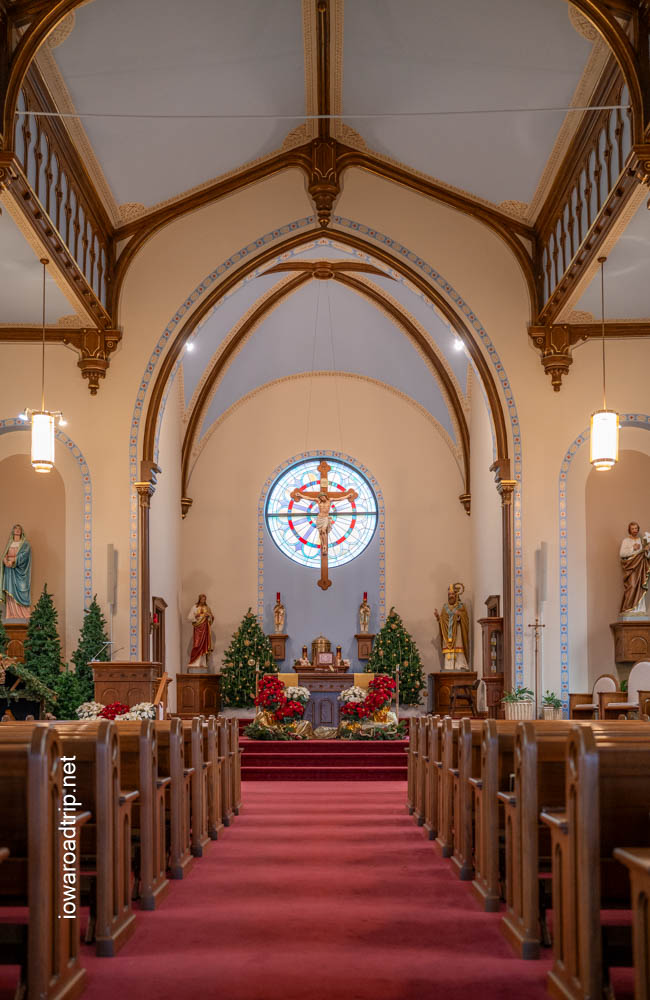
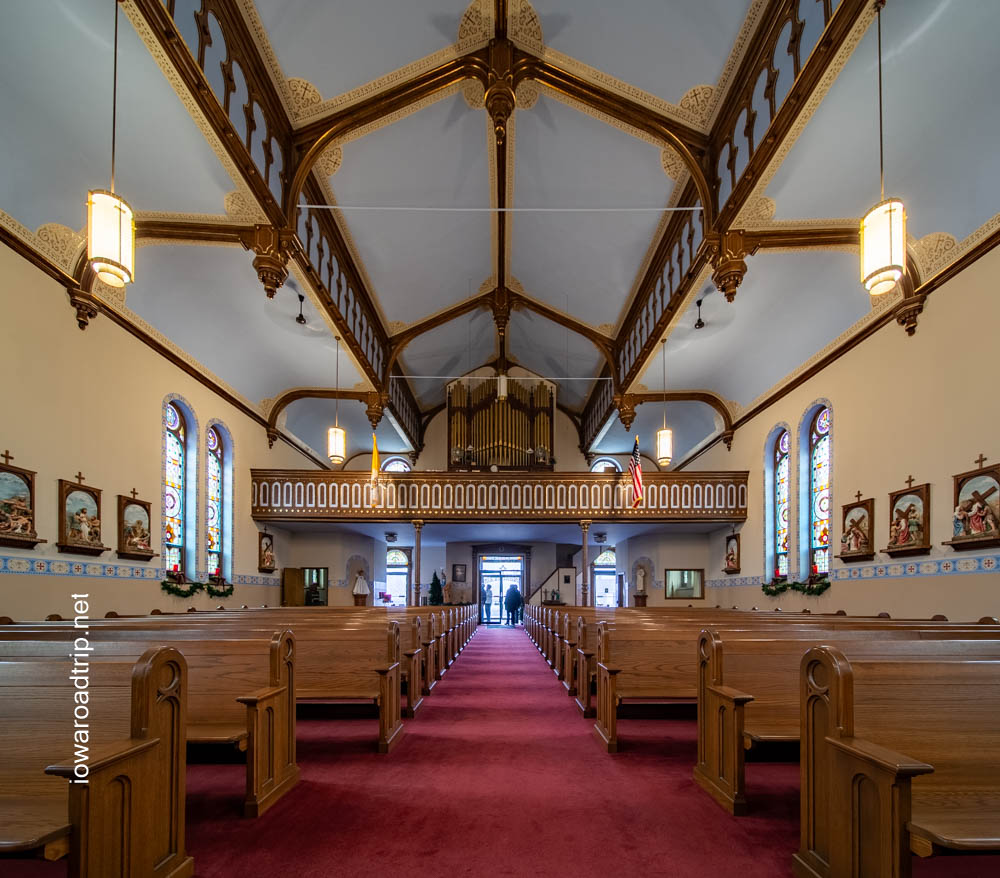
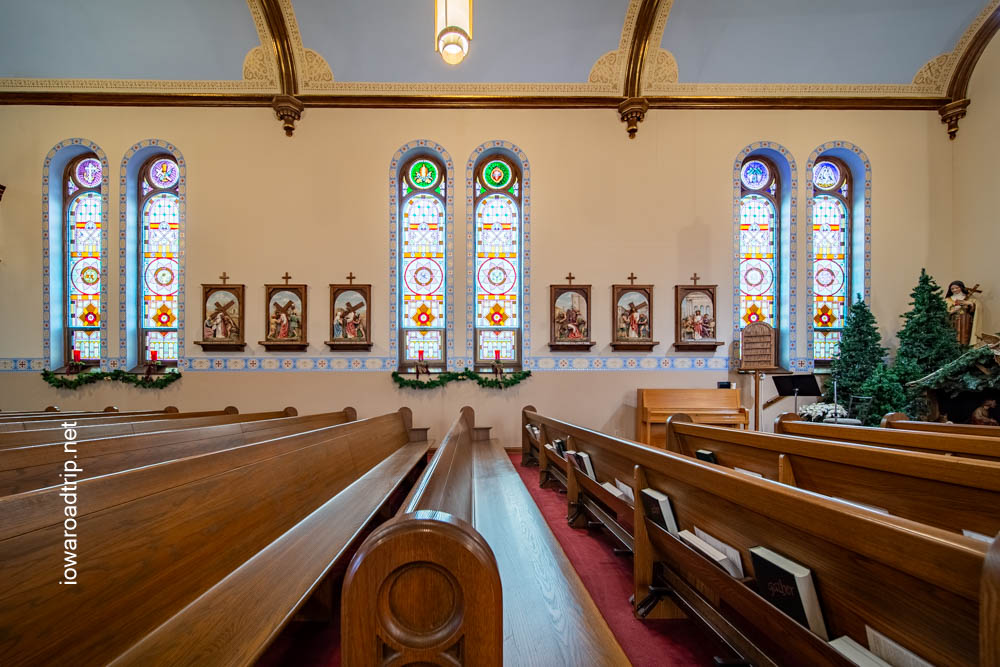
Step inside, and the sense of craftsmanship continues. The scale of the interior, combined with its historic details, creates a space that feels both grand and reverent. Whether you’re visiting for faith, architecture, photography, or history, this is a place that invites you to slow down and take it all in.
In 1919, both the church and rectory were covered in stucco, helping preserve the structures and giving them much of the appearance visitors see today.

A Center of Community Life
As the years passed, St. Boniface continued to grow alongside Westphalia. When the Diocese of Des Moines was established in 1911, the parish became part of the new diocese.
One of the most influential periods in the church’s history came under Rev. Hubert Duren, who became pastor in 1926 and served for 36 years. During his leadership, the parish expanded significantly, including the construction of a parochial school in 1927 and the Shrine of Our Lady of Grace in 1930. These additions reinforced the church’s role as the heart of daily life in Westphalia.
The church’s historical and architectural significance was formally recognized in 1991, when the St. Boniface Catholic Church District was added to the National Register of Historic Places.
A Living History
St. Boniface is not just a historic building—it’s a living parish. In 2025, the community dedicated a new Heritage Center, created to preserve and share the story of the church and the generations who have called Westphalia home. It’s a powerful reminder that this is a place where history is still being made.

Planning Your Visit
A visit to St. Boniface Catholic Church doesn’t require much time, but it’s well worth building into a western Iowa road trip.
Tips for visiting:
- Be respectful of services and parish activities
- Quiet reflection is encouraged inside the church
- Parking is available nearby
The church pairs well with other small-town stops in Shelby County, making it an easy and rewarding detour.
Why This Stop Matters
St. Boniface Catholic Church is a perfect example of what makes road tripping in Iowa so rewarding. It tells a story of immigrants, faith, and community—crafted in brick, stone, and tradition. Whether you’re drawn by history, architecture, or simply the joy of discovering something unexpected, this is a place that leaves a lasting impression.
Add Westphalia to your map, and let St. Boniface remind you why Iowa’s back roads often lead to the most remarkable places.