See the Machines That Built America at the Earthmoving Legacy Center
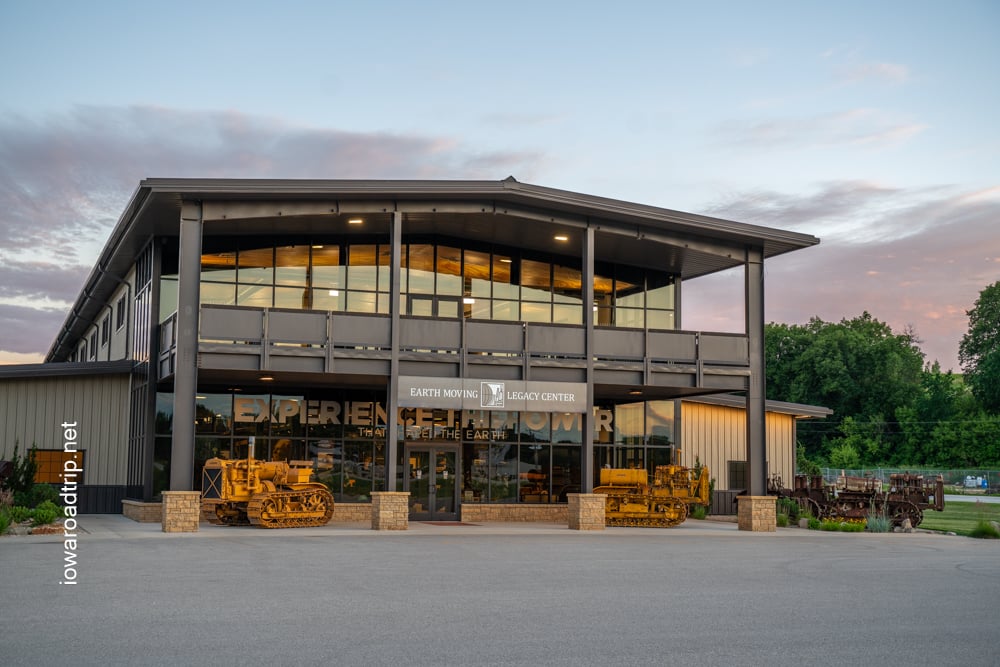
The Earthmoving Legacy Center in Elkader tells the story of how moving dirt went from horse-drawn scrapers to massive tracked machines.
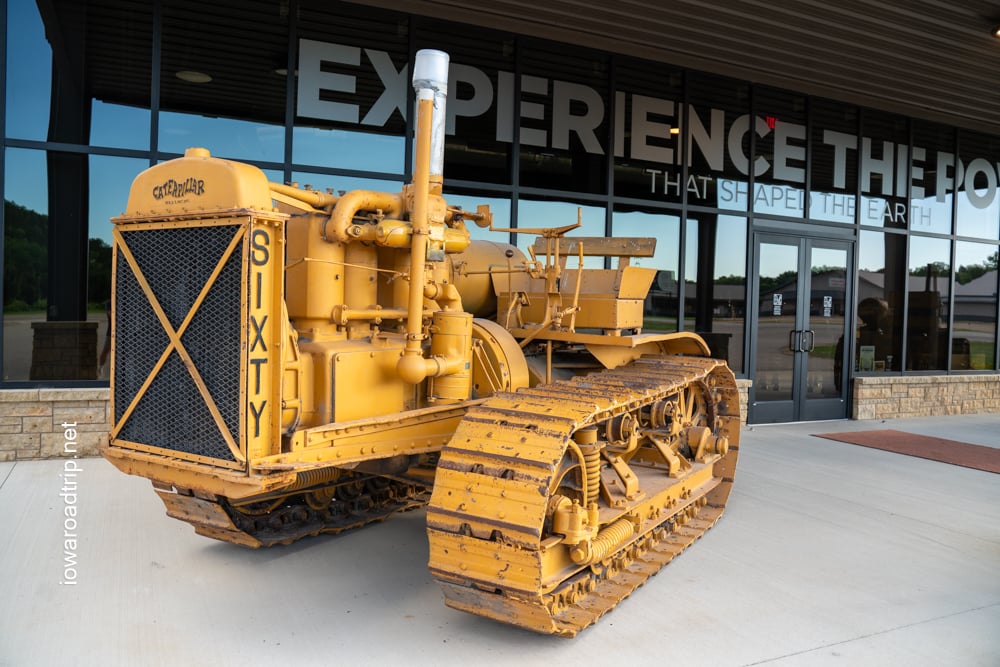
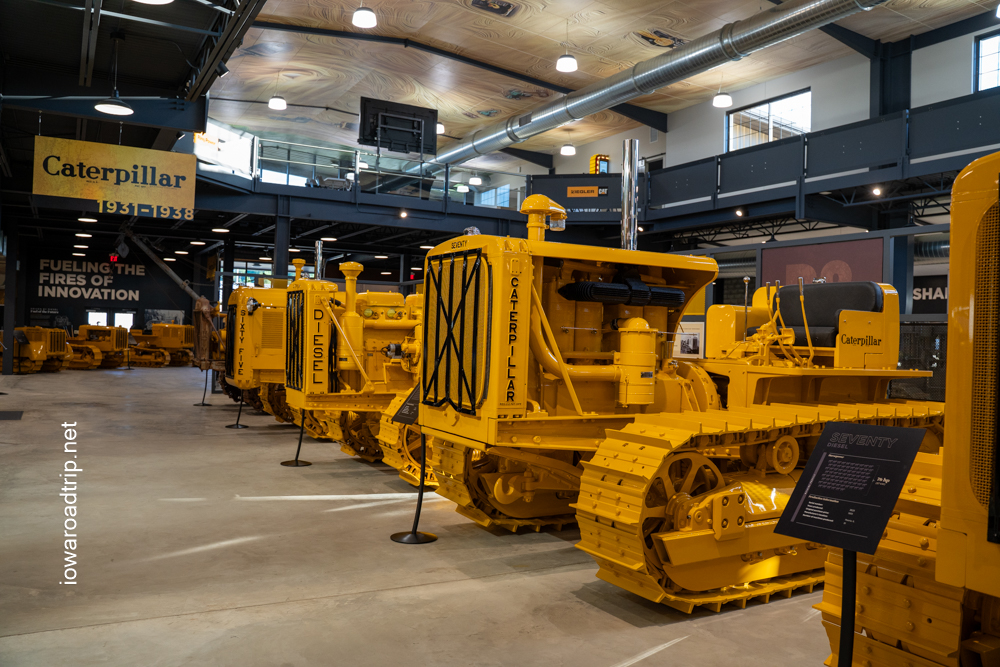
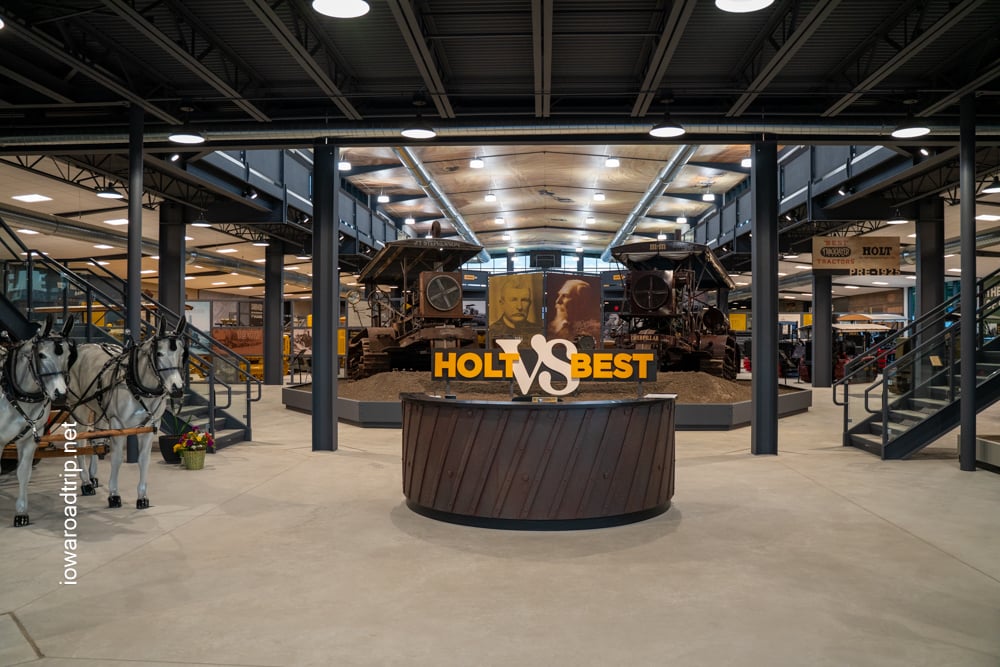
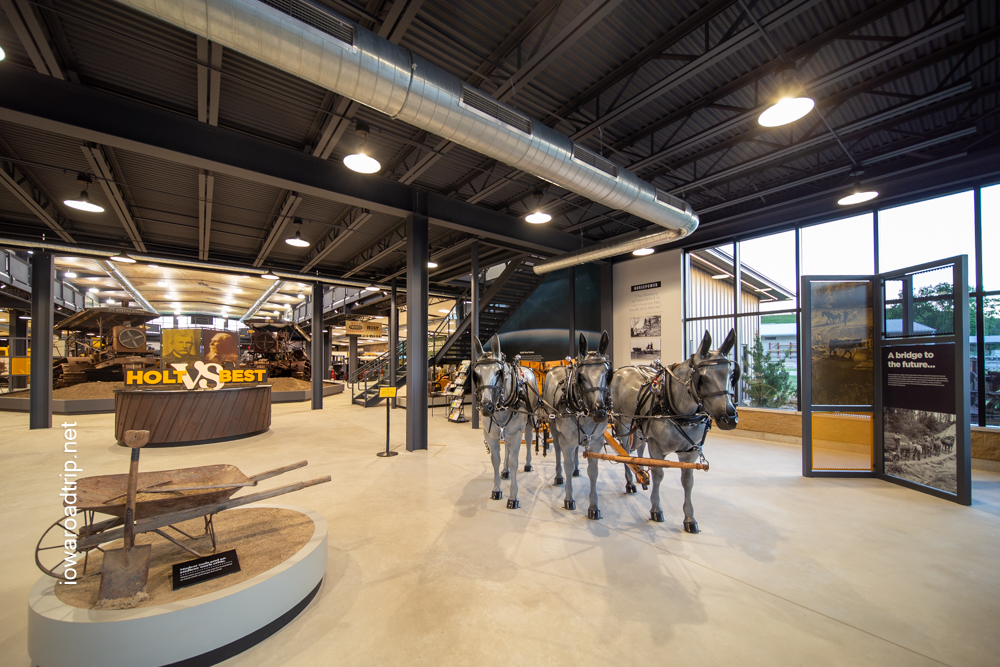
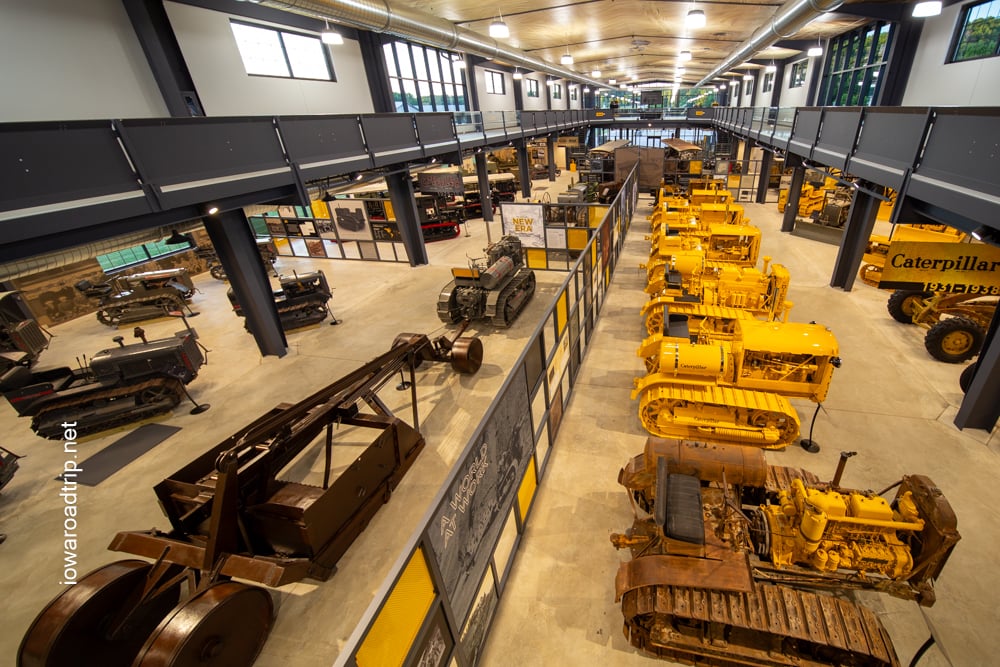
Inside the 38,000-square-foot museum are approximately 50 pieces of equipment dating from the 1880s through the 1940s. The collection includes horse-drawn machinery, steam equipment, early gasoline tractors and some of the machines that helped shape the history of Caterpillar.
You don’t have to know model numbers or engine specifications to enjoy the museum. The changes are easy to see simply by walking from one generation of equipment to the next.
Earthmoving Legacy Center Visitor Information
Address: 24412 IA-13, Elkader, Iowa
Hours: Tuesday through Saturday, 9 a.m. to 4 p.m.
Admission:
Adults: $15
Seniors: $10
Children 12 and younger: $10
Family admission: $30
Phone: 563-245-3690
Allow: About 60 to 90 minutes
Private tours: Available by request
The museum occasionally adjusts its Saturday hours for private events, so check current hours before making a special trip.
From Horse-Drawn Scrapers to Heavy Equipment
The earliest machines in the museum date to the late 1800s, when horses supplied the power for scrapers and other equipment used to move and level soil.
Those early pieces make a good starting point because they show just how much work was once required to move relatively small amounts of dirt.
From there, the collection moves into steam-powered machinery, gasoline tractors and eventually diesel equipment. Each change brought more power and allowed operators to handle larger jobs in less time.
Walking through the museum makes that progression easy to understand without getting buried in technical details.
Follow the Story That Became Caterpillar
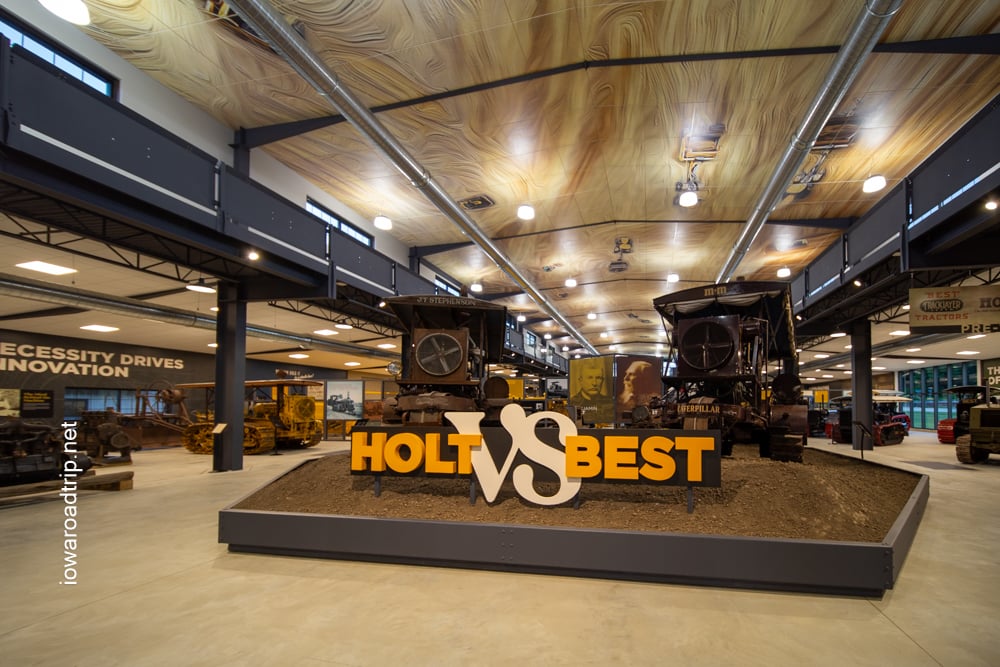
A large part of the museum follows the histories of Holt Manufacturing Company and the C.L. Best Tractor Company.
Both companies helped develop early track-type tractors and competed for years before merging in 1925 to form Caterpillar.
Machines from Holt, Best and early Caterpillar are displayed near one another, making it possible to compare tracks, engines, controls and other changes from one generation to the next.
That side-by-side comparison is one of the museum’s strengths. You can see the evolution rather than just reading about it.
Why Tracks Changed Earthmoving
Crawler tractors spread their weight across a larger area than wheeled machines, helping them travel across soft, muddy or uneven ground.
That made them useful for jobs where conventional tractors could easily become stuck.
The museum gives visitors a close look at the tracks, rollers, steering systems and undercarriages that made these machines different.
Even if you know very little about heavy equipment, the basic idea becomes pretty obvious when you see the machines at full scale.
Look for the First Caterpillar Fifteen
One of the standout pieces is a Caterpillar Fifteen identified as the first one produced.
The 15-horsepower tractor was designed primarily for agricultural work and is one of the more historically significant machines in the collection.
There’s also a museum tradition that touching the tractor brings three years of good luck. Take that part as a bit of museum fun rather than official Caterpillar history.
Why Aren’t All the Caterpillars Yellow?
Not every Caterpillar in the museum wears the familiar yellow paint.
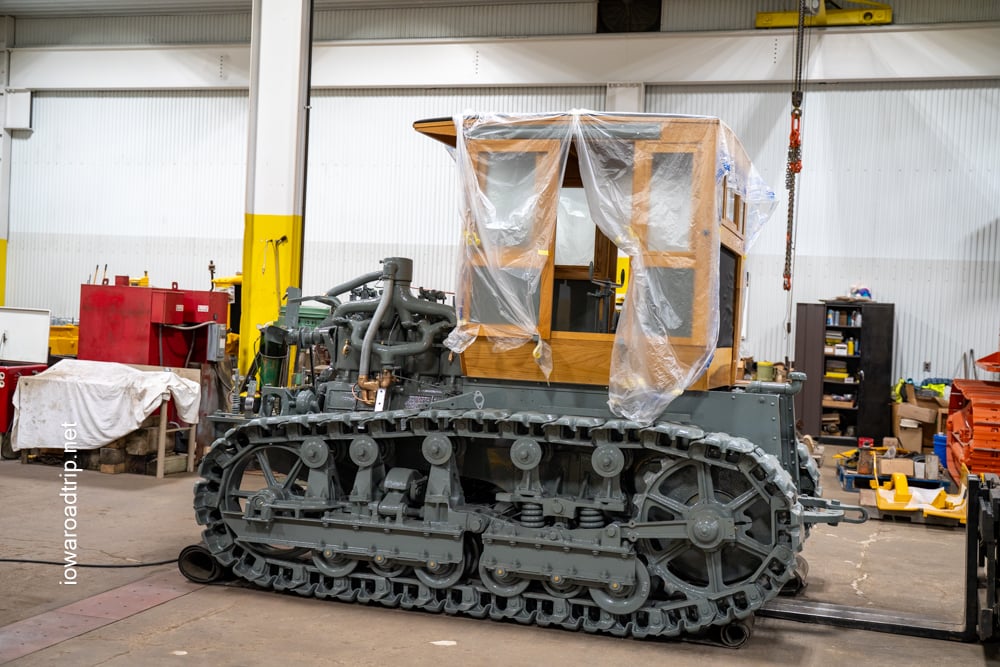
Some of the early machines are gray, reflecting an earlier period in the company’s history. Caterpillar switched to its familiar highway yellow in 1931.
Seeing gray and yellow machines together is a simple visual reminder that even Caterpillar’s appearance evolved over time.
See the Caterpillar Diesel 65
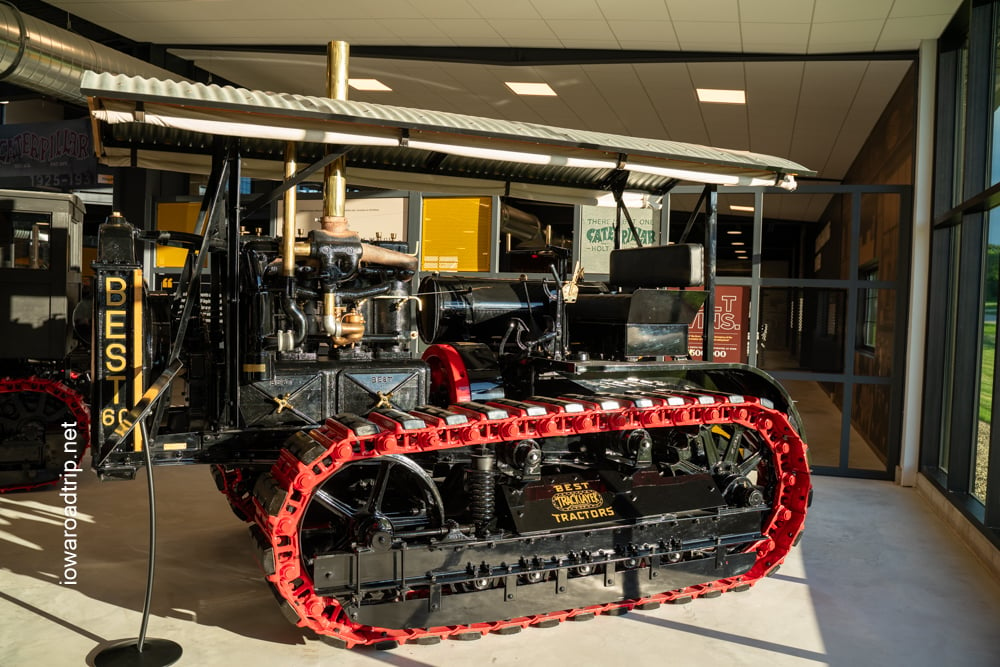
Another notable machine is the Caterpillar Diesel 65.
Introduced in 1931, it came during Caterpillar’s early push into diesel power. Only 155 were produced while the company worked through problems with the new technology.
Despite those challenges, the Diesel 65 helped point Caterpillar toward the diesel equipment that would eventually become a major part of the company’s success.
It has also been identified as one of museum founder John Moyna’s favorite machines in the collection.
Compare One Generation With the Next
One of the most interesting parts of the museum is simply comparing machines.
Operator seats, controls, engines, tracks, blades and safety features changed considerably over the decades.
Some early machines leave almost everything exposed. Later equipment begins to look more like the heavy machinery still used today.
You don’t need to recognize a single model number to notice the differences.
Don’t Forget to Look Up
The equipment isn’t the only thing worth seeing.
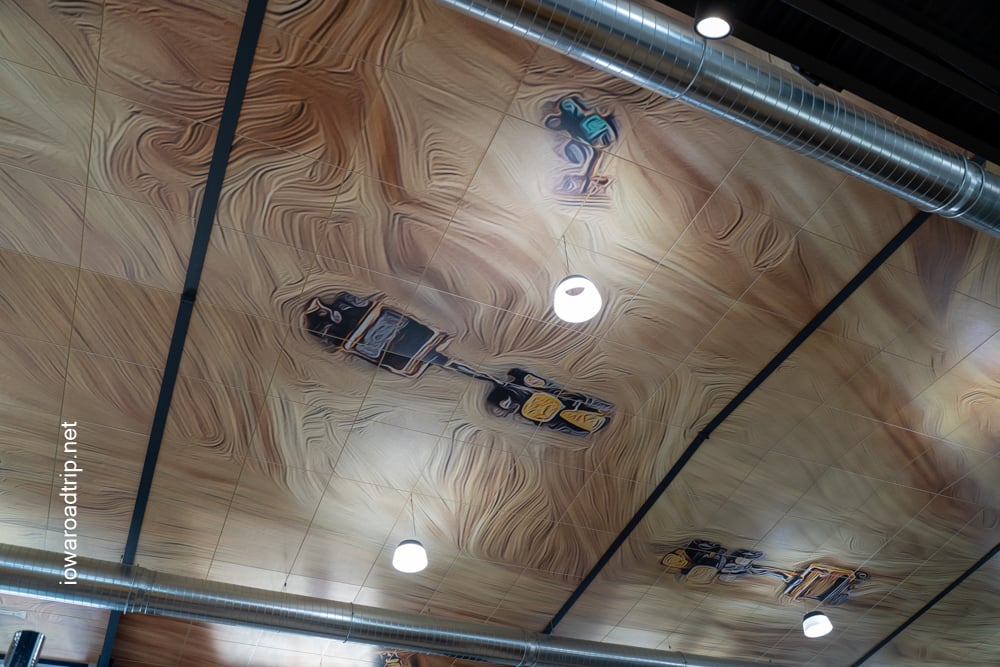
More than 960 four-foot-square ceiling tiles form a large mural showing earthmoving equipment at work. It stretches above the museum floor and is easy to miss if you’re concentrating on the machines below.
It’s worth stepping back for a wider look at the building before moving on.
The People Behind the Machines
The Earthmoving Legacy Center also tells the stories of the people who designed, operated, maintained and repaired this equipment.
Displays touch on operators, mechanics, farmers, engineers and builders, along with the conditions they faced and the work required to keep early machinery running.
Those stories help keep the museum from feeling like nothing more than rows of old tractors.
How Earthmoving Equipment Changed Iowa
Machines like these played a role in building roads, preparing construction sites, improving farmland, installing utilities and completing flood-control and bridge projects.
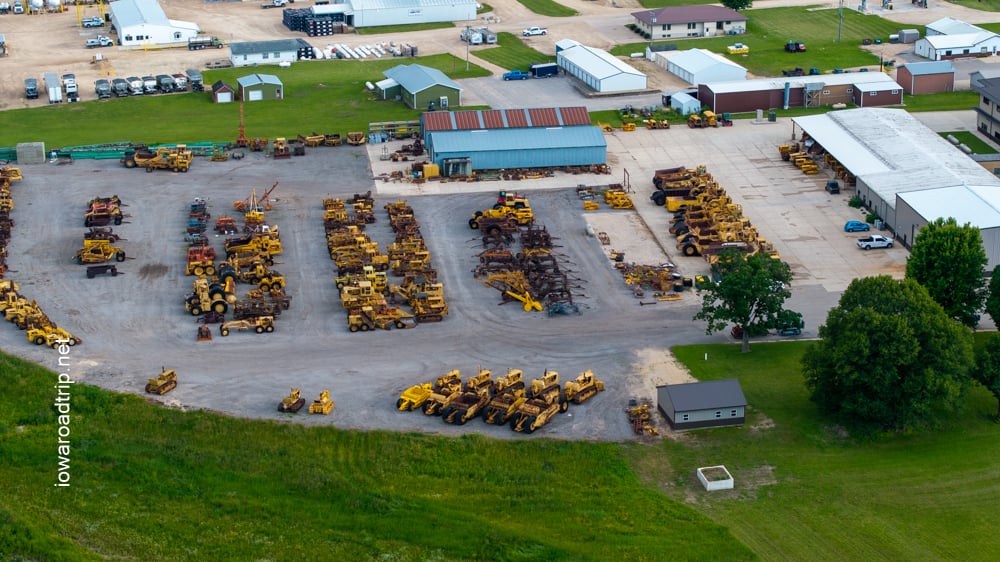
The museum also has a direct connection to modern construction through C.J. Moyna & Sons, which continues working on construction and site-development projects today.
That connection between the historic machines inside and the equipment still working around Iowa gives the collection a little more context.
Restoration and Special Events
The museum continues to locate and restore rare machines, including projects involving a Caterpillar Diesel 70, Caterpillar 666 and Holt 10-Ton.
Some special events include outdoor displays or opportunities to see machinery operating, but visitors shouldn’t expect equipment demonstrations during a typical museum visit unless one has been announced.
Is the Earthmoving Legacy Center Good for Kids?
Children who already stop to watch bulldozers and excavators at construction sites will probably find plenty to look at here.
The museum is filled with full-size tractors, crawlers, exposed engines, tracks and controls.
Most of the equipment is historic and isn’t meant for climbing, and the museum relies more on machines and displays than interactive exhibits. Younger children will need supervision around the collection.
How Much Time Should You Allow?
Most visitors should plan on about 60 to 90 minutes.
A quicker walk-through could take around 45 minutes, while equipment enthusiasts or photographers could easily spend two hours examining individual machines and reading the displays.
Make It Part of an Elkader Road Trip
The Earthmoving Legacy Center sits along Highway 13 outside downtown Elkader.
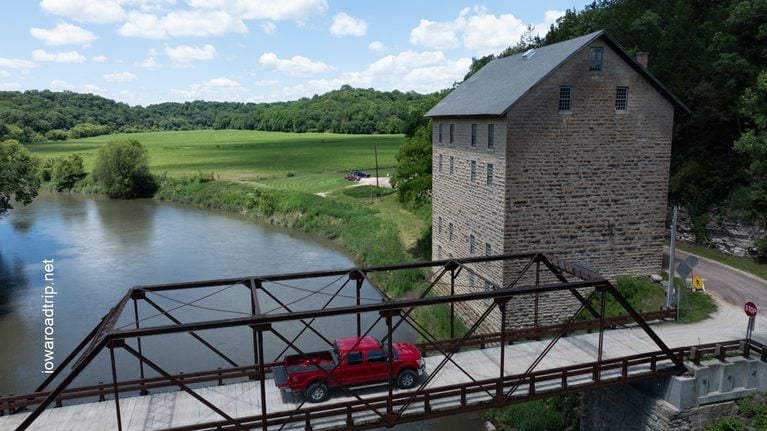
Nearby stops include downtown Elkader, Keystone Bridge, the George Maier Rural Heritage Center, Carter House Museum, Motor Mill Historic Site and Osborne Nature Center.
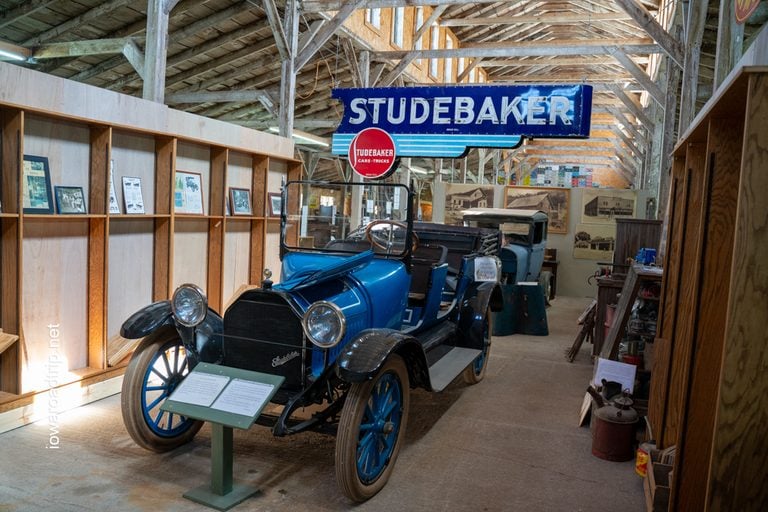
The Earthmoving Legacy Center pairs especially well with the George Maier Rural Heritage Center. One focuses on construction equipment and Caterpillar history, while the other covers farming, automobiles, household work and rural life.
Together, they offer two very different looks at how machines changed work in Iowa.
Is the Earthmoving Legacy Center Worth Visiting?
If you enjoy construction equipment, old tractors or mechanical history, the Earthmoving Legacy Center is an easy recommendation.
But you don’t have to be a machinery collector to find something interesting here.
Seeing horse-drawn scrapers, steam equipment and early Caterpillar tractors lined up in the same building makes the changes in earthmoving technology surprisingly easy to follow.
The size of the machines gets your attention first. Seeing how quickly they changed is what makes the museum worth exploring.