What to Know Before Visiting Motor Mill Historic Site Near Elkader
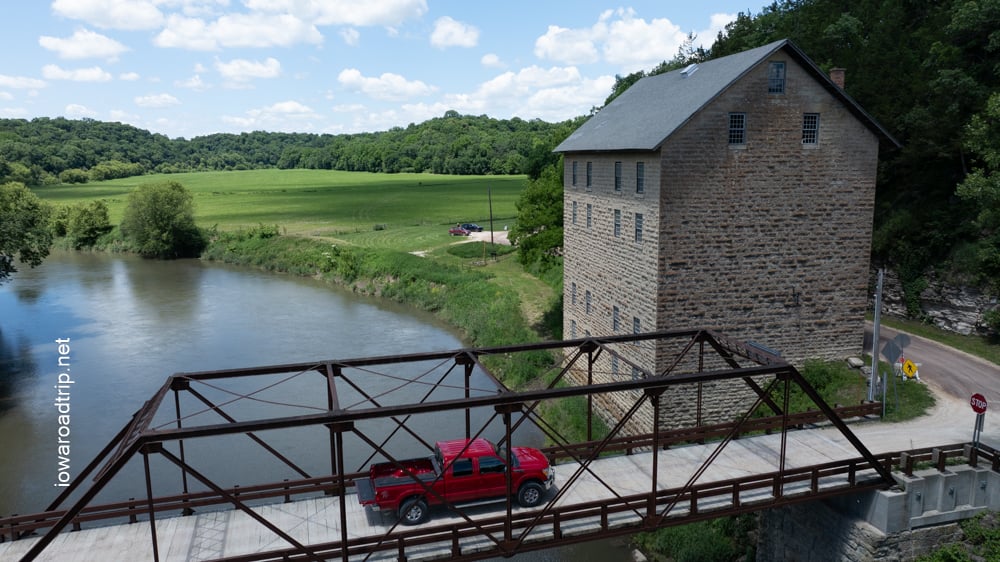
Hidden at the end of a gravel road southeast of Elkader, Motor Mill Historic Site is one of northeast Iowa’s most striking historic settings.
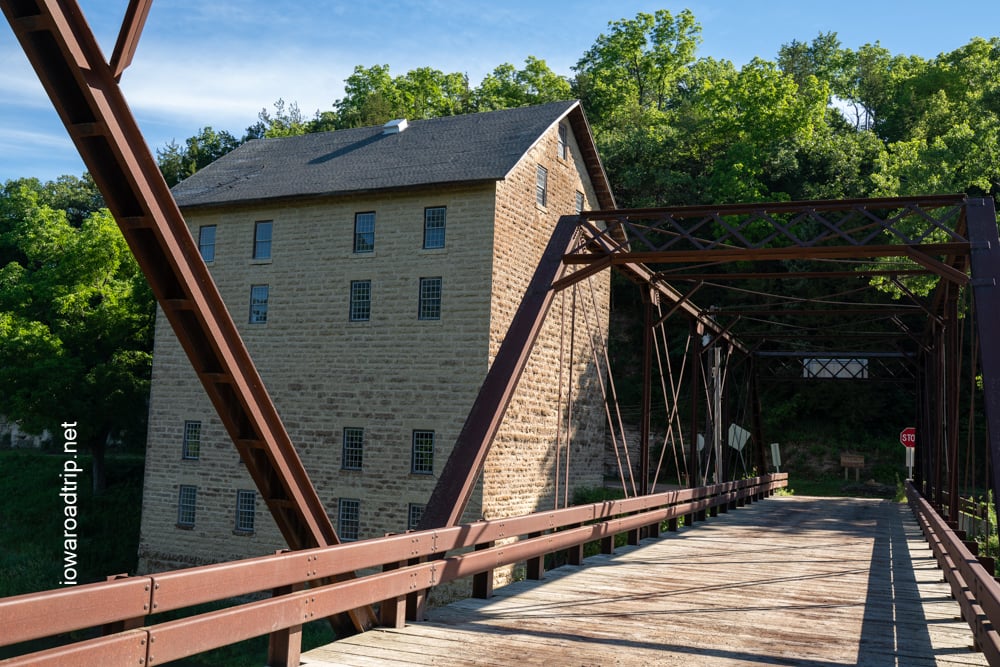
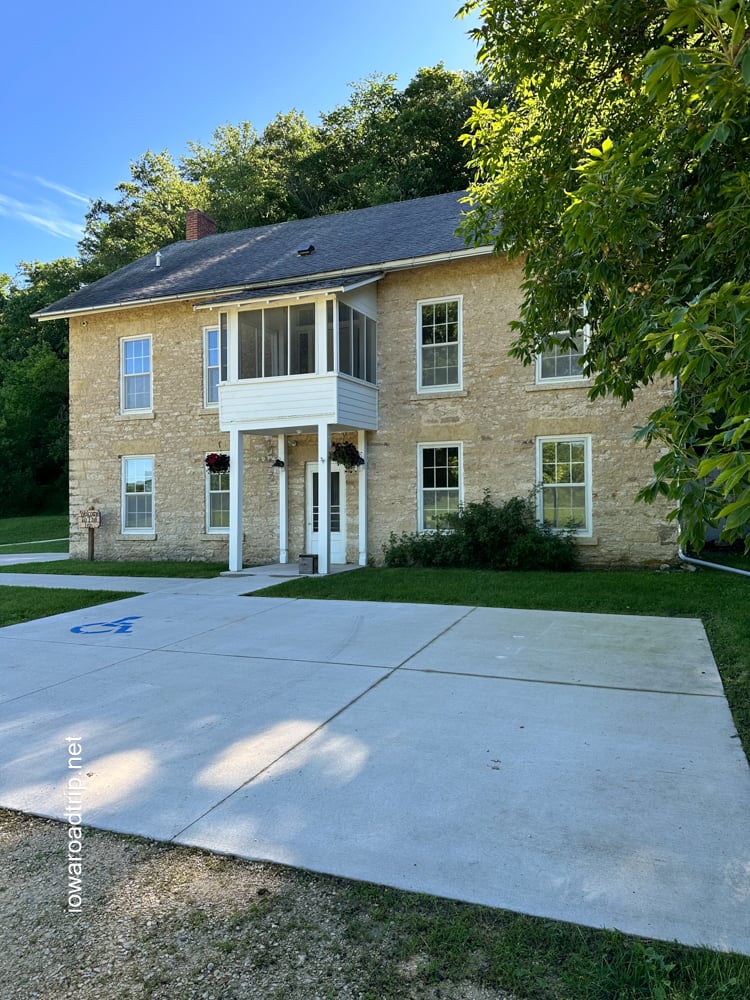
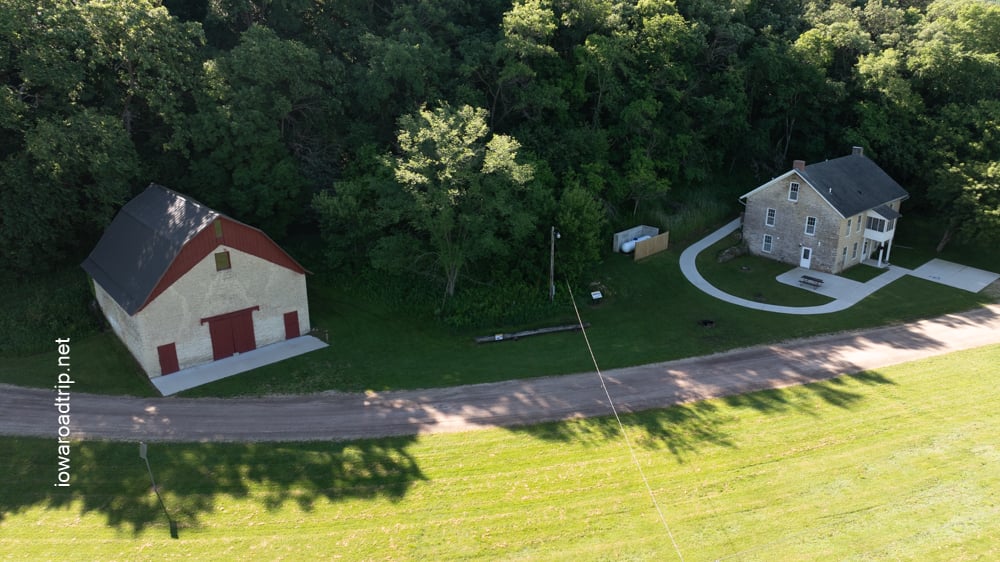
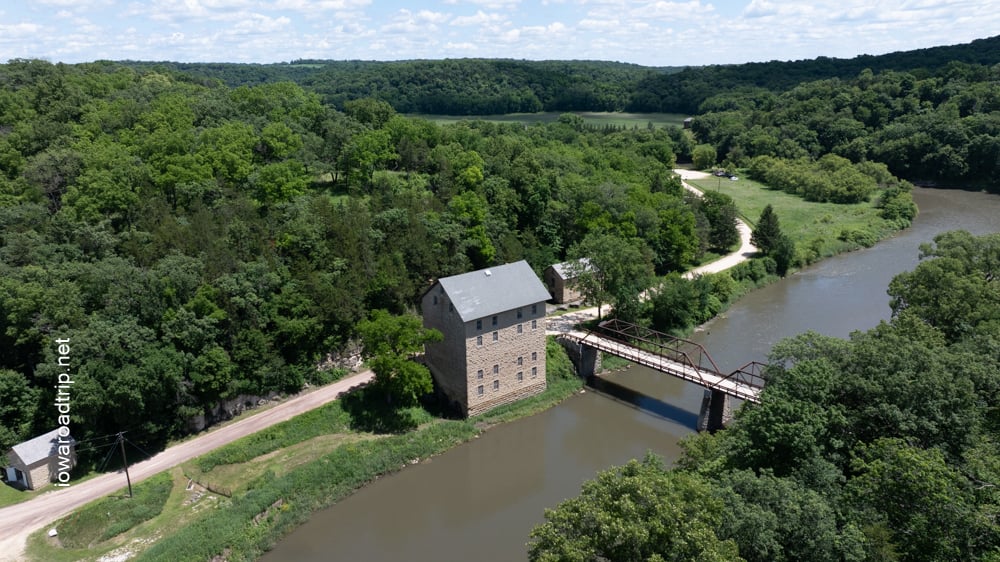
The site is anchored by a six-story limestone mill overlooking the Turkey River, along with four additional stone buildings and a historic bridge.
You don’t need a tour to enjoy the property. Visitors can walk the grounds, cross the bridge, photograph the mill and explore the surrounding trails throughout the year. If you want to see inside the mill, however, you’ll need to plan around the seasonal building schedule.
When Is Motor Mill Open?
The outdoor grounds are open year-round.
Scheduled guided tours are typically offered on weekends from Memorial Day through Labor Day, with additional dates extending into October.
Private and group tours can also be arranged through Clayton County Conservation.
Tour schedules and building access can change, so check current information before making a special trip.
What Is There to See at Motor Mill?
The historic site includes five native limestone buildings dating from the late 1860s:
- The six-story flour mill
- Motor Mill Inn
- The cooperage
- The stable
- The icehouse
The mill is the centerpiece. Standing about 90 feet tall, it rises above the Turkey River with wooded bluffs behind it.
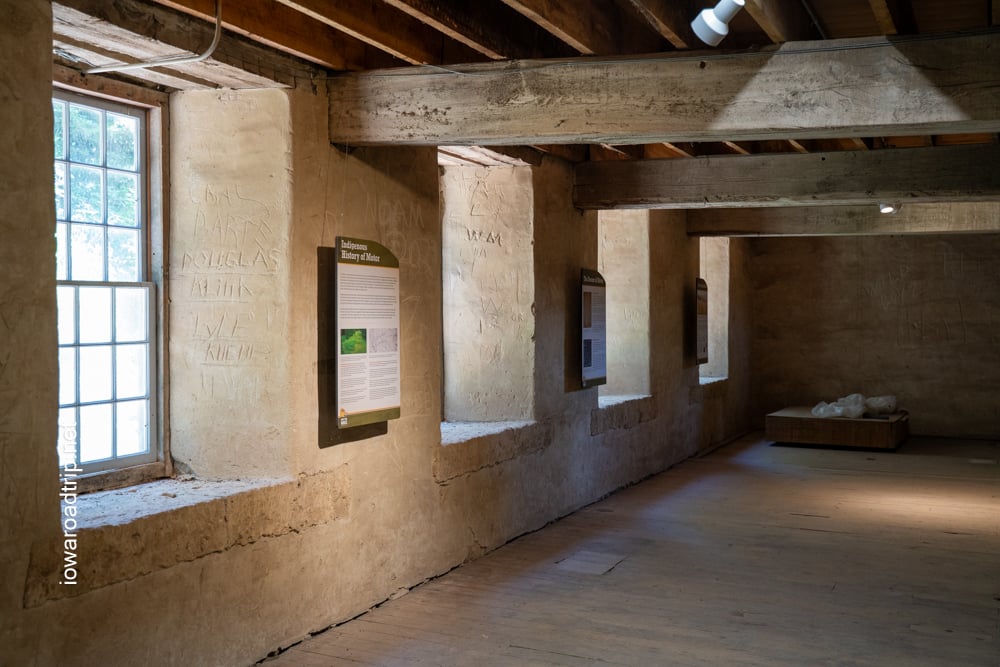
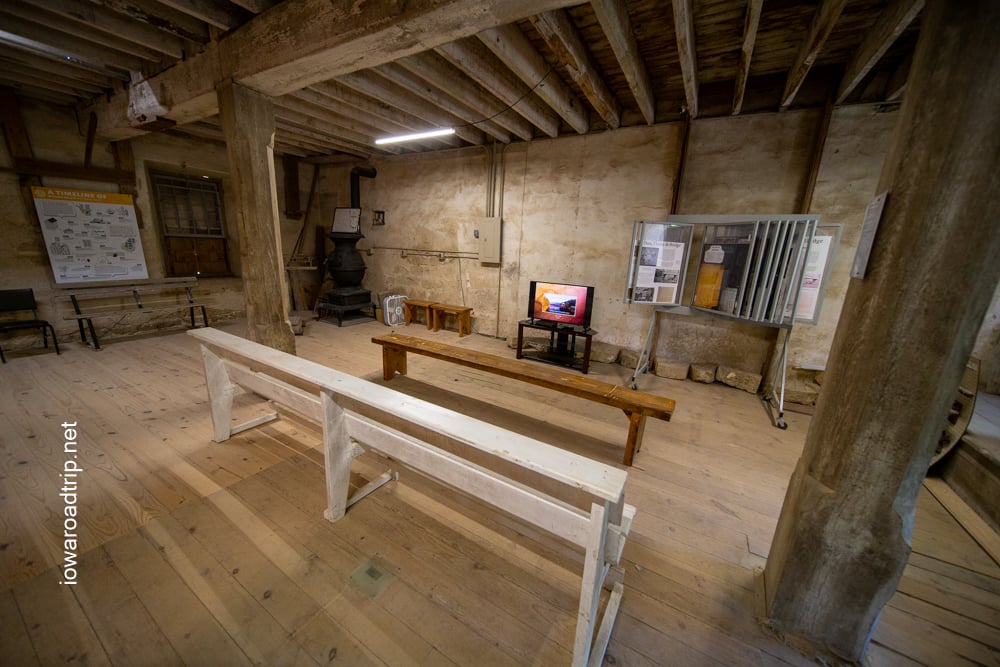
Visitors can walk among the buildings, cross the bridge and view the mill from both sides of the river. Interpretive exhibits in the Welcome Center and Motor Mill Inn provide more background on the site.
Tour the Mill
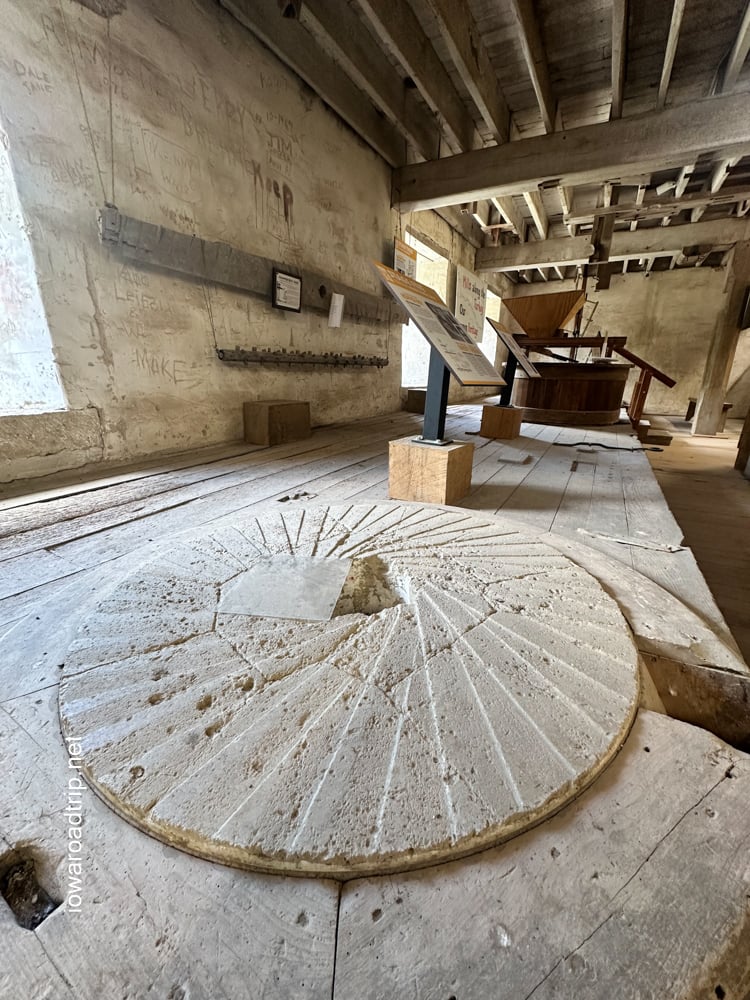
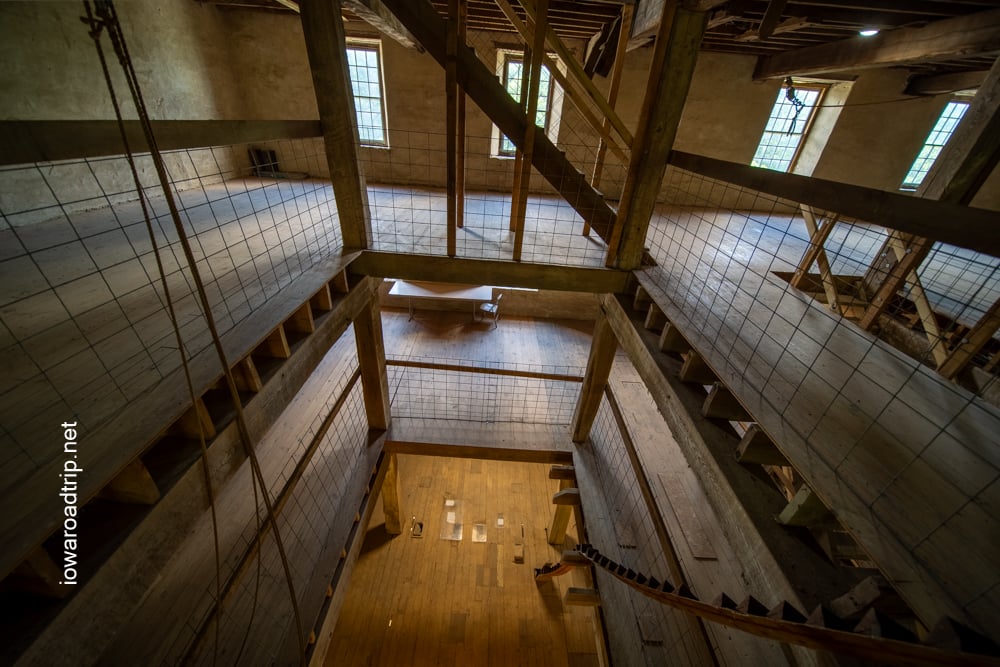
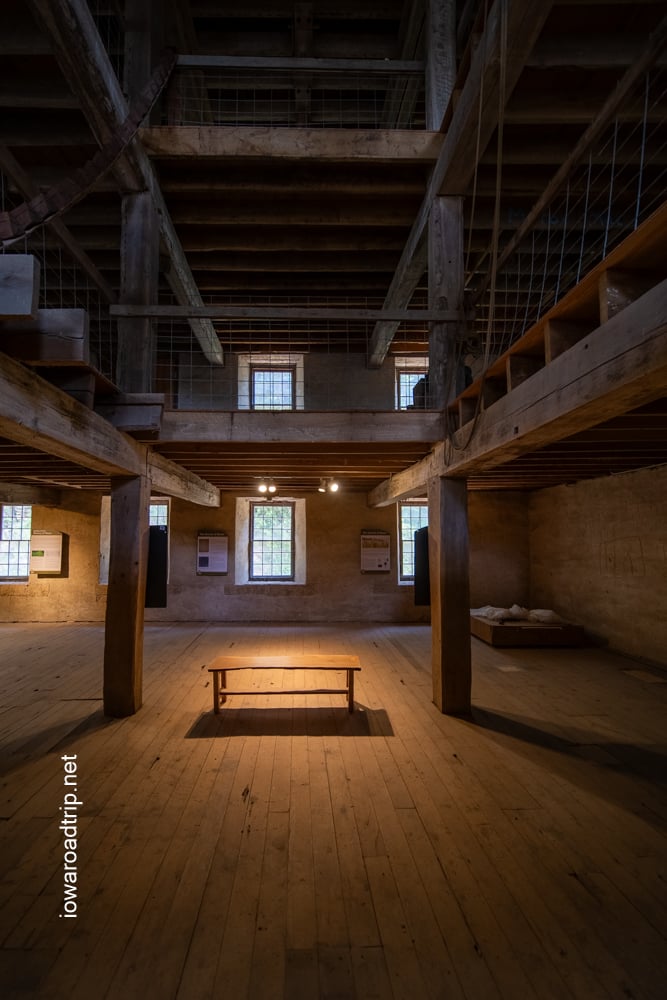
Inside, Motor Mill feels much different from a modern museum.
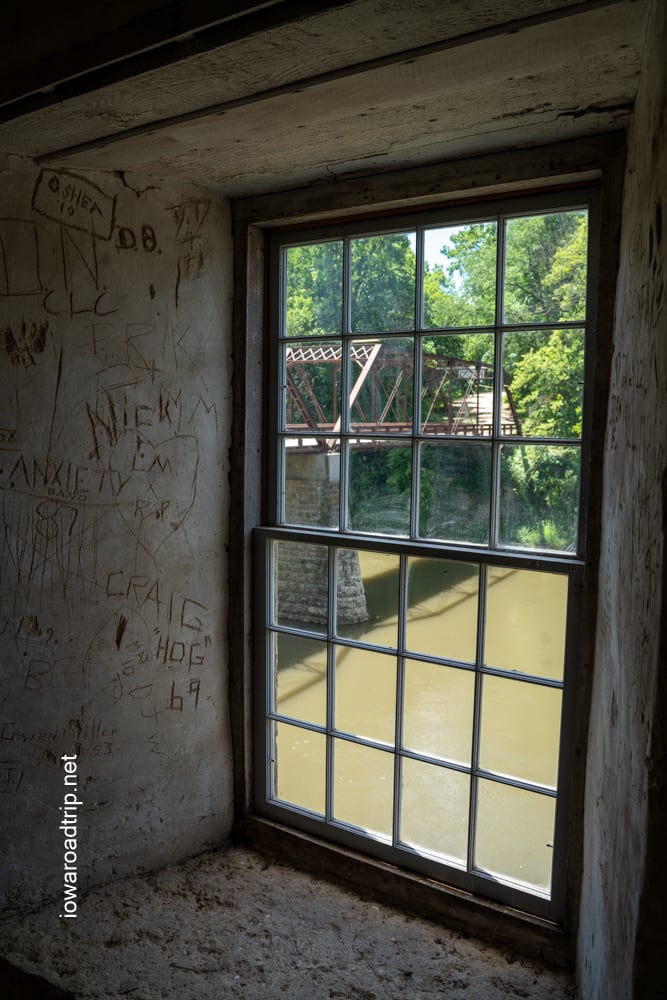
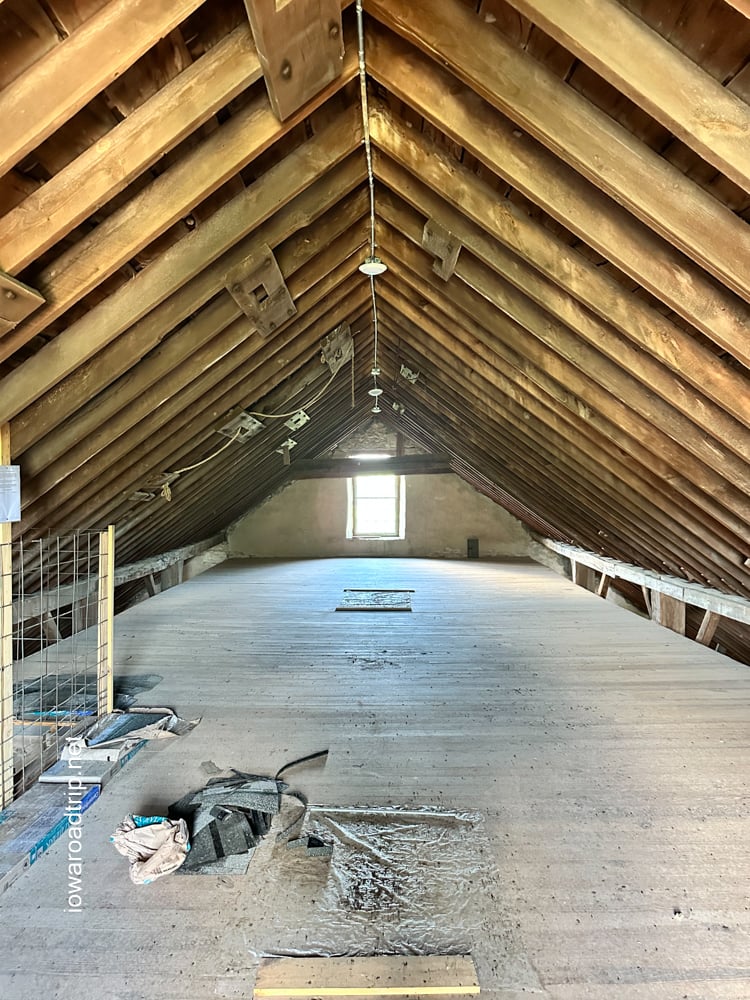
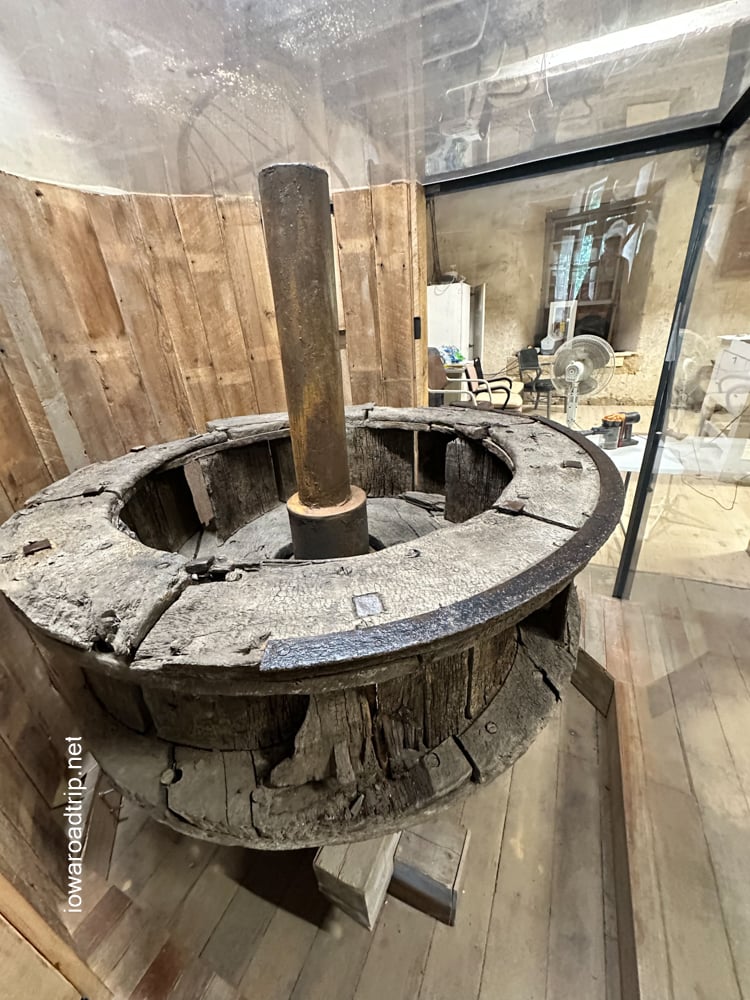
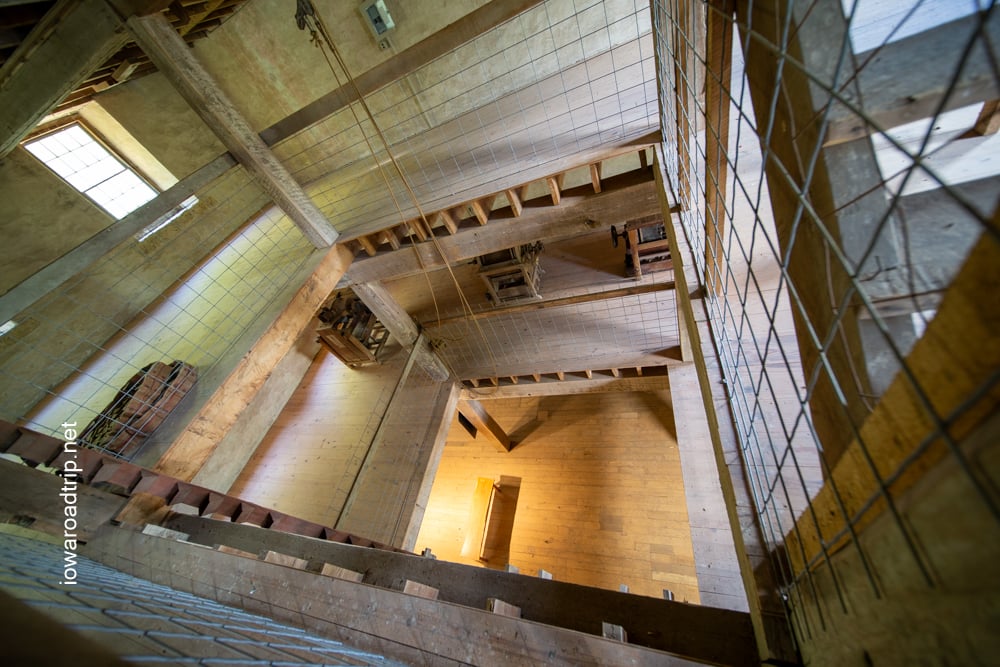
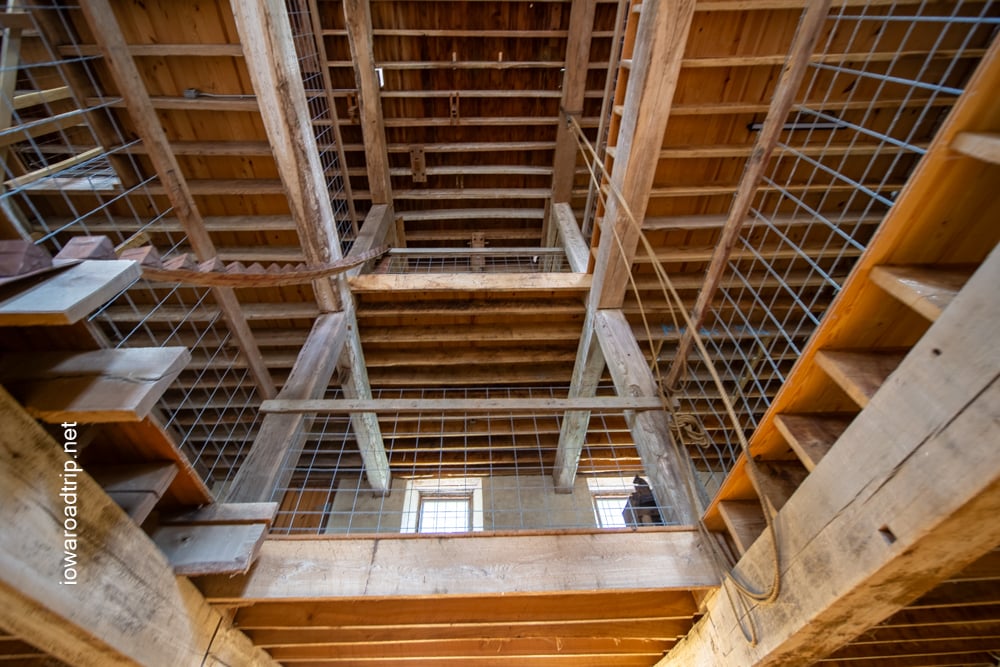
Most of the original milling equipment was removed long ago, leaving open floors, heavy wooden beams, limestone walls and remnants of the water-powered system.
A guided tour explains what took place on each of the six floors, how grain moved through the building and how water from the Turkey River powered the operation.
Tours also cover the town that Motor’s founders hoped to build and the restoration work that preserved the mill.
Access between floors is by stairs, and visitors should expect uneven surfaces inside the historic building.
Allow about 45 minutes for the tour, or 60 to 90 minutes if you also plan to explore the grounds and bridge.
Walk Across the Motor Mill Bridge
A bridge has connected the two sides of the Turkey River here since the late 1860s.
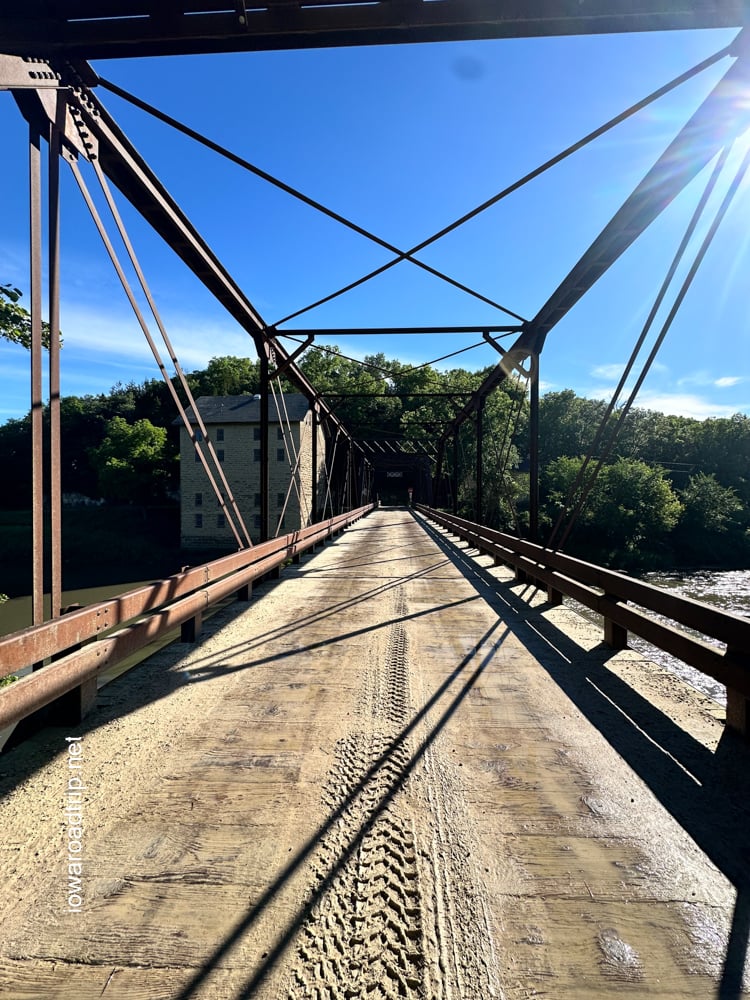
The current bridge is a replica of the steel truss bridge built in 1899. Flooding destroyed one span in 1991 and the remaining span in 2008. The replacement bridge was completed in 2012.
Visitors can walk or drive across it.
For one of the best views of Motor Mill, cross the river and look back toward the limestone buildings with the wooded bluff rising behind them.
Hike the Trails
Motor Mill Historic Site covers 155 acres and includes more than four miles of trails on both sides of the Turkey River.
The trails pass through forests, prairie and restored savanna, with some routes climbing toward views from the surrounding bluffs.
Expect natural surfaces, roots, rocks and elevation changes.
The Robert Grau Memorial Savanna Trail begins on the north side of the river, while trails on the south side are also open to horseback riding.
Retz Memorial Woods borders the northeastern edge of the property and protects 49 acres of oak, sugar maple and basswood forest, along with limestone cliffs and a deep ravine.
Paddle the Turkey River
A boat ramp is located near the primitive campground on the north side of the river.
The paddle from Elkader to Motor Mill covers about 5.5 miles. From Motor Mill, paddlers can continue another 11.5 miles downstream to Garber.
River conditions can change quickly, especially after heavy rain, so check current water levels before heading out.
Camping at Motor Mill
Five primitive campsites are available near the river.
These sites do not have electrical hookups or modern campground amenities, making them better suited for tent campers looking for a quieter stay.
Reservations are available online, while unreserved sites may be available on a first-come, first-served basis.
Stay Overnight in the Motor Mill Inn
For a more unusual stay, the restored Motor Mill Inn can be rented overnight.
Interpretive exhibits occupy the lower level, while the upper two floors are available for lodging.
The inn can also be rented for meetings, workshops and small gatherings.
What to Know Before You Go
Address: 28518 Galaxy Road, Elkader, Iowa
Grounds: Open year-round
Historic buildings: Open seasonally
Contact: Clayton County Conservation, 563-245-1516
Time needed: About 30 to 45 minutes for the grounds, or 60 to 90 minutes with a tour
Road conditions: The final approach includes gravel roads
Accessibility: Expect grass, gravel, slopes and uneven surfaces outdoors. The mill has multiple floors connected by stairs.
How to Get to Motor Mill
Motor Mill is southeast of Elkader.
One route begins on Highway 13 south of town. Turn east onto X3C, also known as Grandview Road, then continue to Hazel Road and Galaxy Road.
Another route follows Grape Road east from Highway 13 before turning south onto Galaxy Road.
Because some older maps may still show a Grain Road address, use the current Galaxy Road address when navigating to the site.
The History of Motor Mill
Motor Mill was built with much bigger plans in mind.
In 1867, John Thompson, James Crosby and J.P. Dickinson formed a partnership to build a flour mill, sawmill, farm and new town along the Turkey River.
Construction began in 1868. Limestone was quarried from the bluff above the site and lowered into the valley, where skilled German stonemasons used it to build the mill.
The mill was completed in 1869 and opened in January 1870.
Water from the Turkey River powered the six-story operation, which processed wheat and buckwheat into flour, corn into cornmeal, and other grains into livestock feed. Barrels for shipping products were made in the nearby cooperage.
Why Does One Wall Look Different?
Three sides of Motor Mill were built with rounded limestone faces, while the fourth is noticeably flatter.
A local legend once claimed that four different stonemasons built the walls and competed with one another over their workmanship.
The more likely explanation is much more practical.
The founders planned to build a woolen mill directly against the flat wall, allowing the two buildings to share the same water and raceway.
The investors were never found, so the second building was never constructed. The flat wall remains as evidence of that unfinished plan.
Why Did Motor Mill Close?
The mill produced high-quality flour, but the business faced several setbacks.
Chinch bugs damaged local wheat crops, while transportation problems made it difficult to move finished products to market.
In 1883, a major flood damaged the dam, flume and bridge. The dam was never repaired, and milling ended after about 14 years.
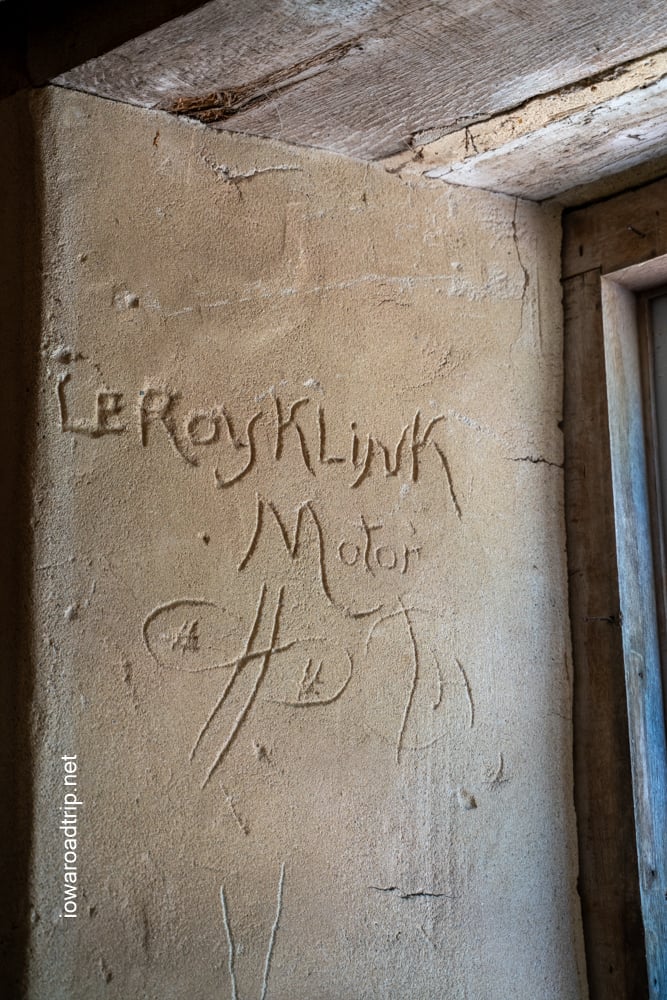
The Klink family purchased the property in 1903 and used the stone buildings as part of its farming operation for the next 80 years.
Preserving Motor Mill
Motor Mill was added to the National Register of Historic Places in 1977.
Clayton County Conservation purchased the site in 1983 with help from the Iowa Natural Heritage Foundation. The property later expanded to 155 acres on both sides of the Turkey River.
The historic designation was expanded in 2014 to include the entire townsite as the Motor Mill Historic District.
Restoration work has repaired roofs, windows, floors and other structural features. In 2020, workers removing silt from the mill’s basement also uncovered four wooden turbines.
Motor never became the river town its founders imagined, but the mill they built still stands above the Turkey River more than 150 years later.