Why the Driftless Area Education and Visitor Center Is Worth a Stop in Lansing
It doesn’t take long to realize that northeast Iowa looks different from much of the state.
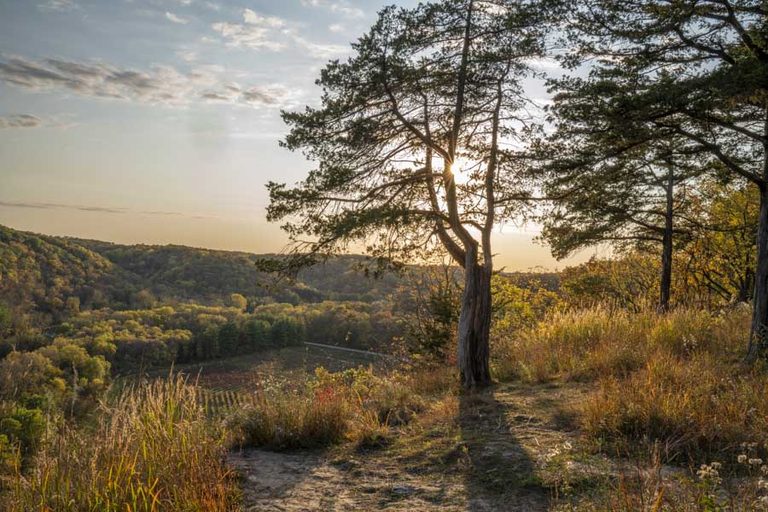
The roads twist through narrow valleys. Wooded hills rise above the highway. Limestone bluffs appear around corners, and cold-water streams wind through the landscape.
The Driftless Area Education and Visitor Center in Lansing helps explain why this corner of Iowa looks the way it does.
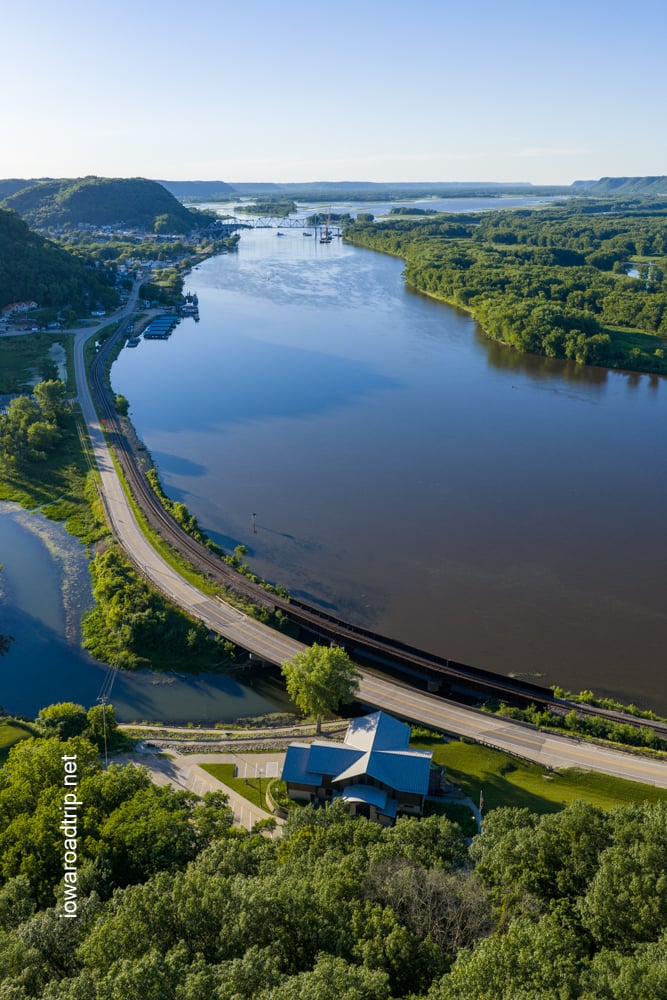
Located just south of town along the Great River Road, the center combines a museum, nature center and traditional visitor center in one building. Its exhibits explore the geology, wildlife, history and river industries of the Driftless Area.
There’s much more here than a rack of travel brochures. The center has three levels of exhibits, live animals, a 1,250-gallon aquarium, hands-on activities for children and observation areas overlooking the Mississippi River.
Admission is free, and you can easily spend an hour or longer exploring.
Quick visitor information
Driftless Area Education and Visitor Center
Address: 1944 Columbus Road, Lansing, Iowa 52151
Admission: Free
Phone: 563-538-0400
Website: https://www.allamakeecountyconservation.org/driftless-center
Best for: Families, nature lovers, Iowa history, Mississippi River history and rainy-day activities
Allow: Approximately one to two hours
Accessibility: An elevator connects the different levels, including the second-floor balcony
Pets: Pets aren’t allowed inside
At the time of publication, regular hours are:
Monday through Friday: 8 a.m. to 4:30 p.m.
Saturday and Sunday: Noon to 4 p.m.
Hours may change for holidays, programs or seasonal operations. Check the center’s website before making a special trip.
The center is a little more than a mile south of Lansing, directly off the Great River Road. Parking is available beside the building.
What to expect when you arrive
When I entered the center, a staff member at the front desk greeted us and asked if we had visited before.
After learning it was our first visit, the staff member gave us a quick overview of the building and pointed out the highlights.
For children, the main attraction was the 1,250-gallon aquarium on the lowest level. For adults, the staff recommended the Mississippi River view from the second-floor balcony and an exhibit about operating towboats and moving barges along the river.
That short introduction made it easy to understand the layout and decide where to begin.
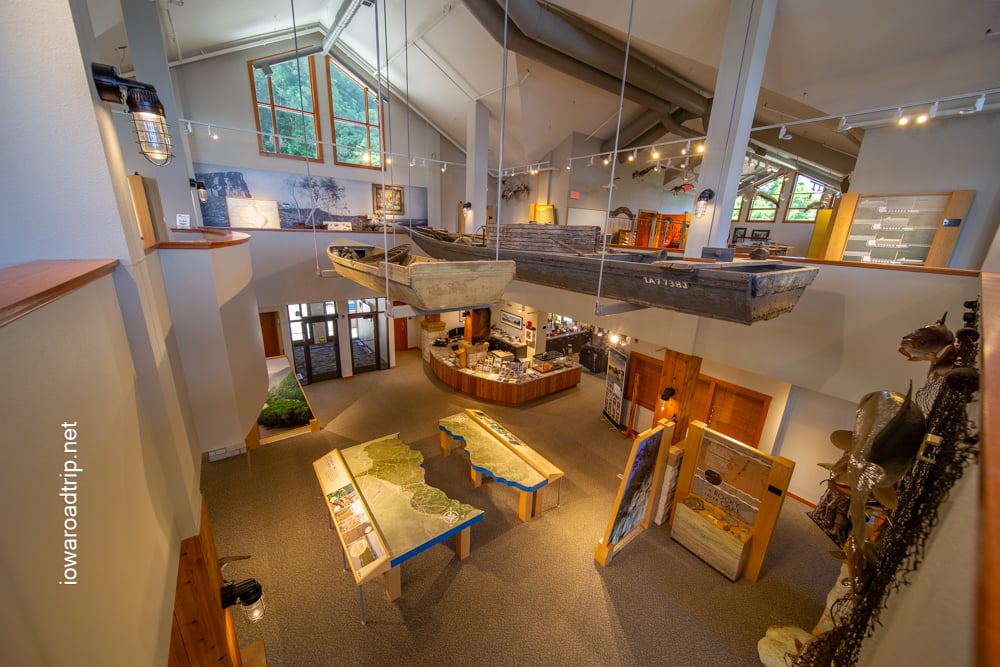
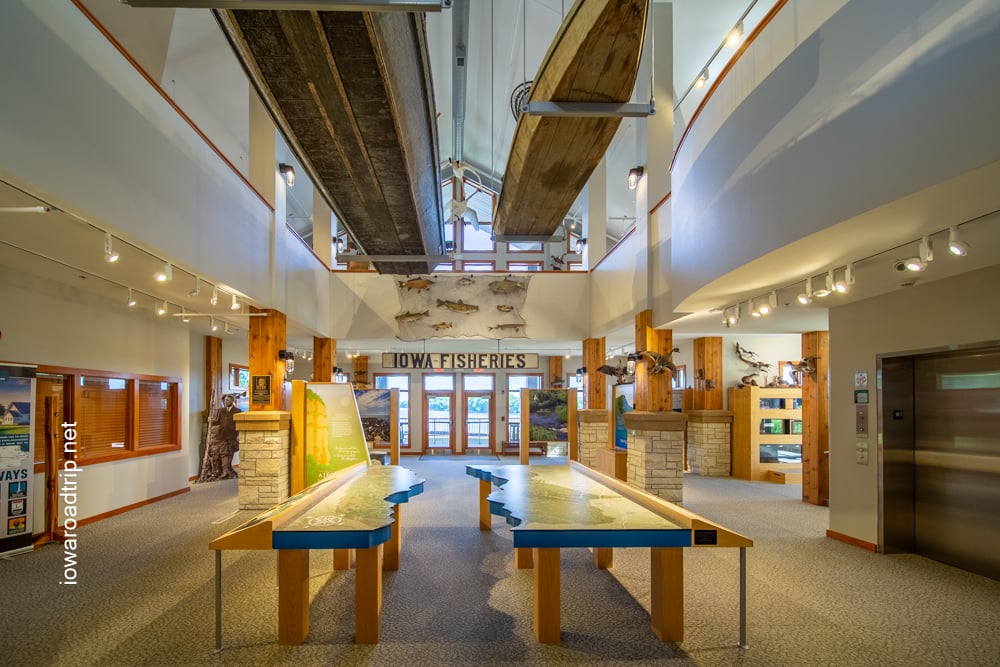
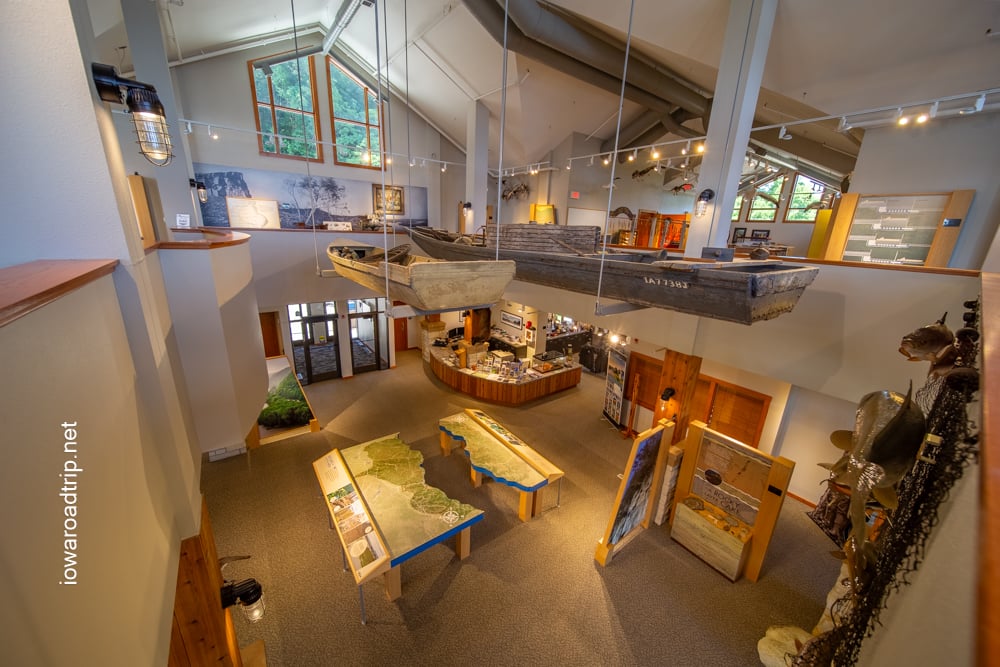
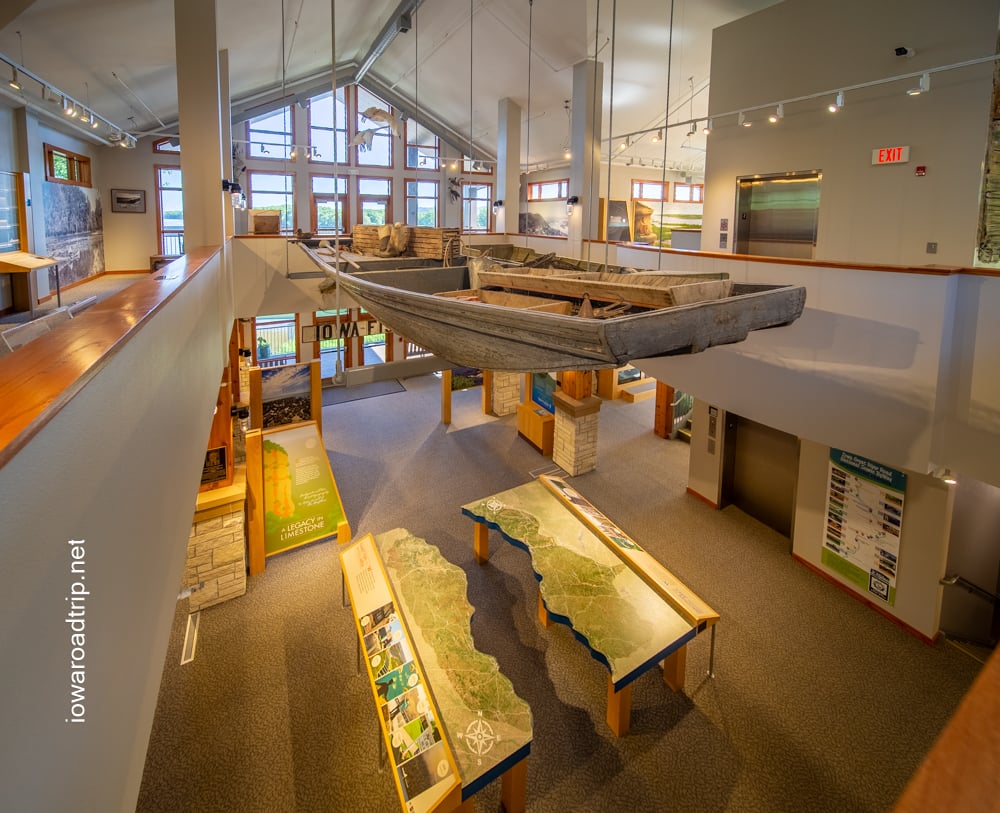
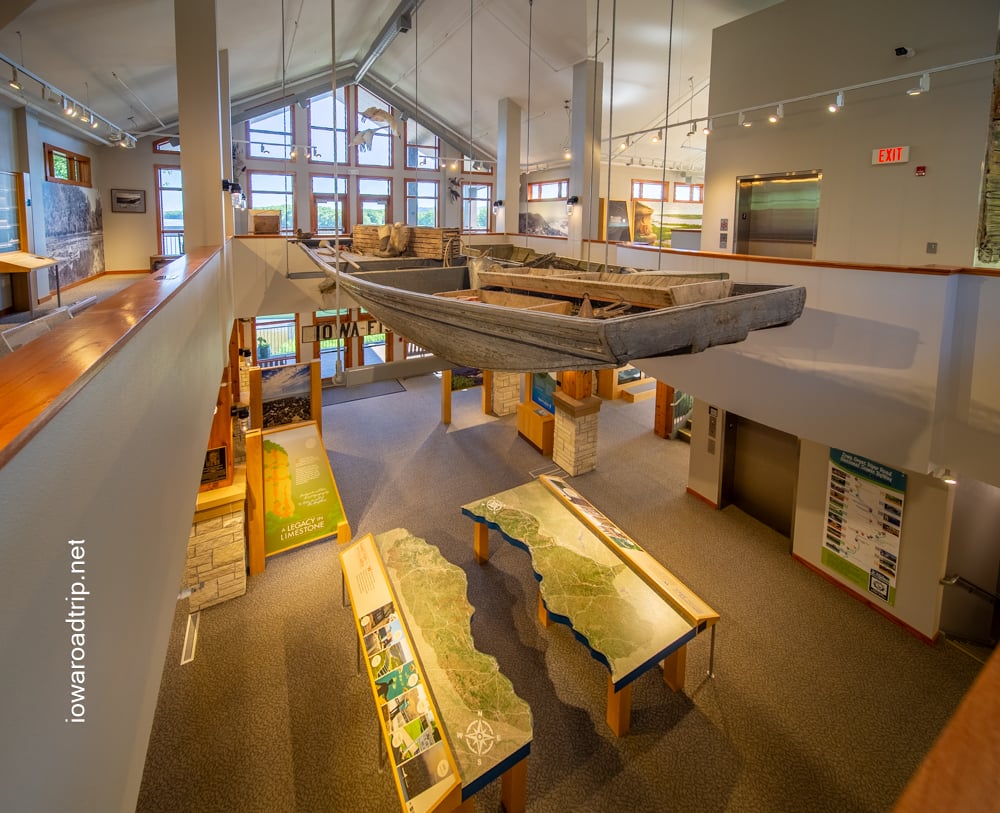
The building immediately feels like more than a visitor center. The entrance opens into a tall central space with large maps, wildlife displays and historic wooden boats hanging overhead.
Exhibits continue on multiple levels around the open center of the building.
What is the Driftless Area?
The Driftless Area covers parts of northeast Iowa, southwest Wisconsin, southeast Minnesota and northwest Illinois.
Its name comes from the lack of glacial drift found across much of the region. Drift is the mixture of rock, gravel, sand and other material left behind by glaciers.
Because those deposits didn’t cover this part of the Midwest, the land kept its rugged shape. That’s why northeast Iowa has so many steep ridges, narrow valleys, limestone bluffs, caves, springs and cold-water trout streams.
You don’t need to understand geology before visiting. The exhibits connect what happened beneath the ground with the scenery you see outside.
After learning how the region was shaped, you may notice more of the bluffs, valleys and streams during the rest of your drive.
See what lives in the Mississippi River
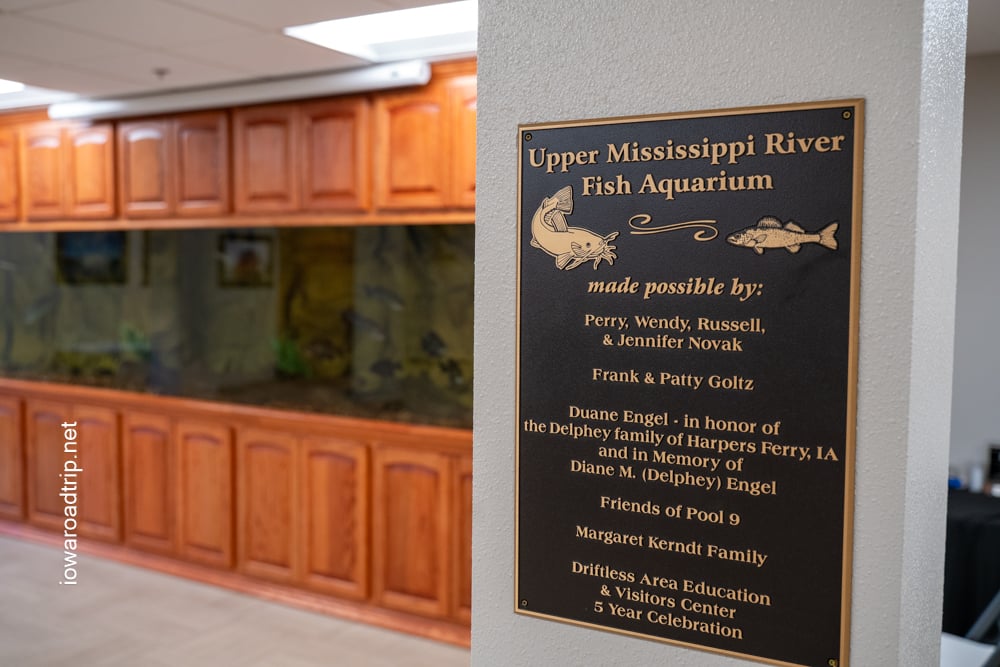
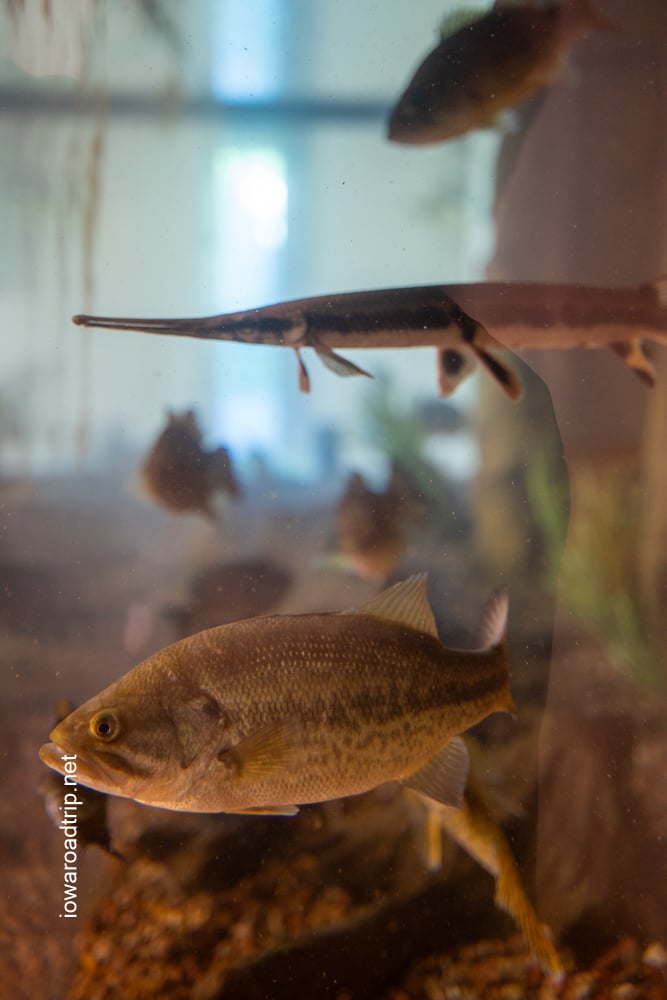
One of the center’s biggest family attractions is the 1,250-gallon Upper Mississippi River fish aquarium on the lowest level.
The aquarium has a long viewing window where children can get their faces close to the glass and watch the fish swim just inches away.
During my visit, the aquarium included several native fish, including an especially eye-catching longnose gar.
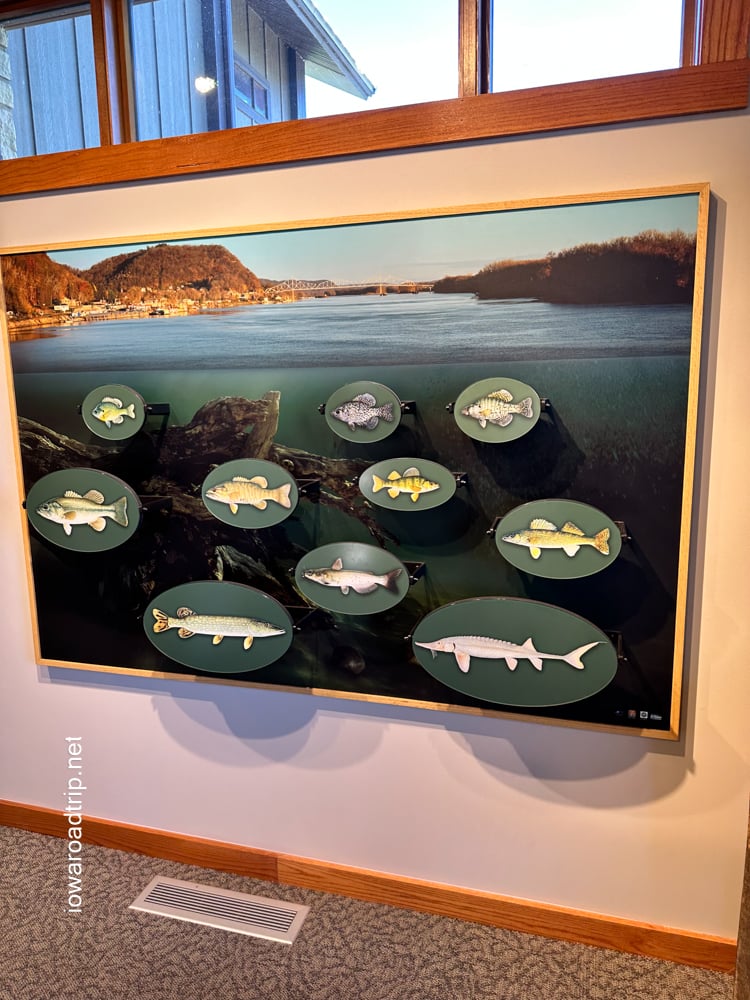
The fish aren’t individually labeled beside the aquarium. Instead, the first floor has an interactive display that helps visitors learn to recognize different species.
Children can look at the illustrated fish, make a guess and then flip each fish over to reveal its name. After learning the species upstairs, they can head downstairs and try to find the real fish in the aquarium.
That connection between the interactive display and the live aquarium makes the experience more engaging than simply looking at fish through glass.
Touch and identify animal pelts
Another hands-on exhibit introduces visitors to the fur trade and animals that live in the region.
A collection of pelts hangs on the wall at a height children can easily reach. Visitors can touch and compare the fur of animals such as beavers, foxes and raccoons.
The animal’s name isn’t immediately visible. Children have to lift or look inside each pelt to find the label and see if their guess was correct.
A nearby display explores the role of the fur trade in the region’s early settlement. Visitors are given a set number of pelts on the display panel and must decide which supplies they could receive in exchange for them.
The activity helps children understand that pelts were once valuable trade goods rather than simply animal skins hanging in a museum.
Check out the live animals
The aquarium isn’t the center’s only live-animal exhibit.
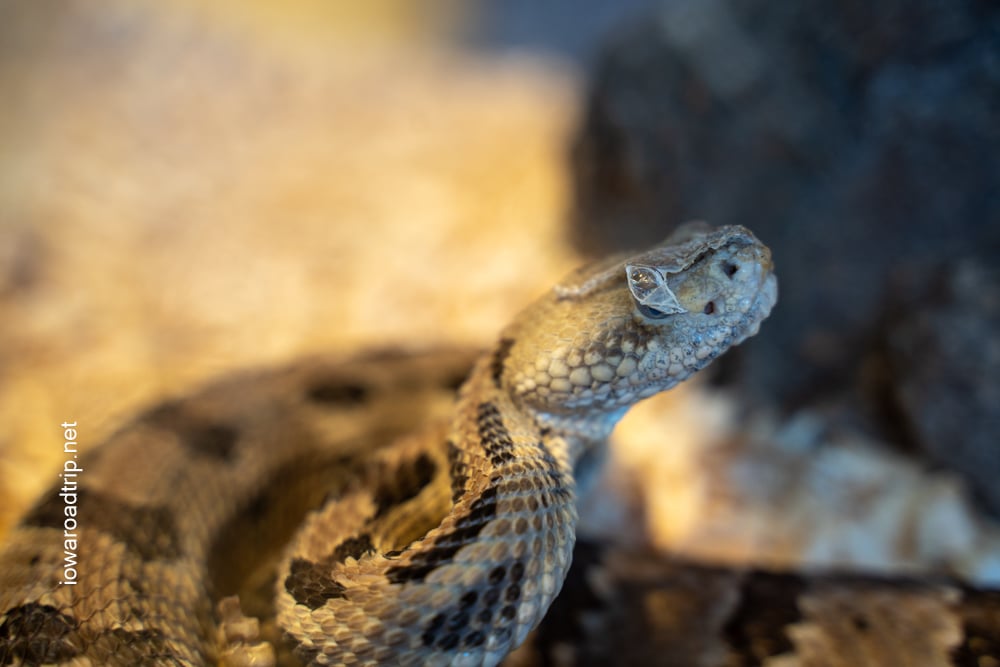
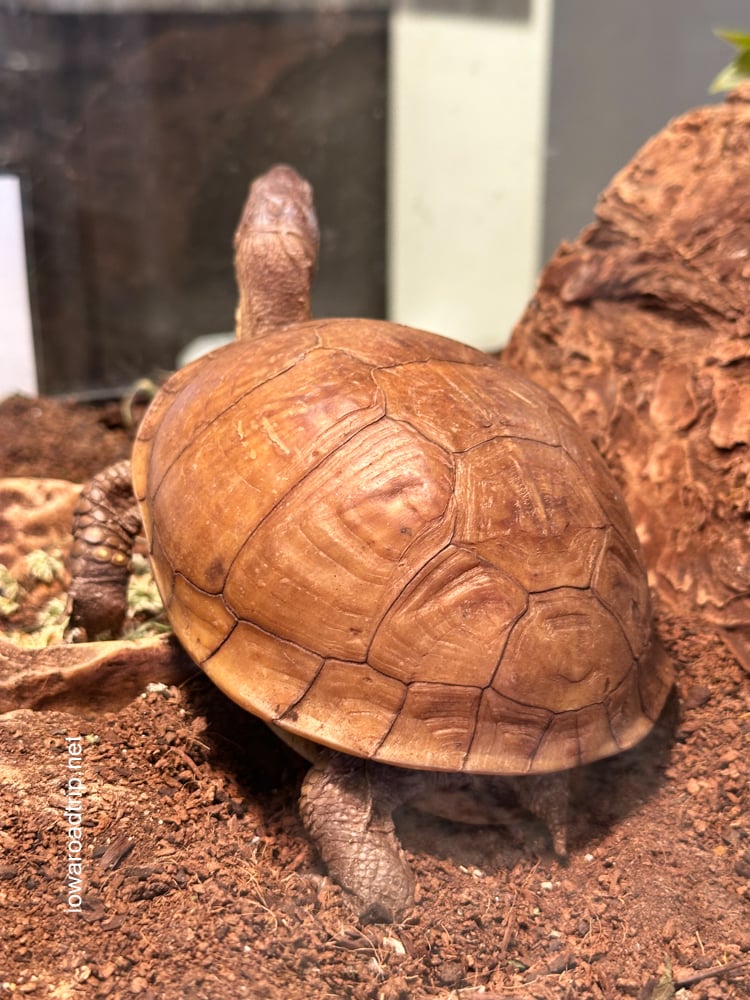
During my visit, the center also had a timber rattlesnake, black rat snake and box turtle. Displays beside the enclosures explained each animal’s habitat, behavior and connection to the Driftless Area.
The timber rattlesnake was especially memorable. This isn’t an animal included only for dramatic effect. Timber rattlesnakes live in the wild in northeast Iowa’s bluff country.
Seeing one safely behind glass gives visitors a close look at a species they would probably prefer not to meet unexpectedly on a trail.
The live animals at the center may change, so visitors shouldn’t assume the same species will be present during every visit.
Look for wildlife throughout the building
Mounted wildlife displays are scattered throughout the center instead of being confined to one room.
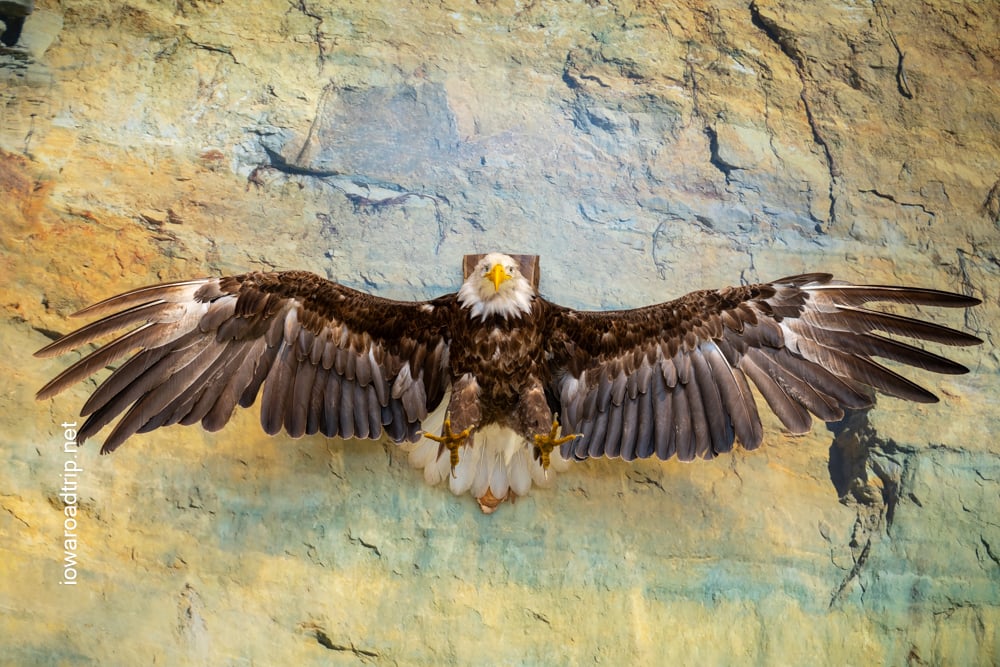
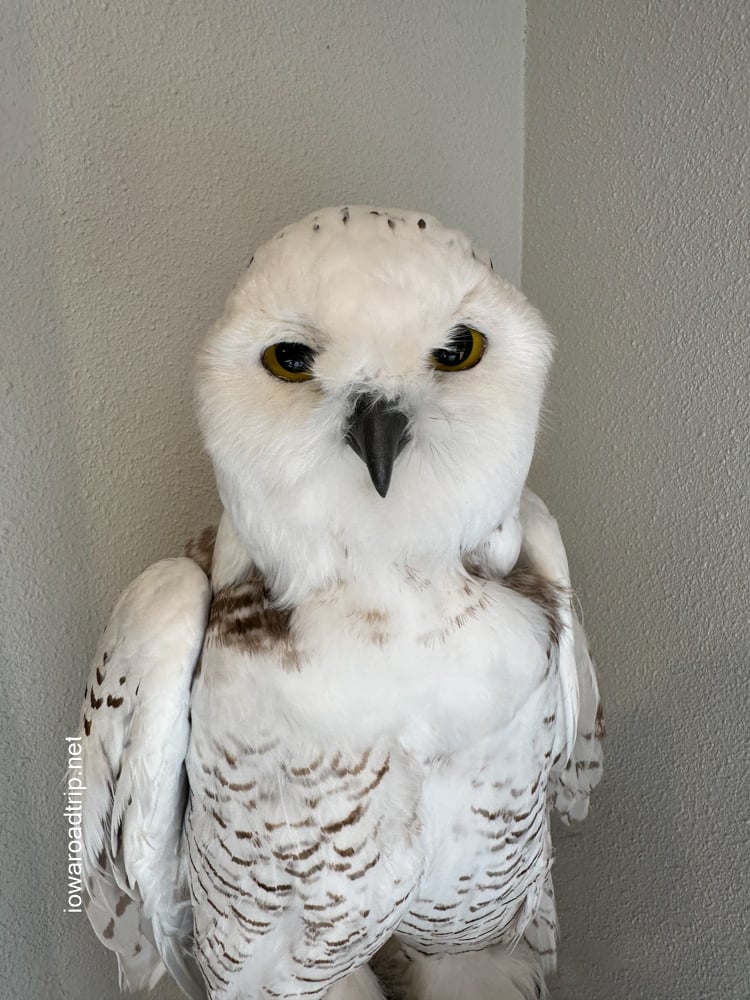
As you move between exhibits, you may encounter animals such as a snowy owl, gray fox, raccoon or bald eagle.
The displays allow visitors to see details that would be difficult to observe in the wild. You can study the size of an owl’s eyes, the markings on a fox and the full wingspan of a bald eagle.
Because the animals appear throughout the building, wildlife remains part of the experience as you move from one subject to another.
Look up at the historic wooden boats
Some of the center’s most noticeable artifacts hang above the open exhibit floor.
Several weathered wooden boats are suspended from the ceiling. Visitors can see them from below on the first floor and then get a closer look from the walkway on the second level.
The open design allows you to examine the shape and construction of the boats from several angles.
Even visitors who don’t stop to read every exhibit panel are likely to notice them. They also help establish the center’s connection to life and work along the Mississippi River.
Step into a Mississippi River towboat pilot house
One of the best exhibits for adults is on the second floor.
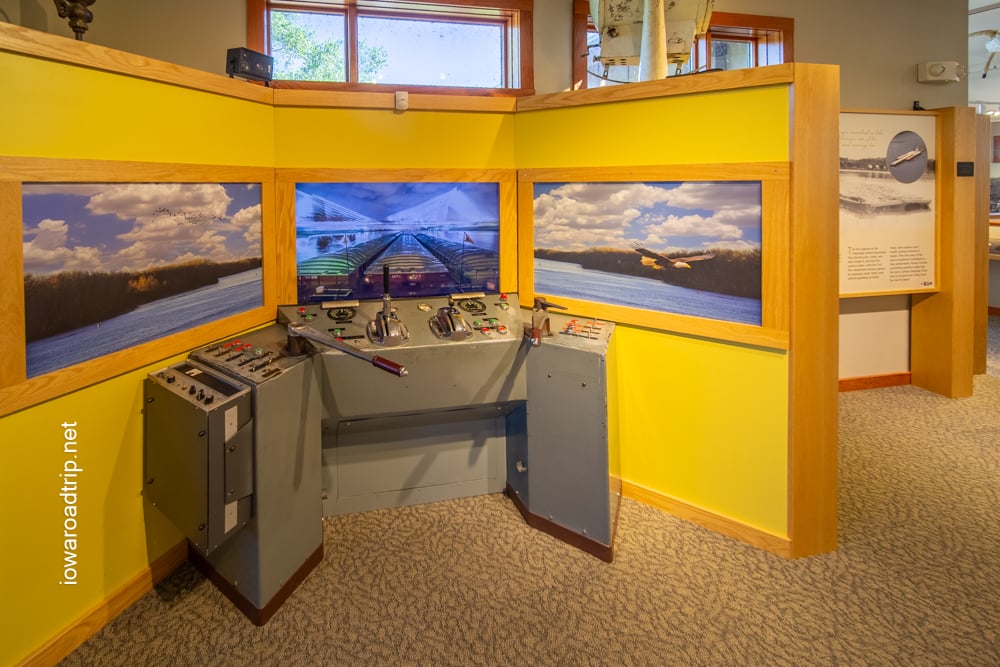
A short film follows life aboard a working Mississippi River towboat. It looks at how much cargo barges carry, how long it can take to travel to New Orleans and some of the challenges crews face along the way.
The video plays above a towboat-style control station. Visitors can stand behind the console and move the levers while the film runs.
The controls don’t change the video, but they help create the feeling that you’re watching the river from inside the pilot house.
The film was one of the highlights of my visit. It goes beyond showing photographs of barges and gives visitors a better understanding of the people who work on the river.
How much can one barge carry?
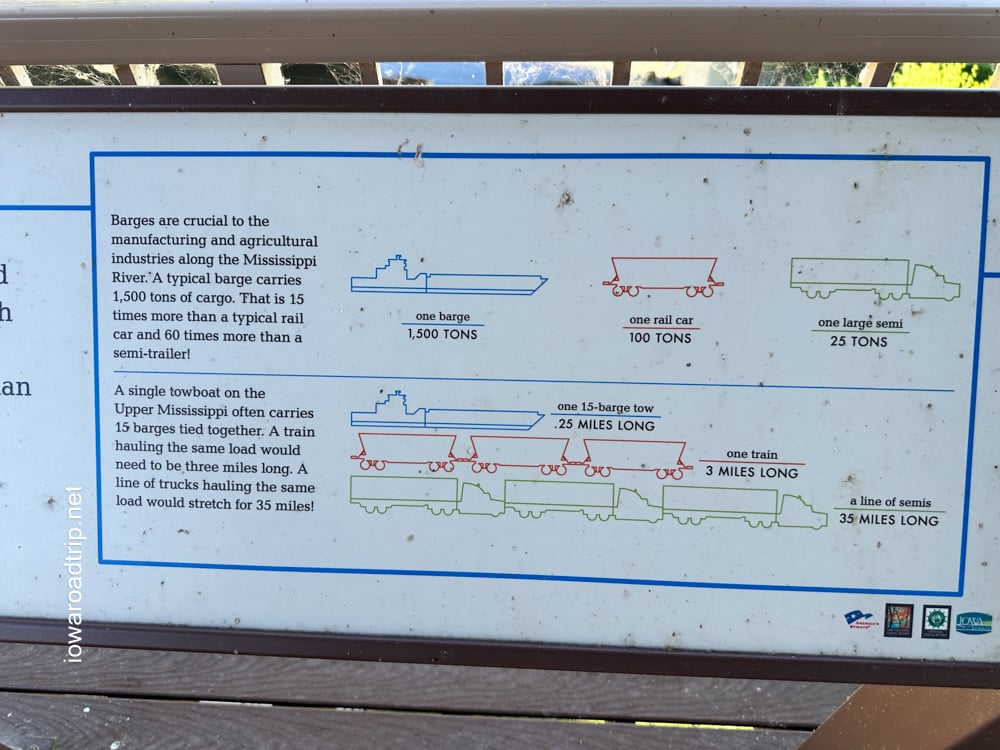
Signs on the second-floor balcony put the size of Mississippi River barge traffic into perspective.
A typical barge carries approximately 1,500 tons of cargo. That’s about 15 times more than a railcar and 60 times more than a semitrailer.
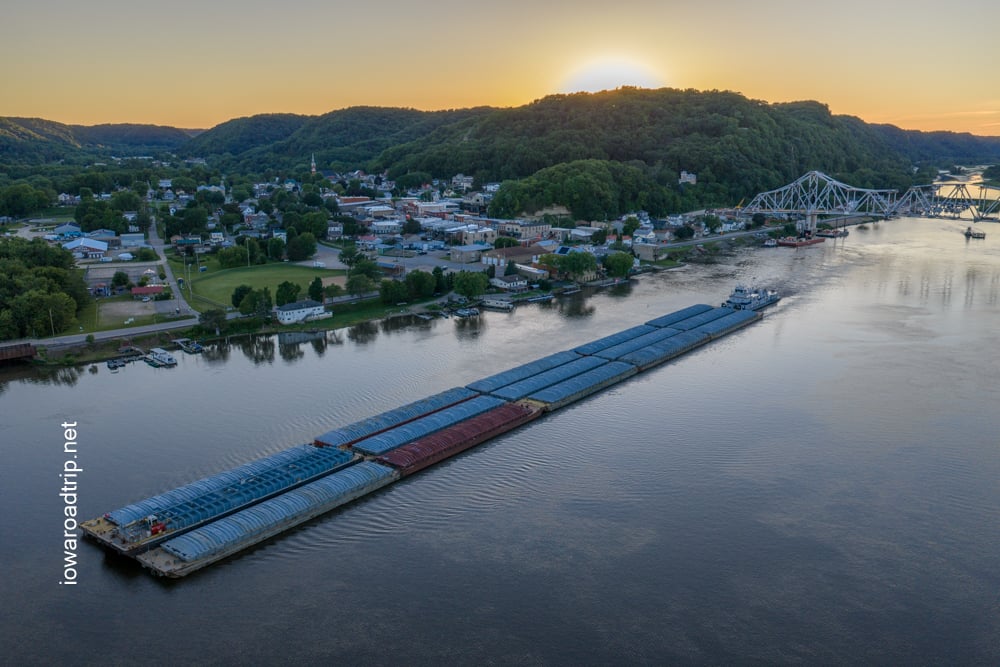
A towboat on the Upper Mississippi River often pushes 15 barges at once. The full tow stretches about a quarter of a mile.
Moving the same amount of cargo by rail would require a train approximately three miles long. Moving it by truck would create a line of semis stretching about 35 miles.
Those comparisons make it much easier to understand the scale of the barges you may see passing Lansing.
Watch the Mississippi River from the balcony
After watching the towboat film, step onto the second-floor balcony.
The balcony is reached from the second floor, which is accessible by elevator or stairs. It’s mainly a standing observation area rather than a place with extensive seating.
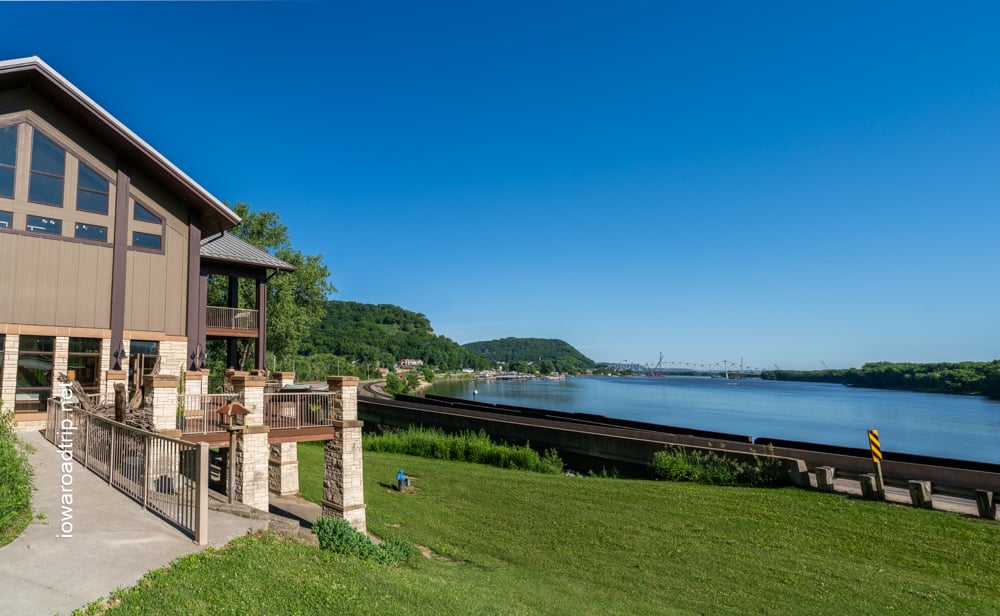
From the railing, you can look across the Mississippi River and toward Lansing. Depending on the timing of your visit, you may see recreational boats, towboats or barges moving along the river.
I saw several smaller boats from the center but no barges during my visit. Later, while exploring Lansing, I watched several large barge tows travel past town.
The view gives the river exhibits an immediate connection to the real world. After learning how barge traffic operates, you can step outside and watch the same transportation system in action.
Learn about Lansing’s mussel-button industry
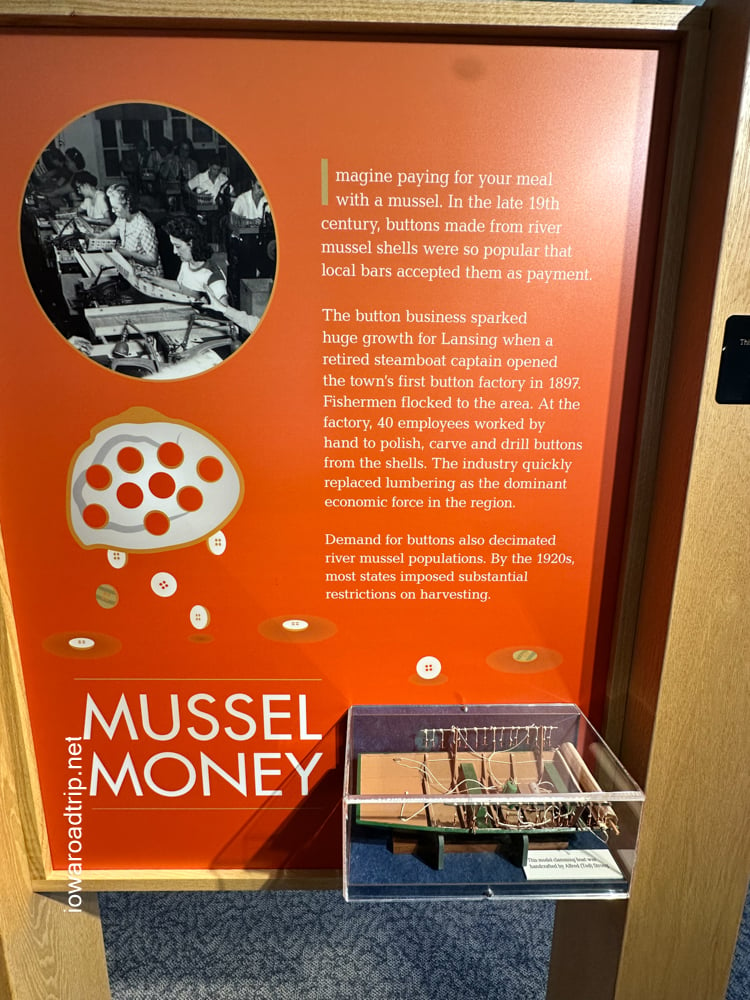
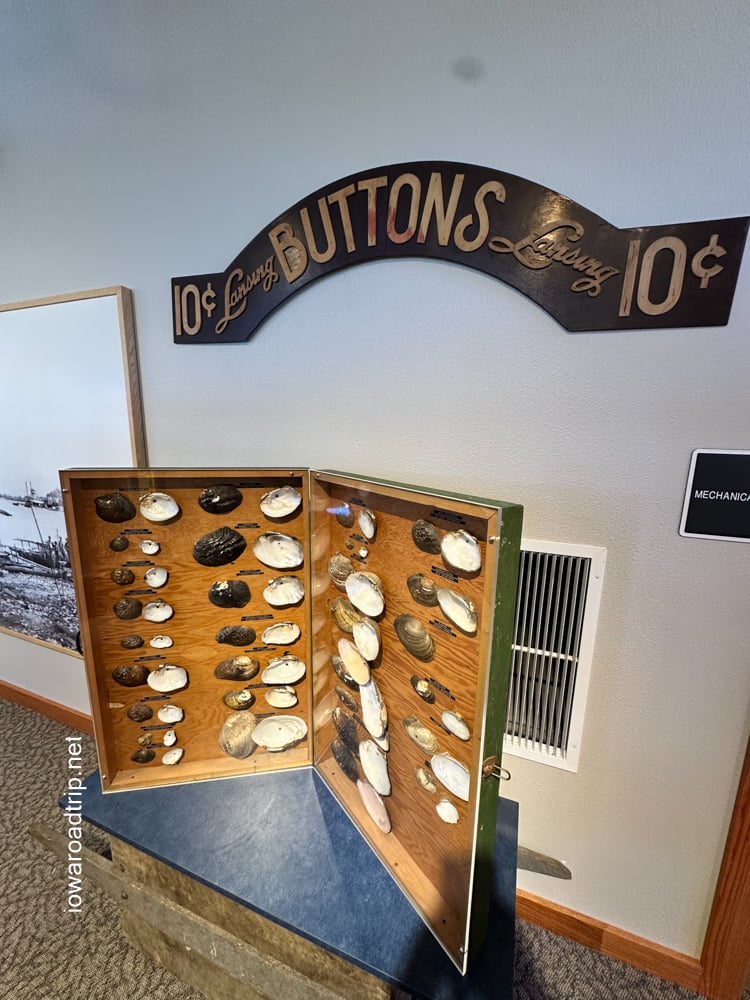
One of the more surprising displays covers Lansing’s freshwater mussel-button industry.
In the late 1800s, buttons made from river mussel shells became so popular that local bars reportedly accepted them as payment.
A retired steamboat captain opened Lansing’s first button factory in 1897. The factory employed 40 people who polished, carved and drilled buttons from shells by hand.
The button business grew quickly and eventually replaced lumbering as the region’s dominant economic force.
The success came at a cost. Heavy harvesting devastated river mussel populations. By the 1920s, most states had placed substantial restrictions on harvesting.
The display includes photographs, button-making tools and a case filled with different mussel shells. It’s a relatively small exhibit, but it tells a part of Lansing’s history many visitors may know little about.
Is the Driftless Center good for children?
The Driftless Area Education and Visitor Center is a particularly good family stop.
Children can do much more than walk through the building and read signs. They can:
- Get close to the glass at the Mississippi River aquarium
- Flip over illustrated fish to learn the name of each species
- Touch and identify animal pelts
- Make decisions in the fur-trading activity
- See live snakes and turtles
- Look for mounted wildlife throughout the building
- Move the levers at the towboat control station
- Watch boats from the Mississippi River balcony
There’s enough variety to hold a child’s attention without turning the visit into an all-day museum trip.
Families can move through the exhibits at their own pace. Free admission also makes it easy to stay only as long as everyone remains interested.
How much time should you allow?
Allow at least an hour to see the main exhibits, aquarium and observation balcony without rushing.
Quick visit: 30 to 45 minutes
This gives you enough time to see the aquarium, live animals, suspended boats and river view.
Typical visit: About one hour
An hour should be comfortable for most visitors and allows time to watch the towboat film.
Longer visit: 90 minutes to two hours
Plan a longer visit if you’re bringing children, want to read the historical displays closely or spend time watching river traffic.
Accessibility and visitor comfort
The center is indoors, climate-controlled and open throughout the year. It’s a useful stop during hot, cold or rainy weather.
An elevator connects the different exhibit levels. Visitors can take the elevator to the second floor and access the Mississippi River balcony without using the stairs.
Public restrooms are available inside.
The exhibits are spread throughout the building, allowing visitors to explore at their own pace. Seating may vary, and the observation balcony is mainly a standing area.
Pets aren’t allowed inside.
Visit the gift shop and information area
Before leaving, look through the nonprofit gift shop and visitor information area near the front desk.
The selection may include books, maps, locally made products, nature-themed merchandise and gifts connected to northeast Iowa.
You can also pick up information about parks, attractions and outdoor recreation in Allamakee County.
Staff members can help answer questions and suggest other places to explore. The center also hosts naturalist presentations, family activities and educational programs, so check its calendar before your trip.
Make it part of a Lansing road trip
The Driftless Center works especially well as the first stop on a Lansing road trip.
Once you understand more about the geology, wildlife and river industries, the rest of the area starts to look different.
From the center, continue into Lansing to explore downtown, visit the riverfront or drive to Mount Hosmer for a sweeping view of the Mississippi River.
You could also combine the center with Yellow River State Forest or Effigy Mounds National Monument near Harpers Ferry.
Even the drive between these places becomes part of the experience. The winding roads, wooded ridges and limestone outcroppings are the same features you just learned about inside the center.
Is the Driftless Area Education and Visitor Center worth visiting?
Yes, especially if this is your first trip through northeast Iowa.
The aquarium, animal pelts and live wildlife give children plenty to explore. The towboat film, historical exhibits and river-traffic displays offer plenty for adults.
The center’s greatest strength is how it connects everything.
You can learn to identify Mississippi River fish and then see them swimming downstairs. You can watch a film about towboat crews and then step onto the balcony to look for river traffic. You can study the region’s geology and then drive through the same bluffs and valleys on your way to the next stop.
The Driftless Center doesn’t just give you something to do in Lansing. It helps you better understand the landscape, wildlife, history and river that define this part of Iowa.