
St. Boniface Catholic Church — New Vienna, Iowa
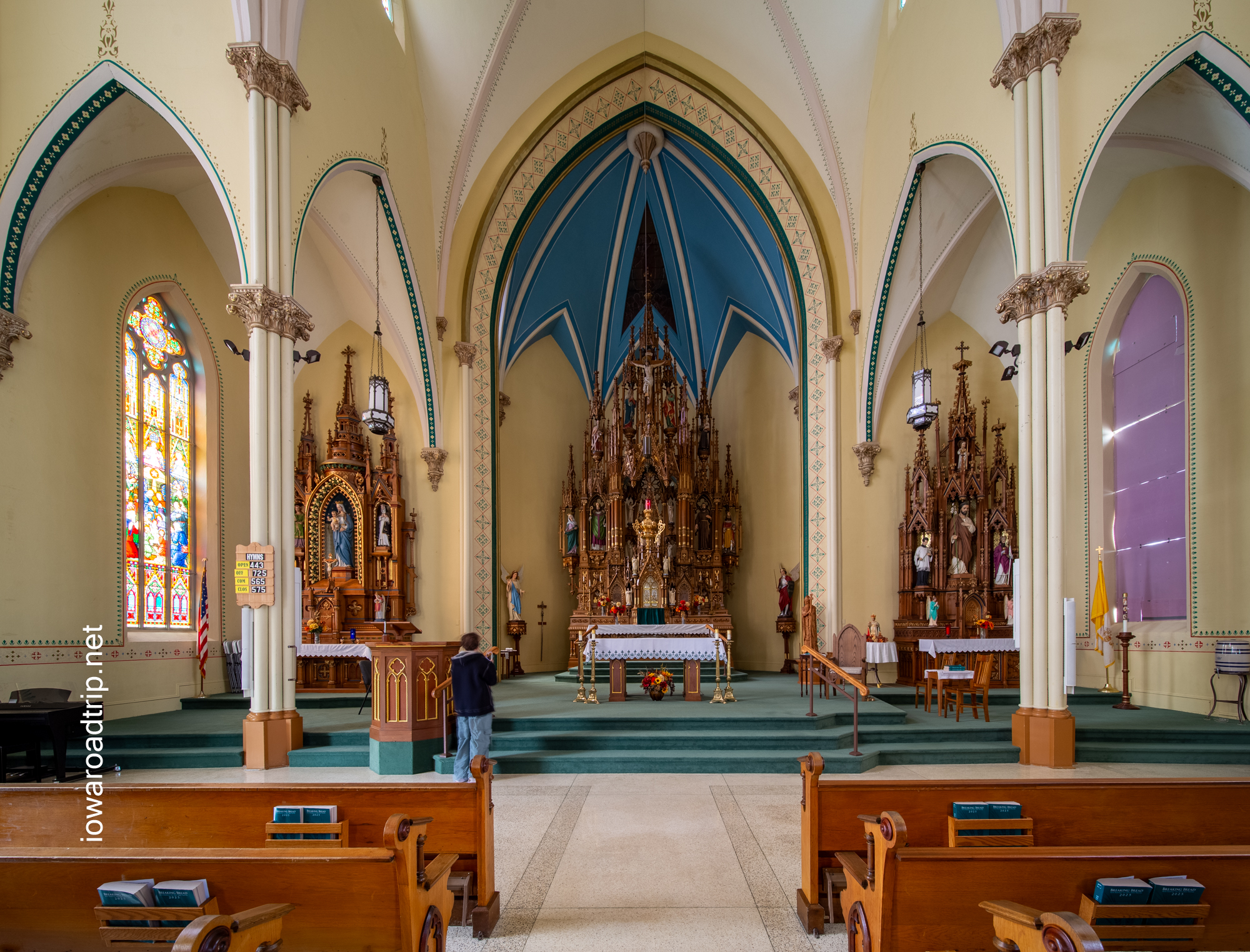
Some road trip stops surprise you with scenery — others stop you with grandeur. St. Boniface Catholic Church in New Vienna is one of the latter. Standing tall above the rolling farmland of eastern Iowa, this historic Gothic limestone church isn’t just a place of worship — it’s a centerpiece of community, history, and architectural beauty that draws visitors from all over.
📍 Address
St. Boniface Catholic Church
7401 Columbus St.
New Vienna, IA 52065
A Landmark in a Small Town
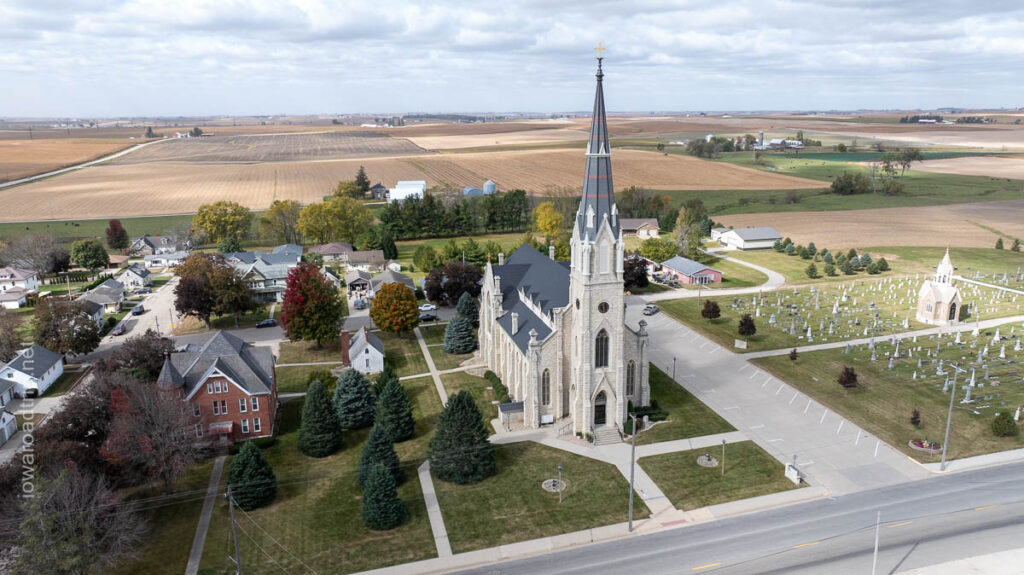
New Vienna is a tiny Iowa town with a big architectural treasure. From afar, the church’s tall spire and sturdy limestone walls rise above fields and rooftops alike — a beacon in every season. The church serves not only local parishioners, but also travelers who make the turn off Highway 136 to see one of Iowa’s most impressive rural churches.
Early Beginnings: The Parish Takes Shape
The roots of St. Boniface Parish stretch back to the very earliest days of New Vienna’s settlement. On January 6, 1846, Bishop Mathias Loras celebrated the first Catholic Mass in the area, marking the beginning of organized worship for German immigrant families who were building new lives here.
Two years later, in 1848, local Catholics built their first permanent church — a simple log structure. Before long, growth led to a larger stone building erected in 1855, complete with three bells brought back by local resident William Steffen Sr., rung for the first time at Easter that year.
The Church You See Today
The present St. Boniface Catholic Church was constructed between 1884 and 1887 under the guidance of Rev. F. W. Pape, with designs by Schnell Architects. Built of magnesia limestone quarried nearby, the church was a community effort: local farmers hauled the stone to the site by oxen and horses, giving their time, talent, and resources to complete the building.
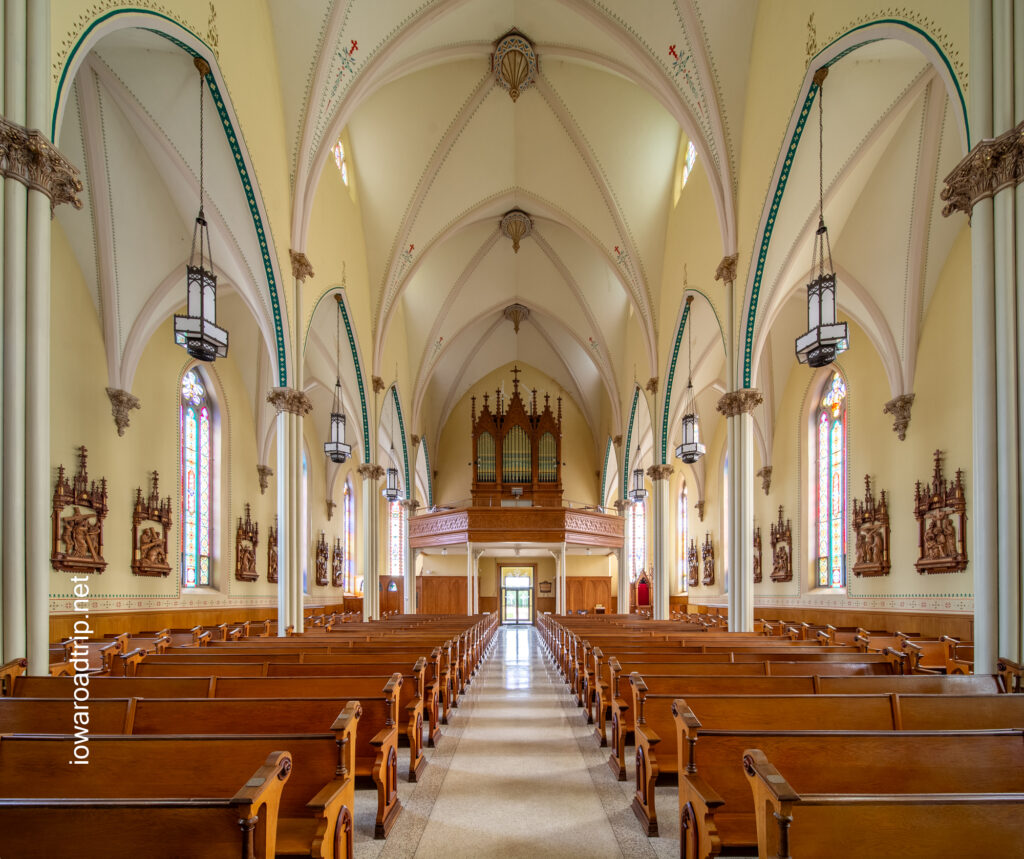
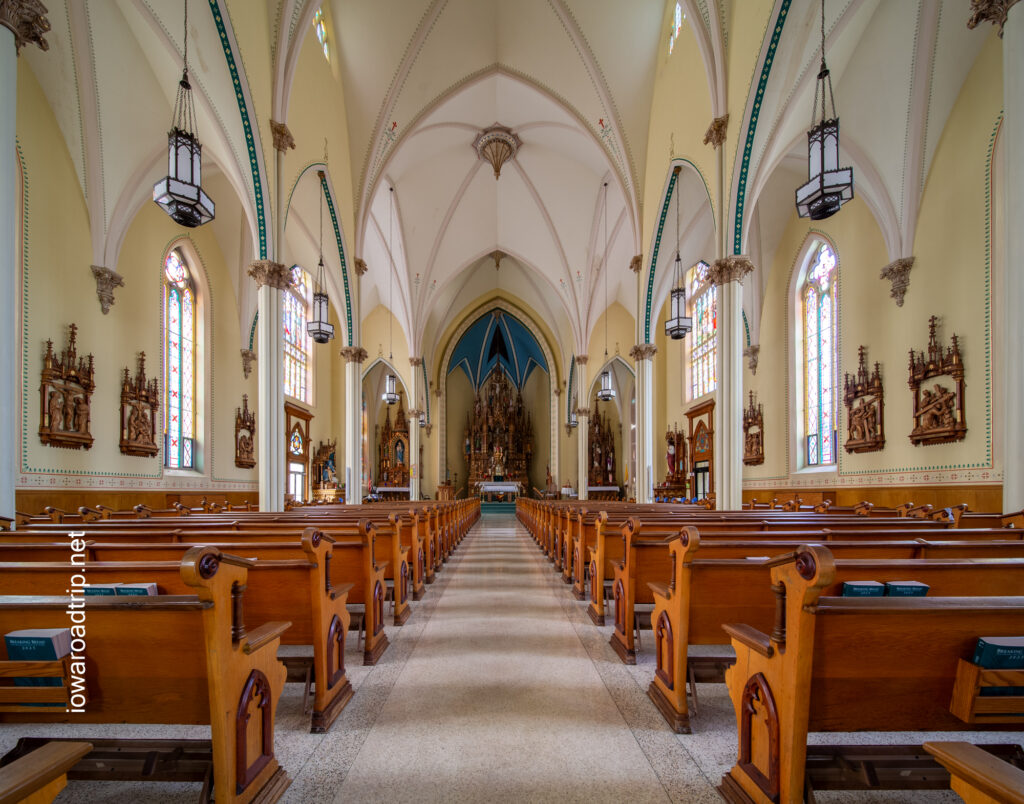
The church was dedicated in 1887, and the result is nothing short of remarkable: a Gothic-style sanctuary stretching 172 feet long and 62 feet wide, with 35‑foot‑high walls and an iconic 200‑foot spire that’s visible across the countryside.
Architectural Details That Impress
Inside and out, St. Boniface is a celebration of craftsmanship:
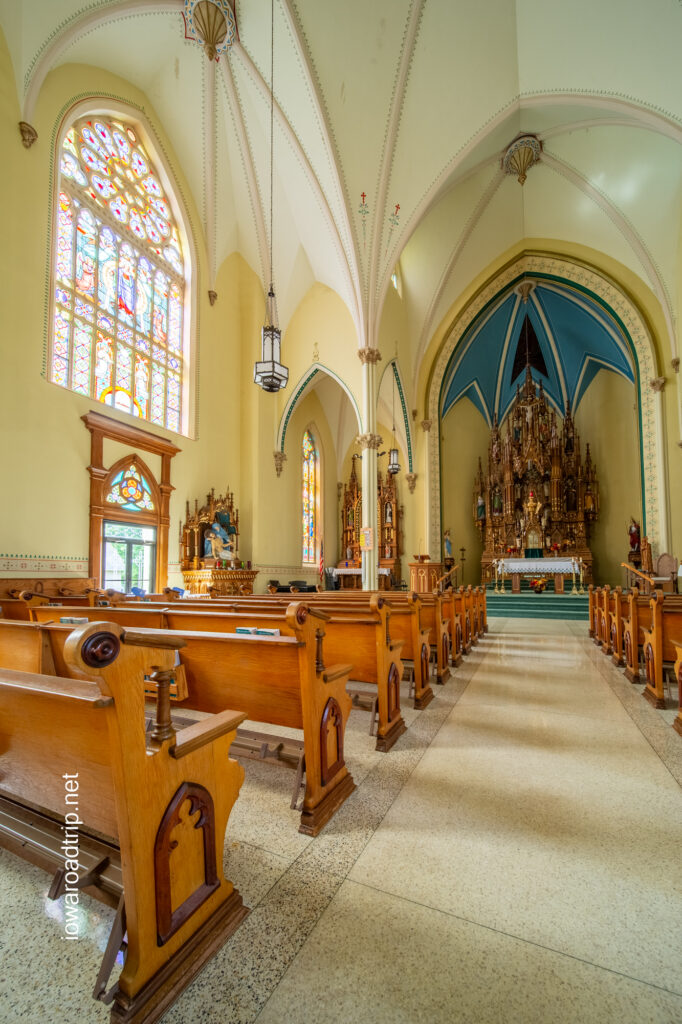
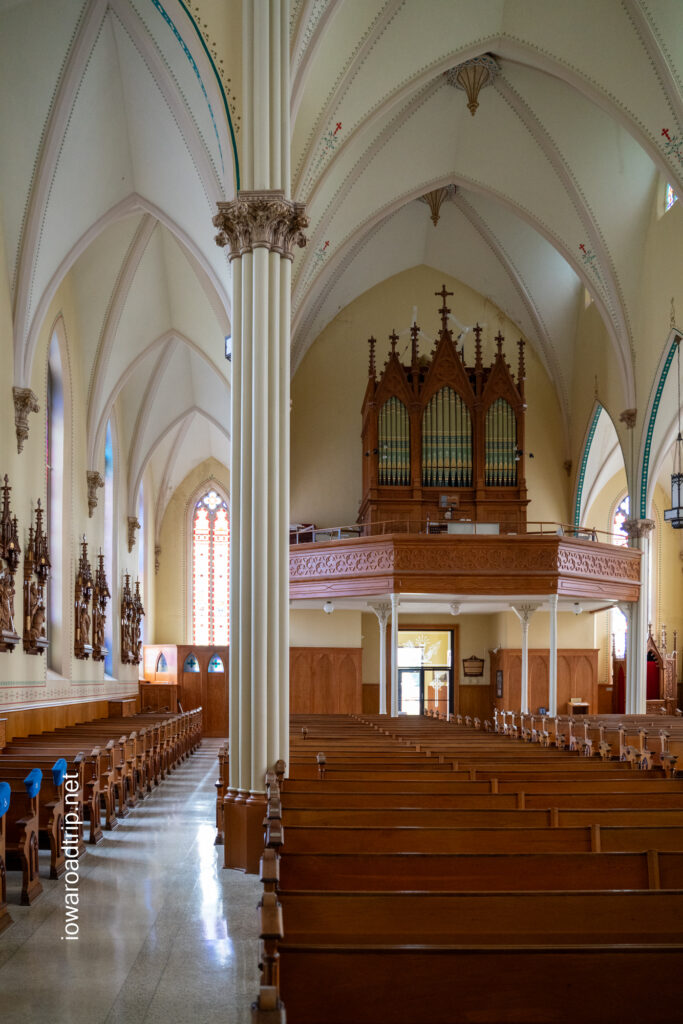
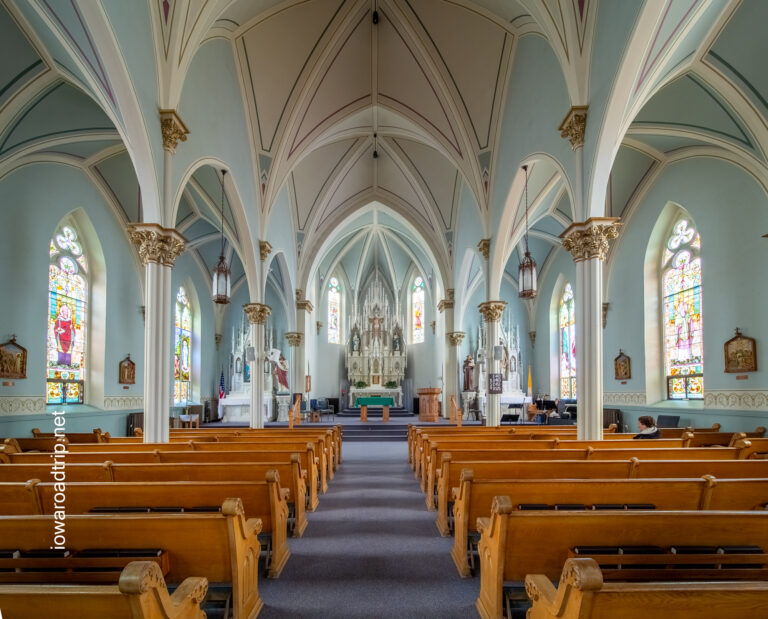
- Stained glass windows that frame the walls and fill the interior with colored light.
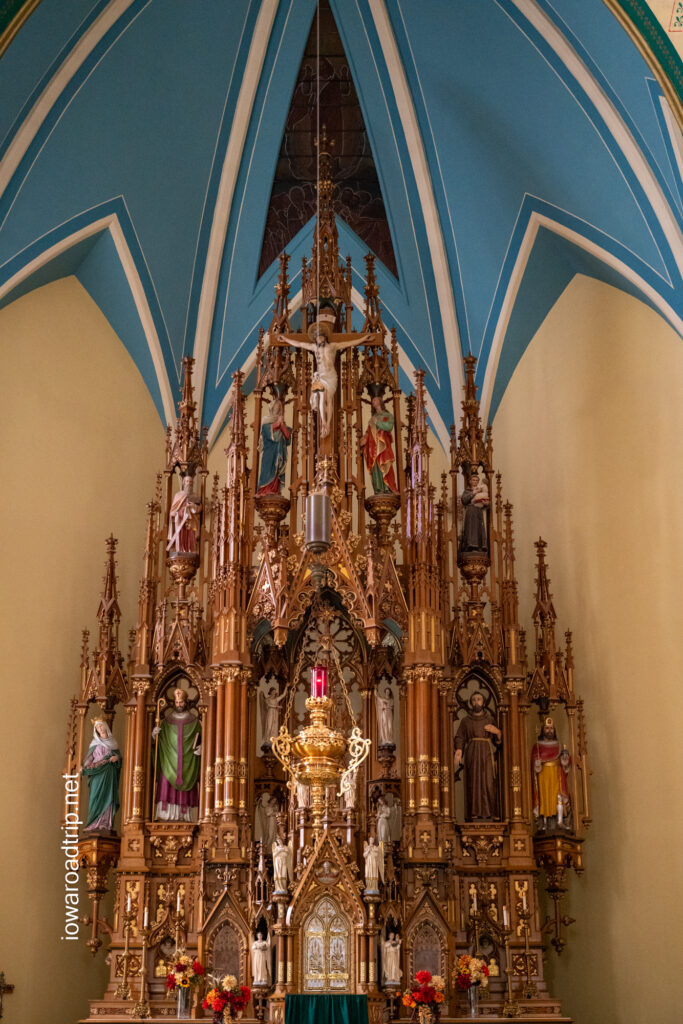
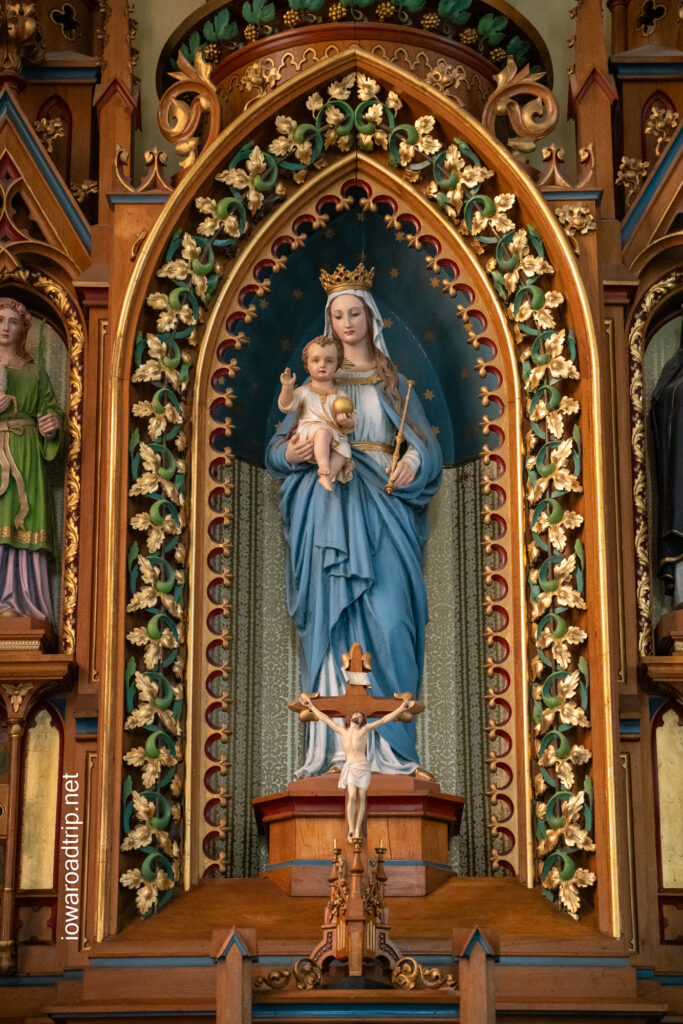
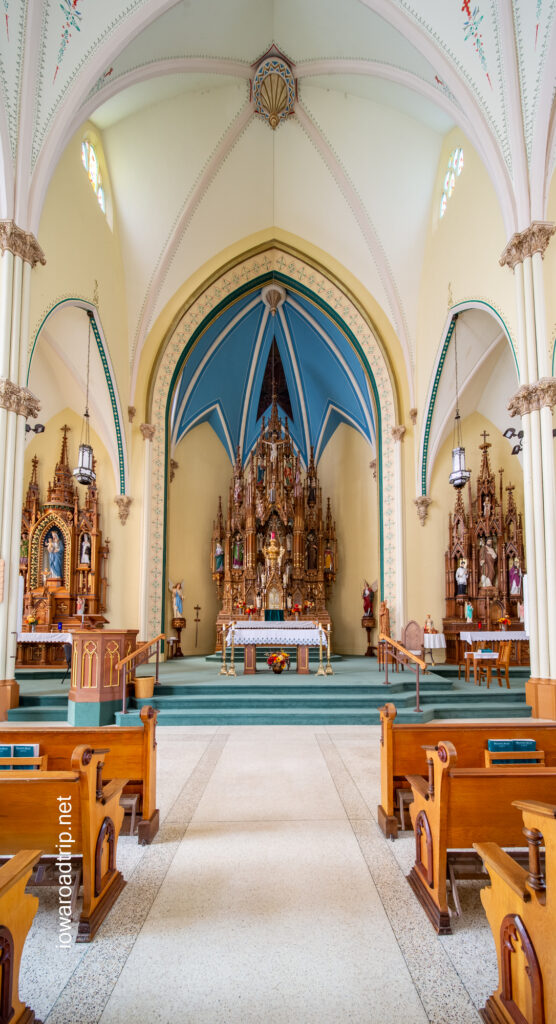
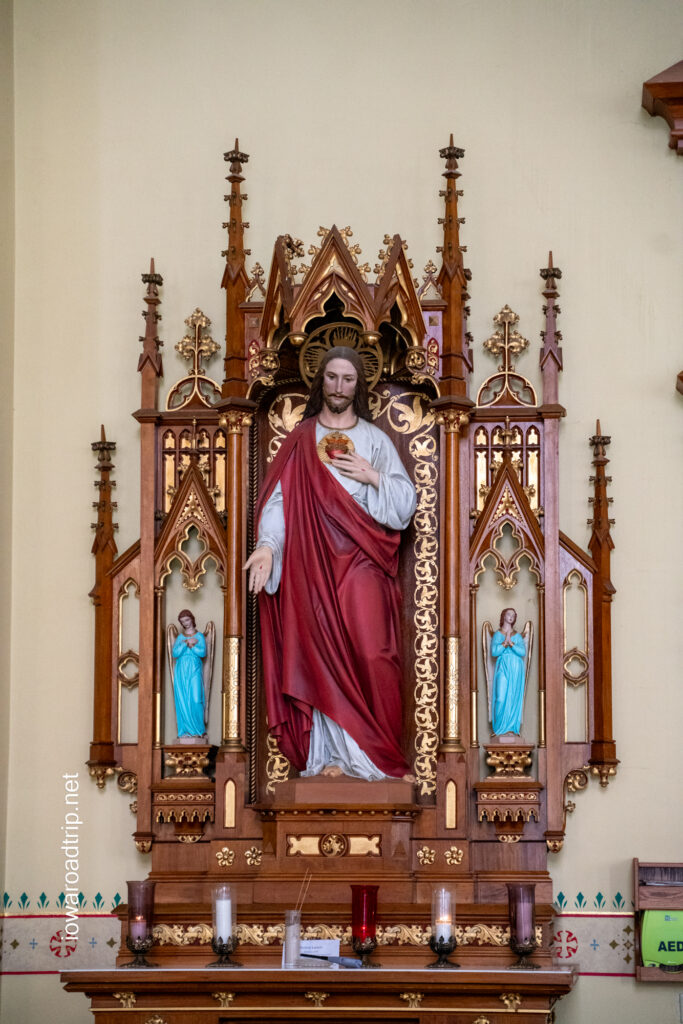
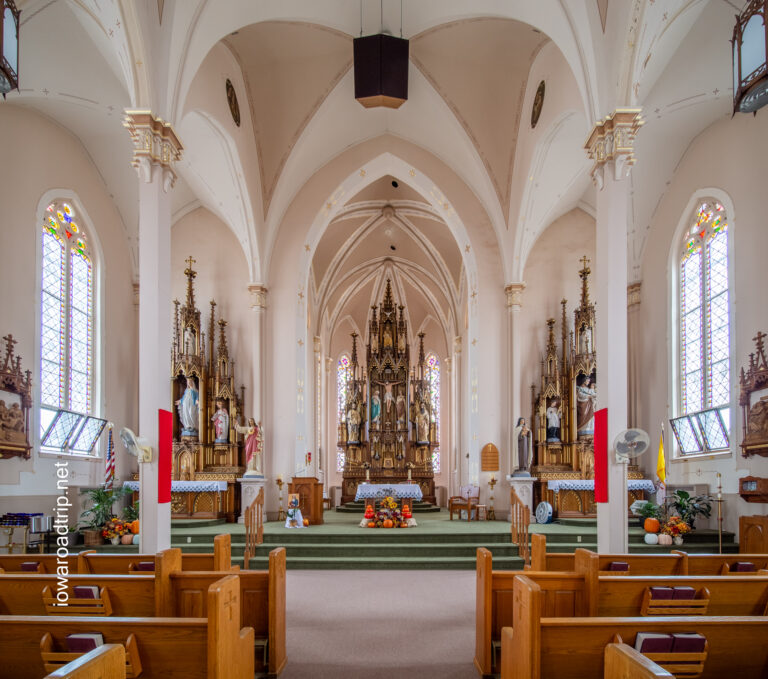
- A hand‑carved main altar of rich detail and artistry.
- A Schuelke pipe organ built in 1891 — one of the few original Schuelke organs still intact in the United States.
Together, these elements give the church a sense of presence and purpose — a mix of beauty and quiet reverence that many visitors find unforgettable.
A Community Center Through the Years
St. Boniface has not just been a building; it’s been a center of life for New Vienna. Over the years, it has witnessed baptisms, weddings, funerals, and countless moments that mark the rhythm of community life. The parish has also been linked over time with neighboring communities like Petersburg, sharing clergy and fellowship.
Planning Your Visit
The church is generally open to visitors during the day. However, if you travel from far, we encourage you to check with the church office to verify hours.
Why This Stop Belongs on Your Iowa Road Trip
St. Boniface Catholic Church isn’t just a photo opportunity — it’s a journey into the heart of Iowa’s heritage. From its early 19th‑century beginnings to the soaring stone structure completed in the late 1880s, the church stands as proof that even the smallest towns have stories worth telling. Whether you’re drawn by architecture, faith, or local history, this remarkable landmark deserves its place on your Iowa travel itinerary.
Take the road less traveled — and let St. Boniface surprise you.





Great pictures of my hometown church. So many wonderful memories here.