Ingemann Danish Lutheran Church — Moorhead, Iowa

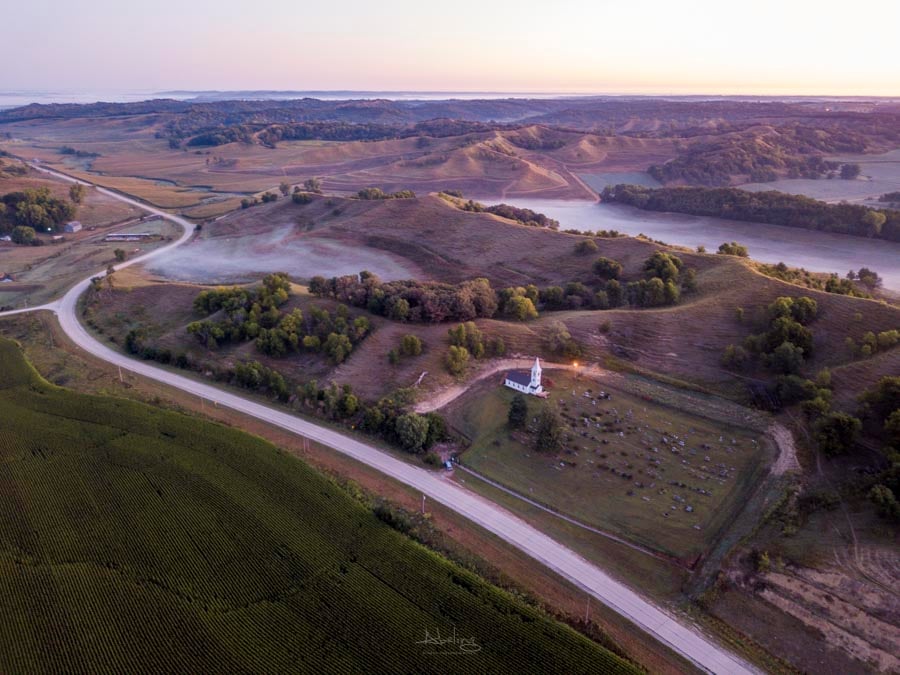
Some road trip stops speak quietly yet powerfully about the people who helped build the heartland. Ingemann Danish Lutheran Church — nestled in the serene countryside west of Moorhead in Monona County — is one such place. This historic white-frame church and its cemetery tell a story of faith, heritage, and community among Danish immigrants in Iowa, and it remains a meaningful landmark for visitors seeking Iowa’s deeper roots.
📍 Address
Ingemann Danish Lutheran Church
32044 County Road E54
Near Moorhead, IA 51558
A Danish Church Born in “Dane Hollow”
In the late 1800s, the rolling hills west of Moorhead drew a cluster of Danish immigrants who called the area “Dane Hollow” due to its strong Danish settlement.
In 1882, Rev. G.B. Christiansen from Blair, Nebraska, organized the Ingemann Lutheran congregation. With services first held in local homes and schoolhouses, the group needed a dedicated space for worship.
The church was named for Bernhard Severin Ingemann, a Danish novelist and poet known for hymns emphasizing broad spiritual themes rather than strict doctrine — a fitting namesake for a congregation rooted in Danish culture and faith.
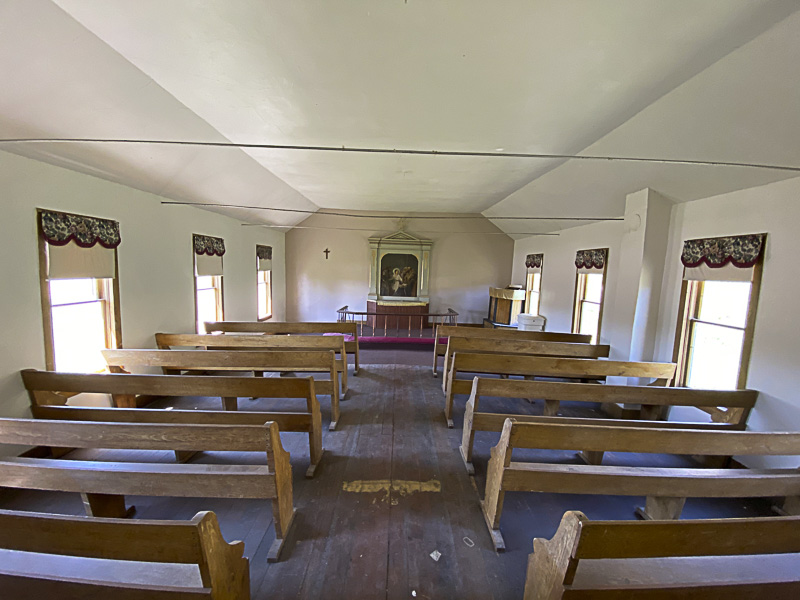
Built by the Community in 1884
Completed in 1884, the church was built on land generously donated by Danish immigrants John and Anna Marie (Nielsen) Johnson, natives of Hedensted, Denmark. Their gift included 20 acres, providing space for the church, cemetery, parsonage, and outbuildings.
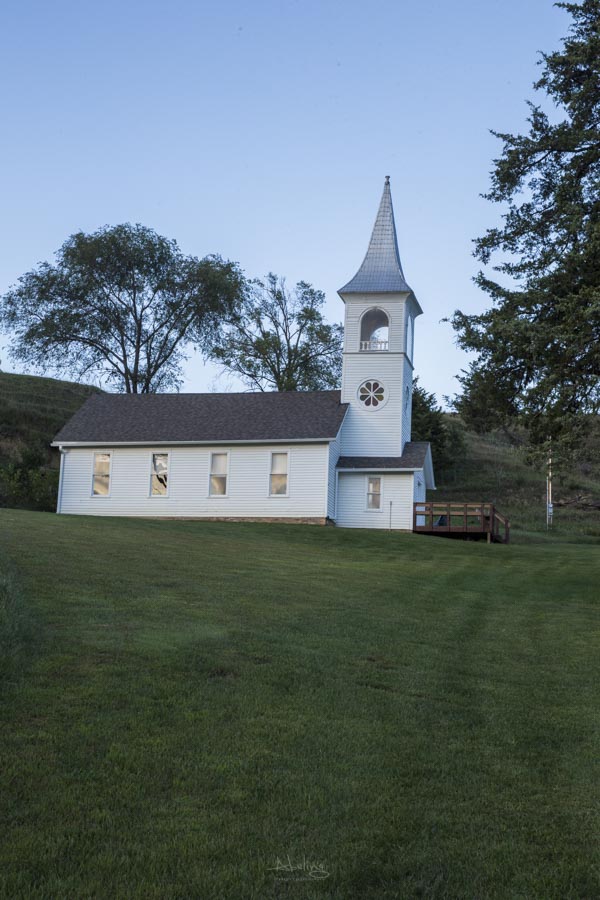
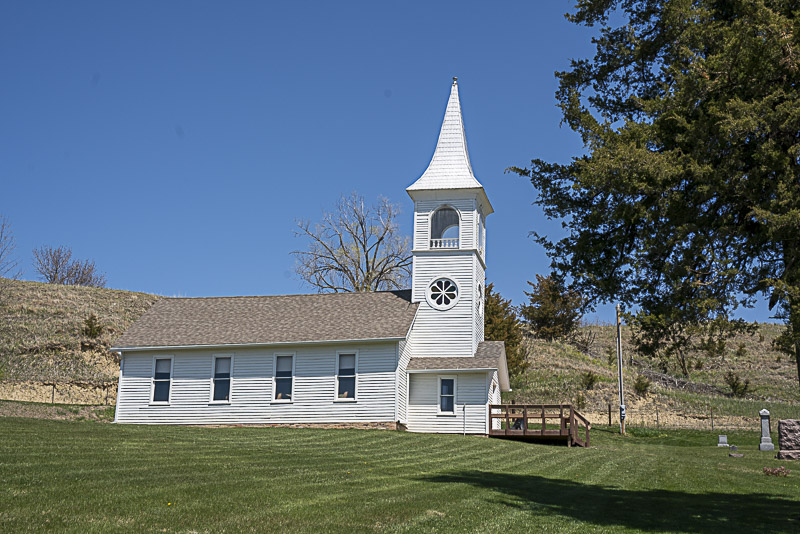
Originally a simple white gabled frame building, the structure later received its distinctive foyer and steeple — designed and added in 1904 by builder Andrew J. Simonsen — giving the church its beloved rural silhouette.
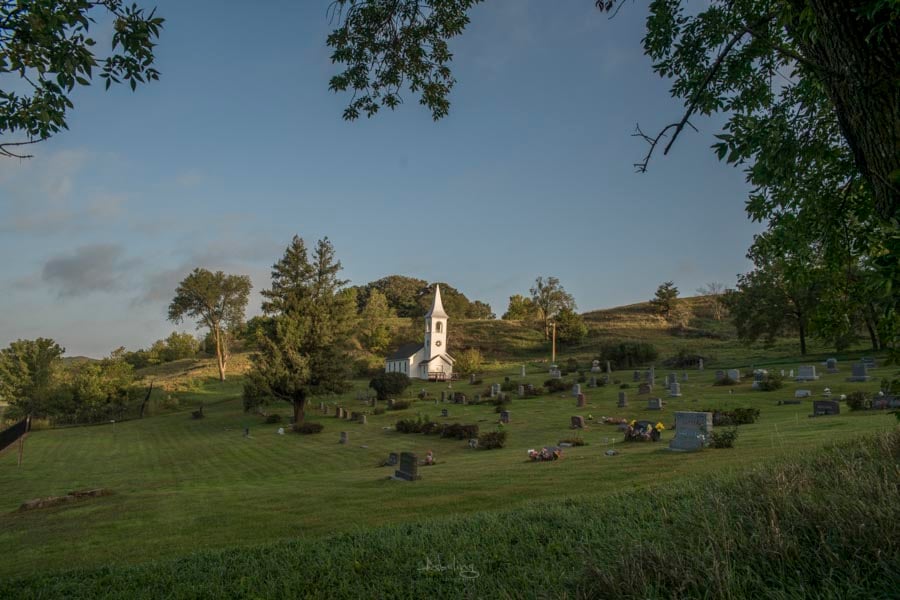
Today, the site and its cemetery — where many Danish immigrants from the area’s early settlement period are interred — are recognized on the National Register of Historic Places.
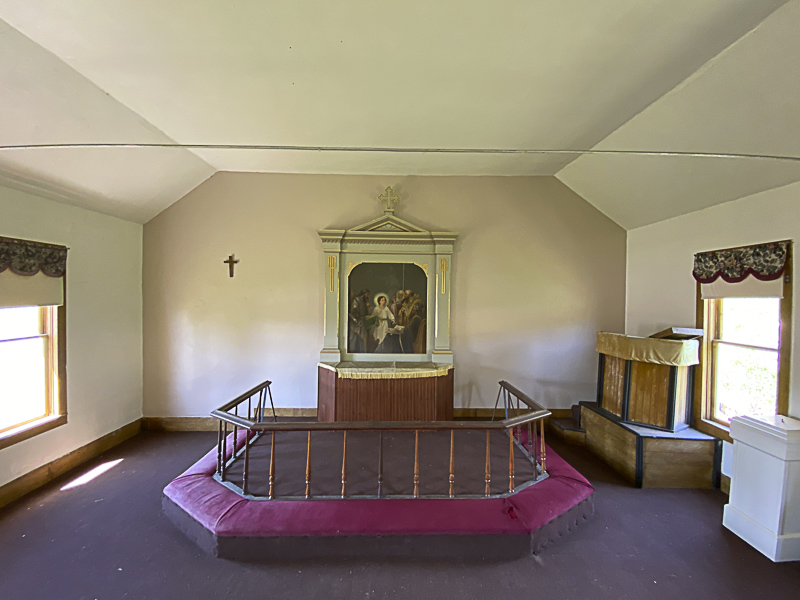
Stories of Change, Language, and Community
Ingemann Church became known locally as the “Lower Danish Church” because of its valley setting, especially after a schism in the Danish Lutheran Church in 1894 led some members to form Bethesda Lutheran Church — the “Upper Danish Church” on a nearby hill.
Services at Ingemann were held in Danish until 1918, when Iowa’s then-governor banned foreign-language use in public spaces, including church services. Around that time, the congregation became too small to support a full-time pastor, reducing services to a monthly schedule.
In 1948, Ingemann and Bethesda congregations joined forces under one pastor, and by 1954, the last baptisms and confirmations at Ingemann Church were recorded.
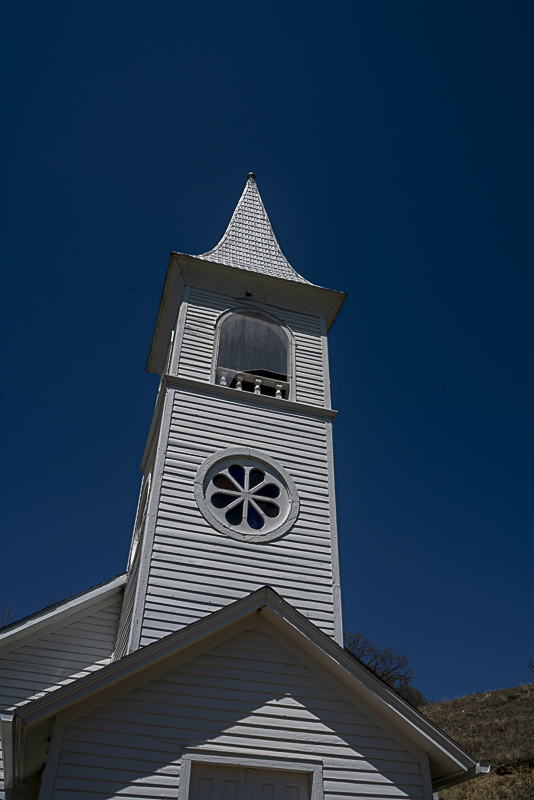
A Quiet Historic Landmark Today
Though regular worship services no longer take place, the Ingemann Danish Lutheran Church Preservation Society maintains the church and cemetery with pride.
The church is still used for:
- Memorial Day services
- Family reunions
- Occasional weddings
These gatherings bring new and old generations together, honoring both faith and heritage amid the peaceful rural setting.
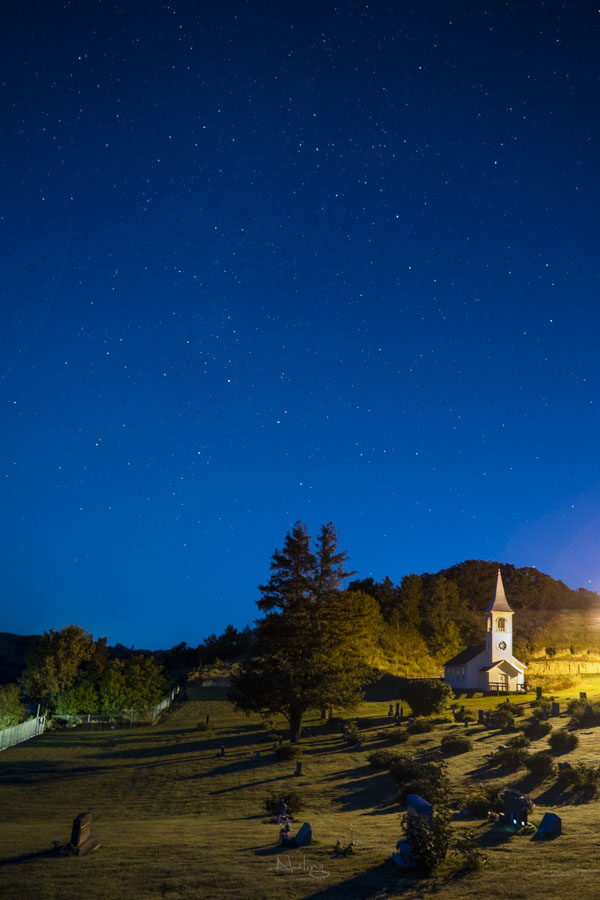
Planning Your Visit
Ingemann Danish Lutheran Church is an evocative stop for anyone exploring the Loess Hills, Monona County, or northwest Iowa’s rural heritage routes.
Visitor tips:
- The cemetery and grounds are open year-round for quiet reflection and photography. However, there is now a security gate around the grounds – and the gate has a timer to control when it opens, which is typically early morning
- Services on Memorial Day weekend draw descendants and visitors alike — a powerful way to experience the site’s history.
- Bring water and sturdy shoes — rural terrain and soft grass paths are the norm.
Combine this church with scenic drives through the Loess Hills or other historic rural churches in the area for a full cultural road trip experience.
Why It’s Worth the Stop
Ingemann Danish Lutheran Church isn’t just an old building — it’s a living piece of Danish-American heritage in the heart of Iowa. From its humble beginnings in a frontier hollow to its century-long legacy of faith, language, and community, this quiet country church rewards visitors with both history and serenity. It’s a reminder that every small town and rural road in Iowa has a story to tell.