The Butter Cow Road Trip: Where to See Iowa’s Butter Cow Legacy
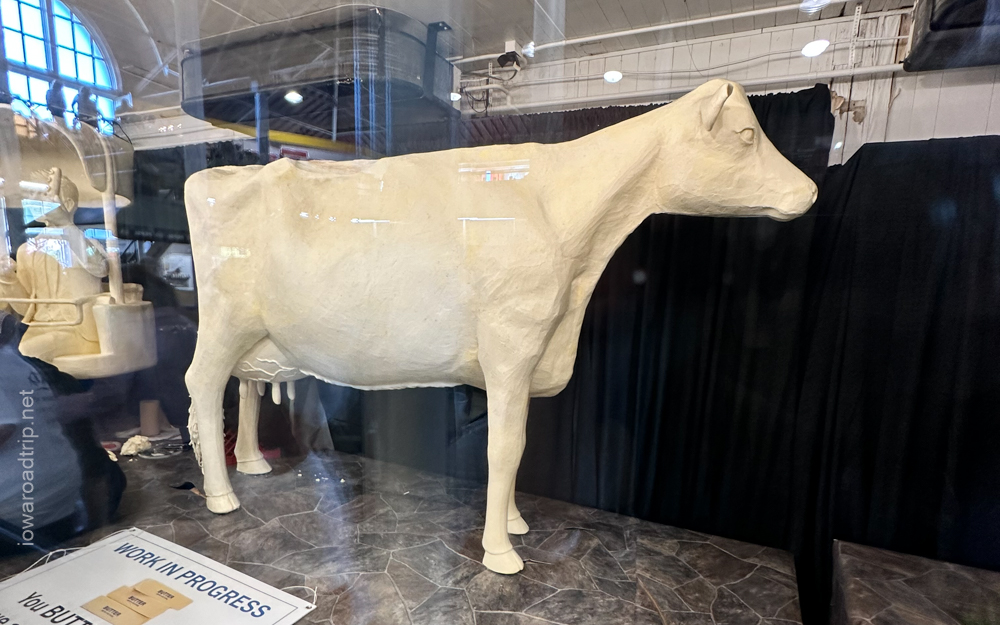
The official Iowa State Fair Butter Cow appears for only 11 days each August, but the story extends far beyond the cooler inside the Agriculture Building.
Permanent sculptures, museum displays, and other tributes connected to the Butter Cow can be found in Des Moines, Toledo, Ames, and Calmar. Together, they tell the story of an Iowa tradition that combines dairy farming, art, State Fair nostalgia, and small-town pride.
Can you visit all the Butter Cow locations in one trip?
The locations are spread across a large portion of the state:
- Des Moines: The annual Butter Cow and a permanent bronze tribute at the Iowa State Fairgrounds
- Toledo: A roadside cow-and-calf sculpture and a Duffy Lyon display at the public library
- Ames: Two permanent sculptures connected to Duffy Lyon and Iowa State University
- Calmar: Dairy exhibits, farm-viewing areas, and additional connections to Lyon’s work
The Des Moines and Ames stops can easily be combined into a central Iowa trip. Toledo can be added to a drive through Tama County or along the Lincoln Highway, while Calmar works best as part of a northeast Iowa road trip.
The annual Butter Cow in Des Moines is seasonal, but most of the other stops can be visited throughout the year.
A quick history of the Iowa State Fair Butter Cow
The first Iowa State Fair Butter Cow was sculpted in 1911 by J.K. Daniels. Several artists continued the tradition before Norma “Duffy” Lyon of Toledo took over in 1960.
Lyon became the fourth official Butter Cow sculptor and the first woman to hold the role. She continued creating the Butter Cow and its companion sculptures until retiring in 2006.
Sarah Pratt became the fifth official sculptor after spending 15 years apprenticing with Lyon.
The Butter Cow begins with an internal frame made from wood, metal, wire, and steel mesh. About 600 pounds of low-moisture Iowa butter are applied over the frame inside a 40-degree cooler.
The finished cow stands approximately 5½ feet tall and 8 feet long. After the fair, much of the butter is stored and reused for future sculptures for as long as ten years. The reused butter is sculpting material and is not returned to the food supply.
Fun fact: The Butter Cow contains enough butter to cover approximately 19,200 slices of toast.
Destination 1: Iowa State Fairgrounds in Des Moines
Location: 3000 East Grand Avenue, Des Moines, Iowa
Best time to visit: During the Iowa State Fair
See the annual Iowa State Fair Butter Cow
The Iowa State Fairgrounds is the official home of the Butter Cow.
During the fair, the sculpture is displayed inside a refrigerated case in the John Deere Agriculture Building. Visitors look through the cooler windows to see the life-size cow and that year’s companion sculpture.
The Butter Cow is one of the fair’s most popular traditions, so do not be surprised to find a crowd gathered around the display. If seeing it is high on your fair-day list, stop early in the morning or later in the evening. The area around the cooler can become especially crowded during the middle of the day and on busy weekends.
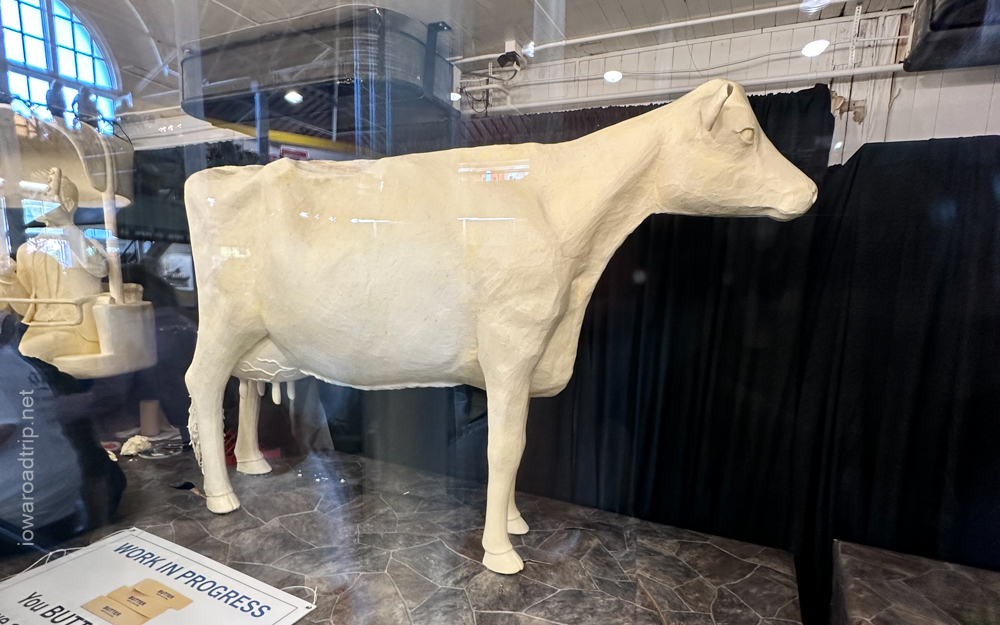
The Butter Cow is only displayed during the Iowa State Fair. In 2026, the fair runs from August 13 through August 23. Fair buildings are scheduled to be open from 9 a.m. to 8 p.m., although hours can change.
The 2026 companion sculpture is titled “Meet Me at the Pepsi Clock.” The display will celebrate Fair Spirit and America250 with scenes representing agriculture, music, art, natural resources, and hometown pride.
Past companion sculptures have featured everything from American Gothic and the Lincoln Highway to Field of Dreams, Star Trek, Sesame Street, Caitlin Clark, Jack Trice, and Kurt Warner. The changing companion sculpture gives fairgoers a reason to return even if they have seen the Butter Cow many times before.
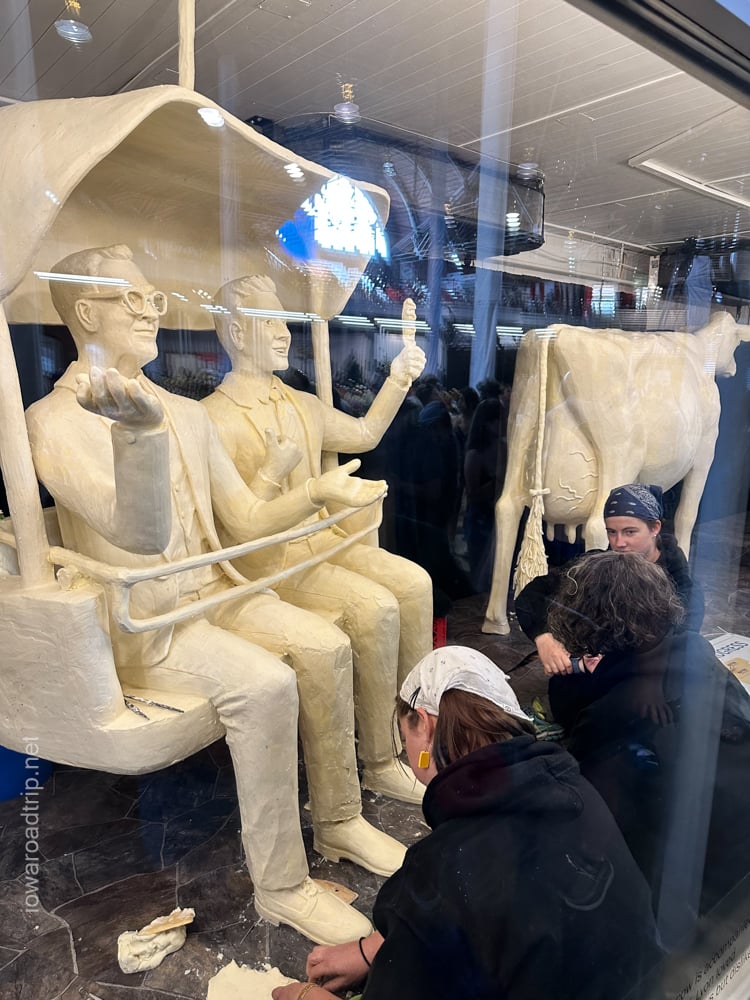
Find the permanent bronze cow-and-calf sculpture
The fairgrounds also contain a permanent tribute to Norma “Duffy” Lyon.
A life-size bronze cow-and-calf sculpture is located outside the John Deere Agriculture Building. It is one of three matching bronze sculptures installed in 2022 to honor Lyon and her contributions to Iowa’s dairy industry.
The other two are located in Toledo and at Iowa State University’s College of Veterinary Medicine in Ames.
Although the bronze sculpture is permanent, access to the fairgrounds may depend on whether the grounds are open for the State Fair or another public event. The easiest time to see it is when you are already attending the fair.
After visiting the Butter Cow inside the Agriculture Building, take a few minutes to walk outside and find this permanent piece of the story.
Destination 2: Toledo, hometown of the “Butter Cow Lady”
Norma “Duffy” Lyon is closely associated with Toledo, and the community remains one of the best year-round destinations for anyone interested in the Butter Cow’s history.
Two related stops can be found in town: the outdoor bronze cow-and-calf sculpture and an indoor display at the Toledo Public Library.
See Toledo’s roadside cow-and-calf sculpture
Location: Near the intersection of Highway 63 and Business Highway 30, Toledo, Iowa
Best time to visit: Year-round
A life-size bronze cow and calf stand on a small hill near the intersection of Highway 63 and Business Highway 30.
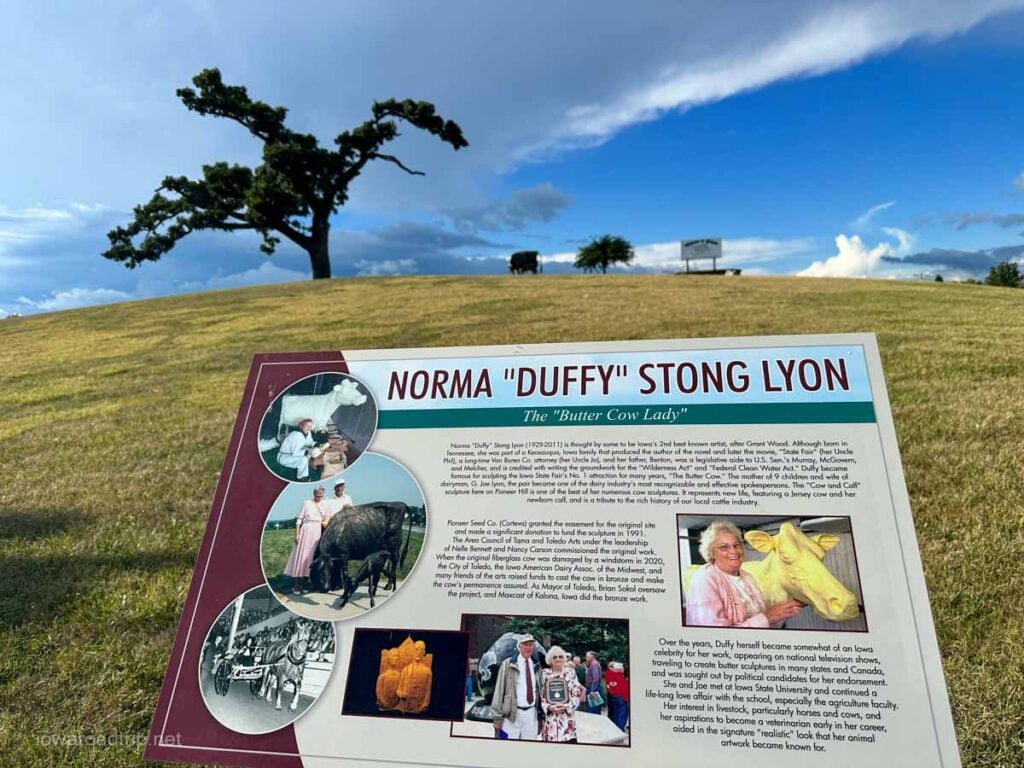
The sculpture sits on a knoll near a large oak tree. It is visible from the road, although you may need to watch carefully as you approach the intersection.
The original cow-and-calf sculpture was installed in Toledo in 1991. After years of weathering and damage from the August 2020 derecho, it was replaced by the current bronze version in 2022.
The Toledo sculpture is one of the easiest Butter Cow-related locations to visit because it functions like a traditional roadside attraction. You do not need an admission ticket, tour reservation, or access to a campus building.
It is not made from butter, of course, but it gives travelers a permanent place to remember the woman who spent more than four decades turning butter sculpting into one of Iowa’s best-known traditions.
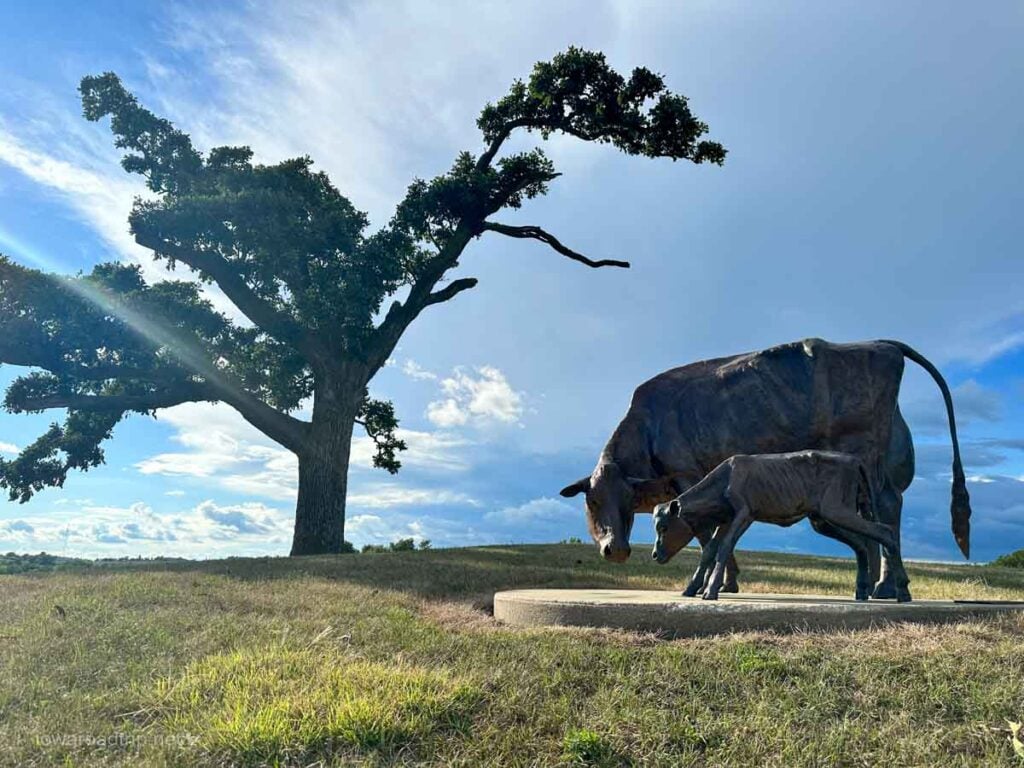
This is a fairly quick roadside stop. Pair it with other Tama-Toledo attractions, including the Tama County Courthouse, Wieting Theatre, Lincoln Highway history, local museums, and small-town restaurants.
Visit the Duffy Lyon display at the Toledo Public Library
Location: Toledo Public Library, 206 East High Street, Toledo, Iowa
Best time to visit: During regular library hours
After seeing the outdoor sculpture, head downtown to the Toledo Public Library.
The library has a dedicated display recognizing Duffy Lyon and her artistic legacy. It provides another opportunity to learn about the person behind the Butter Cow tradition.
The roadside sculpture is the more visual stop, while the library helps add context to Lyon’s life and work. Together, the two attractions make Toledo an important destination on this road trip.
Because the display is inside a working public library, it can only be visited during regular library hours. Check the current schedule before arriving, especially around weekends and holidays.
Destination 3: Duffy Lyon’s Iowa State University connections in Ames
Duffy Lyon graduated from Iowa State University in 1951 with a degree in animal science. She and her husband, Joe, were also well known in the dairy industry, particularly for their Jersey cattle.
Two sculptures in Ames connect her work as an artist with her knowledge of dairy animals.
Find the bronze sculpture at the College of Veterinary Medicine
Location: Veterinary Field Services Building, 1712 South Riverside Drive, Ames, Iowa
Best time to visit: Year-round, but check campus parking and access
One of the three bronze cow-and-calf sculptures honoring Lyon is located outside the Veterinary Field Services Building at Iowa State University’s College of Veterinary Medicine.
The sculpture is a bronze cast based on the original artwork displayed in Toledo. A nearby plaque provides additional information about Lyon and the Butter Cow tradition.
Although the sculpture is outdoors and permanent, it is located on a working university campus rather than at a traditional tourist attraction. Before making a special trip, check the campus map and current visitor parking information.
This stop makes the most sense as an addition to a day in Ames rather than as the only reason for your visit. It can be paired with Reiman Gardens, Iowa State University’s public art collection, downtown Ames, or other campus attractions.
Additional Ames connection: Jersey Jewel at the ISU Dairy Farm
Iowa State University has another sculpture connected to Duffy Lyon at its dairy farm south of the main campus.
When plans were underway for the new dairy facility, Lyon and her grandson created a life-size Jersey cow known as Jersey Jewel. The piece was later cast in bronze to preserve the artwork.
Jersey Jewel is not a replica of the Iowa State Fair Butter Cow. Instead, it represents another part of Lyon’s legacy: her knowledge of real dairy cattle and her lifelong connection to Jersey cows.
The sculpture stands near the entrance to the ISU Dairy Farm. Because this is an active university dairy facility rather than a traditional visitor attraction, check ahead for current access and parking information.
Stay in public areas, follow posted signs, and do not enter working agricultural areas without permission.
Destination 4: Iowa’s Dairy Center in Calmar
Location: 1527 Highway 150 South, Calmar, Iowa
Best time to visit: Year-round, with access varying by day and time
Iowa’s Dairy Center connects the Butter Cow story to the agricultural industry behind it.
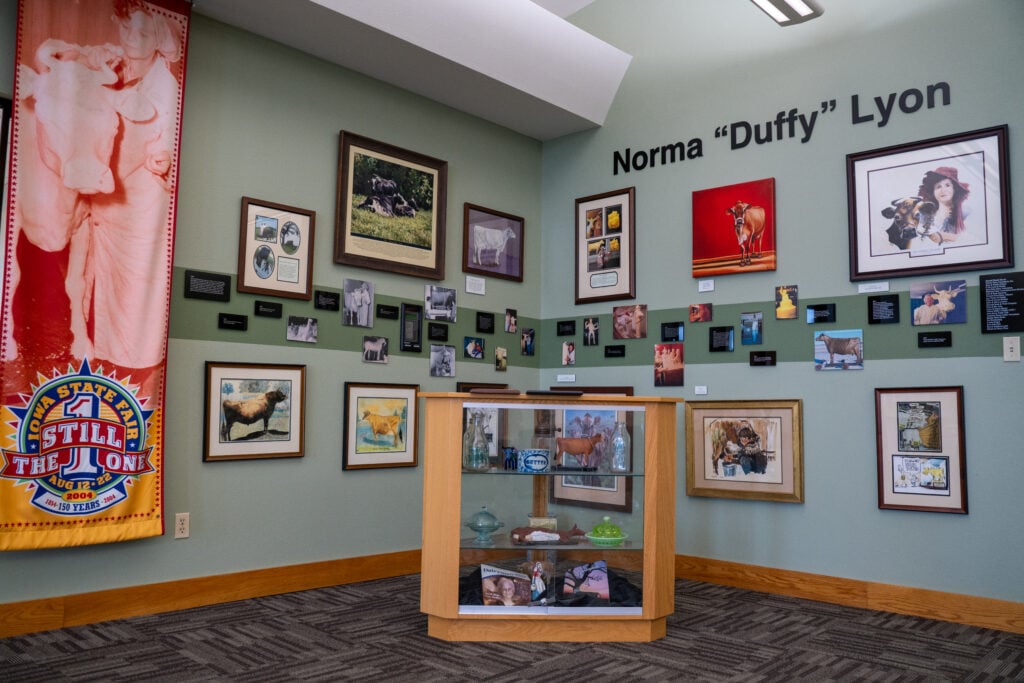
Near the entrance, visitors can see the repaired fiberglass cow and calf that originally stood in Toledo. The facility has also featured materials connected to Duffy Lyon, including artwork, photographs, memorabilia, and a timeline of her life.
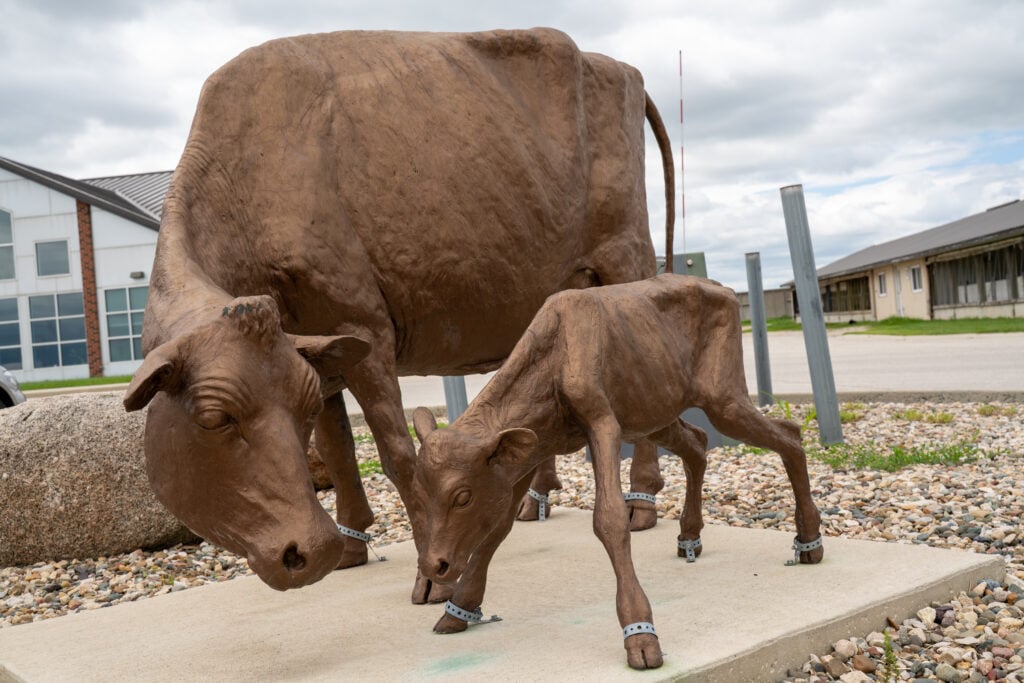
Beyond the Butter Cow connection, Iowa’s Dairy Center includes dairy exhibits, educational displays, a robotic milking viewing area, and information about modern dairy farming.
This is the most extensive stop on the road trip. Rather than pulling over for a quick photograph, visitors can spend time learning how cows are cared for, how robotic milking works, and how milk travels from the farm to the consumer.
What can you see at Iowa’s Dairy Center?
Iowa’s Dairy Museum is generally open Monday through Friday from 8 a.m. to 4 p.m.
Educational areas include the Hall of Breeds and displays explaining cow nutrition, digestion, milk production, and the role of dairy farming in Iowa.
The robotic milking viewing area allows visitors to watch cows enter an automated system to be milked. Public access to the viewing area is listed as available around the clock, making it possible to stop outside regular museum hours.
Because access can vary by area, check current visitor information before making a special trip to Calmar.
Guided tours versus self-guided visits
Self-guided visits are free and do not require an appointment. They are a good choice for evening and weekend visitors or anyone who wants a shorter look at the educational displays and viewing areas.
Self-guided visitors are not permitted inside the working barns.
Guided tours require advance reservations and provide access to additional parts of the dairy operation. Depending on the tour, visitors may see the robotic milking facility, freestall barn, maternity area, calf barn, museum, and other areas of the farm.
Check the current schedule and tour pricing before planning your visit.
Iowa’s Dairy Center is a natural addition to a northeast Iowa road trip. It can be paired with Decorah, Spillville, Fort Atkinson, the Driftless Area, and other Winneshiek County destinations.
Temporary bonus through September 7, 2026: Iowa’s Butter Cow at the Smithsonian
One Butter Cow-related attraction is currently located well beyond Iowa.
The exhibition State Fairs: Growing American Craft at the Smithsonian American Art Museum’s Renwick Gallery in Washington, D.C., includes a life-size butter cow created on-site by Iowa State Fair butter sculptor Sarah Pratt.
The exhibition explores art and traditional crafts associated with state fairs across the country. The Butter Cow is presented not simply as a funny fair novelty, but as an example of regional art, agricultural tradition, and community identity.
The exhibit is open through September 7, 2026, and admission to the Renwick Gallery is free.
This is a limited-time opportunity to see the Butter Cow tradition represented as part of a national exhibition about state fairs and American craft.
Why the Butter Cow still matters
The Butter Cow is quirky, nostalgic, and completely Iowa.
It brings together two subjects that might not seem naturally connected: fine artistic detail and dairy farming. It also links the Iowa State Fair with small-town Toledo, Iowa State University, and generations of farm families.
Some visitors come to admire the craftsmanship. Others stop because seeing the Butter Cow has become an annual family tradition. Plenty of people simply enjoy telling someone from outside Iowa that, yes, we really do sculpt a life-size cow from butter every year.
The next time you attend the Iowa State Fair, stop at the Agriculture Building and see the official Butter Cow. But do not assume the story ends when the fair closes.
Follow it to Toledo, Ames, and Calmar, and you will find roadside art, dairy history, university connections, small-town pride, and one of Iowa’s most unusual artistic legacies hiding in plain sight.